
On April 24th, Horizon officially released the Journey 6 series chips in Beijing. At the launch event, we saw displays of domain controllers based on the Journey 6 series chips, indicating that the Journey 6 series chips will enter mass production vehicles by the end of 2024. This sets a precedent for the fastest deployment of automotive intelligent driving chips.
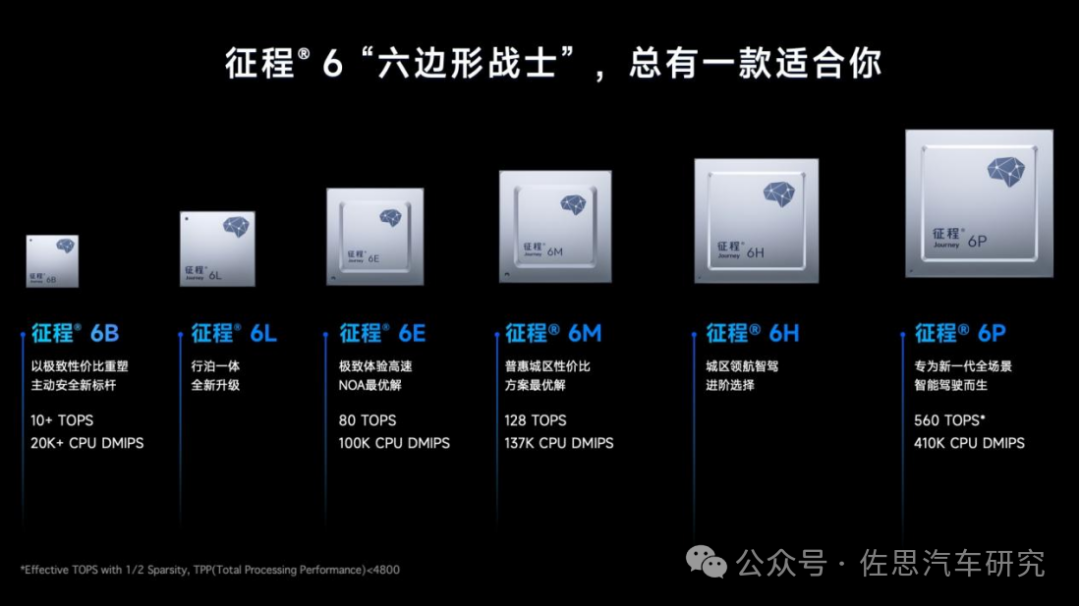
Image source: Horizon
The Journey 6 series consists of six chips, contrary to previous speculation of three, sufficient to cover various scenarios and price points for intelligent driving. The launch focused on the Journey 6B, 6E, 6M, and 6P. The author believes B stands for Base, L for Light, E for Efficiency, M for Medium, H for High, and P for Performance or Premium. Horizon has not disclosed the parameters for the Journey 6L and 6H, but estimates the AI computing power of 6H to be 256-300 TOPS, with CPU computing power of 250-300K DMIPS. The AI computing power of 6L is estimated to be 30-40 TOPS, with CPU computing power of 40-50K DMIPS. The most noticeable upgrade of the Journey 6 series compared to the 5 series is the CPU computing power. The Journey 5’s CPU is an 8-core Cortex-A55, with computing power of roughly 25-30K DMIPS. This time, aside from the lowest Journey 6B, all other CPU computing powers have been significantly increased. Another upgrade of the Journey 6 series is the BPU architecture. The so-called BPU is Horizon’s alternative term for AI accelerators, where B stands for Brain, hence it can be referred to as a brain-like processor. The first generation of BPU pays tribute to mathematician Bernoulli, whose distribution is the simplest discrete probability distribution model. The second generation BPU pays tribute to British mathematician Bayes, who derived Bayes’ theorem, a probability algorithm that infers causes from results, which has gained prominence in today’s artificial intelligence. The third-generation BPU architecture of the Journey 6 pays homage to game theory founder Nash, naming it the Nash architecture. John Nash, born on June 13, 1928, was a renowned economist, the founder of game theory, and the inspiration for the protagonist in “A Beautiful Mind.” He was a former assistant professor at MIT and later a professor of mathematics at Princeton University, primarily studying game theory, differential geometry, and partial differential equations. Due to his groundbreaking contributions to the equilibrium analysis theory of non-cooperative games alongside two other mathematicians (economists, John C. Harsanyi and Reinhard Selten), he significantly impacted game theory and economics, winning the Nobel Prize in Economic Sciences in 1994. Game theory mainly addresses the decision-making interactions between intelligent and non-intelligent vehicles. Currently, most intelligent driving is based on single vehicles, without considering the influence of other vehicles on intelligent vehicle decisions. This sometimes makes intelligent vehicles appear less flexible, such as when an oncoming vehicle yields to let the intelligent vehicle go first, but the intelligent vehicle cannot understand the intention of the oncoming vehicle and waits for it to pass. Thus, most intelligent driving strategies have the shadow of reinforcement learning, which aims to teach agents (our “models”) to learn through interaction with the environment (which can be virtual or real). RL was initially proposed based on the Markov process, placing the agent in an uncertain fixed environment and attempting to learn an optimal strategy through a reward/punishment mechanism. In single-agent cases, this method has been proven to converge. However, when multiple agents are placed in the same environment (multi-agent reinforcement learning, MARL), the situation becomes much more complex. Suppose we are trying to improve urban traffic conditions with intelligent vehicles. In that case, each vehicle’s decision will affect the decisions and performance of other vehicles, leading to potential conflicts between intelligent vehicles, as both may find a particular route to be the most convenient (yielding the most rewards). Game theory has an RL algorithm that uses deep neural networks for function approximation, iteratively calculating the payoff matrix of sub-games (Gt). This sub-game is what was mentioned earlier as stage games. At each time t (each stage game), responses that conform to NE are calculated (σ), and the optimal strategy (π) is obtained, then new strategies are added to expand Gt to Gt + 1, and the process is repeated. This is the most sophisticated intelligent driving decision-making algorithm. The entire AI acceleration of the Journey 6 series is based on the Nash architecture. The Journey 6B focuses on extreme cost-performance ratio, with a CPU possibly being a 6-core Cortex-A55, and a manufacturing process of either 14 or 28 nanometers. The international prospective customers for the Journey 6B are Bosch and Denso, while domestic prospective customers include NavInfo, FuriTech, and Minieye. Major competitors may include Mobileye’s EyeQ5M/H and EyeQ6L.
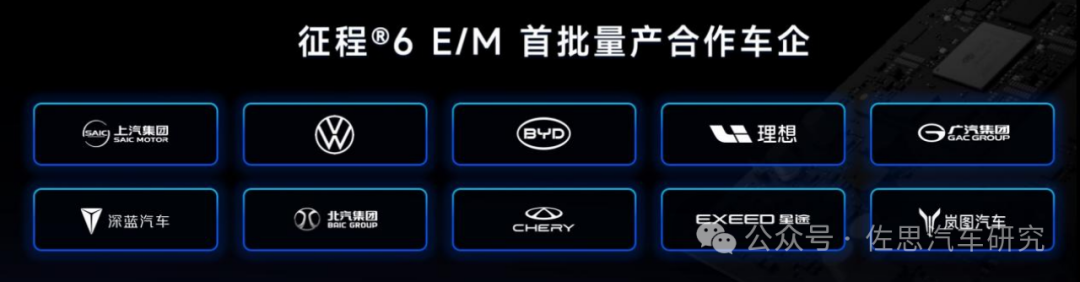
Image source: Horizon
The main products of the Journey 6 series are E/M.
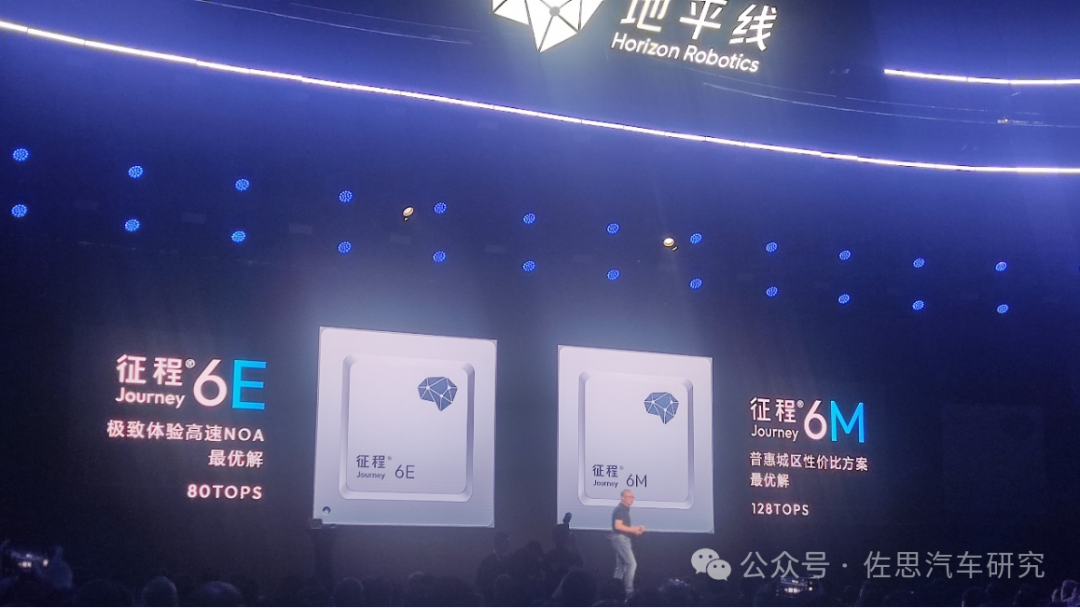
Image source: Horizon launch event
The Journey 6 series will begin deliveries of its first mass-produced vehicles in 2024, with more than 10 models expected to be mass-produced and delivered by 2025. Targeting the mid-level intelligent driving market, Horizon has launched the best cost-performance solution for urban areas—the Journey 6M, as well as the optimal solution for extreme experience in high-speed NOA—the Journey 6E, and provides AEC-Q104 automotive-grade SiP modules and Matrix 6 domain control reference designs, achieving ultra-high integration for lower power consumption and better system costs. At the launch event, Horizon announced collaborations with multiple Tier 1 and software-hardware partners for the Journey 6E/M, revealing that over 50 ecosystem partners will launch quasi-mass production products based on the Journey 6E/M by the second quarter of 2024.
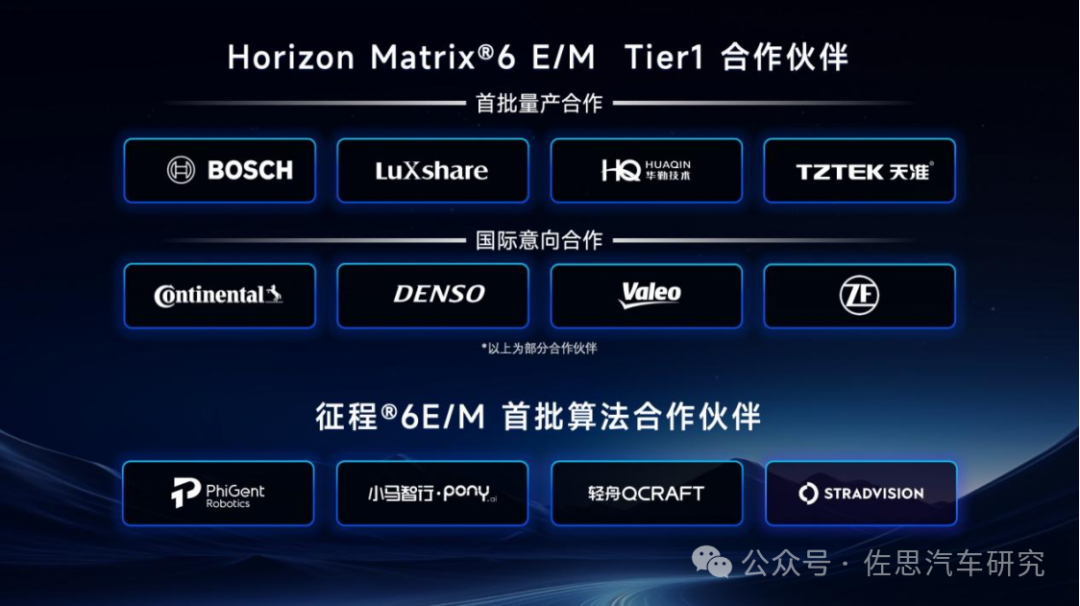
Image source: Horizon
What everyone is most concerned about is the flagship Journey 6P.
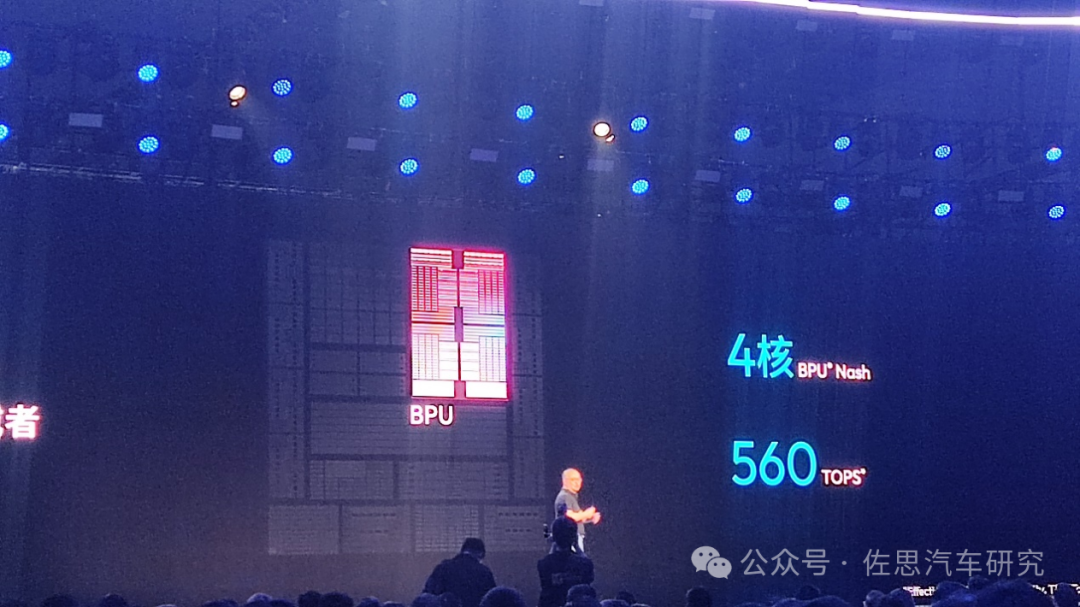
Image source: Horizon launch event
The AI computing power of the Journey 6P is 560 TOPS. Horizon cautiously noted that 560 TOPS is the equivalent computing power under a 1/2 sparse network, and they did not mention the precision, which should still be INT8. This computing power far exceeds the combined power of four Orins. To emphasize again, with the current top-level automotive Ethernet switch bandwidth not exceeding 1.25GB/s, and typical PCIe 4.0 switches not exceeding 32GB/s, even the PCIe 6.0 switch, which is priced much higher than Orin, does not exceed 120GB/s. Achieving a fourfold increase in computing power like in the server industry using four H100s would require a bandwidth of at least 900GB/s, which is impossible. Connecting four Orins with the top automotive Ethernet switch would yield at most 1.2 times the single Orin’s computing power, equating to 300 TOPS. This is also the reason NVIDIA spent billions of dollars developing NVLINK, which is also why NVLINK is strictly regulated and prohibited from export by the U.S.
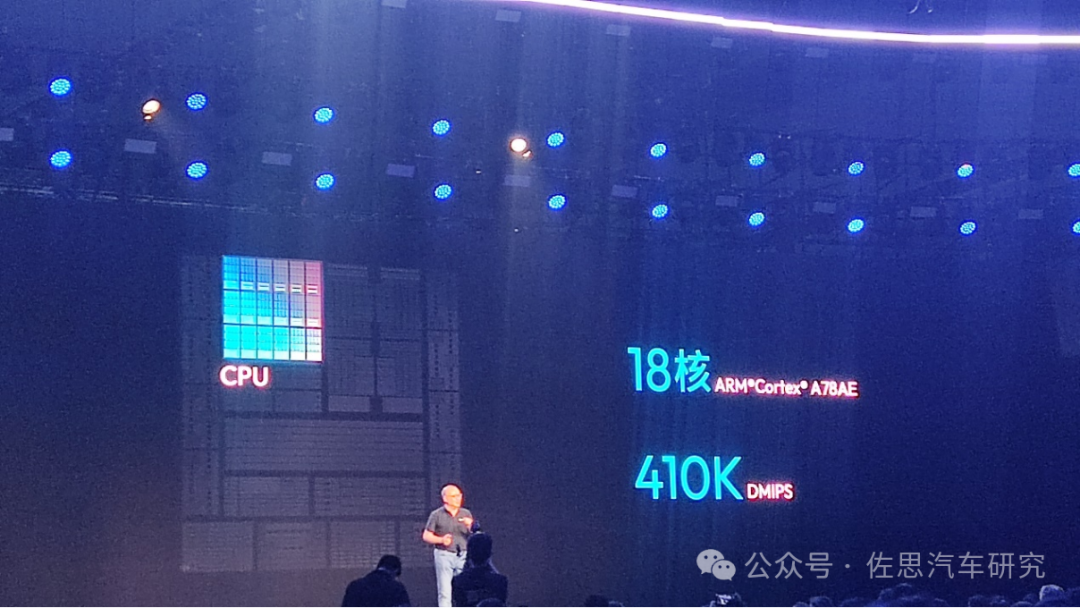
Image source: Horizon launch event
The CPU is an 18-core ARM Cortex-A78AE, with a computing power of 410K DMIPS. The NVIDIA Orin-X has a 12-core ARM Cortex-A78AE, with a computing power of 227K DMIPS. Due to the high heat generation of Orin’s GPU, its CPU frequency is lower, while the GPU computing power of Horizon is only 200 GFLOPS, resulting in low heat generation, allowing for a higher CPU frequency, making its computing power nearly double that of NVIDIA. Huawei’s Ascend 610 CPU has 16 cores and a computing power of 200K DMIPS.
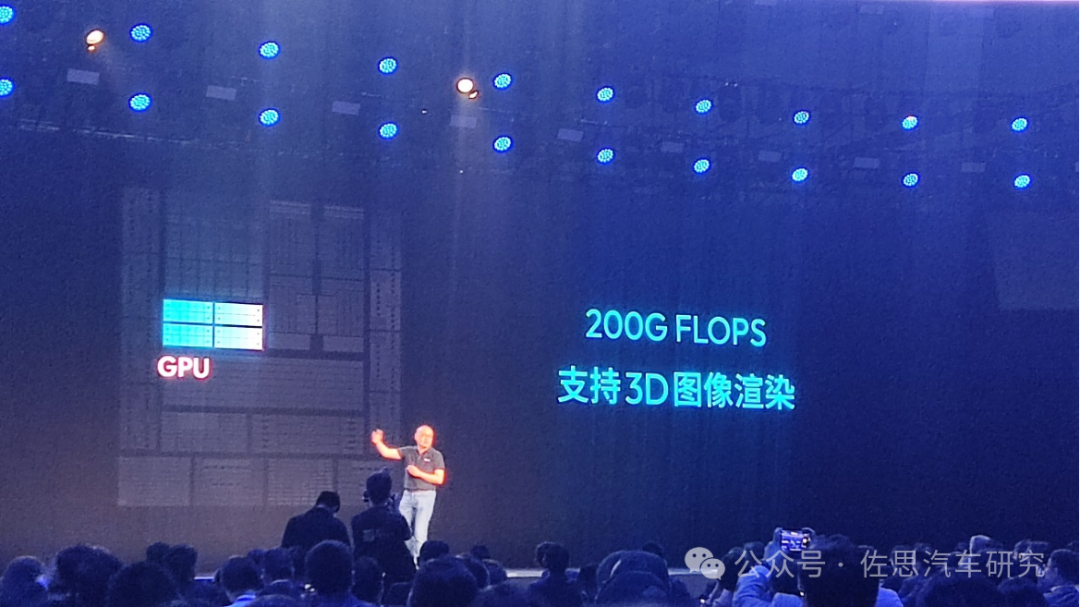
Image source: Horizon launch event
The Journey 6P includes a micro GPU with low computing power, only 200 GFLOPS, primarily for outputting images in the intelligent driving domain to the instrument or central control screen.
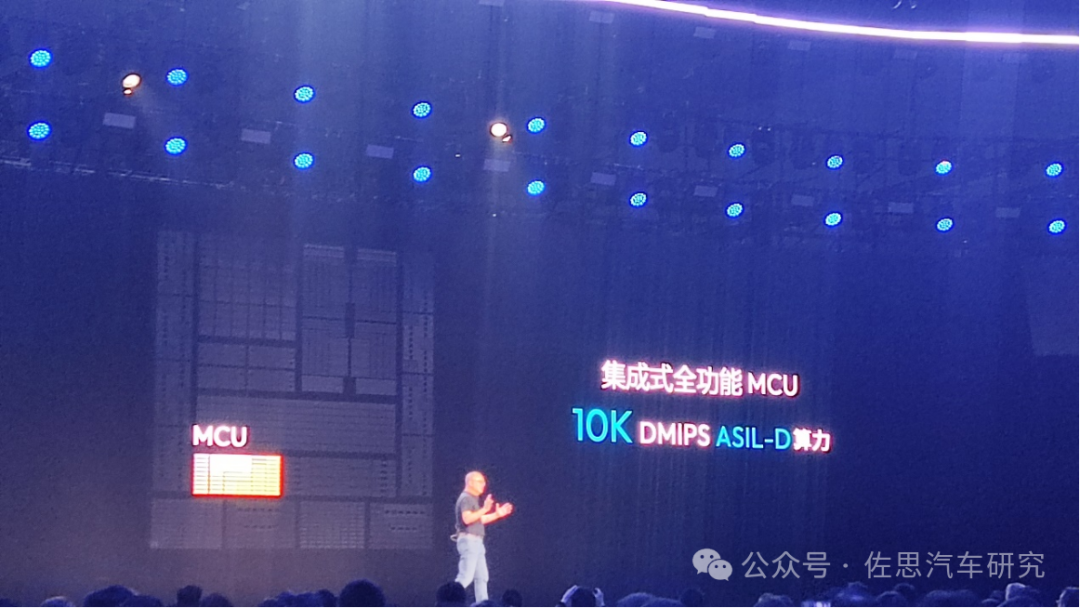
Image source: Horizon launch event
To reduce costs, better manage the supply chain, and decrease software complexity, the Journey 6P internally adds an ASIL-D level MCU island, with a computing power of 10K DMIPS. Currently, most use separate safety MCUs to control vehicle chassis, typically Infineon’s TC397, which is relatively expensive, has significant price fluctuations, and unstable supply conditions, with a maximum computing power of 4K DMIPS and typical computing power of 2.7K DMIPS. Horizon has not disclosed detailed information but should be similar to Qualcomm’s SA8650/SA8255/SA8775 with four-core ARM Cortex-R52 cores, estimated to run at 800-1000MHz. In terms of storage bandwidth, it has been upgraded to LPDDR5, with a bandwidth of 205GB/s, the same as NVIDIA’s Orin. Front-facing perception supports 18 million pixels, with an image bandwidth of 5.3Gpixel/s.
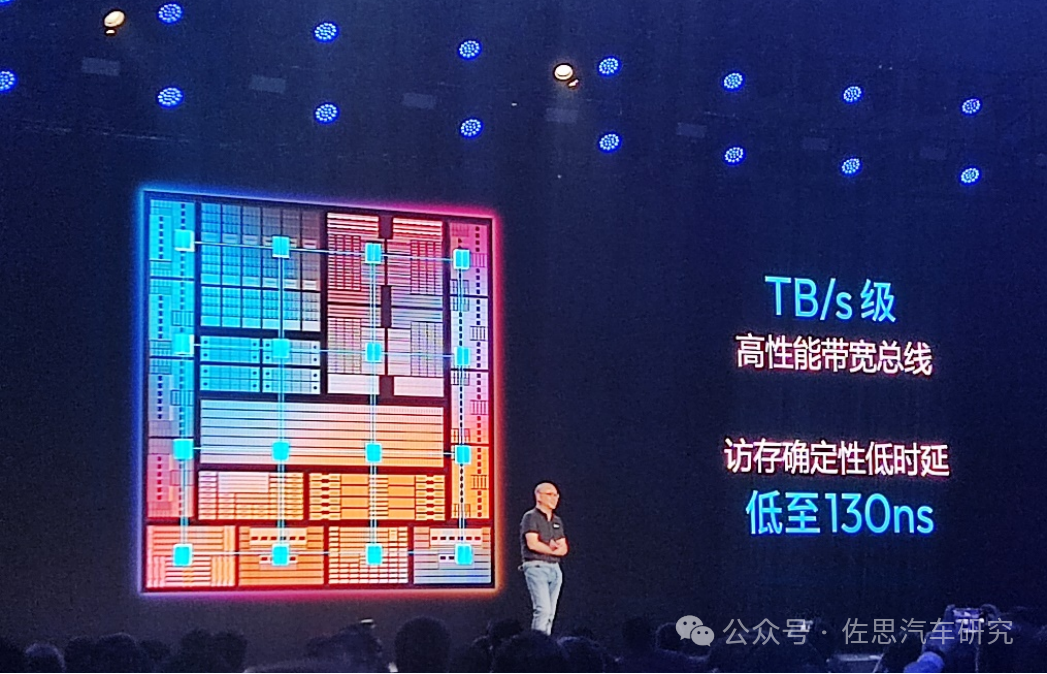
Image source: Horizon launch event
It uses a TB/s level high-performance bus with memory access latency as low as 130 nanoseconds.
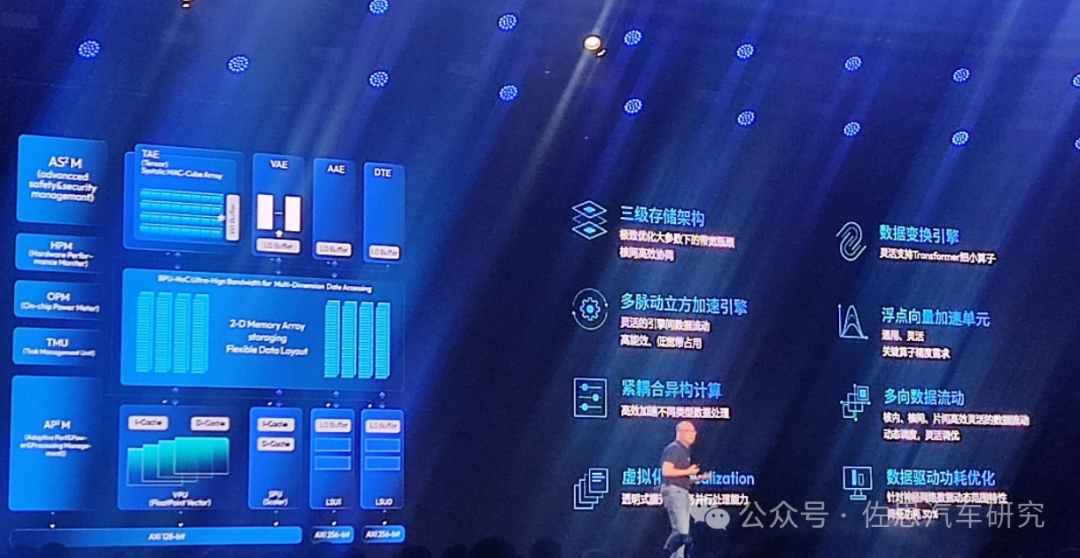
Image source: Horizon launch event
To cope with the vector operations prevalent in the new generation of large models, it has specifically added a VPU, which is a vector floating-point operation acceleration unit.
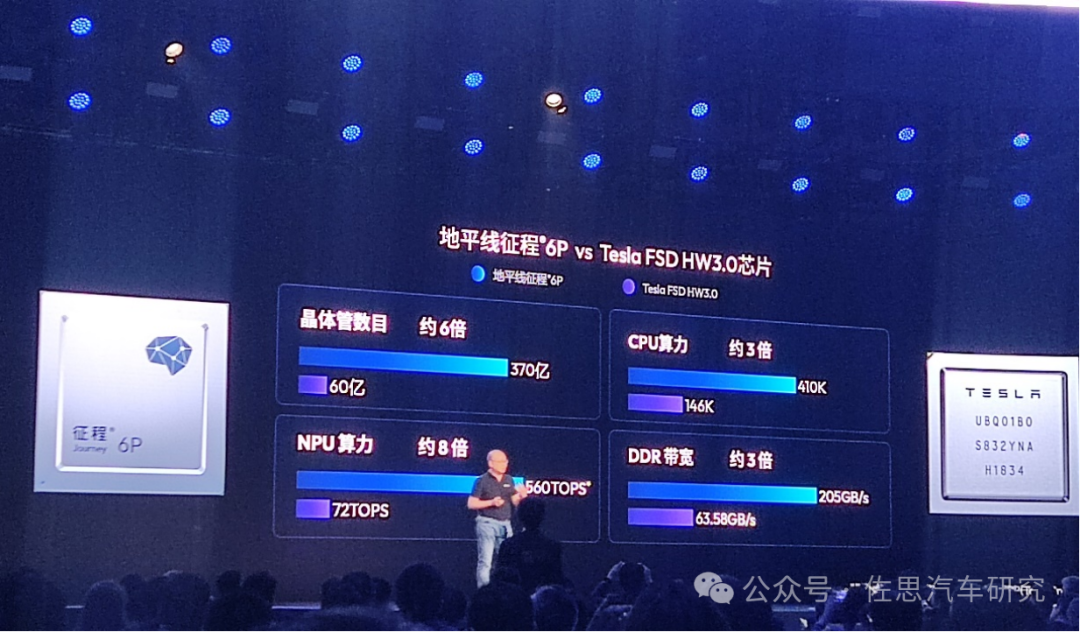
Image source: Horizon launch event
The number of transistors in the Journey P6 reaches 37 billion, while NVIDIA’s Orin has only 17 billion and Xavier has only 9 billion. Alongside the Journey 6 series, the full-scene intelligent driving solution SuperDrive was also released, focusing on breakthroughs in human-like experiences, creating a user-friendly intelligent driving system 2.0. With a dynamic, static, and OCC (Occupancy) three-network integrated end-to-end perception architecture and data-driven interactive game theory algorithms, SuperDrive can ensure scene pass rates, traffic efficiency, and human-like behaviors in any road environment, providing users with an elegant, confident intelligent driving experience in complex urban scenarios such as congested merging, intersection interactions, yielding to cyclists, congested lane changes, and urban roundabouts.
SuperDrive’s Breakthrough in Complex Scenarios
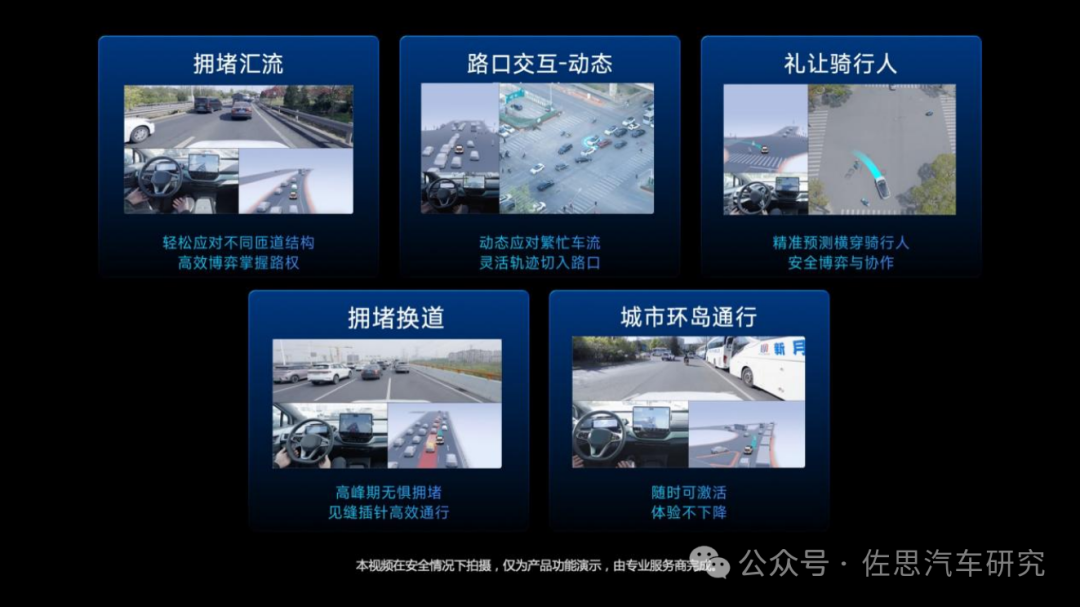
Image source: Horizon
The integrated perception end-to-end architecture of dynamic, static, and occupancy networks is an effective means to accurately reproduce the objective physical world. Under this architecture, the occlusion recall rate increases by 70%, dynamic code lines decrease by 90%, and network load decreases by 50%, effectively solving the current industry’s high latency, multiple rules, and heavy loads in perception architecture. Data-driven interactive game theory can provide more human-like optimal solutions, allowing SuperDrive to flexibly handle complex traffic flows like an experienced driver, with a 50% increase in lane change success rates in congested scenarios and a 67% increase in intersection pass rates. As the U.S. continues to escalate its hostility towards China’s high-tech sector, NVIDIA’s Thor will likely not be allowed to be exported to China, and the wave of domestic replacements in the chip sector is about to arrive. Disclaimer: The views and data in this article are for reference only and may differ from actual conditions. This article does not constitute investment advice, and all views and data in the text only represent the author’s stance, without any guidance, investment, or decision-making opinions.
More Zosi Reports
Contact for Report Orders and Cooperation Consulting:
Mr. Zhao: 18702148304 (same as WeChat)
Ms. Zhang: 13716037793 (same as WeChat)
Zosi 2024 Research Report Writing Plan
Panorama of the Intelligent Connected Vehicle Industry Chain (April 2024 Edition)
| 48V Low Voltage Power Supply Network Research | Thermal Management Systems | End-to-End Intelligent Driving Research |
| 8295 Cabin Domain Controller Disassembly | Automotive Comfort Systems | Automotive AI Large Model Research |
| L3/L4 Autonomous Driving and Startups | Two-Wheeled Vehicle Intelligence | Automotive Information Security Research |
| L2/L2+ Autonomous Driving | Automotive Software Business Models | Vehicle RISC-V Research |
| In-Cabin Monitoring Research | Software-Defined Vehicles | Integrated Batteries |
| Vehicle Visual Research | AUTOSAR Research | Automotive Operating Systems |
| Automotive Multimodal Interaction | E/E Architecture | Line Control Brake Research |
| Vehicle-Mounted Voice | Multi-Domain Computing Research | Steering Systems |
| Gesture Interaction | Cabin Domain Control | Commercial Vehicle Intelligent Chassis |
| Cabin Design Trends | Autonomous Driving Domain Control | Passenger Vehicle Chassis Domain Control |
| Vehicle-Mounted Information Entertainment | Body (Area) Domain Control Research | Line Control Chassis |
| TSP and Application Services | Multi-Domain Computing and Area Controllers | Skateboard Chassis |
| Intelligent Cabin Tier 1 | Electric Drive and Power Domain Research | Electronic Control Suspension |
| Intelligent Cabin Platform | Integrated Parking Research | Key Components for Intelligent Steering |
| Cabin Multi-Screen and Linked Screens | Cabin Parking Integration | OTA Research |
| Instrument and Central Control Display | Cabin Driving and Parking Integration | Automotive Gateway |
| Cabin SoC | HUD Industry Research | Automotive Cloud Service Research |
| Autonomous Driving SoC | HUD Industry Chain | Automotive Digital Key |
| Redundant Systems | HUD Quarterly Report | Roadside Intelligent Perception |
| Local Automotive Enterprises ADAS | Passenger Vehicle T-Box | Roadside Edge Computing |
| Foreign OEM ADAS Research | Commercial Vehicle T-Box | Wireless Communication Modules |
| ADAS and Autonomous Driving Tier 1 – Domestic | T-Box Ranking Analysis | Automotive 5G Integration |
| ADAS and Autonomous Driving Tier 1 – Foreign | Automotive Electronics OEM | Vehicle-Mounted Antennas |
| Top 10 Intelligent Driving Tier 1 Comparison | High Precision Positioning | V2X and Vehicle-Road Collaboration |
| OEM Model Planning Research | Autonomous Driving Maps | In-Car Communication Chips |
| Automotive Modularization | AI Large Model and Autonomous Driving Computing Center | Automotive MCU Research |
| OEM Overseas Layout | Intelligent Driving Fusion Algorithms | Automotive CIS Research |
| Key Components of ADAS Domain Controllers | Automotive Visual Algorithms | Automotive VCU Research |
| Domain Controller Ranking Analysis | Vehicle-Mounted Cameras Tier 2 | Automotive UWB Research |
| Autonomous Driving Heavy Trucks | Surround View Market Research (Domestic) | Sensor Chips |
| Commercial Vehicle ADAS | Surround View Market Research (Joint Venture) | Power Management Chips |
| Commercial Vehicle Intelligent Cabin | Infrared Night Vision | Vehicle-Mounted Storage Chips |
| Commercial Vehicle Internet of Vehicles | Autonomous Driving Simulation (Foreign) | Automotive Functional Safety |
| Commercial Vehicle Intelligent Chassis | Autonomous Driving Simulation (Domestic) | Electronic Rearview Mirrors |
| New Forces Brand Internet of Vehicles | Vehicle-Mounted Ultrasonic Radar | Intelligent Surfaces |
| Joint Venture Brand OEM Internet of Vehicles | Laser Radar Research | Intelligent Door Systems |
| Independent Brand OEM Internet of Vehicles | Core Components of Laser Radar | Intelligent Glass |
| Model Supplier Research | Millimeter Wave Radar | Vehicle-Mounted Wireless Charging |
| Disassembly of NIO, Toyota, and Great Wall Vehicle Control and Cabin Domain Controllers | Radar Disassembly | Vehicle-Mounted Payment |
| Disassembly of DJI Front View Dual Cameras and Tudatong Laser Radar | Ranking of Laser and Millimeter Wave Radar | Vehicle-Mounted Payment |
| Disassembly of NIO ET5/ET7 Intelligent Functions | Mining Autonomous Driving | Automotive Wiring Harness |
| Function Disassembly of Li Auto L8/L9 | Unmanned Shuttle | Automotive Sound Systems |
| Function Disassembly of XPeng G9 | Unmanned Delivery Vehicles | Automotive Seats |
| PBV and Automotive Robots | Unmanned Retail Vehicle Research | Automotive Lighting |
| Flying Cars | Agricultural Machinery Autonomous Driving | 800V High Voltage Platform |
| Autonomous Driving Standards and Certifications | Dash Cameras | Solid-State Batteries |
| Autonomous Driving Regulations | Automotive eCall System | Fuel Cells |
| 75 Trends from the Shanghai Auto Show | Automotive EDR Research | Charging and Swapping Infrastructure |
| Digital Instrument OS | Personalization of Intelligent Vehicles | Automotive Motor Controllers |
| Data Loop Research | IGBT and SiC Research | Hybrid Power Reports |
“Zosi Research Monthly Report”
ADAS/Intelligent Vehicle Monthly Report | Automotive Cabin Electronics Monthly Report | Automotive Vision and Radar Monthly Report | Battery, Motor, Control Monthly Report | Vehicle-Mounted Information Systems Monthly Report