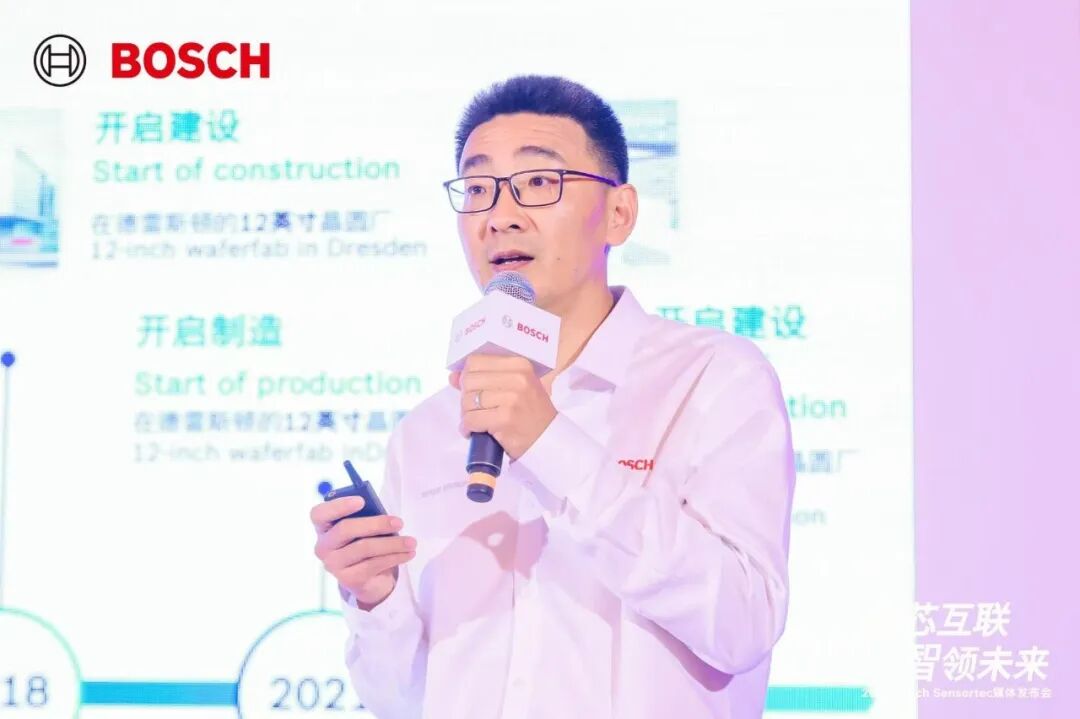
Wang Hongyu is currently the President of Bosch Sensortec for the Asia-Pacific region and also serves as the Vice President of Bosch Automotive Electronics Semiconductor in China. With nearly 20 years of rich experience in the sensor and semiconductor industry, he has held important positions in various divisions and regions since joining the Bosch Group in 2006. Since 2020, he has been serving in his current role at Bosch Sensortec, and from August 2024, his responsibilities will expand to include Bosch Automotive Semiconductor in China.
About Personal Growth
Q: Please share the most impactful person or event in your personal growth journey.
I remember when I first joined the Bosch Central Research Institute, I was deeply impressed by my direct supervisor’s depth of expertise in the field and his analytical and problem-solving abilities when faced with complex technical issues. He dealt with over a hundred invention patents across multiple fields, including electronics, electrical, and mechanical engineering. Even when encountering technical problems outside his expertise, he could always find reasonable solutions through systematic analysis. This inspired me—true technical experts never limit themselves.
Over the years, I have had the privilege of meeting many technical experts at Bosch. They have been deeply engaged in their respective fields for a long time and maintain a passion for research. Every opportunity to communicate with them has deeply moved me and inspired me to maintain my original intention and enthusiasm for technology.
Q: What insights have you gained from working at Bosch for many years?
The longer I work at Bosch, the more I feel, and I can summarize it in a few points:
First, Bosch is a company driven by technology, with a profound “engineer culture.” For over a century, it has been committed to improving human life through technological innovation, continuously promoting technological progress across multiple industries.
Second, the company places great importance on employee development, encouraging and supporting employees to rotate positions and explore diverse opportunities within the group. I have personally benefited greatly from this.
About Bosch Semiconductor Business
Q: What unique advantages do you see in Bosch Semiconductor?
Among first-tier suppliers in the automotive industry, Bosch may be the only company that has both 200mm and 300mm wafer fabs. We often joke that Bosch is “the most knowledgeable about semiconductors in the automotive circle and the most knowledgeable about automobiles in the semiconductor circle.” The much-discussed “cross-industry” collaboration has been practiced by Bosch for over sixty years. Since entering the semiconductor industry in 1958, Bosch has evolved from initially designing and manufacturing simple diodes to establishing a comprehensive semiconductor manufacturing layout globally. Bosch has deep accumulations in three major product lines: MEMS sensors (including consumer and automotive applications), power semiconductors, and automotive ICs and IP modules.
The advantages of Bosch Semiconductor can be summarized as follows:
First, leading and innovative process technology. From the renowned “Bosch process” in the MEMS industry to the silicon carbide dual-channel trench gate technology, and as the inventor of the CAN bus protocol, Bosch holds a large number of semiconductor-related patents and applications, always at the forefront of the industry.
Second, full value chain capabilities in design, manufacturing, and packaging testing. We cover the entire process from key process development to mass production delivery, effectively promoting the industrialization of new technologies and significantly enhancing product consistency and reliability. This is also one of the important reasons why Bosch MEMS maintains a leading position globally.
Third, a deep understanding of automotive systems and vertical integration capabilities. As a system supplier deeply involved in the development of vehicle controllers, Bosch can more accurately define and develop high-performance automotive semiconductor products, including ICs, MEMS, and power devices, which not only supports the development of Bosch’s internal system divisions but also continuously empowers the entire industry.
In addition, Bosch has established a comprehensive front-end and back-end manufacturing and supply chain network globally. We have our own wafer fabs in Reutlingen, Dresden, Germany, and Roswell, USA; at the same time, we have packaging and testing plants in Reutlingen, Germany, Hatvan, Hungary, Suzhou, China, and Penang, Malaysia. Bosch has been deeply engaged in key markets, including China, for many years and maintains close cooperation with leading foundries worldwide, ensuring that the semiconductor business has excellent supply flexibility to meet customer business needs to the greatest extent.
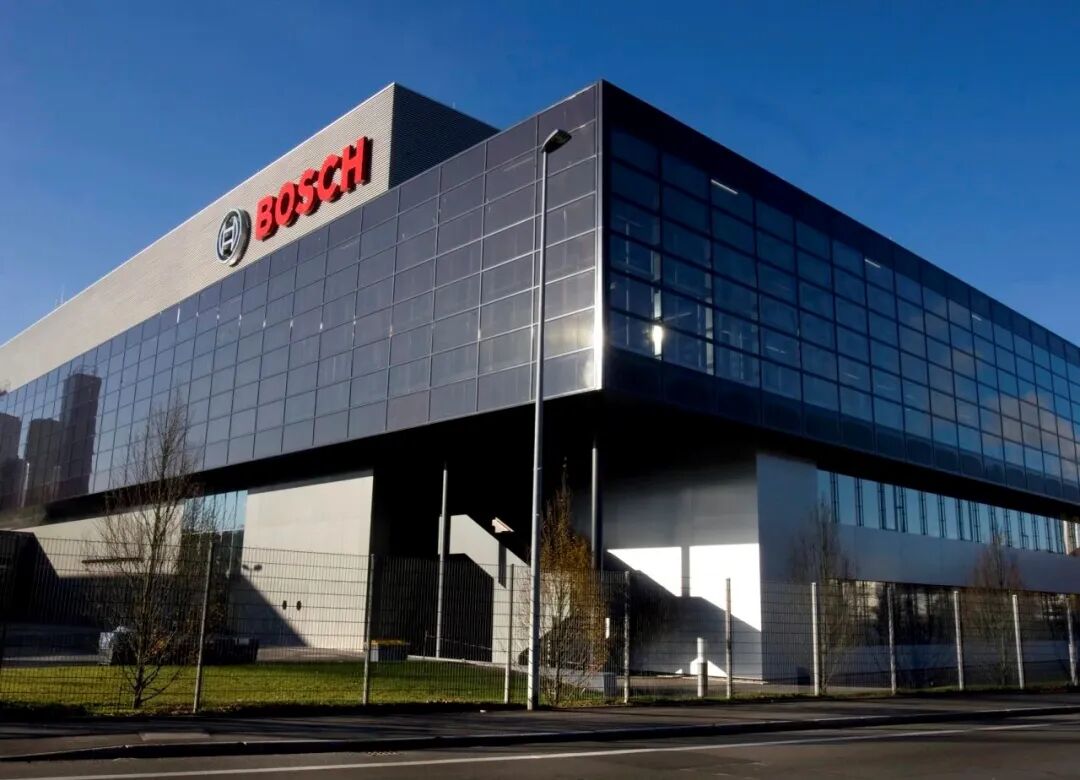
Exterior view of Bosch’s wafer fab (Reutlingen plant)
Q: What are the main business challenges and opportunities currently faced? How to respond?
The increasing uncertainty of geopolitical factors has subjected this highly globalized industry to unprecedented severe tests in supply chain resilience and adaptability. In this context, the inherent long R&D cycles and huge investments in the semiconductor industry further exacerbate the pressure on liquidity and profitability for semiconductor companies.
Despite the numerous challenges, the rapid development of the Chinese market provides Bosch with valuable opportunities. By deepening its localization layout in China, Bosch continuously enhances local development capabilities to better serve local customers. At the same time, we have never stopped seeking opportunities to deepen cooperation with local partners to optimize Bosch’s global semiconductor network and comprehensively enhance overall delivery capabilities. Relying on deep technical accumulation and global network advantages, Bosch can provide strong support for local customers’ technological innovation and overseas strategies, helping them seize the initiative in the new round of global competition.
In the future, we will further refine our semiconductor product portfolio based on market demand, adhere to the bottom line of high-quality products and R&D, and promote sustainable and steady business growth.
Q: As the head of Bosch Semiconductor in China, how do you continuously promote the development of this business?
The development of Bosch Semiconductor in China focuses on three directions:
First, continuously deepen long-term partnerships with Chinese customers. We will continue to provide innovative, high-quality, and competitive products and services, and strengthen stable supply capabilities to ensure the continuous growth of existing businesses.
Second, continuously enhance business, product, and R&D capabilities in China. We will promote the co-creation and co-construction of new products and new technology routes based on deeper customer understanding and market insights. By collaborating with customers in development, we will enhance responsiveness and accelerate the pace of product introduction from R&D to market, truly achieving “in China, for China.”
Third, continuously expand and deepen local supply chain advantages. We will strengthen collaboration with the local semiconductor industry chain in China, building a more resilient and competitive local supply ecosystem to ensure product availability, cost-effectiveness, and delivery stability.
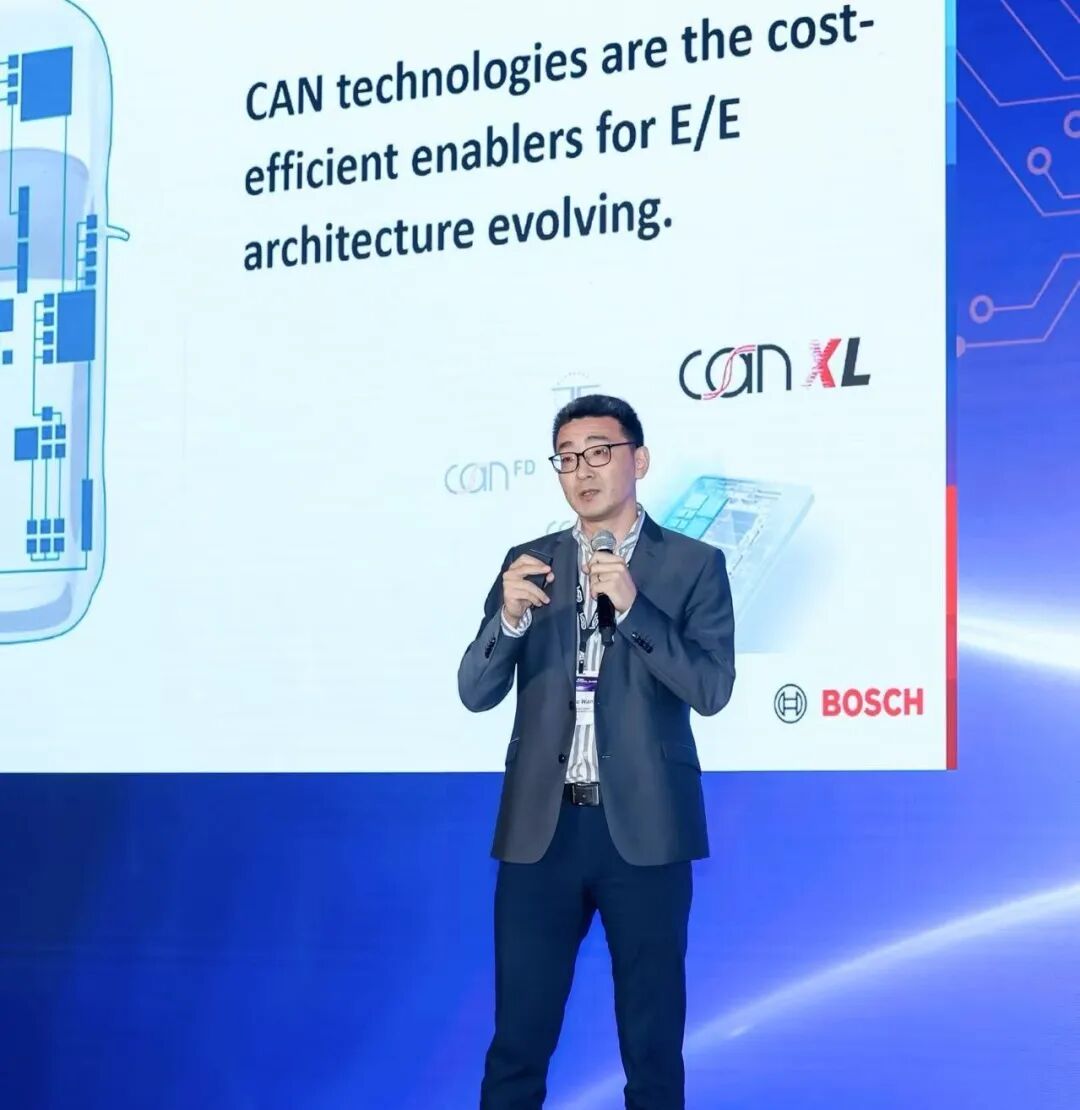
Wang Hongyu introducing Bosch Semiconductor business at an industry forum
About Bosch Semiconductor Talent and Culture
Q: What values does Bosch Semiconductor China advocate?
We emphasize customer orientation, encouraging employees to think from the customer’s perspective, keenly sensing needs, and exceeding customer expectations. We advocate proactive responsibility, hoping that every colleague can take responsibility, dare to take on challenges, and actively address issues until objectives are achieved. In our work, we pursue excellence, courageously challenge the status quo, continuously optimize processes, and technological innovation is our unchanging pursuit, encouraging employees to keep learning and self-improving, constantly exploring new technologies and solutions in a complex and rapidly changing market. At the same time, we advocate an open and cooperative mindset, leveraging global collaboration to fully utilize the synergy of cross-cultural and cross-regional teams. This value system helps us build a vibrant, change-oriented, and future-facing high-performance team.
Q: What advice do you have for the development of professional talent in the semiconductor field?
I want to emphasize the love for the semiconductor industry, as passion leads to focus, and focus leads to excellence.
On top of that, one must have solid professional knowledge and a spirit of continuous learning. The semiconductor field is a typical interdisciplinary and industrial sector, involving a wide range of knowledge, such as physics, microelectronics, electrical engineering, computer software, etc. Therefore, based on a solid technical foundation, professionals also need to continuously learn to expand the breadth of their technical and knowledge base (such as processes/manufacturing, design, testing, project management, etc.) while deepening their professional depth and keeping up with industry frontiers.
The semiconductor industry is upstream in the value chain, and system thinking ability is crucial for developing semiconductor products, such as understanding the role and requirements of chips in the entire electronic system, knowing the performance requirements of chips in application scenarios, and being familiar with the collaboration of the semiconductor value chain upstream and downstream. Building system thinking capabilities combined with solid professional skills is a demand for talent in the industry.
Maintaining curiosity and a willingness to expand interdisciplinary capabilities is also important. For example, the integration of semiconductors with artificial intelligence and automotive electronics is deepening, and learning about artificial intelligence algorithms and automotive electronic systems can horizontally expand one’s knowledge system, becoming a versatile talent is a trend in industry development.
In practice, professionals not only need strong problem-solving abilities but also excellent team communication and collaboration skills, such as clearly expressing technical viewpoints and collaborating with cross-functional teams. Bosch has systematic training in these areas, which, combined with daily work, indeed supports our talent’s continuous development in this regard.
Thank you, Hongyu, for accepting our interview, and we wish Bosch Semiconductor business continued success!
Bosch Automotive Electronics
Bosch Semiconductor
Bosch Semiconductor and Sensors are committed to ensuring a safe, comfortable, and low-emission driving experience. Our product portfolio includes MEMS (Micro-Electro-Mechanical Systems) sensors, SiC power semiconductors, automotive ICs, and IP modules. In addition, Bosch also provides large-scale production MEMS foundry services. As a leading semiconductor technology and service provider in the automotive industry, and one of the largest suppliers of MEMS sensors in the consumer electronics field globally, currently, an average of 20 MEMS sensors are installed in each vehicle, one-third of which come from Bosch; it is expected that by 2035, each new vehicle will integrate more than 40 Bosch chips on average.
| Previous Reviews |