Shenyang Machine Tool, China’s largest CNC machine tool manufacturer, has chosen EtherCAT as the internal bus for its latest i5 intelligent CNC machine tool control platform, fully implementing EtherCAT master and EtherCAT slave on servo drivers and IO devices. Shenyang Machine Tool (Group) Co., Ltd. owns the largest comprehensive machine tool manufacturing plant in China and a national-level CNC machine tool development and manufacturing base. Its technological means and equipment strength have reached an internationally advanced level, with over 300 leading products in more than a thousand specifications, covering the entire country and exporting to over 80 countries and regions. The production and sales volume of machine tools has always ranked first in the domestic industry for many years. Shenyang Machine Tool (Group) Design Research Institute Co., Ltd. Shanghai Branch (hereinafter referred to as Shanghai Research Institute) is a subsidiary of Shenyang Machine Tool (Group) Co., Ltd. Since its establishment in 2007, the Shanghai Research Institute has been exploring design and bold innovation in the fields of motion control and cloud manufacturing, dedicated to the research and development of motion control technology and cloud manufacturing technology products for the machine tool industry, bringing practical benefits and innovative power to customers and related industries. So far, the Shanghai Research Institute has developed a series of products in the business areas covered by Shenyang Machine Tool Group, including CNC systems, HSHA series servo drivers, and WIS workshop information systems. The i5 intelligent CNC machine tool adopts EtherCAT communication At the China CNC Machine Tool Exhibition (CCMT) 2014, the i5 intelligent CNC machine tool independently developed by Shenyang Machine Tool made its debut, featuring intelligent functions such as feature programming, graphical diagnosis, real-time monitoring of machine tools, remote diagnosis, 3D simulation, and STEP programming, better meeting market development needs and providing personalized solutions for users. It is expected that by the end of the 12th Five-Year Plan, the i5 intelligent CNC machine tools will achieve orders of 10,000 units. The i5 realizes five major functions: Industry, Information, Internet, Integrate, Intelligent, which means effective integration of industrialization, informatization, networking, intelligence, and integration.
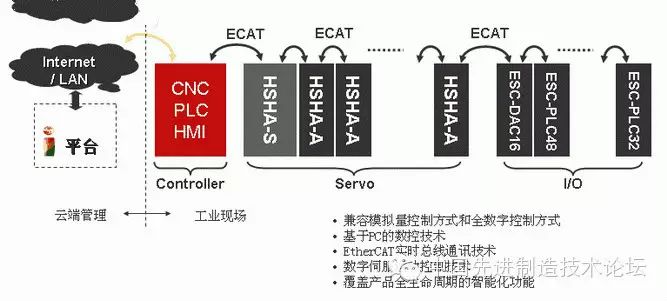 Figure 1: i5 Platform Architecture Diagram. Note: In this diagram, EtherCAT is abbreviated as ECAT
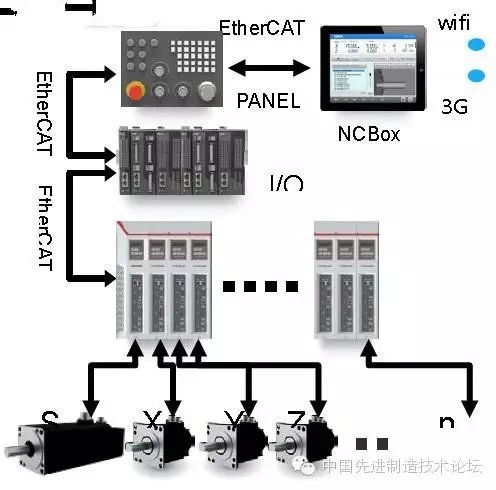 Figure 2: CNC System Architecture of the i5 Machine Tool
The i5 control platform consists of three types of devices: NC controller, HSHA series servo drivers, and I/O devices. The Shenyang Machine Tool Shanghai Research Institute is responsible for the research and development and implementation of the entire control platform.
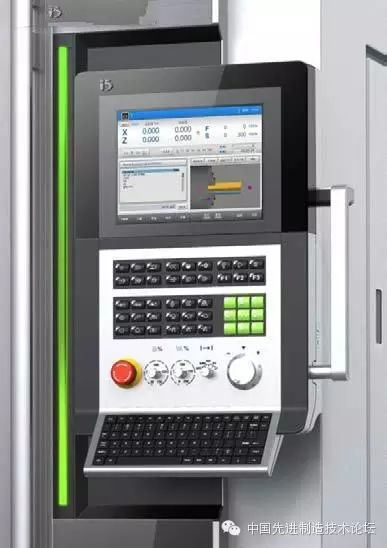 Figure 3: i5 CNC Panel – EtherCAT Master
The i5 control platform adopts a PC-based concept and is equipped with advanced real-time industrial Ethernet technology EtherCAT (Ethernet for Control Automation Technology) developed by Beckhoff from Germany. It establishes high-speed real-time data exchange communication between the CNC system and external servo drivers, IO, and operation panels using the EtherCAT communication bus. The i5 CNC system uses high-performance servo drivers and general IO operation units developed by the company that utilize EtherCAT communication, providing users with high-end bus-based control solutions at completely domestically produced prices. Why choose EtherCAT? In addition to the implementation of the device’s own functions, during the early research and development phase, the Shenyang Machine Tool Shanghai Research Institute made predictions and evaluations on bus selection. Because the i5 platform requires cloud management via Ethernet, the physical layer based on Ethernet technology makes the cost of workshop informatization acceptable, and the interconnection between on-site devices becomes very simple. Therefore, the focus was on the communication technology of industrial Ethernet.
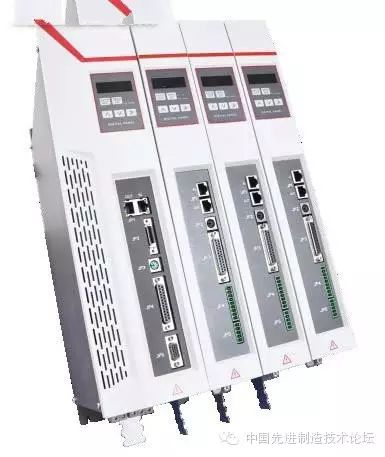 Figure 4: HSHA Series Servo Driver – EtherCAT Slave
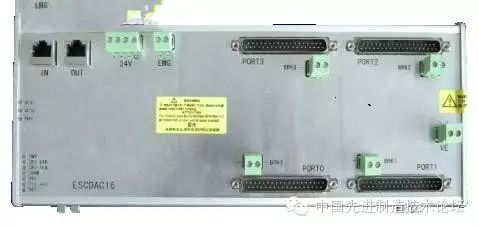 Figure 5: I/O Devices – EtherCAT Slave
For the i5, although the CNC algorithm is the core technology, the design of high-end motion control imposes strict requirements on the bus. Fast transmission time and higher synchronization are the core requirements for the bus. Shenyang Machine Tool’s requirements mainly focus on synchronization, as the basic process data requires as high synchronization and lower latency as possible to meet the needs of basic categories of CNC machine tool motion control and process control, without worrying about the impact of bus performance on CNC. EtherCAT, in addition to the well-known “on the fly” communication mechanism that achieves almost the fastest communication time, its distributed clock mechanism can provide all slaves with a synchronized hardware clock with a jitter of about 50ns, ensuring the consistency of the actions of each feed axis during multi-axis trajectory interpolation control, greatly reducing processing contour errors; moreover, the characteristic of slaves supporting synchronous output simplifies the circuit design and code writing of real-time slaves, accelerates development speed, and shortens product market launch time. This mechanism is directly integrated into the protocol, facilitating implementation and application. Because many algorithms in i5 are developed with know-how, and the mailbox protocol supported by EtherCAT makes the process of developing advanced functions for complex applications and interconnections relatively easy. Using EtherCAT mailbox communication allows for the transmission of all parameters of the servo drivers at any time and supports the transmission of standard Ethernet data frames, achieving standard IT applications and facilitating integration with upper management software; Like many other industries that are upgrading, CNC system suppliers hope to provide high-performance processing functions while reducing research and development costs. EtherCAT communication does not require active infrastructure components such as switches and routers, nor does it require complex IT knowledge. The CNC system does not need a dedicated expensive communication card, and only a standard Ethernet port is needed to achieve data communication. For external device slaves, only inexpensive ASIC chips are needed, or the IP core for implementing the EtherCAT slave link layer can be integrated into the FPGA that is also required. The i5 CNC system, in order to balance low cost and development convenience, uses Beckhoff’s ASIC chips on the servo drivers and FPGA IP cores on the IO operation stations; this way, after using EtherCAT technology, there is almost no increase in hardware costs, while performance has been greatly improved; In the face of complex CNC system usage sites, users have very high requirements for the usability of equipment on-site—highly flexible processing; extremely efficient; and highly reliable. EtherCAT fully meets these requirements: using EtherCAT communication instead of traditional analog control methods eliminates the interference and attenuation of analog signals, greatly improving the reliability of the CNC system. Especially under the current factory conditions in China, users require that the equipment application site has a very high tolerance for environmental temperature and humidity—running directly without environmental control in the high temperature and humidity environment of southern China in summer; the production site does not require any additional guarantees for power/electromagnetic environment. Conclusion The ultimate benefits brought by EtherCAT to the end users of machine tools are evident, which is due to Shenyang Machine Tool’s adoption of PC-based and EtherCAT control methods: ■ Improvement in machine tool performance, thus saving time: the interpolation cycle can be shortened from 4ms to 0.5ms, greatly increasing the processing speed and accuracy of the CNC system; the fast communication system also reduces the PLC response time of the CNC system to one-tenth of the original, improving the responsiveness of external devices and shortening processing time; ■ Reduction of production time and costs: under the traditional analog control method, each servo driver needs to receive an analog control signal from the CNC system and feedback encoder signals, which requires setting a terminal and corresponding cables for each servo driver on the CNC system. Since the cables are not standard-defined, manufacturers need to invest a lot of manpower and resources for production. Now, standard Ethernet cables are used from the CNC system to the servo system and other peripherals, which can be directly purchased from professional manufacturers, reducing production time and costs. ■ Ease of use of machine tools: EtherCAT’s flexible topology structure is easy to configure and diagnose. An EtherCAT network can support up to 65,535 devices without being restricted by the placement position in the topology structure, making it easy to connect servo drivers, IO operation units, operation panels, grating scales, encoders, and various sensors required by the i5 CNC system, truly making it the “intelligent brain.” Slave devices do not require special dip switches for address configuration, and protocol diagnostics can pinpoint malfunctioning devices.
Disclaimer: The articles contained in this public account are either original or compiled and edited based on online sources, and the copyright of the articles belongs to the original authors. If there are any issues regarding the content, copyright, and other matters, please contact us! The content of the article reflects the author’s personal views and does not represent the position or support of this public account. This public account reserves the final interpretation right of this statement.