Source: Shen Wang Tencent News (ID: qqshenwang)
Author: Xue Fang
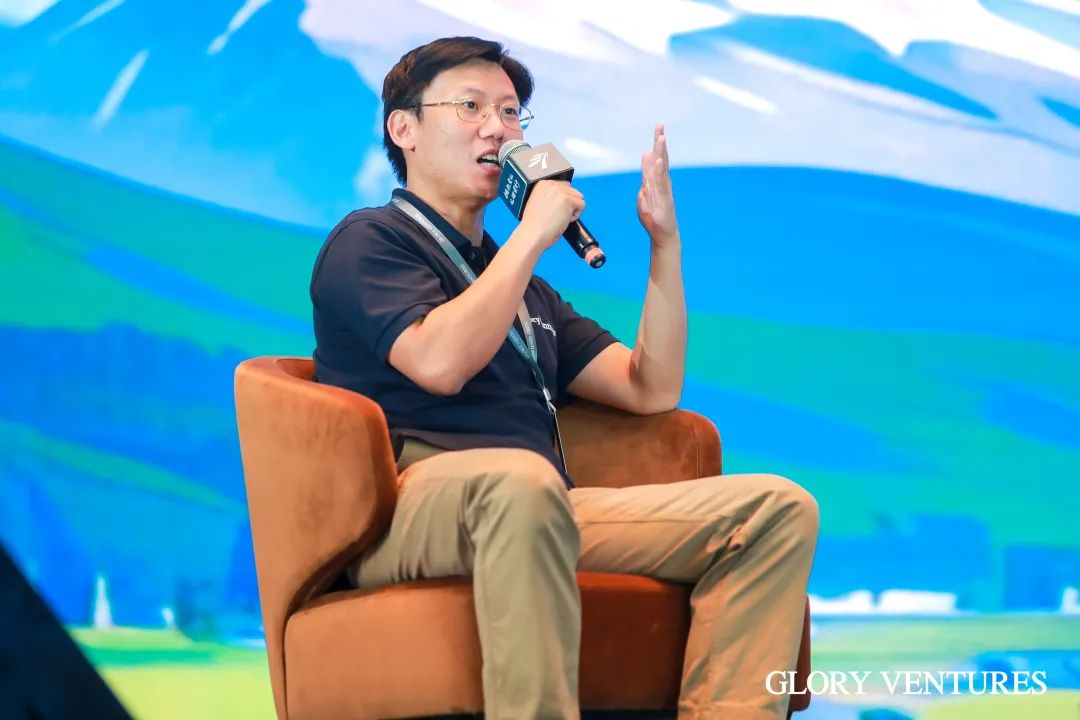
Yang Guang has over a decade of experience in semiconductor investment. In 2015, Yang Guang and his former colleague Bai Zongyi founded Yaotu Capital, focusing on the semiconductor sector around applications such as consumer electronics, automotive electronics, data centers, and cloud computing, investing in companies like Biren Technology, Hanbo Semiconductor, Aixin Yuan Zhi, Cloud Leopard Intelligence, Hailo, Vayyar, and Xingchen Technology (301536).
The latest investment from Yaotu is Yuan Jinhui’s new project SiliconFlow. “Although the core of SiliconFlow is software, it belongs to the large model infrastructure layer, and we also pay attention to the opportunities brought by changes in generative AI infrastructure.” Unlike the first collaboration with Wang Huiwen, which was benchmarked against OpenAI, Yuan Jinhui’s startup this time focuses on AI infrastructure in the era of large models, aiming to lower the application costs and development thresholds of large models.
Currently, AI and chips have become the biggest trends in the global capital market for 2024, with Nvidia leading the way. Yang Guang believes that there is still a significant gap between China and the US in the field of AI. Given the current geopolitical environment, Huawei has the best chance to challenge Nvidia.
“Huawei has strong system capabilities, with self-developed CPU Kunpeng, AI processor Ascend; in addition, it has its own network cards and interconnection technologies. Nvidia has the CUDA ecosystem, and Huawei is also building its own ecosystem. From the perspective of system capabilities, it is the closest to Nvidia, and currently, the only company that can directly compete with Nvidia in the GPU or AI field is definitely Huawei,” Yang Guang explained.
In our conversation, Yang Guang conducted an in-depth review of the current state of the domestic chip industry; here is the transcript of the dialogue:

China is Already a Global Leader in Consumer Electronics Chips
Reporter: What are the similarities and differences in the investment logic of chips in the three areas of consumer electronics, automotive electronics, and data centers & cloud computing? What are the current development statuses?
Yang Guang:The threshold for consumer electronics is slightly lower compared to automotive and data centers, and it is also an advantageous industry for China. Brands like Huawei, Xiaomi, and OPPO are performing very well. By the time Yaotu was planning its investments, Chinese consumer electronics brands were already doing quite well, but competition was also very fierce. Consumer electronics manufacturers are seeking differentiation, unlike the overseas market where Apple and Samsung have near-monopolistic competition and are not as urgent for new features. China is still in a rapid iteration and competitive process; consumer electronics are very competitive. We have invested in some chips related to imaging and charging technology, and currently, in terms of photo imaging, fast charging, and wireless charging, Chinese smartphones are doing much better than Apple and Samsung.
In this area, China has already achieved global leadership, with many applications defined by China. For example, the charging speed of Chinese Android phones is five times that of Apple, driven by demand from Chinese customers, forcing Chinese companies to achieve the best globally. We have invested in many companies in consumer electronics, which have reached global excellence driven by applications.
I believe automotive is the second wave. Early on, Europe and the US were absolutely leading, but today, a trend similar to consumer electronics is slowly emerging, with many applications led by China.
Whether for new energy vehicles or fuel vehicles, innovations related to autonomous driving such as LiDAR, smart cockpit-related car machines, displays, HUD, and DMS are all being actively promoted by Chinese manufacturers. Companies like BYD, NIO, Li Auto, and Xiaomi are very innovative; some can iterate a new model in just 18 months, pushing Chinese startups to produce many new things. This area has clearly surpassed European and American manufacturers.
Currently, China is still in a following position in the data center space. Our approach is to observe what kind of technological innovations are happening in Europe and the US, especially in Israel and the US, and we can follow along. It’s fine to keep up with most of Nvidia’s innovations, but it is very challenging to surpass it in the short term, whether in hardware or software, as its development is much more advanced.
In my opinion, the stages in these three tracks are currently different; the first two tracks are relatively market-oriented, while the data center is still a protected market. Unlike consumer electronics, which is a very market-oriented competitive environment, the data center and cloud computing track indeed requires some policy support.
Reporter: Huawei’s Xu Zhijun emphasized the importance of domestic chips at the 2023 World Computing Conference and called for more use of domestic chips. Which domestic chips can directly replace foreign ones, and where are the significant gaps?
Yang Guang: In consumer electronics products like smartphones, currently, only one chip, the AP (Application Processor, which supports the operation of the system and apps), relies on advanced processes, and the domestic penetration rate is relatively low. Apple’s chip is made by Apple itself, while many Chinese manufacturers, except for Huawei, mostly rely on Qualcomm and MediaTek. Among domestic chip manufacturers, the best is HiSilicon, followed by Spreadtrum. HiSilicon has not yet recovered to its original production capacity; in the future, it will depend on the speed of domestic advanced process chip manufacturing.
In the automotive sector, there are gaps in chips for autonomous driving and those in the cockpit and chassis domains. The best overseas autonomous driving chips are Nvidia and Israeli company Mobileye. In 2017, Intel spent $15.3 billion to acquire Mobileye. Domestic startups like Horizon, Black Sesame, and Aixin Yuan Zhi are all striving to replace their market; the main suppliers for smart cockpit SoC chips, which support displays like dashboards and car machines, are Qualcomm, while domestic companies like Chipone and Chiplink are involved. For domain control, the main MCU suppliers are Infineon and NXP, while domestic companies like Jiefa, Xinwang, and Qixinwei are also working on it.
It is foreseeable that the proportion of domestic replacements will significantly increase in the coming years.
In servers and data centers, there are many chips, and the current domestic penetration rate is very low. The combined market share of all Chinese companies is less than 1%, globally as well, with Nvidia dominating. The challenges and opportunities in this area are considerable.
In fact, the data center field is not just Nvidia; there are many overseas giants. Nvidia’s market value exceeds $2 trillion, Broadcom’s market value exceeds $620 billion, Intel’s market value is $160 billion, and Marvell’s market value is over $60 billion. Many of these companies’ technologies are still in a bottleneck state, with products leading over Chinese companies.
It is difficult for a single Chinese company to compete with Nvidia, but we have laid out a circle of companies. For instance, in the computing layer, we have Biren (GPGPU), Hanbo (GPU), and Jinde (RISC-V CPU). In the network layer, we have Cloud Leopard Intelligence (DPU), NetX (SmartNIC), NeuReality (AI NAPU), and Electric Science Star Technology (PCIe Retimer); in communication transmission, we have Mosen Technology Credo (optical module DSP), Siler (silicon photonics chip), and Zonghui (optical module VCSEL); in storage, we have Deyi Micro (storage controller).
These companies are all important links in the generative AI infrastructure. Together, they may build a system that can compete with Nvidia.
Reporter: What is your view on the current gap between China and the US?
Currently, there is a significant gap. The gap is not just in computing power itself; in Nvidia’s entire system, computing power is only a part. It has many technologies related to networking and communication, forming the core hardware system of Nvidia called DGX Station. The reason everyone prefers to use Nvidia’s complete system is that it can quickly run large model training.
There is an article called Nvidia’s Three AI Treasures—CUDA, Nvlink & NVSwitch, InfiniBand. CUDA is a software suite that optimizes GPU usage; Nvlink & NVSwitch enable multi-chip collaboration and data transmission, which is internal to the server; InfiniBand is a high-performance computing network communication standard. Nvidia acquired an Israeli company, Mellanox, in 2020, which is currently a leader in this field, completing high-speed interconnects between servers within data centers.
After the heat of AIGC, China also has outstanding infrastructure companies with performance support, such as Zhongji Xuchuang, a global leader in optical modules. Overall, there are many excellent companies domestically, but the gap is still considerable.

Will Huawei Become China’s Nvidia?
Reporter: If you had to pick one, who do you think could become China’s Nvidia in the future?
If I had to name one, it would definitely be Huawei. As mentioned earlier, Nvidia has many capabilities that are actually on its system. It has high-performance GPUs and AI chips, as well as interconnection and networking, and Huawei is also a system-level company.
Before Huawei was suppressed by the US, it was involved in both systems and chips. Only particularly core chips that could dominate system performance would be made by HiSilicon itself. But today, it’s different; Huawei does many things on its own. Huawei’s system capabilities are particularly strong, with self-developed CPU Kunpeng, AI processor Ascend; in addition, it has its own network cards and other interconnection technologies. Nvidia has the CUDA ecosystem, and Huawei is also building its own ecosystem. From the perspective of system capabilities, it is the closest to Nvidia, and currently, the only company that can directly compete with Nvidia in the GPU or AI field is definitely Huawei.
Reporter: Has the competitiveness of Huawei Ascend improved now?
Ascend is definitely very competitive in the market now. On one hand, it is part of Huawei’s server ecosystem, with Huawei’s CPU being Kunpeng, and GPU and AI being Ascend. Overall, I believe its future competitiveness should be quite strong. Ascend is currently at 910B, and the 910C will be launched soon. In terms of performance and parameters, it should be quite good. Another advantage of Huawei is its own supply chain, which is something that all current startups do not possess, so Huawei will definitely occupy a considerable market share.
Reporter: After ten years of investment, how do you view the stages of domestic chip investment?
The first wave of chip companies in China emerged with the export of China’s 3C products, where many 3C products were low-cost, so there was a need for high-cost-performance chips, leading to the emergence of excellent chip companies like Spreadtrum and RDA. The second wave involved brands in consumer electronics and home appliances, and now many have been listed on the Growth Enterprise Market and the Sci-Tech Innovation Board, such as Zhaoshengwei, Shengbangwei, and Hengxuan Technology. We are now entering the third wave, which is also the most challenging stage, facing many tough challenges. For example, the companies in our investment portfolio like Hanbo Semiconductor, Biren Technology, Cloud Leopard Intelligence, and Aixin Yuan Zhi are all working on large chips for data centers or automotive applications, facing strong competitors and significant challenges, but the returns from success are also substantial.
Reporter: Is there a consensus in the current primary chip market?
The primary market in China is relatively emotion-driven. Once everyone focuses on a certain direction and forms a consensus, many people rush to invest, and company valuations soar, similar to the Gartner curve: at the beginning of a new technology, everyone is very enthusiastic, even overly optimistic, underestimating the difficulties of the technology, resulting in high valuations. After a while, when everyone realizes that so much money has been invested but product and business progress is slow, investment willingness declines, leading to a difficult period for companies. However, as pitfalls are gradually overcome and product technologies are ready, and customers are also ready, things start to improve again. In fact, the Gartner curve summarizes the development history of many popular tracks in the primary market.
Reporter: Do you think the chip investment track has become competitive in the last two years?
It is definitely competitive. People joke that there are only two tracks in China: one that everyone can do and one that no one can do. The one everyone can do is competitive, while the one no one can do is not. For example, photolithography machines cannot be produced.
However, the current situation is different. The problem is that the market was too good before; when the market is good, entrepreneurs are also very proud, and investors are desperate to invest. Many early investors have their own egos; if they miss the first round, they might not want to invest in the second round when it has risen three to five times, leading them to form their own teams and invest in the first round. This has led to the most booming period in the market from 2018 to 2020, where many teams emerged in every track, such as GPU and AI. Theoretically, there shouldn’t be so many teams in each track; three to four companies would be reasonable, but ultimately more than ten emerged, and all received considerable investments.
Reporter: Is this a waste of social resources?
Yes, including human and capital resources. Previously, when the market was too good, many people invested and supported many companies, but only three or four could succeed, and the remaining seven or eight would fail.
However, today’s market environment is different, and entrepreneurship has become more challenging. For a founder, the first consideration is whether to start a business and whether there are enough people willing to follow them. Three or four years ago, many may have wanted to leave large companies to start their own businesses or join startups, but in the current environment, that may no longer be the case.
On the other hand, financing has also become difficult. Investors are facing challenges in fundraising and exiting, making fund investments more cautious. As mentioned earlier, even if a new autonomous driving company or large chip company emerges today with a similar background and track, it will definitely not be able to raise as much money as in previous years. Currently, it is relatively less competitive, especially in areas requiring massive financing.

Cloud Vendors Will Personally Enter the Chip Market
Reporter: What changes has ChatGPT and Sora brought to chip investment?
Currently, most chips on the market are not specifically designed for large models. ChatGPT officially launched in November 2022, while it takes two to three years for a chip from design to mass production. It wasn’t until the explosive popularity of ChatGPT that everyone started thinking about how to optimize their chips for large models. The vast majority of chips on the market are still designed for the previous generation of AI architectures.
Recently, the US AI chip company Groq released a new chip, and many domestic AI chip companies are already planning designs to better support transformers. For example, GPT-3 compresses the world’s knowledge into a large model with 175 billion parameters. For chips, a significant bottleneck is data exchange. Context, especially long text, contains a massive amount of information. Generating a token requires reading all the data in the memory, leading to high bandwidth requirements. What affects user experience is response speed: the time it takes to produce the first token and the subsequent tokens. Text-to-image and text-to-video also face similar issues; in addition to quality, response speed is still not fast enough.
The underlying issue is that AI chips still face bottlenecks in computing power, capacity, and bandwidth, and there are many optimization possibilities from the hardware dimension. All practitioners see this direction; Nvidia is also desperately optimizing, and other self-developed chips from cloud vendors and chip companies are also in the works. It all comes down to who can launch products faster.
Ultimately, the implementation and application scenarios of large models will definitely involve cost calculations. The current business model is very simple: it’s all about selling tokens. How much does it cost to sell a million tokens? For cloud vendors and GPU manufacturers, they will calculate how much it costs to generate a token and how much they can earn from selling a token. From a hard application perspective, the goal is to minimize the production cost of tokens. If this cost can be reduced significantly, for example, to 10% of the current cost, AI will enter many production processes.
Currently, everyone mainly uses Nvidia’s A and H series for training, and they are also trying Huawei, but in the inference stage, everyone will calculate the costs. For models with fewer parameters, they might even use Nvidia’s 4090 for inference because it is much cheaper than the A and H series. Therefore, in the inference stage, calculating the economic accounts is crucial to winning; currently, most R&D is heading in that direction. People will not only compete on absolute computing power but also on the operational costs behind the entire system.
Reporter: Who is currently working in the domestic AI inference chip market?
I believe more opportunities are left for some chip startups that are already doing well in the market, as these companies have money, talent, and experience. The companies in our investment portfolio, such as Biren, Hanbo, Xingchen, Aixin Yuan Zhi, and Hailo, are all optimizing their original chips to better support the transformer architecture. There are also some new startups emerging, but we are still researching and observing because a new team dedicated to developing inference chips for large models would need around 500 to 1000 people and to raise 1 to 2 billion; in today’s market environment, that remains a significant challenge.
Reporter: Has the window for investing in GPUs closed in this market environment?
At least right now is not the best timing. Currently, in the AI chip computing power space, I believe there are not many opportunities for small companies or startups; the top three or four companies in the market will focus on developing the next generation of computing power chips to better meet the needs of large models.
Reporter: Will this be challenging?
I think it will be manageable. As long as there are major clients willing to lead, startups will have opportunities. The biggest fear is that clients won’t adopt the products, but in today’s environment, domestic clients will definitely open up some application scenarios, and I believe that excellent domestic companies can perform very well in certain scenarios.
Reporter: What do you think the future landscape of the global chip field will be like?
I believe the future may be defined by applications, which could be called the fourth wave of chip entrepreneurial investment. Many large companies may personally enter the chip market, just like in the US now. The current trend in the US is that cloud vendors are making their own chips because Google, Microsoft, Amazon, and OpenAI have invested heavily in Nvidia, allowing Nvidia to profit effortlessly. I believe that if we look five or six years ahead in China, it will be similar to the US. Currently, the best mobile chip maker in the US is no longer Qualcomm but Apple, which has entered the chip market itself; in automotive chips, the best performer used to be Israel’s Mobileye, but now it is Tesla.
Currently, no company in the AI chip field can surpass Nvidia, but Google, Microsoft, and Amazon have all entered the fray, and OpenAI plans to develop its own chips. Clients are beginning to engage in vertical integration of software and hardware. In China, Huawei is the only company that has been able to do this; Huawei has done very well in mobile phones, and among cloud vendors, Alibaba has Pingtouge, Baidu has Kunlun, and Tencent and ByteDance have deep layouts as well.

Successful Entrepreneurs Dare to Go All In
Reporter: In recent years, with the frequent occurrence of “black swans” and “gray rhinos”, how do you view this uncertainty?
Many industries are cyclical, just like there was a period when smartphone chips were in great shortage, and manufacturers had to stock up. If a single chip is missing, the phone cannot be produced. Chip suppliers need to secure wafer capacity to ensure chip production, and wafer fabs set very strict conditions, resulting in severe overbooking. For instance, a smartphone manufacturer may genuinely need 10 million chips, but suppliers might stock 15 million chips, with the extra 5 million being safety stock. This leads to inventory clearance, which can take over two years. Subsequently, automotive chips also faced a wave of shortages, which is a normal cycle.
The same goes for the new energy track; lithium batteries are also in surplus, and photovoltaics are also in surplus. Everyone is busy engaging in price wars; last year, the price of photovoltaics fell to a historical low. After the surplus capacity is cleared, prices will return, and this is all cyclical.
From an investment perspective, the projects you invest in will experience cycles. From our perspective, it’s crucial to choose the right timing to enter and exit, trying not to exit during the worst market period or enter during the hottest market period. Projects invested in during the peak shortage of chips are usually the most expensive, and if they go public during an industry-wide inventory clearance, the investment return rate will certainly be poor, so investors should try to avoid this.
Reporter: Avoid chasing trends and try not to speculate?
It is indeed difficult to avoid, as everyone is chasing trends. What we aim to do is to layout in advance for trending tracks, but those trending tracks also have cyclical nature. A project typically takes at least 8 to 10 years to go from investment to listing in China, and experiencing cycles is inevitable. The ability of the founding team to withstand cycles is crucial; it’s easy to succeed in favorable conditions, but how to navigate in adverse conditions tests the team’s capabilities.
Reporter: This really tests the founder’s judgment of the future?
In cyclical industries, we prefer to invest in experienced entrepreneurs. Those who have gone through cycles tend not to be too impulsive, while those who have not often become very aggressive. “If the customer says they need so much, we will provide that much,” spending all available cash on stockpiling. But when the customer doesn’t need that much, what will they do? Many people can only succeed in favorable conditions. The current market is definitely in adverse conditions, and in this situation, how the founder can align with suppliers, customers, and employees is a significant test of their capabilities.
Reporter: How do you determine if a founder is worth investing in?
I mentioned investing in experienced individuals, specifically in cyclical industries like new energy and semiconductors. We prefer to invest in those with experience, but in AI, we prefer to invest in younger individuals. In the AI field, age should not be too advanced; they need to have hands-on experience in new technology to keep up with rapid technological iterations.
Reporter: What is your methodology for learning?
I believe curiosity is essential. People tend to be complacent, so they need to continuously break out of their comfort zones. For instance, we have done quite well in semiconductor investments. The typical profile of semiconductor entrepreneurs includes an education background from well-known domestic and foreign schools and 10 to 20 years of experience working at large companies.
However, this profile differs in the new energy sector, where there are very few returnees, and more grassroots heroes are emerging. We look for individuals in local listed companies who are in the second or third positions to start their own businesses.
Additionally, in cutting-edge technology, most people are in academic institutions, so we will conduct academic tracing to find the best professors in relevant fields to discuss with them. Professors often lack business experience, so we spend time helping them find CEOs, optimize equity structures, and persuade them to take on roles like chairman, CTO, or chief scientist. The CEO will suggest finding someone with industry experience to lead.
Reporter: How many projects did your institution invest in last year?
27 projects.
Reporter: Who do you admire?
Elon Musk; such individuals are rare. He possesses many qualities, such as a forward-looking vision of future technological trends. His three entrepreneurial ventures are in completely different directions; moreover, what is even more commendable is that he is an entrepreneur who goes all in. We appreciate entrepreneurs who can stake everything during tough times, as many cannot do that.
We often discuss with the founders we invest in how much they would be willing to reinvest in their company if it encounters difficulties. Founders who emerged in the EV sector and previously made money have staked their fortunes in tough times, which has often moved investors to continue funding and ultimately helps them overcome challenges. Tesla is an example of this; those who cannot do this often cannot attract continued investment from investors and ultimately fail.
MR and AR
Are the Next Billion-Level Terminals in Consumer Electronics
Reporter: Yaotu Capital has a deep connection with the Israeli market; what does this mean?
I worked with my partner in a fund with an Israeli background from 2011 to 2015, gaining a good understanding of the Israeli technology ecosystem. Back then, we invested in many companies in China, some of which had their technology roots in Israel. After founding Yaotu Capital in 2015, our philosophy has been to invest in both Israel and China simultaneously. If we find a promising track with leading technology but only Israeli companies are involved and no Chinese companies are, we will invest in an Israeli company, which can later commercialize in the US, Europe, and China.
All Israeli tech companies look at long-term technological changes and bet on core technologies. Given Israel’s small territory and poor business relations with neighboring Arab countries, it is challenging for them to do business. Therefore, Israel’s model is to create disruptive technologies from 0 to 1 and sell them to the US or Europe.
Reporter: Israel’s technological innovation is also strong; how does it compare to Silicon Valley?
Israel is known as the Silicon Valley of the Middle East. Unlike Silicon Valley, they focus on point innovations, which are purer and do not seek to be particularly large, only aiming for 0 to 1.
Reporter: What is your methodology when investing in early-stage chip companies?
When we first looked at GPUs and AI in 2016, the first Israeli company, Habana, emerged, and we were optimistic about them as they used a new architecture to challenge Nvidia. Later, we discovered and invested in Hanbo Semiconductor in China. The two founders of Hanbo came from AMD. Why? Because globally, only three companies have successfully produced GPUs: the two American companies, AMD and Nvidia, and one Chinese company, HiSilicon. If we are to invest in the GPU track, we need to find a matching technical team with backgrounds in Nvidia, AMD, or HiSilicon.
The founders of Hanbo and Biren have experienced technical personnel from the aforementioned two major companies.
Secondly, we look for established teams. What do we mean by established? They have previously collaborated and have built mutual trust and complementarity, so they do not require much time to get accustomed to each other.
The founder and CEO of Hanbo Semiconductor, Qian Jun, has over 28 years of experience in high-end chip design and was fully responsible for GPU chip design and production at AMD. The other founder and CTO, Zhang Lei, has over 25 years of rich experience in chip design, particularly in AI and video fields. This combination is perfect.
Reporter: You invested in an XR chip company, Wanyou Yintili. Currently, ByteDance’s PICO is reducing staff, and Apple’s Vision Pro has only been popular for a short time. How do you view the rise and fall of this field?
We invested in Wanyou Yintili at the beginning of 2022, just when Apple’s Vision Pro was nearing completion. Up to now, no one else is doing this in this niche area, and the product will require 1 to 2 billion to develop.
We believe the next wave in consumer electronics will definitely be in MR and AR. Looking at the terminals that consumer electronics carry, the most widely used terminal today is the smartphone, which has limitations due to screen size. Furthermore, if many AI-related functions, like smart recognition and navigation, are added, the user experience may not be ideal, as you have to take out your phone to take pictures or recognize things. However, glasses are very natural, and we believe MR and AR are the next billion-level terminals in consumer electronics.
AR and MR have also gone through the Gartner curve. The first wave was in 2015, when many startups entered the VR and AR tracks, including hardware, components, and even services. We invested in an Israeli waveguide company, Lumus, in 2016, which has now secured design wins with top international manufacturers. However, we were overly optimistic, thinking consumer AR would emerge around 2021, but now it seems it may not appear until 2026 or 2027.
Apple’s Vision Pro is actually not VR; it is MR (mixed reality). When you wear the glasses, many cameras capture the real environment and display it back to you with low latency, allowing for clear visibility of the physical world. This is very close to AR. The difference between VR and AR lies in whether you can see the real environment.
Vision Pro is revolutionary. After a few more iterations, the price will definitely drop significantly. The difficulties faced by PICO, including layoffs, are related to the previous generation of VR. With the rise of Vision Pro, I believe Chinese manufacturers will follow suit, and everyone will adjust their strategies to develop higher-end products that approach the Vision Pro experience; companies like ByteDance will not miss out.
Apple has made many original technological innovations. The dedicated chip R1 of Vision Pro is self-developed by Apple and is based on Apple’s defined needs. This is also why we invested in Wanyou Yintili, as most people are unaware of this need, and very few can do this. Some founding members of Wanyou Yintili came from Apple.