In 2023, the CSP-J/S certification can be described as bustling and lively. The number of registrants has increased from 80,000 in 2021 to nearly 150,000 in 2023, almost doubling in just two years! Many parents are anxious and plan to have their children learn C++ for the competition, but some questions remain unanswered. They are unsure about their child’s chances of winning awards in the competition and how long they should plan for their child’s C++ learning. Today, we will start with the question of “How Long to Win Awards in C++ Competitions?” to explain the competition in detail. This is a practical guide, and we recommend saving it! To answer this question, we need to consider several factors, including the child’s foundational abilities, the province or city they are in, and their motivation to learn.
01.
Child’s Foundational AbilitiesTo tackle CSP-J/S, one must first understand the content of the preliminary and final rounds. How difficult are these two rounds? Professional teachers describe it as follows: The difficulty of the entry-level group is equivalent to that of a university computer science graduate, while the advanced group is equivalent to that of a master’s degree graduate. However, do not think that the preliminary and final rounds are simply different in difficulty; they are very different and must be prepared for separately.
1. Examination Format. The preliminary round is a written test; the final round is a computer test, and candidates must adapt to the computer test and master the final round system NOI Linux 2.0.
2. Score and Question Types. The preliminary round has a full score of 100, while the final round has 400 points. The preliminary round includes multiple-choice questions, reading programs, and completing program questions; the final round has four major questions, which are programming design questions.
3. Scope of Assessment. The preliminary round focuses on theoretical knowledge of informatics. The final round assesses practical programming skills, emphasizing practical ability and comprehensively evaluating the contestant’s algorithm application and programming skills.
From the above, it can be seen that the biggest difference between the two is that preliminary round contestants do not need to write code, while the final round specifically tests coding skills. So, what kind of children can learn C++ and compete successfully?
1. Children good at mathematics find it easier to learn C++.
Children who excel in mathematics often can learn programming languages well, but this is not because mathematics knowledge is used in the competition; rather, it is measured from a thinking perspective. The knowledge learned in the two subjects is different, but both demand similar thinking skills. Children with good math scores have strong logical thinking skills, so they have an advantage in learning programming.2. Children with a programming background.Although the competition focuses on C++, many children who participate in the competition have learned more than just C++, often having learned other programming languages, including Python and Scratch. From many contestant cases, it is rare for participants to have learned C++ directly; most of them have learned other programming languages before specializing in C++, and many children start learning C++ after gaining a certain foundational understanding at a young age. Learning other programming languages is often to help children find interest early on, as C++ can be more tedious than other languages. If you want to enhance your child’s interest in programming and lay a thinking foundation, it is still recommended to learn early and then learn C++, allowing the child to be more adept later on.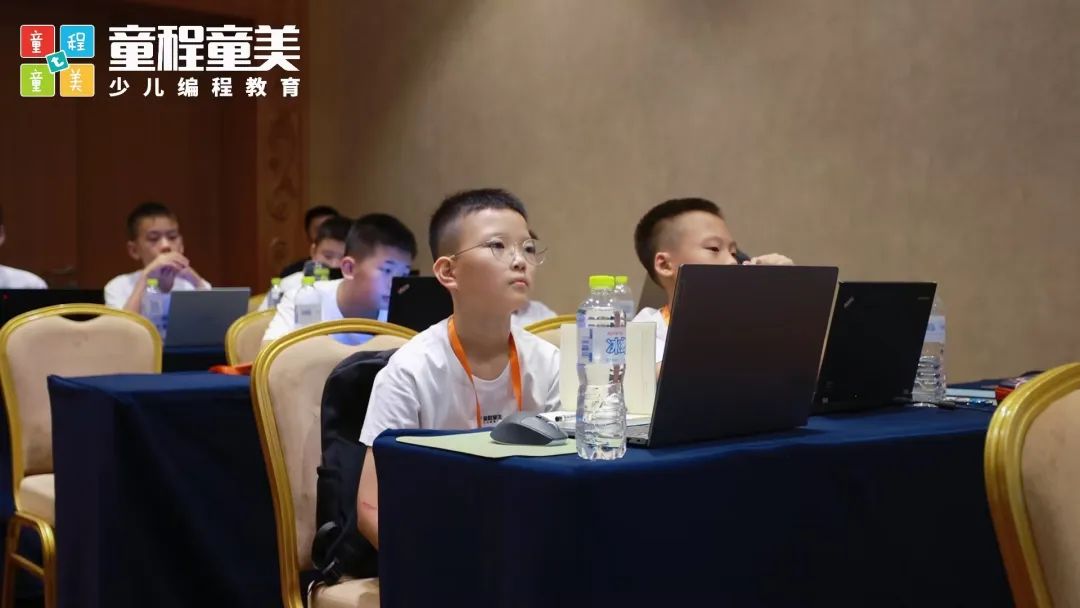 2023 Tong Cheng Tong Mei CSP Training Camp
02.
Is the province a “strong” or “weak” province? How long it takes for a child to win an award must consider their province, as the difficulty varies between strong and weak provinces. To know the CSP-J/S certification, children need to register in their province or city, and their competitors are also from the same province or city. The overall level of competition determines the difficulty of the certification exam and has a significant impact on whether they can enter the final round. It is commonly said in the industry: “In strong provinces, look at the preliminary round; in weak provinces, look at the final round.” This means that in strong provinces, many contestants often get “stuck” in the preliminary round and do not qualify for the final, but once they advance to the final, they have a greater chance of winning awards in the second round. If students are contestants from strong provinces like Zhejiang, Shandong, Beijing, Guangdong, and Sichuan, they must pay attention to the preliminary round and prepare adequately, especially for students in the popular group. Comparing strong province Zhejiang with weak province Hainan, the advancement rate in the preliminary round is much lower in Zhejiang than in Hainan, but the advancement rate in the final round is reversed. The level of competition in the province has a decisive impact on the contestant’s preparation for the competition. Children from strong provinces need to learn early to have more opportunities, which requireschildren from strong provinces to reserve more time for competition preparation, at least a year more than children from weak provinces. Additionally, the differences in provinces also affect the learning environment for contestants. A good learning environment makes it easier for children and parents to persist on this path and gain good coaching guidance.
03.
Motivation to Learn Finally, let’s discuss the personal factors affecting a child’s participation in the competition, namely the child’s level of initiative in learning. This has the most direct impact on whether the child can continue on this path and how far they can go. The competition is a selection process, and children who can earn rankings and awards stand out. Moreover, the competition is a series of events, not just a one-off success; it requires years of continuous participation. The exams in the competition have long durations, typically not less than 2 hours, with most lasting 3-4 hours. Whether a child can stay focused and work hard until the last moment is very important for their personal initiative. If a child wants to succeed in an exam, they must prepare in advance and do a lot of practice; the same goes for the competition. Even talented contestants need to invest a lot of time to learn well, with a minimum weekly investment of 10 hours. Whether in terms of difficulty or duration, this requires contestants to have a long-term competitive spirit, not to give up halfway, and have spare time to patiently continue learning. Whether a child can sit still and concentrate is a necessary condition for walking the path of the competition. Even if a child is smart and talented, without perseverance and the determination to tackle difficulties step by step, they will not go far. If a child can solve 300 problems, they can basically win an award in the entry-level group. However, if they cannot do that, even the most gifted child has no hope.
Finally, let’s summarize the key points:
Given the foundational abilities and motivation to learn, children from strong provinces need to prepare for two and a half years to win awards, such as those from Jiangsu, Chongqing, Shandong, and Beijing, especially Chongqing, which currently has the highest score line and is the most challenging province.
In contrast, children from weak provinces, such as Hebei, Shanxi, and Guangxi, can achieve this in one and a half years.

Tong Cheng Tong Mei is dedicated to teaching Chinese children programming.
Long press the image below to follow up: child’s age + phone number
Or long press to scan the QR code below
1-on-1 to learn more about specialized student planning


More Tong Cheng Tong Mei courses are detailed below: (Click blue text) Save and share | Tong Cheng Tong Mei children’s programming brand and course system introduction Tong Cheng Tong Mei Marta Creative Enlightenment Programming, creating “screen-free physical programming” enlightenment courses for children aged 4-6! LEGO Creative Programming Enlightenment Course | How should parents guide preschool children who want to learn programming? 1 minute to understand NOIP Informatics Competition, ideal school direct train, amazing operation! Tong Cheng Tong Mei 6-8 years Scratch graphical fun programming course introduction 1 minute to uncover: The secrets of Tong Cheng Tong Mei Python children’s programming! 1 minute to reveal: Tong Cheng Tong Mei Wedo LEGO robot programming!1 minute to understand: Tong Cheng Tong Mei EV3 robot programming! Tong Cheng Tong Mei course reveal: hardware and software programming enlightenment courses, same learning time, double ability improvement! Tong Cheng Tong Mei online course introduction, everything you are interested in is here!