In this study, a cleverly designed high self-supporting chitosan-based hydrogel ink with a dense, reversible physical crosslinking network was developed for the rapid in situ preparation of personalized diabetic wound dressings. This network is established through various electrostatic and hydrogen bonding interactions between the zwitterionic polyelectrolyte carboxymethyl chitosan and nano-clay, and is further enhanced by introducing amide bonds as dual hydrogen bond donors/acceptors.Thanks to this, the ink exhibits excellent 3D printing performance at low nano-clay content (< 1.5%), allowing for the printing of high-fidelity, large-scale, and complex structures without additional processing, while essentially retaining its inherent rheological properties after high-pressure sterilization and the incorporation of active ingredients, thus demonstrating great potential in the in situ manufacturing of diabetic wound dressings.The related results have been published in“Advanced Functional Materials”, titled“High Self-Supporting Chitosan-Based Hydrogel Ink for In Situ 3D Printed Diabetic Wound Dressing“. Among the authors, Li Shanshan from Guangdong Pharmaceutical University, Xu Yidi from Jinan University, and Zheng Lu from South China University of Technology are the co-first authors, while Professor Wang Xiaoying is the corresponding author, and Associate Professor Zhang Hantian from Jinan University is a co-corresponding author. This work was supported by the Guangdong Natural Science Foundation, the National Natural Science Foundation, and the Macao Science and Technology Development Fund.
1 Background Introduction
Personalized biopolymer hydrogels for 3D printing have shown significant advantages in the treatment of diabetic wounds, especially in terms of in situ printing. However, most biopolymer inks currently lack sufficient self-supporting capabilities during the printing process, often relying on auxiliary methods such as temperature control, suspension bath support, or simultaneous crosslinking during printing. These methods are not only limited by the capabilities of 3D printers but may also lead to inefficiencies, uneven crosslinking, and complex post-processing issues, affecting the manufacturing efficiency of dressings or causing premature release of active substances, making it difficult for bio-based dressings to achieve rapid, in situ manufacturing on wounds. Although some inks have achieved direct 3D printing through weak reversible physical interactions, such as Schiff base reactions and microgelation, these methods still face challenges in achieving high shape fidelity and accurately constructing complex structures. Therefore, by adjusting the molecular structure of CMC and modulating its reversible interactions with low doses of LAP, we developed an easy-to-process, highly self-supporting hydrogel ink, enabling the in situ manufacturing of multifunctional wound dressings (Figure 1). The designed CMC derivative carboxymethyl chitosan methacrylate (CMA) exhibits photopolymerization capability and enhanced hydrogen bonding by increasing the pendant methacrylate (MA) groups. As expected, the CMA/LAP (CMAL) ink possesses a robust and rapidly reversible physical crosslinking network driven by dense weak electrostatic interactions and hydrogen bonds. This network facilitates various high-fidelity direct 3D printing applications, such as microtube fabrication and the printing of multi-component or complex structures. Notably, even after sterilization in an autoclave, the physical crosslinking network is largely preserved. To address the susceptibility to infection and impaired angiogenesis in diabetic wounds, silver nanoparticles (AgNPs) and hypoxia-inducible factor-1α (HIF-1α, VH298) stabilizers were incorporated into the CMAL ink.
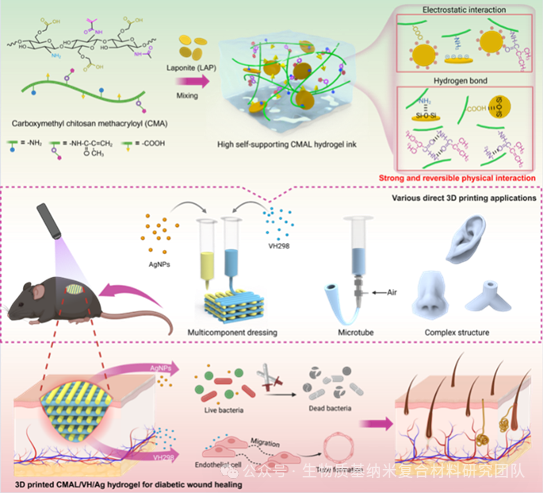
Figure 1. Schematic diagram of the preparation and application of high self-supporting chitosan-based hydrogel ink (CML)
2.1 Preparation and Characterization of CMAL Ink
The chitosan-based gel ink is directly compounded from methacrylated carboxymethyl chitosan (CMA) and two-dimensional nano-clay (LAP). It exhibits excellent sol-gel transition capability and self-supporting ability, with a maximum injection length of 28.5 cm under suspension, demonstrating a strong and rapidly reversible physical crosslinking network. Further rheological tests confirm its high apparent viscosity, excellent thixotropy, and good self-healing ability (Figure 2). Compared to other biopolymer-based inks, this ink has higher viscosity and yield stress at lower nano-clay addition levels.
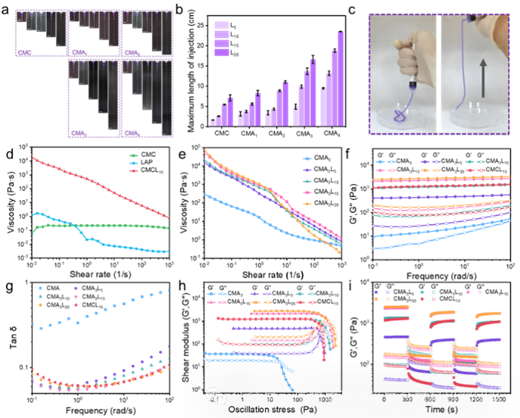
Figure 2. Analysis of the injection capability and rheological properties of CMAL ink
2.2 Study on the 3D Printing Performance of CMA3L Ink
Thanks to this, the CMAL ink exhibits excellent 3D printing capabilities, demonstrating high shape fidelity and stability. It can easily fabricate small-diameter (inner diameter < 500 μm) microtubes and construct large-sized complex structures without additional supports and auxiliary tools (Figure 3). These results highlight its tremendous potential for in situ 3D printing of wounds.
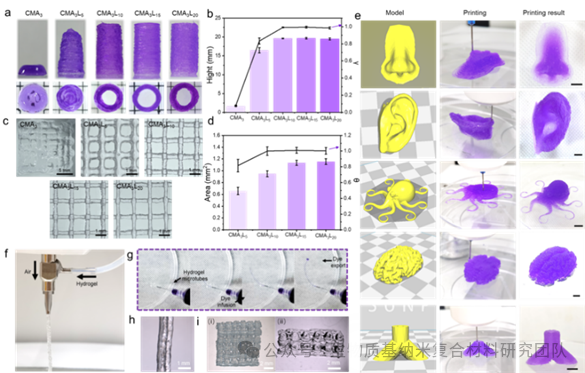
Figure 3. 3D printing performance of CMAL ink
2.3 Interaction Mechanism Between CMA and LAP
To elucidate the mechanism behind the excellent elasticity and printability of CMAL ink, this work studied the interactions between LAP and CMA (Figure 4). Through experimental and molecular simulation analyses, it was found that due to the zwitterionic polyelectrolyte characteristics of carboxymethyl chitosan itself and the newly introduced dual hydrogen bond donor/acceptor—amide bonds, there exist dense and reversible electrostatic and hydrogen bonding interactions between CMA and LAP. Additionally, the introduction of amide bonds enhances the intramolecular/intermolecular hydrogen bonding interactions of CMA, and these factors collectively contribute to the formation of a high-density reversible physical crosslinking network in CMAL. Therefore, even after high-pressure sterilization and the addition of various active ingredients, the CMAL gel ink maintains good printing performance, meeting the demand for in situ 3D printing of multifunctional dressings on wounds.
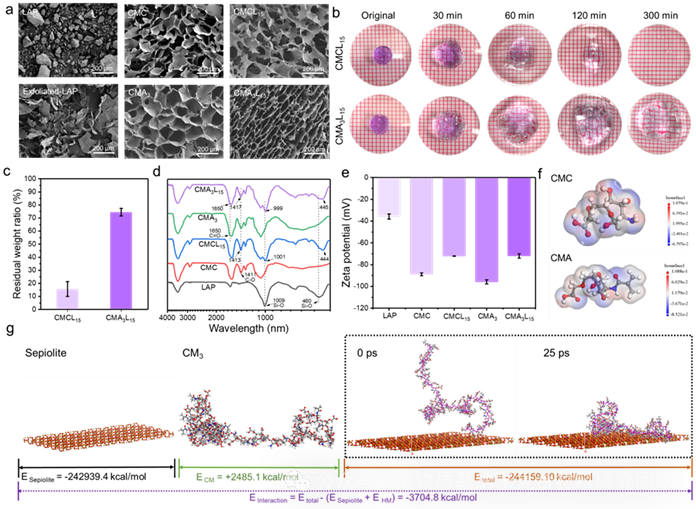
Figure 4. Interaction between CMA and LAP
2.4 Interaction Mechanism Between CMA and LAP
Furthermore, based on the characteristics of diabetic wounds, this study constructed multifunctional 3D printed dressings by separately loading the ink with antibacterial agent nano-silver and Hif-α stabilizer VH298, aimed at anti-infection and promoting angiogenesis. In vivo experimental results indicate that this gel ink can achieve in situ 3D printing at the wound site, and the resulting multifunctional dressings can significantly accelerate the healing of diabetic wounds (Figure 5).
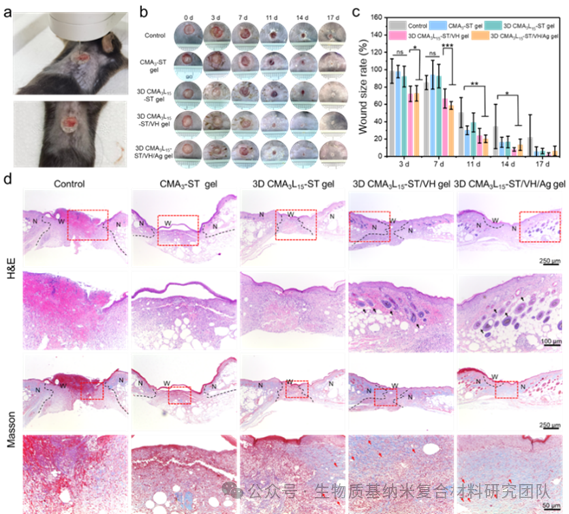
Figure 5. The ability of 3D printed chitosan-based hydrogel dressings to promote diabetic wound healing
Conclusion
This study developed an easy-to-prepare, high self-supporting, high shape fidelity CMAL hydrogel ink by enhancing the density of reversible electrostatic and hydrogen bonding networks, which can withstand high-pressure sterilization and deliver active ingredients for the rapid preparation of personalized diabetic wound dressings. This work not only provides a new strategy for preparing high self-supporting biopolymer inks but also paves the way for the development of advanced personalized wound dressings.
Article Link:
https://doi.org/10.1002/adfm.202414625


Image/Article by:Li Shanshan
Typesetting: Yao Dinglin
Review: Wang Xiaoying
Scan to follow for more information