Building a NAS is not like assembling a desktop computer where you can just stack components and increase size. Compactness is also a requirement for NAS, and some users opt for smaller motherboards to fit more hard drives in limited space.
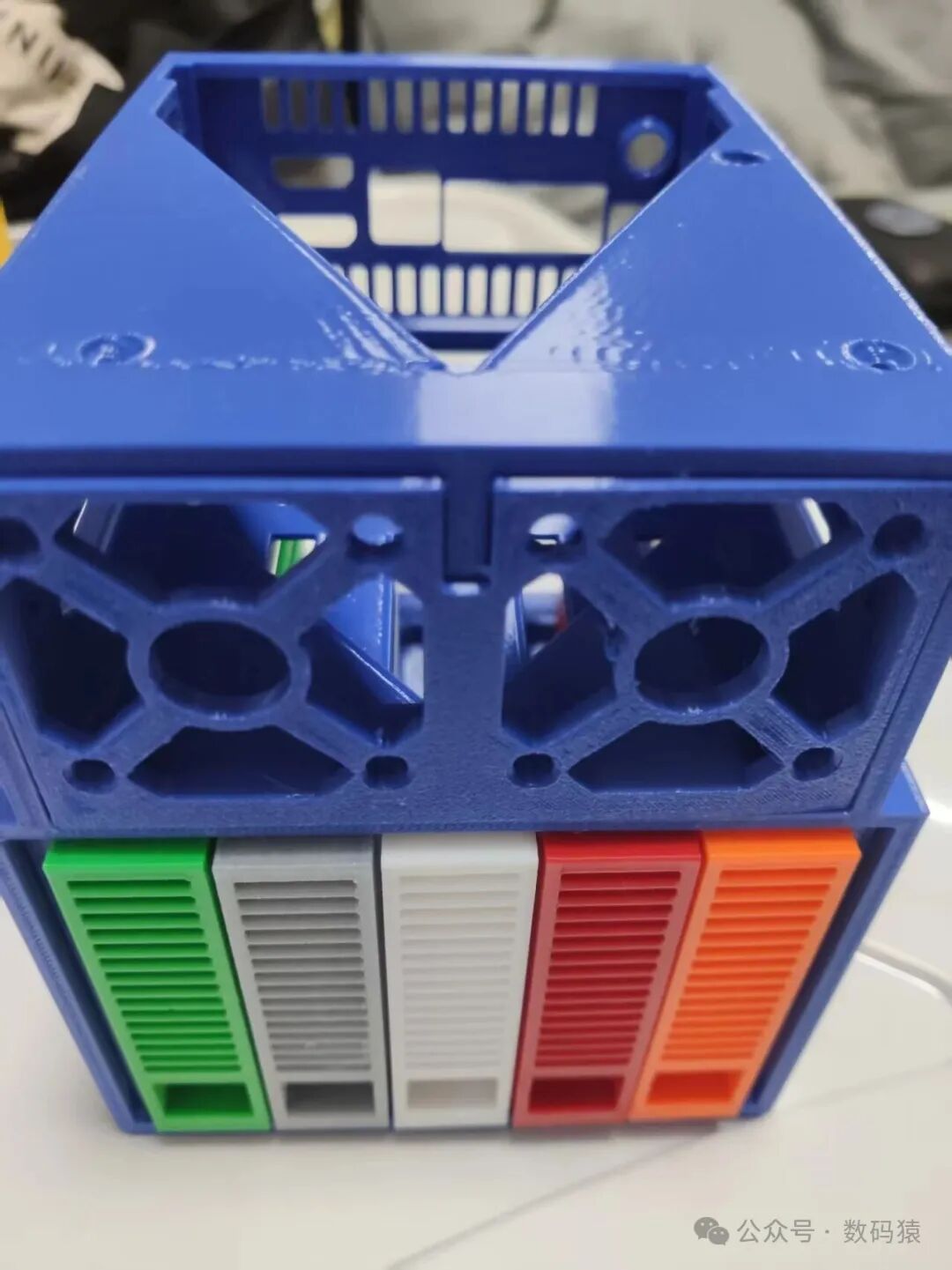
As a result, some ITX boards measuring 15cm or even 3.5-inch boards around 12cm have become popular choices among many enthusiasts, particularly in the field of industrial control boards.
On platforms like Xianyu, searching for all-in-one machines, robotic vacuums, or even cash registers can yield a plethora of 3.5-inch industrial control boards. The increasing intelligence of various terminal devices has led to higher demands for control systems, prompting many manufacturers to integrate small-sized computer motherboards into them. Despite their small size, they are fully functional and operate almost identically to our desktop computers.
However, finding a small motherboard around 12cm that can accommodate a 3.5-inch hard drive in the seafood market requires patience and keen eyesight. It’s akin to searching for a suitable foundation for your digital home.
Recently, I acquired several 3.5-inch motherboards for assembly and would like to share some insights on what to pay attention to when hunting for such motherboards in the seafood market, as well as analyze the characteristics of the boards you provide.
Guide to Avoiding Pitfalls When Buying Motherboards in the Seafood Market
Purchasing hardware on second-hand platforms like Xianyu can offer great value, but it also requires extra caution.
-
Clarify Your Core Requirements: This is the most important step. You need to think clearly about:
- Main Purpose of the NAS: Is it purely for file storage and backup, or does it need to run Docker containers, virtual machines, or even serve as a home media server (requiring hardware transcoding)?
- Drive Bay Requirements: How many hard drives do you plan to connect? Are the SATA ports on the motherboard sufficient? Do you need to add interfaces through a PCIe expansion card?
- Balance Between Power Consumption and Performance: NAS typically runs 24/7, so low power consumption is crucial, but you shouldn’t sacrifice performance entirely for energy savings.
- Network Requirements: Is a single Gigabit Ethernet port sufficient? Do you need dual ports for link aggregation or soft routing?
Essential Communication and Verification:
- Function Confirmation: Ensure that all interfaces on the motherboard (SATA, USB, PCIe, etc.) are functioning properly and can power on correctly.
- Driver Support: Ask the seller if drivers are available, or search in advance based on the motherboard model (especially for network and sound card chip models) to see if your operating system (such as Windows, Linux, or Black Synology) is supported.
Analysis of Common Industrial Control Mini Motherboard Platforms
Industrial control boards vary in quality, and for our NAS assembly, selecting cost-effective boards is sufficient; there is no need to pursue excessively high performance, as smaller boards will inevitably lag behind desktop ITX boards at the same price point.
Thus, the target is roughly narrowed down to J1900, N2800, around 3rd generation i3 or 4th generation i5, as well as Celeron 1037U, 3865U, etc.
After all, different manufacturers produce the same model of board, and different brands may have different expansions, so it’s essential to carefully review the board’s information before purchasing.
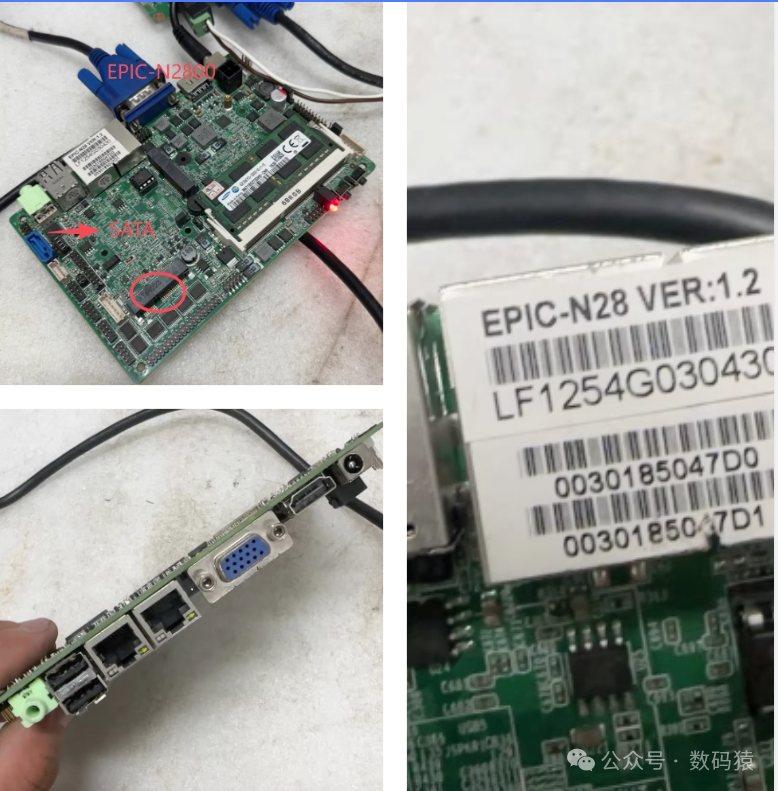
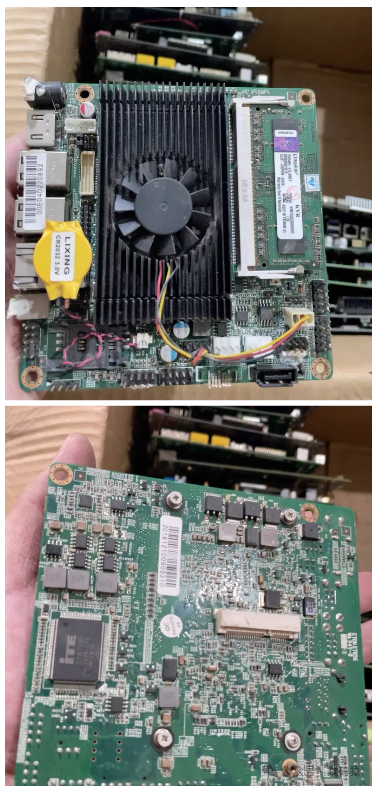
This EPIC-N2800 features dual Gigabit Ethernet ports, a laptop DDR3 memory slot, an onboard CPU, one SATA, and minipcie. Due to size constraints, most industrial versions do not come with PCIe expansion, but this minipcie is almost always present.
Moreover, most of them use 19V or 12V 5525 power connectors, generally requiring around 5A for operation.
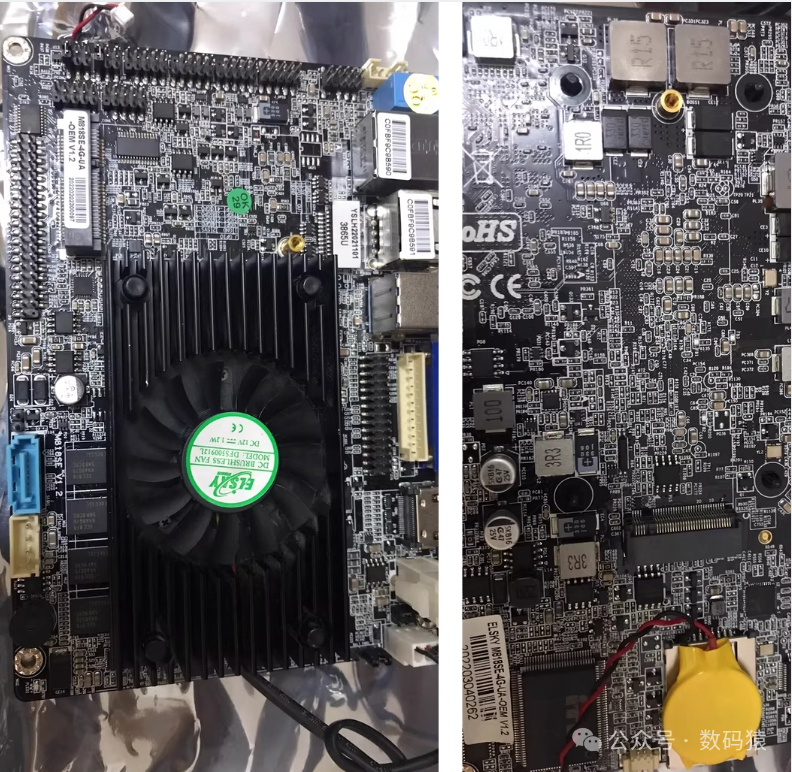
Celeron 3865U, with 4GB DDR4 memory onboard, has an M.2 NVMe interface at the back, using a 4-pin power connector. It also reserves a SATA interface and minipcie.
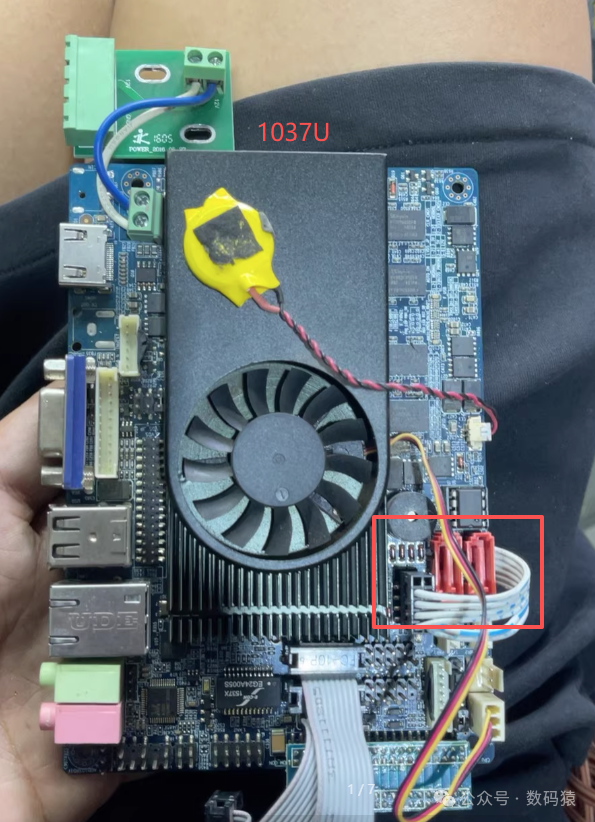
1037U, with performance similar to 3865U, both are dual-core CPUs. However, 1037U industrial control boards are more common, and most have onboard memory, either 2GB or 4GB. Before purchasing, check this, as it only has onboard memory and does not provide memory slots.
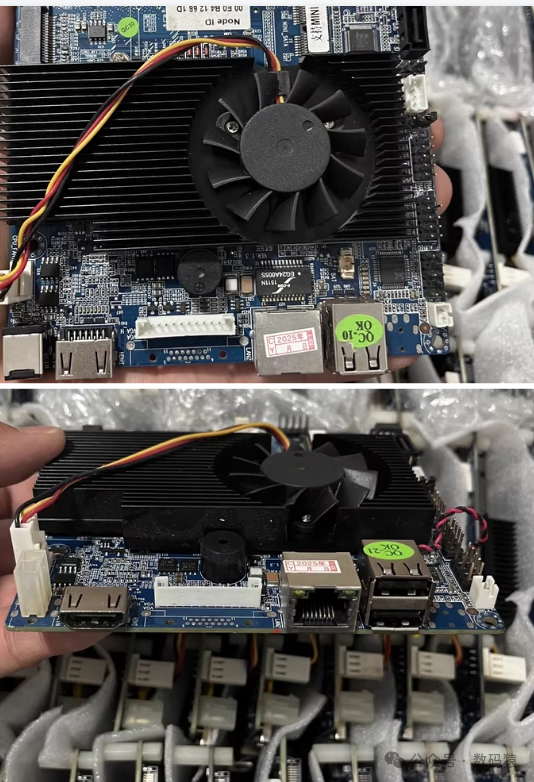
This 1037U motherboard only provides one SATA expansion. If you have specific requirements for this, you can look at other brands, such as the one below, which is equipped with two SATA ports.
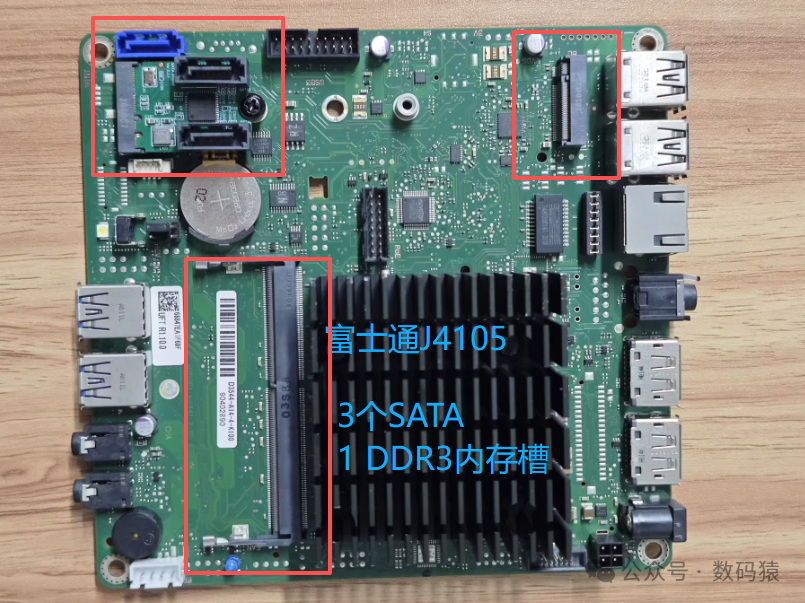
J4105/J4125: Gemini Lake Refresh architecture, 4 cores and 4 threads (no hyper-threading), with a frequency of 1.5-2.5GHz (J4105)/1.5-2.7GHz (J4125), and a TDP of only 10W. The frequency and power are slightly higher, and the following image shows a Fujitsu motherboard with decent expansion options.
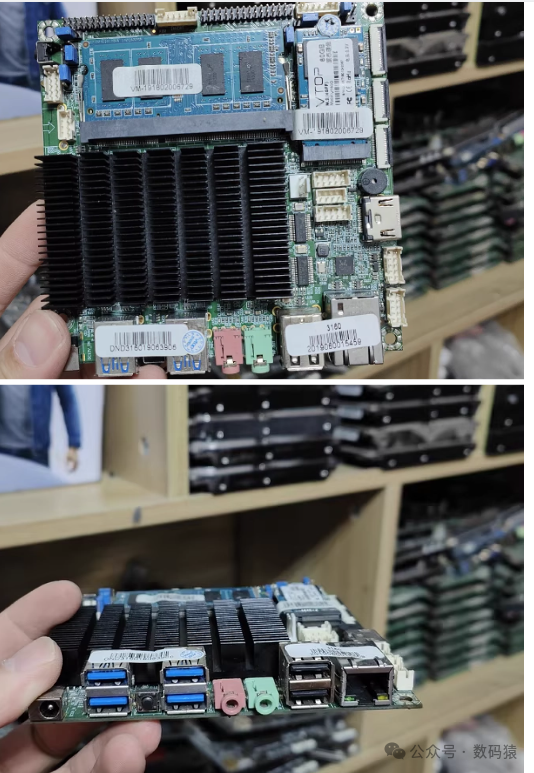
Cash register disassembly J3160/N3160 motherboard, 3160 is also a 4-core processor, with slightly lower power consumption than the one above, only 6W, similar to the dual-core N3050.
On Xianyu, you can find some cash register disassembly boards, and their size is only 12×12, suitable for space-constrained builds.
However, if you are currently looking for a 12cm board, be sure to check carefully, as in most cases, it does not come with SATA interfaces, only minipcie and USB.
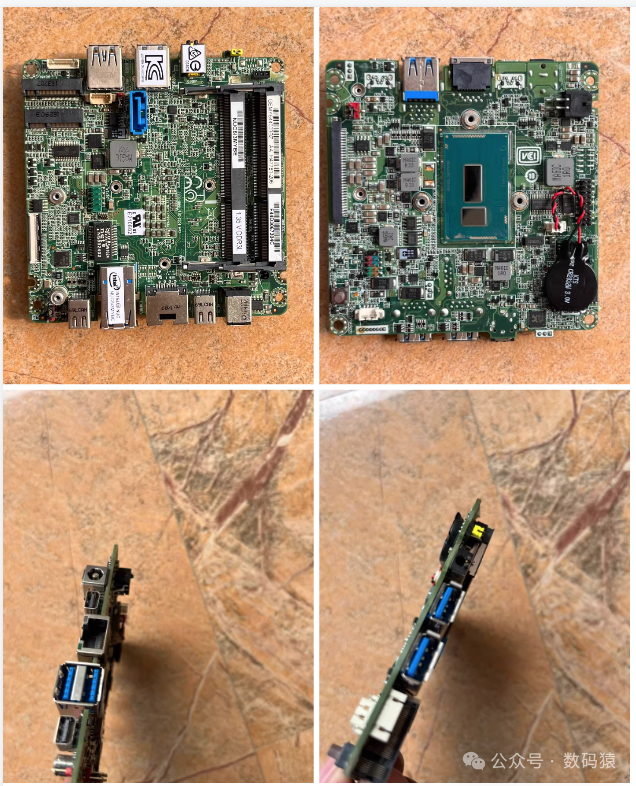
There are also some small boards with decent performance, such as the Intel NUC series. This board has a significant influx of i3 and i5 3rd to 5th generation models, but the prices increase significantly for higher generations, making them less cost-effective for NAS builds.
i3-5010U, DDR3L low-voltage memory, generally configured with SATA interfaces, M.2 SATA interfaces, M.2 wireless Wi-Fi interfaces, Gigabit Ethernet, and multiple USB ports. The lowest price on Xianyu is over 100.
Not only Intel processors are found in industrial control boards; AMD also has a presence, although I haven’t purchased one yet. However, based on the seller’s posts, this board seems decent for NAS assembly and casual use.
AMD G-T56N is equipped with USB ports, LAN ports, and SATA.
| Platform/Model | Advantages | Disadvantages | Suitable NAS Scenarios |
|---|---|---|---|
| Intel J/JB Series (e.g., J1900, J3160, J4105) | Extremely low power consumption (usually under 10W), affordable, high integration | Relatively weak performance (mostly Atom architecture), mainly used for basic storage | Low power consumption, pure file storage, lightweight applications |
| Intel N Series (e.g., N2840, N3710) | Low power consumption, compact size | Very limited performance, mainly used for ultra-mini PCs | Entry-level NAS with extremely low performance requirements |
| Intel Low Power U Series (e.g., i3-5010U, i5-5200U) | Stronger performance (Core architecture), supports virtualization technologies, good energy efficiency | Relatively higher price, may require additional cooling configuration | Home media server (hardware transcoding), lightweight virtual machines, Docker applications |
| Intel Celeron/Pentium (e.g., 1037U, 3865U) | Older low-power models, very affordable | Older architecture, weaker performance, may lack features (e.g., missing AES instruction set affecting encryption performance) | Entry-level storage with extremely limited budget |
| AMD Low Power Platform (e.g., G-T56N) | Prices can be very low | Old architecture, relatively high power consumption, weak performance, driver support may not be as reliable as Intel | Not recommended for new NAS installations |
- EC3-1037-4CD, NANO-1037U Mini Motherboard: Based on Intel Celeron 1037U, a very old platform with weak performance, suitable for basic file storage, acceptable power control but outdated architecture.
- Yanyu Industrial Control N39 (J1900), Yanyu Industrial Control ITX-N29 Mini Motherboard, Mini Motherboard J3160/N3160: Typical Intel Bay Trail-D (N29/J1900) or Braswell (J3160) industrial control motherboards.Extremely low power consumption, a popular choice for many low-power NAS, butperformance is limited to basic file services and very lightweight applications. Dual Ethernet versions are suitable for soft routing or link aggregation.
- i5-5200U Mini Motherboard, NUC5i3MYBE (i3-5010U): Based on Intel Core i series low-voltage CPU,performance is significantly stronger than other motherboards you provided. Supports VT-x and other virtualization technologies, suitable for running virtual machines, Docker, and even using Intel integrated graphics for videohardware transcoding (such as Plex, Emby, Jellyfin), greatly enhancing the experience. Pay attention to cooling and price.
- 3865U Industrial Control Motherboard: Intel Apollo Lake platform, slightly newer than Bay Trail/Braswell, with improved performance while still maintaining low power consumption, a common low-power NAS choice before the J series.
- AMD G-T56N Processor: Very old AMD platform, with power consumption and performance not superior to the same generation Intel,generally not recommended for NAS unless the price is extremely low and you are only using it for experimentation.
- BYT-U1 (Celeron N2840): Intel Bay Trail-M platform, very weak performance, mainly used for tablets or ultra-mini devices, not suitable for NAS unless you only need a very basic network disk.
- J4005/J4105 Quad-Core Dual-Bay 3.5-Inch: Intel Gemini Lake platform, successor to J1900/J3160,better energy efficiency, with some performance improvements and fixes for certain instruction set supports (like AES-NI). The dual-bay design is very suitable for entry-level NAS and is commonly used in many brand NAS solutions.
- For pure file storage and backup, pursuing extreme low power consumption and low cost: Intel J1900/J3160 industrial control boards are classic choices, but do not have high performance expectations.
- If you want to balance performance, power consumption, and functionality (hardware transcoding, virtual machines): Intel low-voltage Core i series (such as i3-5010U, i5-5200U) is a better starting point, although the price is higher, the experience improvement is significant.
- For a compromise choice, seeking a newer platform and better energy efficiency: Intel J4005/J4105 or newer platforms (like J4125, N5105) are excellent balance points.
- Be sure to avoid overly old or unsuitable architecture platforms: Such as AMD G-T56N, Intel 1037U, N2840, unless they are extremely cheap and you are fully aware of their limitations.
In conclusion,the motherboard is the cornerstone of the NAS, and when hunting for components in the seafood market,patience and careful verification are key. I wish you success in finding your desired motherboard and successfully building your own NAS!