For a smartphone, the processor is like its heart, determining the performance of the phone. Therefore, a good smartphone often needs to be equipped with a powerful processor chip. In today’s processor field, the main competitors are Qualcomm, MediaTek, Samsung, and Huawei. However, since Samsung’s Exynos and Huawei’s Kirin chips are primarily used only in their own devices or a few partner brands, most manufacturers have limited choices, leaving Qualcomm and MediaTek as the only two that can directly compete.
In the high-end chip segment, Qualcomm and MediaTek launched the Snapdragon 820 and Helio X25 respectively this year. However, according to market reactions and third-party benchmarking data, the Snapdragon 820 clearly outperforms the Helio X25. As a result, the current mainstream Android flagships are all equipped with the Snapdragon 820 chip, and those that are not using it do not dare to claim they are top-tier flagships. However, in the mid-range chip segment, MediaTek and Qualcomm are in a fierce competition, with the Helio X20 being the world’s first deca-core processor, showing impressive performance that can rival Qualcomm’s Snapdragon 652. Therefore, many manufacturers prefer to use these two chips in their mid-range flagship models.
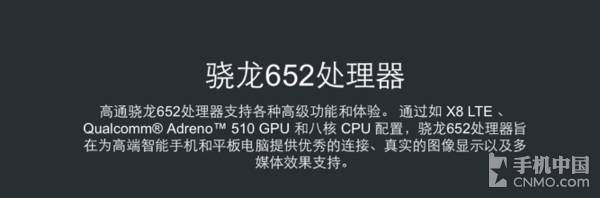
Today, we will delve into these two chips to explore their features and characteristics, as well as their performance, power consumption, gaming capabilities, and network speed. If you’re interested, please read on:
Hardware Specifications Comparison
Although the Snapdragon 652 belongs to the Snapdragon 600 series and not the higher-end Snapdragon 800 series, it is by no means weak. It is Qualcomm’s second-generation 64-bit processor, manufactured with a 28nm process, consisting of four high-performance ARM Cortex-A72 cores (clocked at 1.8GHz) and four more energy-efficient Cortex-A53 cores.
The Helio X20, on the other hand, is MediaTek’s first deca-core processor, featuring a tri-cluster deca-core architecture that reduces power consumption by 30% compared to traditional dual-cluster designs, while also improving computational power by 15%. This chip includes two Cortex-A72 cores with clock speeds of 2.1-2.3 GHz, four Cortex-A53 cores with a clock speed of 1.85 GHz, and four more Cortex-A53 cores clocked at 1.4 GHz.
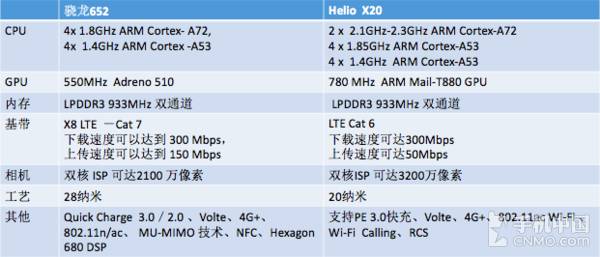 Comparison of the Two Mid-Range Chips
From the detailed configuration comparison of the two processors, it appears that the MediaTek Helio X20 has ten cores, which is two more than the Snapdragon 652, and a higher clock speed, seeming to be more powerful. However, Snapdragon processors are known for their stability and smooth performance, and this time the Snapdragon 652 is equipped with four of the latest high-performance A72 big cores, making its CPU performance quite formidable. We will look at specific benchmark results later.
Furthermore, in terms of baseband, the Snapdragon 652 uses the X8 LTE, supporting Cat 7, significantly enhancing upload speeds, which is three times that of Helio X20’s Cat 6. It also supports congestion-free Wi-Fi MU-MIMO technology, which can reportedly achieve speeds up to three times faster in crowded places. In terms of GPU, the Snapdragon 652 uses the Adreno 510, while the Helio X20 employs the Mali-T880 GPU.
Benchmark Software Testing
After discussing various aspects, let’s look at the benchmark results directly. I selected two of the latest flagship devices for comparison, with the following configurations:
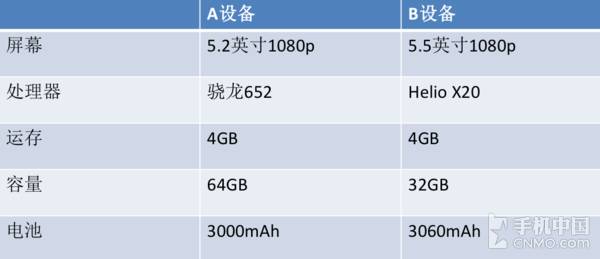 Configuration Comparison of the Two Tested Devices
Both devices have 4GB of RAM, with Device A equipped with the Snapdragon 652 processor and Device B with the MediaTek Helio X20 processor. Their batteries are similar, while Device B has a slightly larger screen (without further explanation, the left is always Device A).
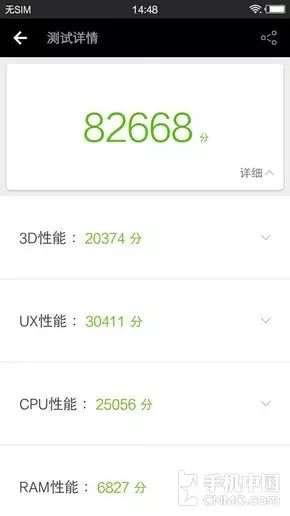
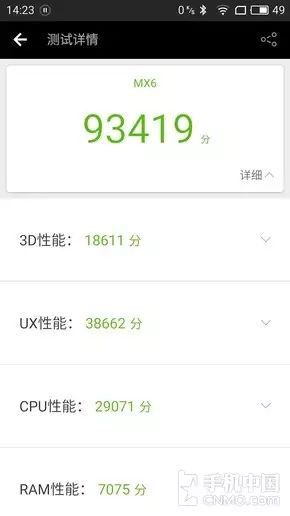
I first used AnTuTu and Master Lu for comprehensive benchmark tests. According to AnTuTu’s benchmark data, the Helio X20 model scored 93,419 points, showcasing the power of ten cores, which is about 10,000 points higher than the Snapdragon 652’s score of 82,668. The most significant difference was in UX performance, where the latter lagged by over 8,000 points. This could be attributed to the Helio X20’s more advanced manufacturing process, higher clock speeds, and additional cores. However, in terms of 3D performance, the Snapdragon 652 slightly outperformed, winning by 1,763 points.
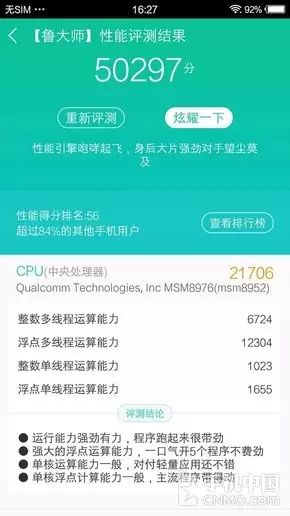
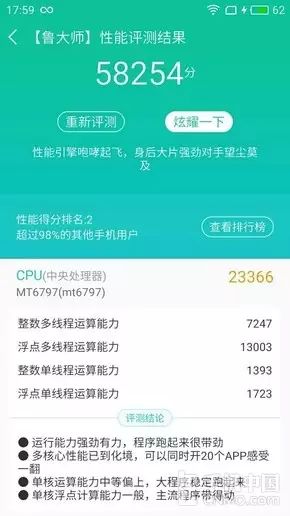
Next, we used Master Lu for another round of testing. The CPU performance difference was not significant, with the Snapdragon 652 device scoring 21,706 points and the Helio X20 device scoring 23,366 points, a mere 1,660 points apart. However, in overall scores, the difference was nearly 8,000 points. This discrepancy may be due to the Snapdragon 652 device running Android 5.1.1, while the Helio X20 device operates on the newer Android 6.0, which likely provides system optimization benefits.
We then utilized renowned testing software Geekbench 3 and Basemark X for single-performance tests on both devices.
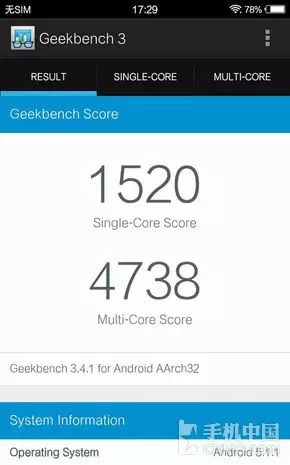
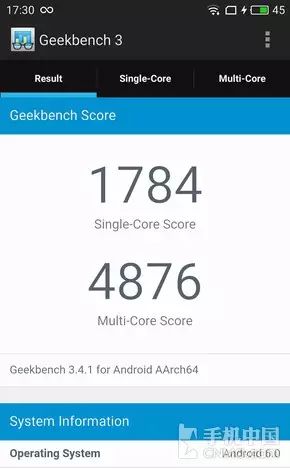
In the Geekbench 3 CPU single-core and multi-core tests, the Snapdragon 652 device scored slightly lower than the MediaTek Helio X20 device.
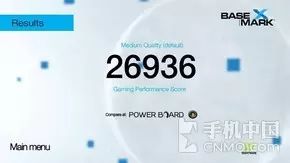
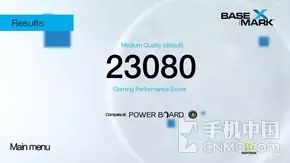
When we tested the gaming graphics performance of the processors using Basemark X, the Snapdragon 652 device surprisingly achieved a score of 26,935, surpassing the MediaTek Helio X20 device by over 3,000 points.
Real-World Usage Experience
Next, we tested two large 3D mobile games and found that both games ran smoothly, with the Snapdragon 652 device performing more naturally and displaying better graphical details. We also confirmed this through GameBench data and evaluations, showing that the frame rate of the Snapdragon 652 device is indeed higher.
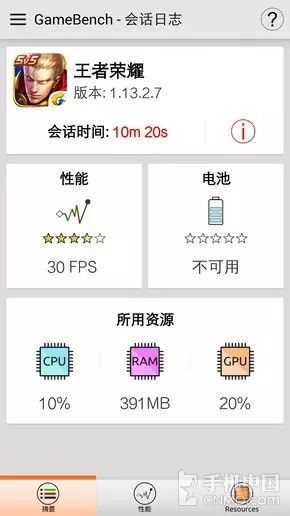
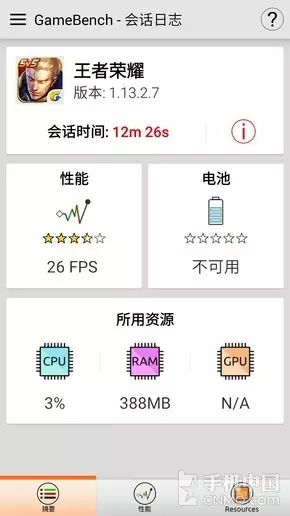
”Honor of Kings” is currently a popular multiplayer online 3D game that requires higher performance from smartphones. GameBench rated both devices with three and a half stars, with frame rates also being commendable. The Snapdragon 652 device slightly edged out with a frame rate of 30 FPS.
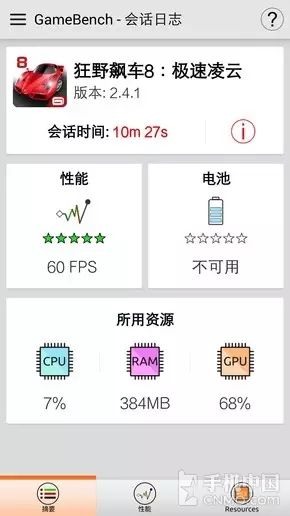
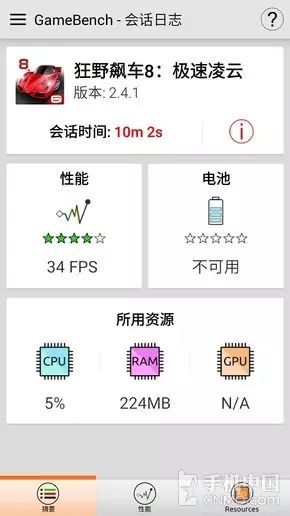
”Asphalt 8: Airborne” is another large 3D game favored by younger players, with an installation package of around 1.5GB. GameBench rated the two devices with one five-star and one four-star rating. The Snapdragon 652 device clearly has the advantage, achieving an impressive frame rate of 60 FPS.
Battery Life and Heat Generation
Next, we conducted battery life tests by making calls for 15 minutes and testing four activities (gaming, video, music) for half an hour each without cleaning the background, recording the remaining battery after each activity, and adding 8 hours of standby (after cleaning all background apps). The results are shown in the following chart, with the two devices remaining at 66% and 58% battery, respectively. Considering the battery capacities of both devices, their battery life is quite good, sufficient for normal daily use.
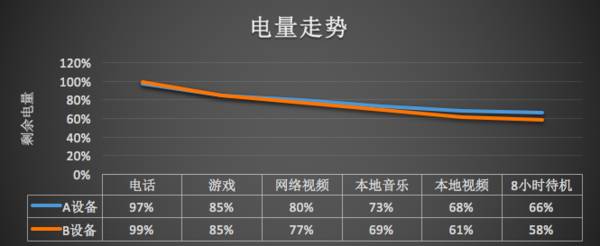
From the chart, it can be seen that overall, the Snapdragon 652 device has better power consumption control. In gaming and video segments, the Helio X20 device drains battery faster, partly due to its larger 5.5-inch screen compared to the 5.2-inch screen of the Snapdragon 652 device. Notably, during the battery testing process, we also measured the device temperatures after gaming and video playback, finding that the Helio X20 device tends to heat up more, with temperatures generally higher, which aligns with our previous assumptions.
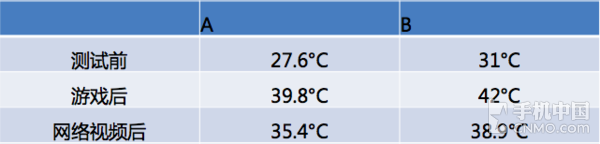
From the temperature test chart, we observed that the Helio X20 device reached temperatures exceeding 40°C after 30 minutes of playing the large 3D game “Asphalt 8: Airborne,” reaching 42°C, which is quite hot. In contrast, the Snapdragon 652 device remained below 40°C. While watching online videos, the Helio X20 device gradually cooled to 38.9°C, still somewhat hot; whereas the Snapdragon 652 device maintained a comfortable temperature of 35.4°C, which is quite good. It’s worth mentioning that even under the same conditions while watching the same video segment, I found that the Snapdragon 652 device displayed clearer and smoother videos, while the Helio X20 device experienced some frame drops, indicating that the Snapdragon 652’s GPU performs better.
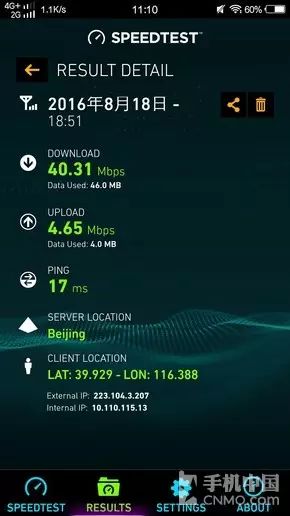
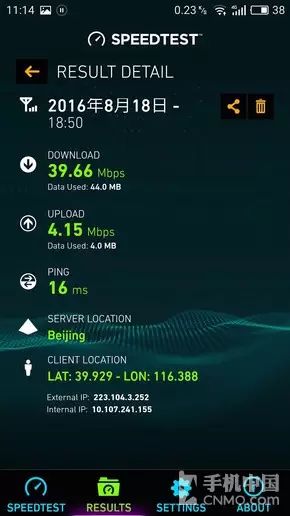
Finally, we used professional speed testing software Speedtest to test the network speed of both devices under mobile 4G conditions. Both devices maintained a stable download speed of around 40Mbps, with upload speeds between 4-5Mbps, showing no significant difference in network speed under 4G. The Snapdragon 652’s upload speed advantage may still be further explored in the future.
Conclusion: Based on our actual test results, the deca-core CPU of the Helio X20 scores slightly higher in overall performance tests and CPU specific tests compared to the Snapdragon 652. However, the GPU performance of the Snapdragon 652 is superior to that of the Helio X20. Performance scores are merely a reference; real-world experience is more important. As two processors primarily used in mid-range flagship models, both the Snapdragon 652 and Helio X20 offer strong performance, providing a smooth experience for various popular large games without any stuttering. However, the Snapdragon 652 has better power consumption control, and in terms of actual gaming experience, the Snapdragon 652 device can be said to have a slight edge.
Due to its architectural advantages, we predict that products featuring these two processors will remain viable for the next one to two years. Smartphones using these two chips still have potential for system upgrades and performance optimizations in the future. In terms of networking, both chips can support download speeds of up to 300Mbps, making them not outdated in the short term, while the upload advantage of the Snapdragon 652 is expected to be further leveraged in the future.