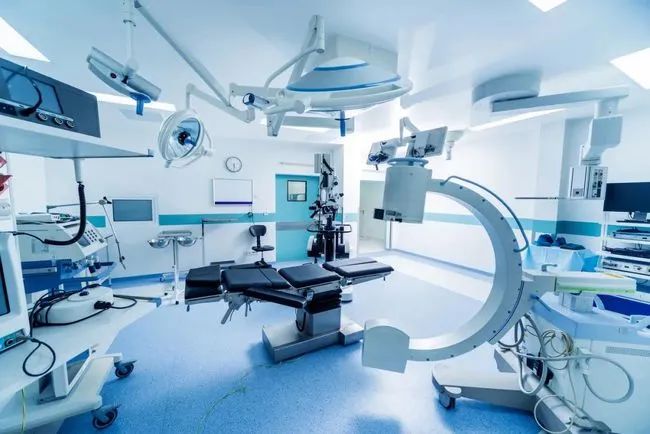
Cleaning and Disinfection of Monitors
Cleaning Plan
1. Use a lint-free cloth, dampen it with an appropriate amount of clean water or 75% ethanol, and wring it out;
2. Wipe the display screen;
3. Wipe the surface of the main unit, modules, or plug-in boxes, avoiding the device’s interfaces and metal parts;
4. Use a dry lint-free cloth to wipe off the cleaning agent from the device’s surface, and place the device in a well-ventilated, cool environment to air dry.
● Note●
● When cleaning the touchscreen, disable the touch function;
● Turn off the device or lock the touchscreen before cleaning;
● Do not use strong solvents such as acetone or trichloroethylene;
● Cleaning agents may corrode interfaces and metal parts.
Cleaning of Related Accessories
Includes blood pressure tubing, pulse oximeter cables, pulse oximeter probes, ECG cables
1. Wipe the accessories with a lint-free cloth dampened with clean water or 75% ethanol;
2. Use a dry lint-free cloth to wipe off any residual cleaning agents;
3. Place the accessories in a ventilated area to dry.
Note: Blood pressure cuff covers can be hand-washed with clean water or mild detergent and air-dried after cleaning.
Disinfection Plan
Disinfect the equipment according to the hospital’s disinfection procedures. Cleaning should be done before disinfection. Please dilute and use disinfectants according to the manufacturer’s instructions.
75% Ethanol Liquid
70% Isopropanol Liquid
0.5% Sodium Hypochlorite Liquid
3% Hydrogen Peroxide Liquid
50% n-Propanol (1-Propanol) Liquid
Shuanmei® Surface Disinfectant Liquid
Disinfection of Related Accessories
Includes blood pressure tubing, pulse oximeter cables, pulse oximeter probes, ECG cables
2% Glutaraldehyde
75% Liquid Ethanol
70% Liquid Isopropanol
50% Liquid n-Propanol (1-Propanol)
Note: Cuffs can be wiped with a lint-free cloth dampened with 75% ethanol or 70% isopropanol for disinfection.
● Avoid●
To avoid potential damage to the equipment, please avoid the following practices:
● Cables and lead wires: Do not clean cables and lead wires with acetone or ketone solutions, and do not use high-pressure sterilization or steam cleaning devices to clean cables or wires;
● Blood pressure cuffs: Frequent cleaning should be avoided, and care should be taken not to submerge the rubber tubing in water during cleaning; avoid liquid entering the cuff;
● The SpO2 sensor clip is a consumable; handle it gently during use. When not in use for an extended period, disconnect the cable from the monitor and store it properly.
Cleaning and Disinfection of Defibrillators
Cleaning Plan
Recommended cleaning agents:
Clean water
Sodium hypochlorite (bleach)
Hydrogen Peroxide (3%)
Ethanol (75%)
Isopropanol (70%)
Perform®classic concentrate OXY (Shuanmei active oxygen disinfectant, C/D grade)
Cleaning of the Main Unit
1. Turn off the power, remove the battery, and disconnect the power cord;
2. Use a soft cotton ball to absorb an appropriate amount of cleaning agent and wipe the display screen;
3. Use a lint-free cloth to absorb an appropriate amount of cleaning agent and wipe the surface of the device;
4. Use a lint-free cloth to absorb an appropriate amount of cleaning agent and wipe the electrode plate base;
5. If necessary, use a dry lint-free cloth to wipe away excess cleaning agent;
6. Place the device in a well-ventilated, cool environment to air dry.
Cleaning of the External Electrode Plate
1. Use a lint-free cloth dampened with clean water or 75% alcohol to wipe the surface of the electrode plate;
2. If necessary, use a dry lint-free cloth to wipe away excess cleaning agent;
3. Place the electrode plate in a well-ventilated, cool environment to air dry or wipe dry with a clean, dry cloth.
Disinfection Plan
Recommended disinfectants:
75% ethanol, 70% isopropanol solution.
Disinfection of the Main Unit
The defibrillator monitor can be disinfected according to the hospital’s disinfection procedures. Cleaning should be done before disinfecting the defibrillator monitor.
Disinfection of the External Electrode Plate
Disinfection procedures may cause some damage to the electrode plate. It is recommended to perform disinfection only when deemed necessary by the hospital maintenance plan. Cleaning should be done before disinfecting the electrode plate.
1. Clean the electrode plate before disinfection;
2. Use a cotton ball or lint-free cloth soaked with an appropriate amount of disinfectant to scrub the electrode plate;
3. Use a lint-free cloth dampened with clean water to wipe off any disinfectant residue on the electrode plate;
4. Place the electrode plate in a cool environment to air dry.
Cleaning and Disinfection of Anesthesia Machines
Choice of Cleaning and Disinfectant Agents
|
Name |
Type |
|
Clean Water |
Cleaning Agent |
|
Soap Solution (pH 7.0-10.5) |
Cleaning Agent |
|
Isopropanol (70%) |
Disinfectant |
|
Sodium Hypochlorite Solution (10% effective chlorine) |
Disinfectant |
|
Disinfecting Wipes (0.5% Quaternary Ammonium Compounds and 55% Isopropanol) |
Disinfectant |
|
Alcohol (75%) |
Disinfectant |
|
Cidex@OPA (only for folding bags, airway pressure gauges, and flow sensors) |
Disinfectant |
|
Glutaraldehyde (2%) |
Disinfectant |
|
High-Temperature, High-Pressure Steam Sterilization |
High-Efficiency Disinfection |
● Note●
● All components of the respiratory system, except for oxygen sensors, airway pressure gauges, and flow sensors, can withstand high-temperature, high-pressure steam sterilization;
● Folding bags can withstand 20 minutes at 121°C or 7 minutes (recommended sterilization time) at 134°C. The suction tubes and collection bottles of negative pressure suction devices cannot withstand high-temperature, high-pressure steam sterilization.
Cleaning Plan
Wiping: Wipe with a wet cloth soaked in a mildly alkaline cleaning agent solution (such as clean water or soap solution with a pH of 7.0-10.5) and dry with a clean, lint-free cloth.
Soaking: First rinse with clean water, then soak in a mildly alkaline cleaning agent solution (recommended water temperature is 40°C) for about 3 minutes, and finally rinse thoroughly with clean water and air dry.
● Note●
● For cleaning the circuit oxygen battery, wipe it with a wet cloth;
● High-temperature, high-pressure sterilization for metal flow sensors at 134°C;
● Disassemble the bellows assembly before cleaning, or it will take a long time to dry;
● After cleaning the bellows, hang it upside down (unfolded) to dry, otherwise, the coils will stick together.
Disinfection Plan
Wiping: Wipe with a wet cloth soaked in disinfectant solution, and dry with a clean, lint-free cloth.
Soaking: Soak in disinfectant solution (soaking time varies depending on the disinfectant), then rinse thoroughly with clean water and air dry.
Pressure Steam: High-temperature, high-pressure steam disinfection (maximum temperature 134°C), disinfection time is 20 minutes.
● Avoid●
To avoid potential damage to the equipment, please avoid the following practices:
● If the flow sensor is made of plastic, do not wet the electrical connectors;
● Oxygen batteries and disposable flow sensors cannot be cleaned;
● Do not use organic, halogenated, or petroleum-based solvents, anesthetics, glass cleaners, acetone, or other irritating cleaners.
Cleaning and Disinfection of Ventilators
Choice of Cleaning and Disinfectant Agents
|
Name |
Type |
|
Clean Water |
Cleaning Agent |
|
Soap Solution (pH 7.0-10.5) |
Cleaning Agent |
|
Alcohol (75%) |
Intermediate Disinfectant |
|
Isopropanol (70%) |
Intermediate Disinfectant |
|
Glutaraldehyde (2%) |
High-Efficiency Disinfectant |
|
Orthophthalaldehyde Disinfectant (e.g., Cidex®OPA) |
High-Efficiency Disinfectant |
|
Localized Temperature and Pressure Steam Disinfection (recommended temperature 134°C) |
High-Efficiency Disinfection |
Cleaning Plan
Wiping: Wipe with a lint-free cloth soaked in a mildly alkaline cleaning agent (soap solution, etc.) or alcohol solution, and dry with a clean, lint-free cloth.
Soaking: First rinse with clean water, then soak in a mildly alkaline cleaning agent (soap solution, etc.) for about 3 minutes at a recommended water temperature of 40°C, and finally rinse thoroughly with clean water and air dry.
● Note●
● To reduce the risk of electric shock, turn off the ventilator and disconnect it from the AC power supply before cleaning;
● If there are blood stains, oil stains, or other dirt on the display or machine casing, use a cotton swab dipped in a small amount of disinfectant to wipe, avoiding liquid entering the gaps of the screen, and finally dry the disinfectant with a cloth.
Disinfection Plan
Wiping: Wipe with a lint-free cloth soaked in medium to high-efficiency disinfectant solution, and dry with a clean, lint-free cloth.
Soaking: Soak in medium to high-efficiency disinfectant solution (recommended soaking time greater than 30 minutes), then rinse thoroughly with clean water and air dry.
Pressure Steam: High-temperature, high-pressure steam disinfection (temperature 134°C), recommended disinfection time is 10-20 minutes.
Ultraviolet: Ultraviolet irradiation disinfection, recommended disinfection time 30-60 minutes.
● Avoid●
To avoid potential damage to the equipment, please avoid the following practices:
● Never attempt to clean, disinfect, or sterilize components while the patient is being ventilated;
● Do not allow chemicals to drip into the system or its openings and connectors;
● Do not use abrasive, sharp tools or any methods that may damage the surfaces of parts;
● Never exceed 134°C during sterilization;
● Do not clean the inhalation safety device.
Cleaning and Disinfection of Ultrasonic Equipment
Cleaning Plan
1. The surface of ultrasonic equipment can be cleaned with neutral soap solution, which should not contain any corrosive ingredients such as fragrances, oils, or alcohols;
2. For display cleaning, use a dedicated screen cleaning agent.
Disinfection Plan
1. For the outer casing of the main unit and the probes, probe cables, display, and touchscreen, disinfect with a disinfectant containing quaternary ammonium compounds or hydrogen peroxide;
2. For other parts, use a disinfectant containing quaternary ammonium compounds for disinfection.
● Note●
● Always wear gloves and protective eyewear during disinfection;
● Be careful not to let disinfectant flow into or splash into the control panel gaps or probe sockets during disinfection;
● Turn off the machine and disconnect the main cable before cleaning and disinfecting the machine;
● Disconnect the probe from the machine before cleaning and disinfecting the probe;
● Disinfectants containing quaternary ammonium compounds should not be used on the probe’s acoustic lens, probe cables, main unit display, or touchscreen.
● Avoid●
To avoid potential damage to the equipment, please avoid the following practices:
● Never use thinners, benzene, ethanol, methanol, scrubbing agents, or other strong solvents, as they can damage the cabinet or display panel. Isopropanol should not be used unless instructed;
● Do not perform steam or high-temperature sterilization on equipment parts;
● Do not use ultrasonic cleaning, boiling, or high-pressure sterilization on probes;
● Do not allow probe connectors to come into contact with any moisture or liquid;
● When soaking probes, do not exceed the specified soaking depth for the probe, and absolutely do not submerge the probe connector or adapter in any liquid;
● Do not soak probes in liquid chemical disinfectants for longer than the time specified in the disinfectant’s instructions, as prolonged soaking may damage the probe and cause premature failure of the casing, leading to electric shock hazards;
● Avoid mechanical impacts and pressure on the transducer, and do not forcefully wrap or drag the cables;
● Do not soak probes in solutions or gels containing alcohol, bleach, ammonium chloride, or hydrogen peroxide;
● Do not clean or disinfect at temperatures exceeding 60°C.
Cleaning and Disinfection of DR/Gastroenterology/X-ray Machines
Cleaning Plan
1. Glazed components and aluminum surfaces can be wiped with a damp cloth and a mild detergent, then dried with a dry wool cloth. Do not use corrosive cleaning agents, solvents, corrosive detergents, or abrasive polishes;
2. Chrome components can only be wiped with a dry wool cloth. Do not use abrasive polishes. Only soap and water should be used to clean plastic surfaces;
3. Any standard glass cleaner can be used to clean touch screens. Spray the glass cleaner on a cloth or towel, then wipe the touch screen; dust and fingerprints do not affect the operation of a properly sealed touch screen.
● Note●
● If you are unsure of the cleaning agent’s properties, do not use it;
● To protect the surface coating, use a non-abrasive wax;
● Using other detergents (e.g., high-concentration alcohol) on chrome components will cause the material to lose its luster and become prone to cracking;
● Avoid using products containing ammonia on touch screens;
● To prevent touch screen failure, promptly remove liquid droplets.
Disinfection Plan
1. The disinfection methods used must comply with the statutory regulations and guidelines regarding disinfection and explosion protection. These components of the product, including attachments and connecting cables, can be disinfected by wiping with a cloth dampened with appropriate disinfectant;
2. Never use corrosive or dissolving disinfectants or sterilants. If you are unsure of the properties of a disinfectant or sterilant, do not use it;
3. Never use flammable or explosive risk disinfectant sprays. These sprays can produce ignitable vapors, leading to serious or even fatal injuries. It is not recommended to use sprays to disinfect medical product rooms, as these vapors may penetrate products, causing electrical short circuits, metal corrosion, or other damages;
4. If non-flammable, non-explosive sprays are to be used, the product must first be turned off and allowed to cool. This avoids convection drawing the spray into the product. The product must be completely covered with plastic before spraying. Once all vapors have dissipated, the plastic can be removed, and the product itself can be disinfected or sterilized as described above. If spray disinfection is used, ensure that all vapors have dissipated before turning the product back on.
Cleaning and Disinfection of Related Accessories
Wireless Flat Panel Detectors
After each patient contact and before returning the detector to the charging dock, the flat panel detector should be cleaned and disinfected. If conditions allow, it is recommended to use disposable sterile protective covers.
Chest X-ray Stands
It is recommended to disinfect the contact areas of the chest X-ray stand’s armrests and flat panel detector casing between two patients. If conditions allow, it is recommended to use disposable sterile protective covers.
Scanning Beds
It is recommended to disinfect the surface and frame of the scanning bed between two patients. If conditions allow, it is recommended to use disposable sheets to cover the scanning bed.
Breast Machine Stands
It is recommended to disinfect the contact areas of the machine stand’s armrests and face masks between two patients.
Breast Compression Plates and Supports
It is recommended to disinfect breast compression plates and breast supports between two patients.
Note: Do not immerse the entire compression plate or breast support in any liquid.
Source: Zhejiang Medical Equipment Management Center

1. Welcome excellent companies to join the Association’s Disinfection Branch, contact number 0571-85188458 18767192022 (same WeChat number). Zhejiang Disinfection Product Industry QQ Group “295501035”.
2. Disinfection product testing, safety evaluation filing, standard document drafting, product regulations, production license processing consultation, 15157110630 (same WeChat).
ExtendedReading
• All You Need to Know About Filing | Labeling Requirements for Disinfectant Products
• How to Distinguish and Prevent H1N1 and H3N2?
• Are These Disinfectant Products Charging an ‘IQ Tax’? Don’t Buy Them!
• GB 38850-2020 “List of Disinfectant Raw Materials and Prohibited and Restricted Substances” National Standard No. 1 Amendment Issued

Contact Us:
Zhejiang Provincial Standardization Technical Committee for Disinfectant Products
Zhejiang Provincial Health Products and Cosmetics Industry Association Disinfection Branch
Zhejiang Provincial Disinfectant Product Industry QQ Group Number: 295501035
Address: Room 1004, Building 12, Hangzhou Xintiandi Business Center, Feijiatang Road, Xiacheng District, Hangzhou
Phone: 0571-85188458