Electrical engineering is a very popular profession with a high market demand. There is a saying in this industry: as long as the lights are on, there will be food to eat. Therefore, the job of an electrical engineer is stable. However, to work in electrical engineering, one must first obtain an electrical engineer certificate. So how can one obtain this certificate? Today, the editor will detail this and introduce the six essential skills that electrical engineers must master for your understanding. Let’s dive in!
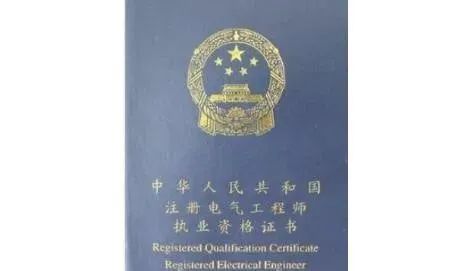
How to obtain an electrical engineer certificate?
The materials required to obtain the electrical engineer certificate are as follows:
1. Professional technical position evaluation form and attachment;
2. The professional technical personnel assessment registration form from the previous year;
3. Professional papers and work summaries;
4. Professional technical personnel competency test certificate;
5. Five 1-inch color photos without headwear, two copies of ID, and two copies of the highest degree certificate.
The process of obtaining the electrical engineer certificate is as follows:
1. Register on the Chinese personnel examination platform;
2. Fill in the information: including name, gender, place of origin, major, graduation school, certificate type, certificate number, exam level, exam subjects, exam region, etc.;
3. Payment: After the review is approved, payment can be made to complete the registration;
4. After registration, print the admission ticket in time and participate in the exam on time.
The six essential skills that electrical engineers must master are as follows:
1. Electrical Knowledge
What is the most fundamental and important skill for an electrical engineer?
It is none other than electrical knowledge. Many who have engineering experience in large state-owned enterprises know that the drawings from design institutes often do not match the actual situation on site. I once had the fortune to meet a young designer from a design institute who, when discussing some component parameters, was told by us that many of the specifications in his designs were insufficient. However, he argued confidently, making it seem reasonable, and I was left speechless. Of course, I cannot generalize; there are many experts in design institutes, and their experience is indeed helpful in coordinating large projects.
What I want to say is that the first step for electrical engineers entering the workplace must start with electrical knowledge. Lacking this knowledge will inevitably lead to design flaws later on. Moreover, those without electrical knowledge cannot judge faults at all. Therefore, this is the most fundamental skill.
2. PLC Programming and Application
What distinguishes electricians from electrical engineers?
The most obvious difference is the application and diagnosis of PLC programming.
So, you may ask, there are various PLCs on the market; which brand should one learn?
Two suggestions:
1. Focus on hardware conditions, meaning you should learn the PLC you can access; because PLC is not a theoretical research item, it is a practical control unit. Studying for a year in books is less effective than actually programming for a month, so get your hands on a PLC, study it, and learn it. Once you master one type of PLC, learning others will be much easier.
2. After learning the PLC at hand or if you have no direction, I suggest choosing Siemens PLC or Mitsubishi PLC, as Siemens is the largest PLC manufacturer globally. Its stability and processing speed surpass other brands, and it is also the most used in China. The market determines its importance. Although Mitsubishi PLC has a lower market share than Siemens, many domestic software has imitated Mitsubishi PLC’s programming methods, so it can also be considered.
3. CAD or Eplan Drawing Software
For electrical engineers, drawings are extremely important, so mastering drawing software is a must. This is beyond doubt. Moreover, circuit design and electrical diagram reading are interrelated; being able to draw electrical diagrams means you can understand them. The more you look at electrical diagrams, the better you can design them. This requires learning based on actual project experience; the more you see and do, the more you will naturally learn.

When we mention drawing software, we cannot avoid discussing Eplan. This software is the standard for drawing in foreign enterprises, meaning almost all foreign companies use this software for drafting. Of course, the advantages of this software are incomparable to CAD, such as the automatic generation of terminal diagrams and cross-referencing of drawings, but the price of excellence is that it is more complex to operate than CAD. Thus, most domestic companies use CAD for drafting because its advantages are simplicity and clarity.
4. Variable Frequency Drive or Servo Technology
For large projects, variable frequency drives are often required, and in cases with high precision requirements, servo systems are also needed. Variable frequency drives and servos have their control systems, and they need to be set up before being connected to the PLC to handle complex industrial situations. A correct setup not only ensures control precision but can also significantly improve production efficiency and reduce maintenance cycles.
5. Touch Screens or Configuration Software
PLC is ultimately just a device that can achieve automation, but it does not have self-diagnostic functions. Therefore, operators often need to intervene manually. The human-machine interface, including touch screens and configuration software, displays PLC information to operators. Touch screens include screens from various brands, and configuration software includes Configurator King, WINCC, INTOUCH, etc. Foreign engineers generally use VB and other programming languages to develop these functions.

6. Robotics and Vision Systems
In recent years, the industrial development of robotics has become a hot industry. Robots have irreplaceable functions in many situations. However, how to select and design a good robot and how to debug an integrated system to work with robots has also been a focus in recent years. The rapid development of the robotics industry has led to market chaos, with various companies competing for market share at low prices. However, low prices have also become a limiting factor for the robotics industry, affecting quality and precision. The skill levels of designers are also mixed; many robot dealers simply sell robots to clients and perform simple processing, which fails to meet client requirements. Therefore, those familiar with robotic systems will undoubtedly occupy a place in the industrial development in the coming years.
Vision systems can be used in conjunction with robots or independently. They are widely used in control, site recognition, and inspection. It can be said that vision systems are currently very popular and will be even more crucial in the coming years, holding a status comparable to that of robots.
How to become an excellent electrical engineer?
It requires a certain level of professional background, capability, or experience. Below, I will discuss five aspects in detail:
1. Professional Background
a) Graduate in electrical engineering, electrical engineering, or related disciplines. The foundational knowledge in the field of electrical engineering is taught in related majors. Only by mastering solid foundational subject knowledge can one lay a firm starting point for advancement. As the saying goes, “A master leads you to the door; your practice is up to you.” A solid foundation will help you solve practical problems through research, independent thinking, and experimentation, even when encountering technical issues in future work. Although foundational knowledge may not help you innovate, it can provide verification guidance and reference for your journey ahead.
b) Professional titles are an unavoidable topic in China. As an electrical engineer, you face various examinations and evaluations, gradually elevating your title from assistant engineer to engineer, senior engineer, and then to professor-level senior engineer, registered electrical engineer, or other higher-level titles. These titles objectively reflect an electrical engineer’s work ability or level to some extent.
c) In addition to participating in title evaluations, actively engage in different associations in society or apply to become a member of foreign standard organizations such as IEC, IEEE, IET, etc. This allows you to stay updated on industry development trends and standard updates.
2. Design Experience
As an electrical engineer, the main job is to engage in design work related to electrical specialties. Besides accumulating design experience through continuous work, self-learning and improvement are also crucial. You can enhance your self-learning through the following avenues:
a) In addition to reading relevant professional course books during university, after starting design work, you should thoroughly study various design specifications, design catalogs or manuals, classic design drawings, and product manuals provided by various suppliers, as well as various industry-specific journals.
b) Actively participate in internal or external design seminars and standard implementation meetings, and be proactive in asking questions or discussing relevant issues with senior colleagues during meetings.
c) Actively attend training or promotional activities organized by product suppliers, as major suppliers often control the latest technologies and innovative directions in related products. Communicating with them can broaden your horizons and provide new ideas and solutions for your design work.
d) Learn from experienced predecessors and experts you encounter, humbly seeking their insights on design experience.
e) As an electrical design engineer, you should not only broadly master various basic design requirements involved in your work but also select one or several key areas to focus on and strive to become a “spokesperson” in that field.
3. On-Site Experience
As an electrical engineer, one cannot just sit in the office and look at the sky; rich on-site experience is also an essential part of improving self-ability. Here, the term “on-site” does not only refer to project construction sites but also includes equipment production, debugging, or testing locations.
a) Electrical engineers should actively participate in the acceptance work of production sites. At the acceptance site, you can not only grasp the status of finished equipment but also verify whether the control circuit design meets usage requirements through on-site experiments. Any production or design flaws discovered can be conveniently modified or remedied, which is also a responsibility to the end user.
b) Actively participate in on-site testing work, such as withstand voltage tests, insulation tests, etc. Even if you do not personally complete these tasks, you should be familiar with various testing processes and related parameter requirements. Participating in the testing process is not only a way to learn but also allows you to promptly identify and resolve problems that arise during production, assembly, transportation, installation, and debugging.
c) Participate in on-site installation and debugging work. On-site installation and debugging work is highly specialized and usually will not be directly handled by electrical engineers. However, actively participating in it is greatly beneficial for self-improvement. Especially during equipment interlocking debugging, you can broaden your perspective and actively communicate with on-site engineers, discovering design flaws or areas for further improvement, thereby accumulating effective experience for future engineering designs.
d) If you have certain professional skills and want to experience different on-site practical environments, you can look for similar work orders on industrial platforms to not only realize your abilities and gain extra income but also help you encounter and solve more on-site issues.
4. Software Application Skills
With the continuous development of computer technology, to efficiently and accurately carry out relevant work, you should proficiently master the following skills:
a) The use of Office software, especially Word and Excel. Do not think that using these software is very simple; in fact, there are huge editing or analytical functions embedded in these document editing software. Mastering them can greatly improve work efficiency, especially with Excel.
b) Proficient use of CAD drawing software. Excellent electrical engineers can not only read relevant drawings but also draw them and understand the working principles of control components.
c) You should master the use of mainstream simulation analysis software on the market. This simulation software is not limited to electrical design; it may also involve simulation software related to other specialties. The purpose of using this software is not only to provide relevant calculation data for design work, verify design ideas, and validate design results but also to provide theoretical calculation data, which is a common requirement in overseas projects.
d) Master the basic applications of commonly used configuration software, PLC programming, or other programming software.
5. Other Abilities
a) With the increasing globalization and international exchanges, as well as the rise of China’s overseas investment and infrastructure projects, mastering a foreign language is very necessary. Whether for daily or professional communication, fluent foreign language skills help you communicate without barriers, understand others’ intentions smoothly, and improve work efficiency.
b) Learn some knowledge about management and finance. As your abilities improve, you will inevitably participate in some management work, and having necessary knowledge will help you quickly adapt to related tasks.
c) Try to expand your knowledge in other professional fields, such as mechanical processing, civil engineering, hydraulic and pneumatic transmission, variable frequency drive speed control, servo drive, etc.
d) Actively exercise and maintain physical and mental health. The greater your ability, the greater the pressure. On the road to success, you will inevitably encounter heavy workloads, and maintaining health is essential to bear the pressures of work.
Alright, that’s about it for the introduction on “How to Obtain an Electrical Engineer Certificate? Six Essential Skills for Electrical Engineers.” I believe after reading this, everyone should have a better understanding of the electrical engineer position!
For more details, please consult: Teacher Wu 18614981755 (same as WeChat)