 The International Curriculum Center of RDFZ (ICC) is located within the campus of Renmin University of China High School, situated in the heart of Beijing’s Zhongguancun High-Tech Park. It is one of the earliest and largest public school international cooperation programs in China, offering the most international high school courses. This article gathers the personal experiences of three outstanding graduates from ICC—Karina (AP program), Vivian (A Level program), and Abby (IB program)—to showcase the features of different international curriculum programs at ICC and provide course selection advice. Karina shares her active classroom atmosphere and rigorous academic research experience in the AP program, particularly through her deep dive into the AP Capstone project, offering insights for students interested in research exploration. Vivian discusses the flexibility and depth of the selected courses in the A-Level program, emphasizing the importance of balancing interest and academic depth. Abby provides valuable course selection strategies and future planning advice for students eager for diverse development, focusing on the comprehensive training and high-level faculty team in the IB program. Let’s take a look together!👇Karina’s Experience in the ICC AP ProgramWhat are the features of the ICC AP program?Karina: I think the biggest characteristic of the AP program is the relaxed teaching style of the teachers. The classroom mainly focuses on interactive discussions, and students are quite proactive in communicating and exploring with the teachers, creating a lively classroom atmosphere. However, the AP courses also have a strong academic component, which is also a standout feature of the ICC AP program: AP Capstone Project. The program consists of AP Seminar and AP Research. During the learning process, we systematically learn how to conduct research. AP Seminar mainly involves secondary data research, requiring practice in completing literature reviews; AP Research is studied in the senior year, focusing on original primary research, where we determine the research topic, research methods, data collection, data analysis, and complete the thesis from scratch. I recommend this project to students who have the capacity; I personally completed a literature review on genetically modified organisms in the field of biology during the AP Seminar class and conducted a modeling project on proteins in the AP Research class in my senior year. These two learning experiences greatly helped me determine my professional direction and provided unique original material for my final essay writing. Additionally, our cohort’s AP program had tiered teaching in the first year, with two classes being math and physics enhancement classes. I was in one of those classes, where we could take AP Calculus AB and AP Physics 1 early, allowing students with strong math skills to solidify their foundations while highlighting their strengths.
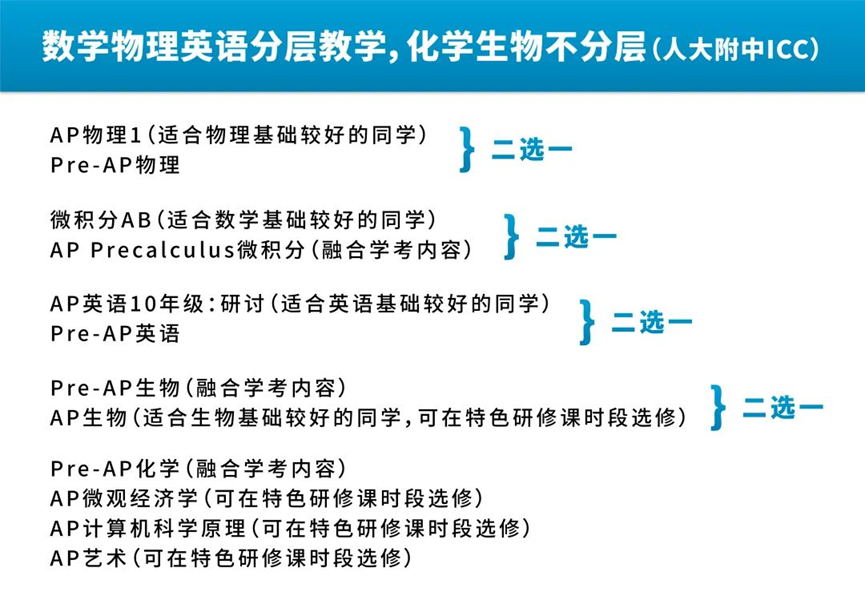
Image information from the education exhibition lecture
Please refer to the official sources for the latest information
How did you choose your courses in the ICC AP program? What advice do you have for younger students regarding course selection?
Karina: Because I was in the math and physics enhancement class, I chose AP Calculus AB and Physics 1 in my first year, and I also self-studied microeconomics and AP Calculus BC. Although the AP exams were canceled in my first year, I took the exams for these subjects in my second year.
In my second year, I chose my major courses: AP Biology, AP Statistics, English Language, and AP Seminar, and I self-studied AP Chemistry, ultimately taking all eight AP subjects I studied in my first and second years during the AP exams.
In my senior year, I chose AP English Literature, AP Psychology, AP Research, and Advanced College Mathematics (a unique high-level math course at ICC).
I advise younger students that if they have the capacity, they can self-study some courses they are good at and interested in during their first and second years, allowing them to learn some higher-level and more challenging courses early on. However, they must consider their energy levels and not challenge themselves blindly.
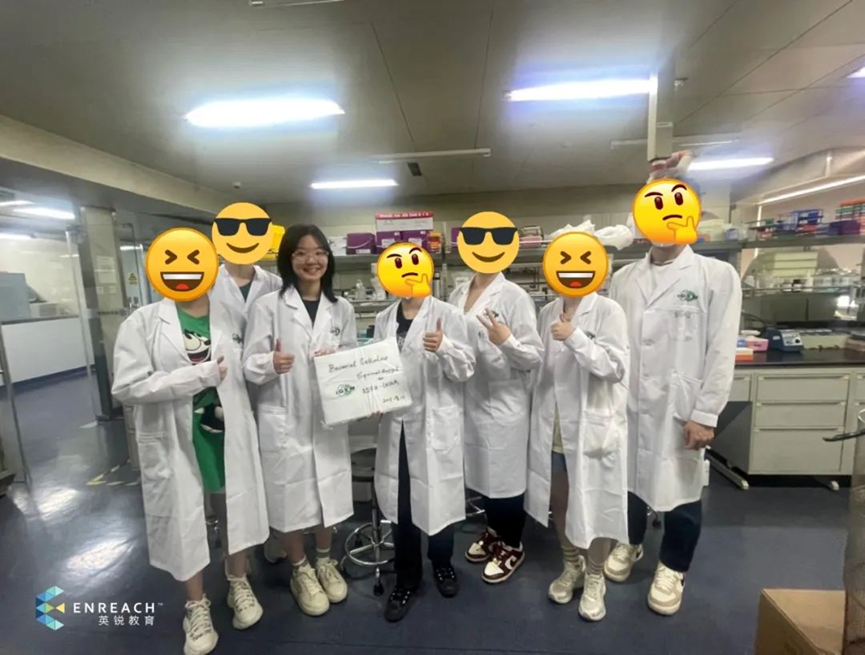 Image of Karina participating in the iGEM synthetic biology competitionVivian’s Experience in the ICC A-Level ProgramWhat are the features of the ICC A-Level program?Vivian: In our A-Level program, we can choose up to five courses and at least four courses. Compared to the six courses in the IB program and the more course options in the AP program, we can select fewer courses within the same time frame. This also means we can study more in-depth course content and deepen the knowledge we have learned, which can better connect with future university academic courses.How did you choose your courses in the ICC A Level program during high school? What advice do you have for younger students regarding course selection?Vivian: In my first year, I chose to study AS Mathematics, and in my second year, I chose Mathematics, Physics, Chemistry, and Economics, dropping Economics in my senior year to study Advanced Mathematics. Regarding course selection advice, I hope younger students can be guided by their interests. During the exploration of academic interests, they can first look at textbooks and understand the assessment methods of the subjects. For example, Economics is a humanities subject that requires assignments to be answered in the form of essays. If writing is a weakness for students, or if they are like me and excel in science problem-solving, it might be better to choose science subjects. Additionally, the A-Level course structure requires a deeper understanding of academic content, and if there is not a strong interest, it can be difficult to continuously invest time and energy into learning, leading to students dropping corresponding courses in their senior year, as I did with Economics.
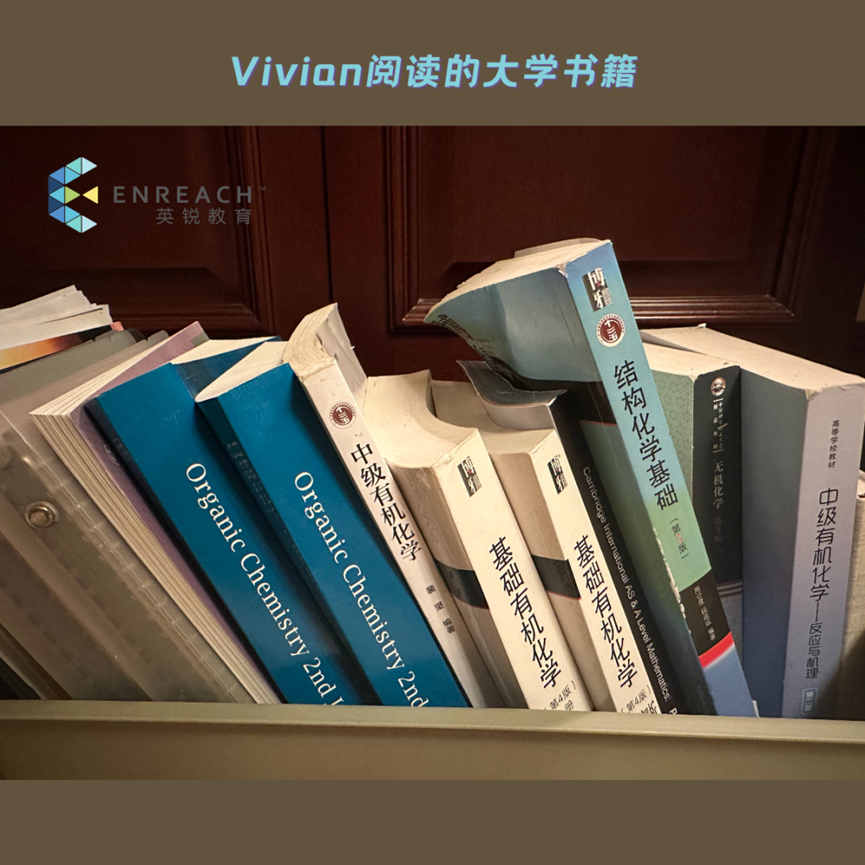 Image provided by Vivian
Abby’s Experience in the ICC IB Program
What are the features of the ICC IB program?
Abby: From my personal perspective, the ICC IB program provides students with many resources and support in the curriculum settings for science, social science, and business, such as our advanced laboratories that offer strong support for our experimental assignments in natural sciences. Another aspect is our high-level faculty team. The IB teachers are overall qualified to be described as