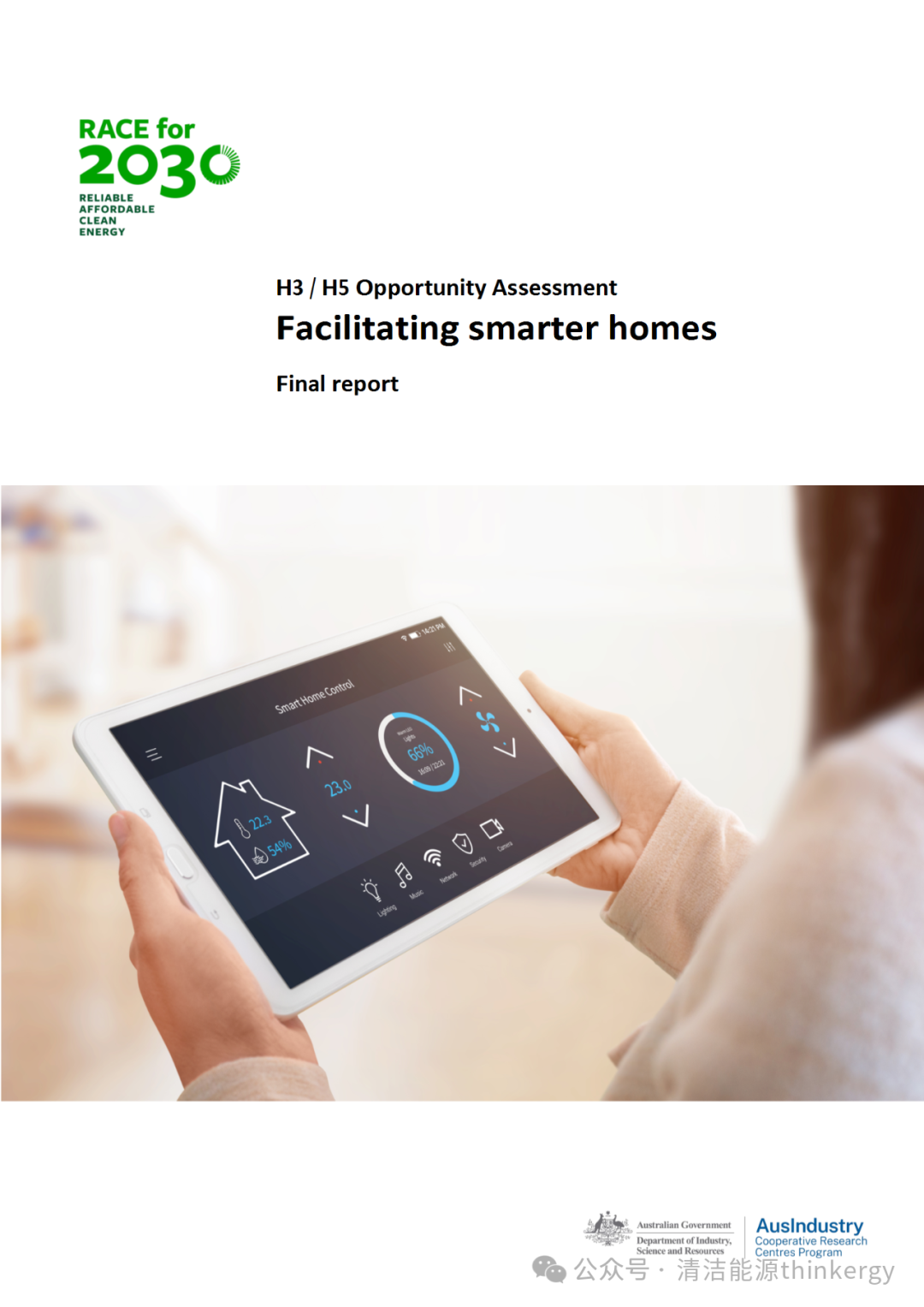
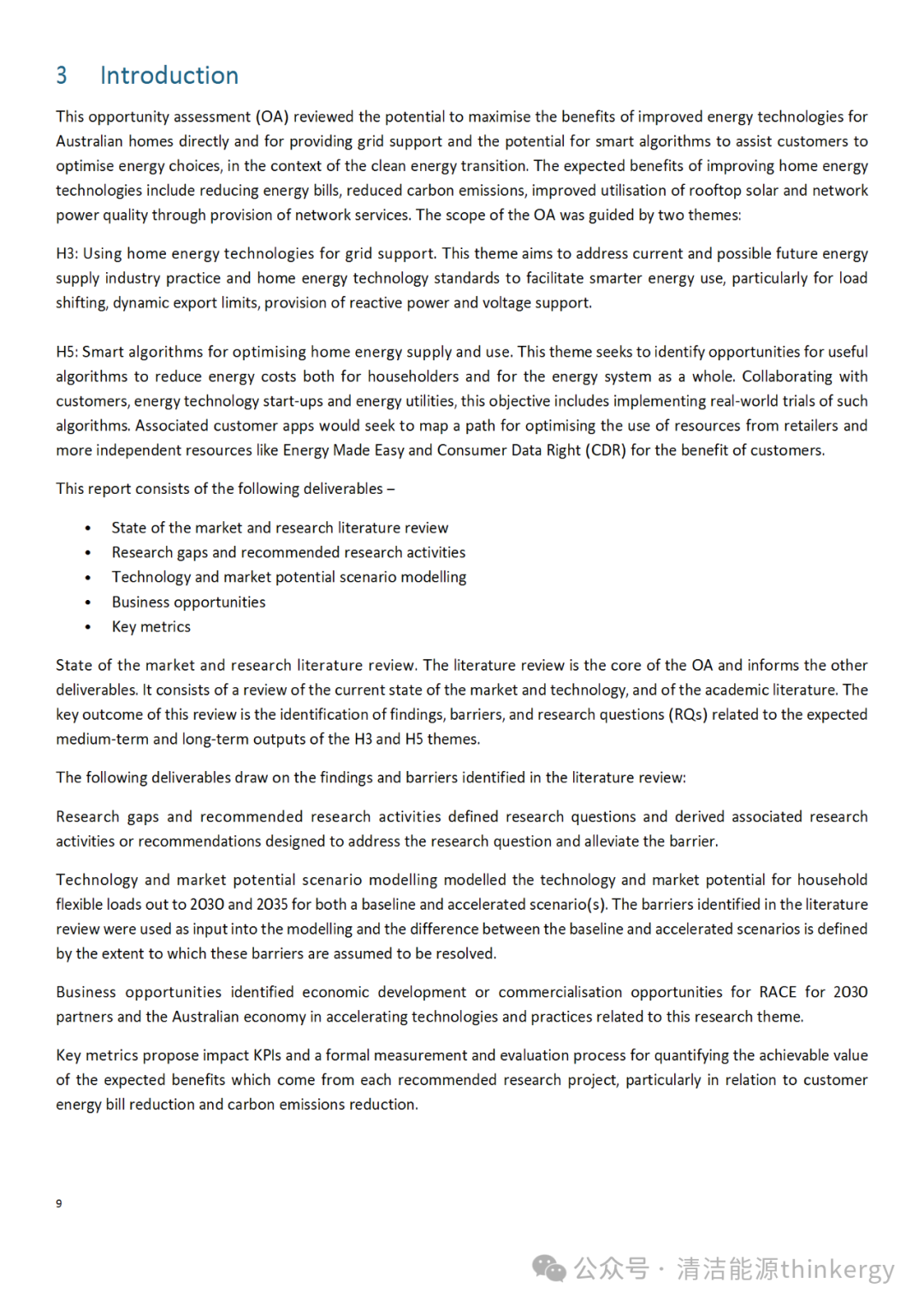
This opportunity assessment (OA) reviews the potential for directly enhancing energy efficiency in Australian households through improved energy technologies in the context of the clean energy transition, as well as providing support to the grid, while exploring how smart algorithms can help customers optimize their energy choices. The expected benefits of improving household energy technologies include lower energy bills, reduced carbon emissions, increased efficiency of rooftop solar utilization, and improved grid quality through network services. The scope of the OA is guided by two themes:
H3: Supporting the grid with household energy technologies. This theme aims to address the practices and standards of household energy technologies in the current and future energy supply industry to promote smarter energy use, particularly load shifting, dynamic export limits, provision of reactive power, and voltage support. Compiled by Chen Jiangyun
H5: Smart algorithms for optimizing household energy supply and usage. This theme aims to explore opportunities for effective algorithms to reduce energy costs for household users and the entire energy system. By collaborating with customers, energy technology startups, and energy suppliers, the goal is to implement practical application trials of these algorithms. Relevant customer applications will help customers plan resource usage paths, including resources provided by retailers and independent resources like “Energy Easy” and “Consumer Data Rights” (CDR) to better meet customer needs.
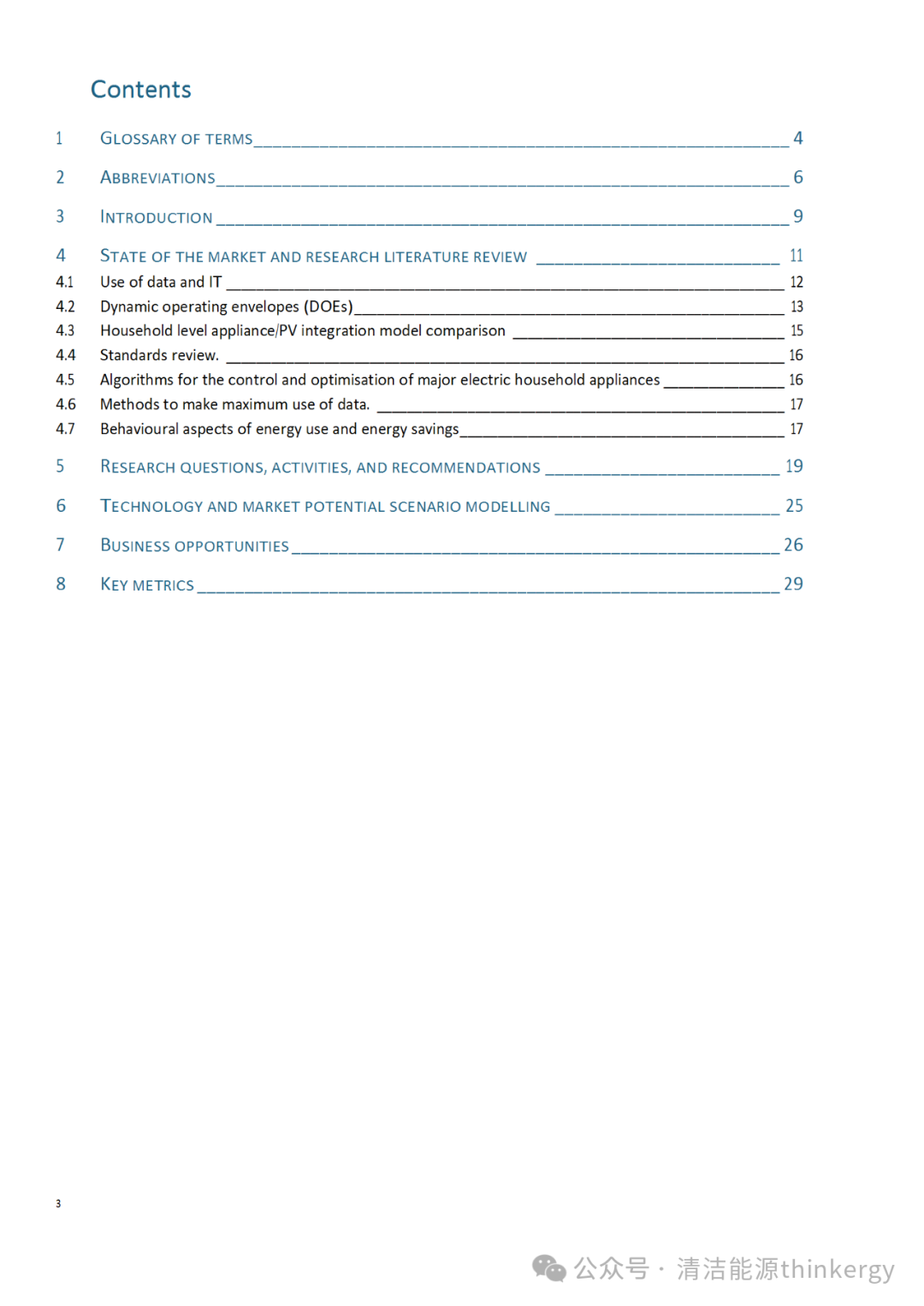
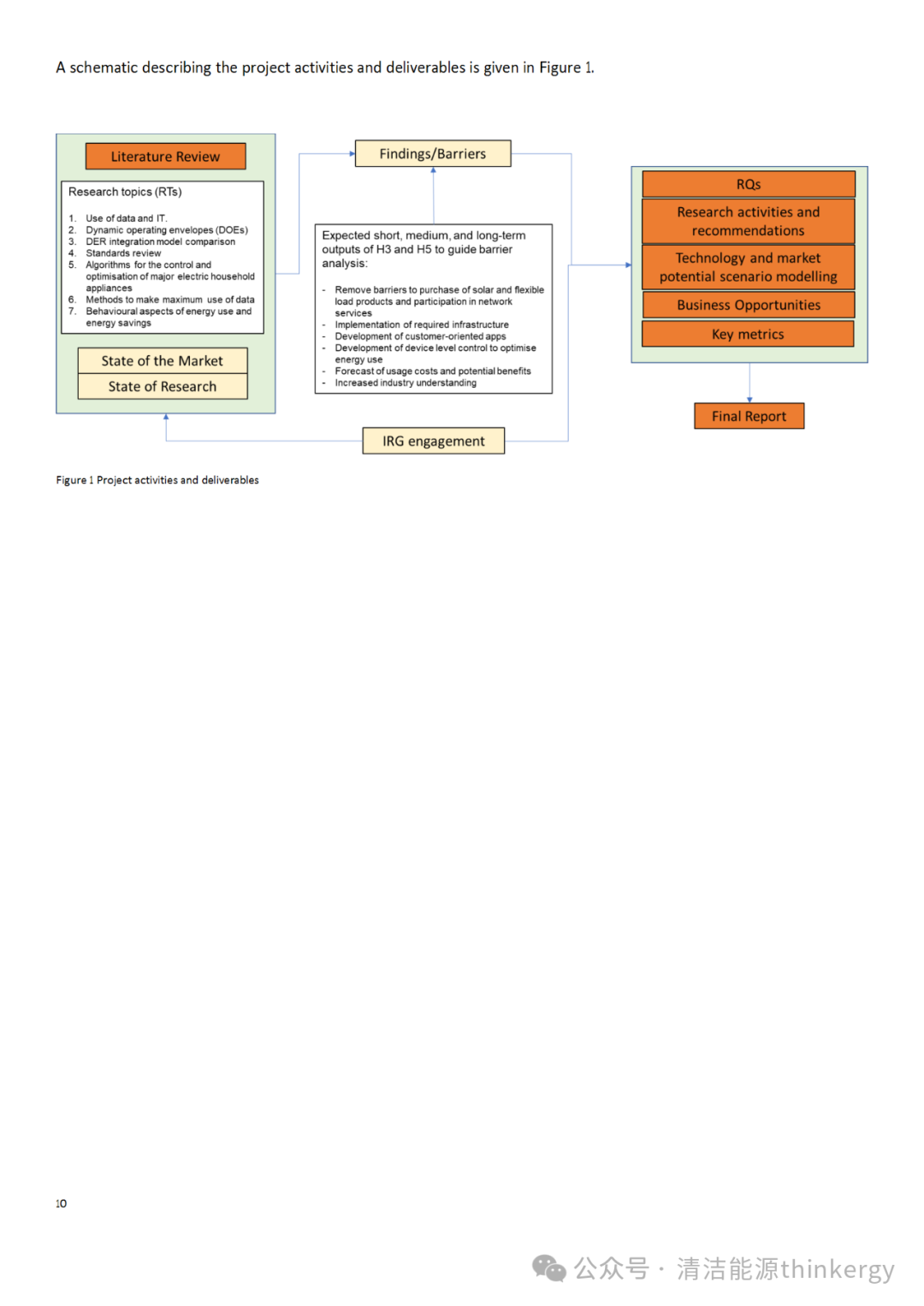
This report includes the following deliverables:
• Market status and literature review
• Research gaps and proposed research activities
• Technical and market potential scenario modeling
• Business opportunities
• Key indicators
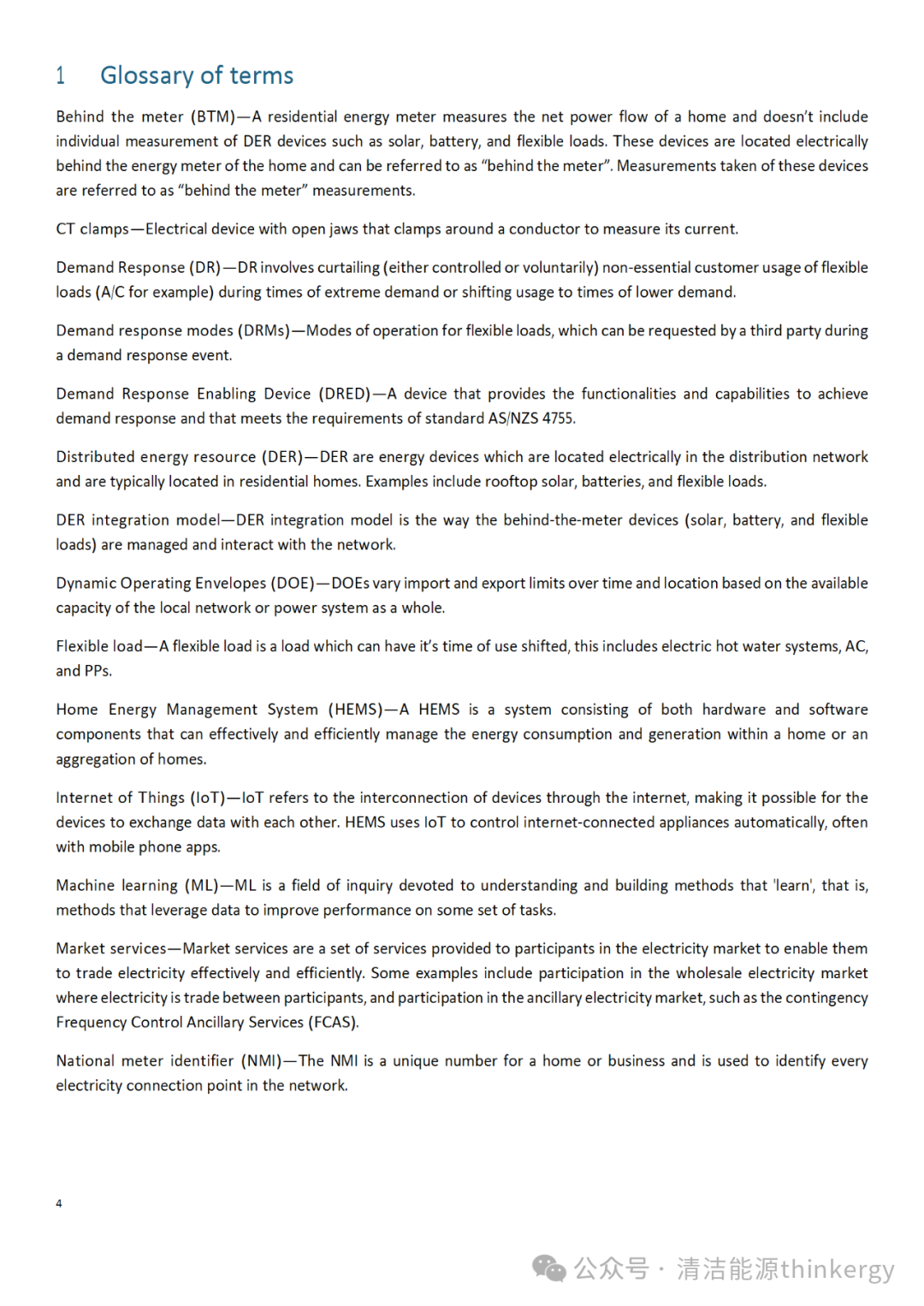
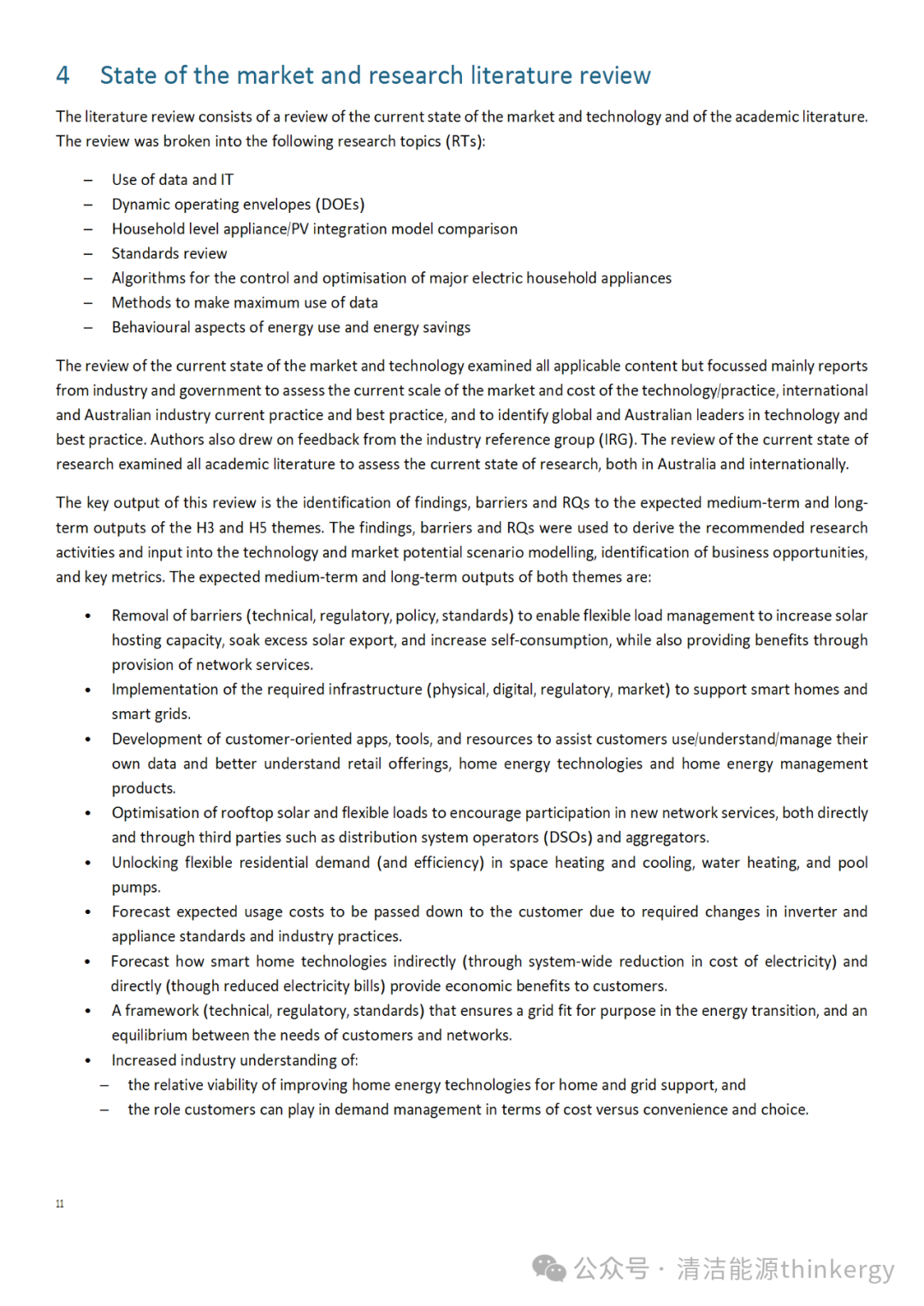
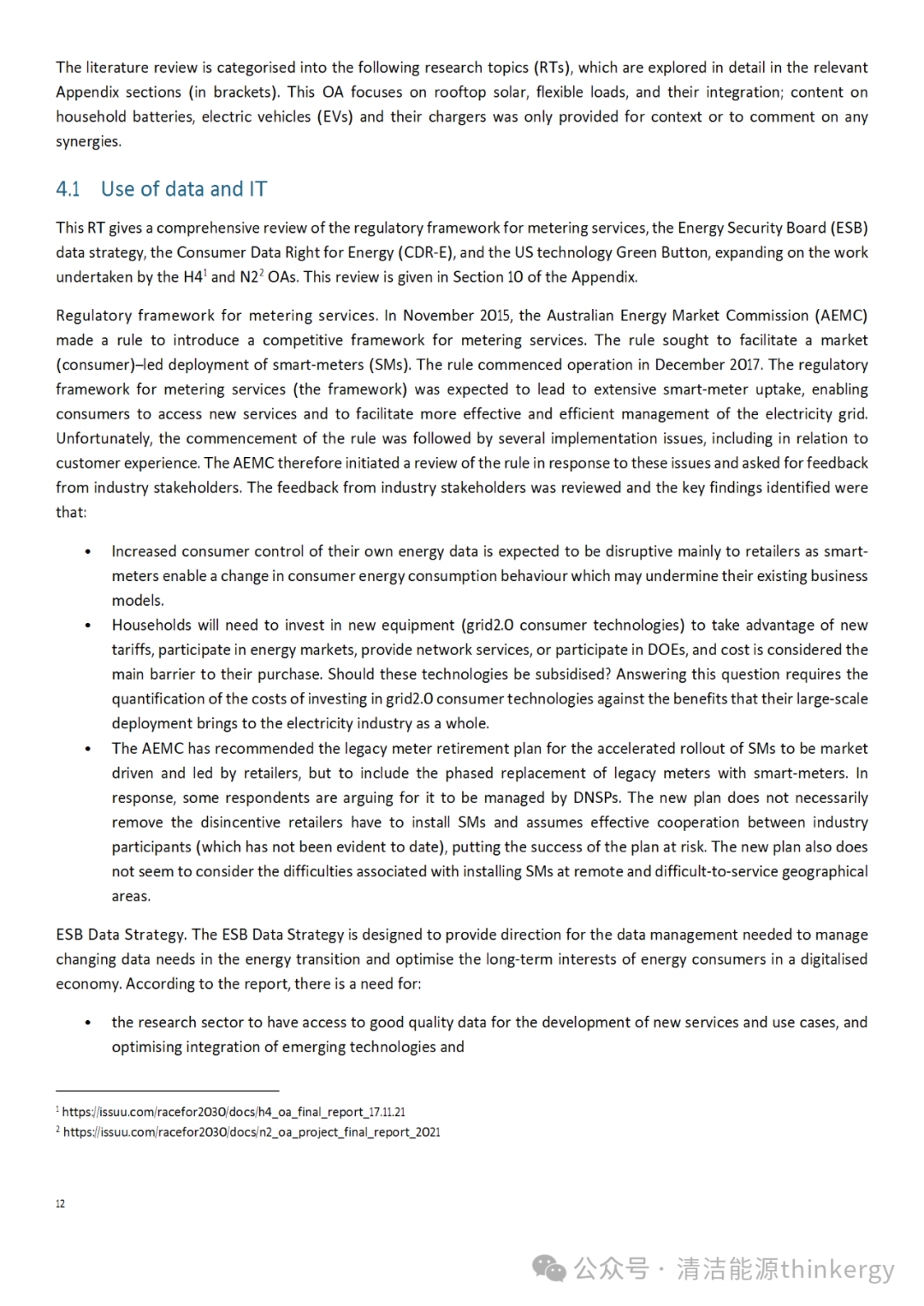
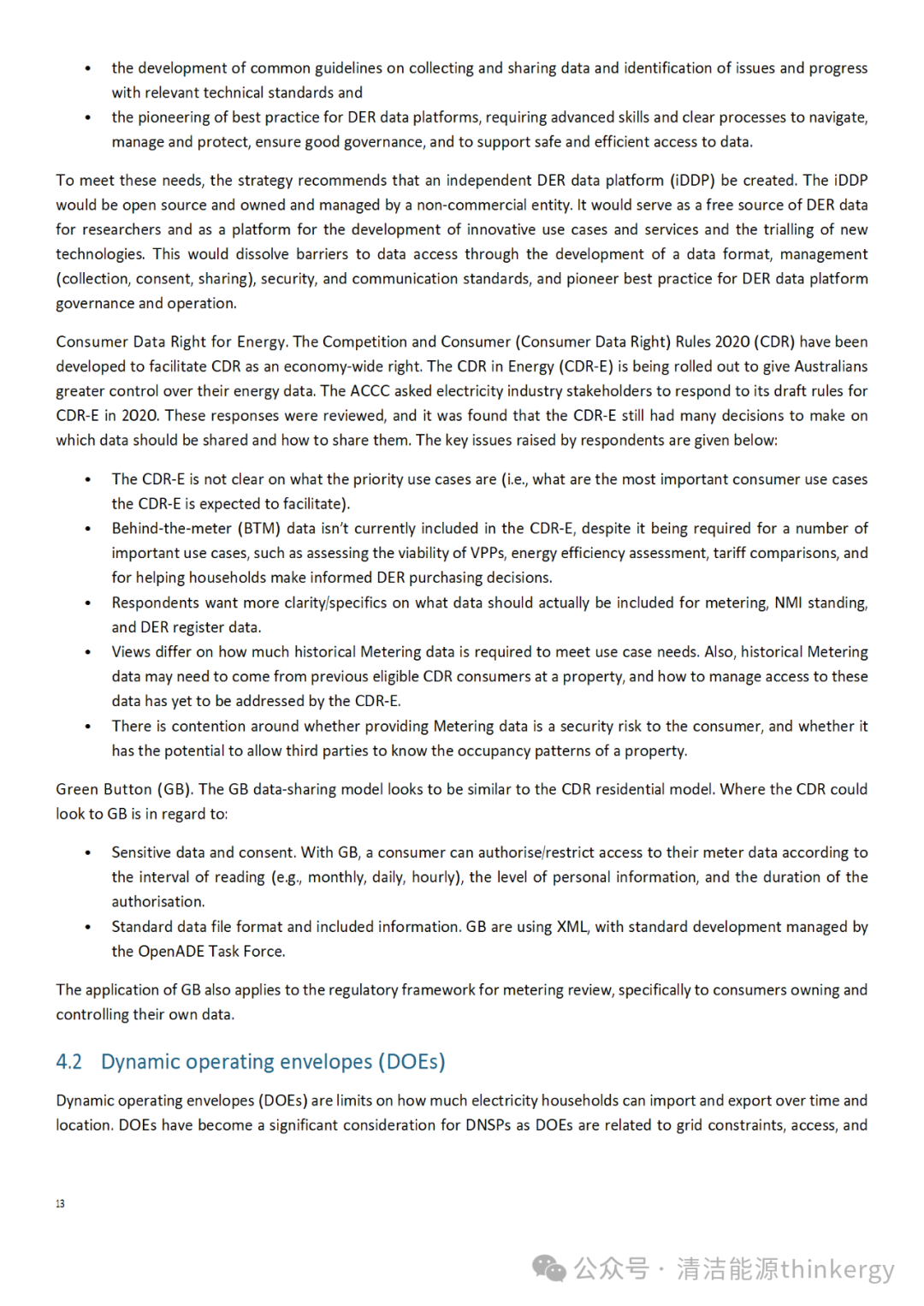
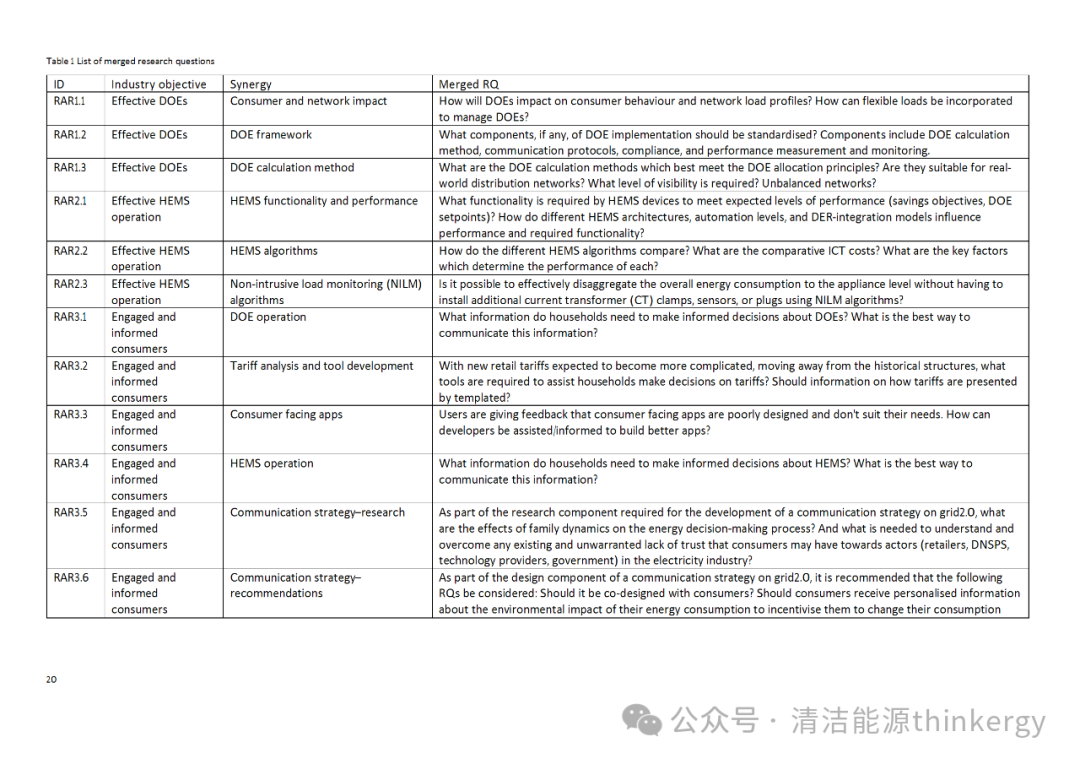
The market status and literature review. The literature review is a core part of the open access (OA) and provides informational support for other deliverables. It covers a review of the current market and technological status, as well as an analysis of academic literature. The main findings of this review lie in identifying discoveries, barriers, and research questions (RQs) related to the expected mid-term and long-term outputs of themes H3 and H5.



Scan the code or add WeChat 583769685 to request the full report
Disclaimer:This public account article is sourced from various public media content, organized, translated, and edited for reference only. The views and content in the article do not provide any guidance and do not constitute any project suggestions or commitments to readers! If this article inadvertently infringes on your rights, please contact WeChat 583769685 for timely handling.
1. Notice on soliciting participating units for the standard compilation of “Technical Regulations for Ground Source Heat Pump Coupled Solar Seasonal Soil Storage Systems”
2. Notice on soliciting participating units for the standard compilation of “Perovskite Photovoltaic Components for Construction”
3. Notice on soliciting participating units for the standard compilation of “Testing and Evaluation Standards for Thermal Energy Storage Equipment for Heating and Cooling”