Source | Embedded Miscellany
Today, I will share some commonly applicable skills for advanced embedded software development.
Embedded Performance Optimization
Cheng Kefe in “Embedded System Design” points out that system-level optimization is key to enhancing the competitiveness of embedded software, which should be approached from three dimensions: code efficiency, resource utilization, and real-time performance.
Embedded software engineers looking to advance can consider transitioning from “function implementation” to “performance deep dive”, mastering memory management, cache optimization, compiler tuning, and real-time analysis techniques to break through performance bottlenecks in embedded software.
1. In-Depth Memory Management Practice
Optimization direction: dynamic memory allocation optimization, memory leak detection, and fragmentation management.
-
Dynamic Memory Pool Design: Implement a fixed-size memory pool in FreeRTOS, reducing memory allocation latency from microseconds to nanoseconds.
#define POOL_SIZE 1024 static uint8_t mem_pool[POOL_SIZE]; static PoolHandle_t pool = xPoolCreate(mem_pool, POOL_SIZE, sizeof(int)); int* ptr = xPoolAllocate(pool); -
Memory Leak Detection: Use Valgrind to analyze memory leaks on ARM platforms, locating memory leak points in sensor drivers for industrial control systems.
valgrind --leak-check=full --track-origins=yes ./app
Related Tools:
- Valgrind: Supports memory leak detection and performance analysis for embedded Linux.
- FreeRTOS Memory Debugging: Real-time monitoring of heap usage via
<span>vPortGetFreeHeapSize()</span>.
2. Cache Optimization and Code Refactoring
Optimization direction: data alignment, loop unrolling, and cache-friendly algorithm design.
Optimization Strategies:
-
Data Alignment: Force structures to align to 64 bytes to improve cache hit rates.
typedef struct __attribute__((aligned(64))) { uint32_t sensor_data[16]; uint32_t timestamp; } DataPacket; -
Loop Unrolling: Unroll the loop of the FFT algorithm 4 times to reduce loop control overhead.
for (int i = 0; i < N; i += 4) { process_sample(data[i]); process_sample(data[i+1]); process_sample(data[i+2]); process_sample(data[i+3]); } -
Locality Optimization: Store frequently accessed variables on the stack to reduce cache misses.
void calculate(void) {
    int local_var = global_var; // Copy global variable to stack
    // Subsequent use of local_var
}
3. Compiler Optimization and Code Generation
Optimization direction: compiler option tuning, inline functions, and specific instruction set optimization.
Compiler Configuration:
-
GCC Optimization Options:
-O3 -ffast-math -march=armv7-a -mfpu=neon-vfpv4 -
Inline Functions: Use
<span>__attribute__((always_inline))</span>to force inline critical functions.static inline uint32_t multiply(uint32_t a, uint32_t b) { return a * b; } -
NEON Instruction Optimization: Utilize ARM NEON instructions to accelerate image processing.
#include <arm_neon.h>
void image_filter(uint8_t* src, uint8_t* dst, int size) {
    int i = 0;
    for (; i < size; i += 16) {
        uint8x16_t vec = vld1q_u8(src + i);
        vec = vaddq_u8(vec, vdupq_n_u8(50));
        vst1q_u8(dst + i, vec);
    }
}
4. Real-Time Analysis and Optimization
Optimization direction: task execution time statistics, worst-case execution time (WCET) analysis.
Toolchain Practice:
-
Task Time Statistics: Use
<span>vTaskGetRunTimeStats()</span>to analyze task CPU usage.char buffer[1024]; vTaskGetRunTimeStats(buffer); printf("Task stats:\n%s", buffer); -
WCET Analysis: Analyze the worst execution paths of industrial control code based on abstract interpretation techniques.
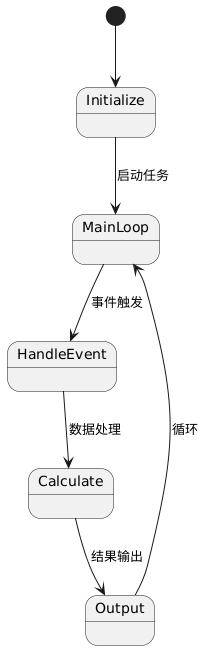
In-Depth RTOS Kernel Analysis
Jean J. Labrosse in “Embedded Real-Time Operating System μC/OS-III” points out that the core value of RTOS lies in achieving “predictable task scheduling”.
Embedded software engineers looking to advance can consider transitioning from “using RTOS” to “understanding RTOS design principles”, mastering kernel trimming, scheduling algorithm optimization, and real-time analysis.
For embedded software engineers aiming to advance, focus on the following three aspects:
-
Kernel Trimming and Customization: Analyze the
<span>configUSE_PORT_OPTIMISED_TASK_SELECTION</span>configuration item in FreeRTOS to understand the impact of hardware leading zero instructions on scheduling efficiency. Practical case: On the STM32F767 development board, by disabling<span>configUSE_TRACE_FACILITY</span>, the kernel code size was reduced from 12KB to 8KB. -
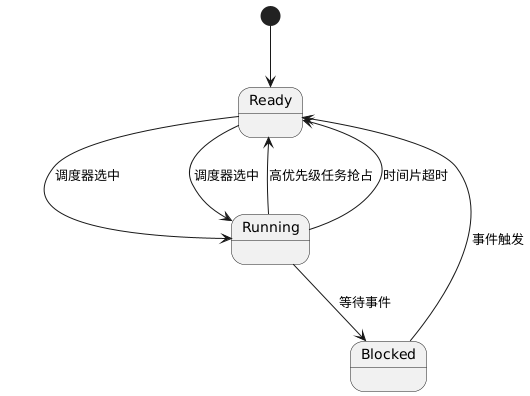
Scheduling Algorithm Optimization: Implement a hybrid mode of priority-based preemptive scheduling and time-slice rotation to reduce task switching latency. As shown:
-
Real-Time Analysis Tools
Master the use of
<span>vTaskGetRunTimeStats</span>function to analyze task execution time distribution. For example, the ADC sampling task is optimized through DMA to reduce CPU usage.
Building Embedded Security Systems
OWASP in the “Embedded Security Guidelines” points out that 80% of IoT vulnerabilities stem from flaws in firmware update mechanisms. Embedded software engineers looking to advance can consider transitioning from “function implementation” to “security design”, mastering encryption algorithms, secure boot, and penetration testing techniques.
-
Encryption Algorithm Practice
#include <aes.h>
uint8_t key[] = "12345678901234567890123456789012";
uint8_t iv[] = "0123456789abcdef";
aes_context ctx;
aes_init(&ctx, key, 256);
aes_crypt_cbc(&ctx, AES_ENCRYPT, data_len, iv, data, encrypted_data);
- Use AES-256-CBC mode to encrypt sensor data, code example:
Secure Boot Implementation
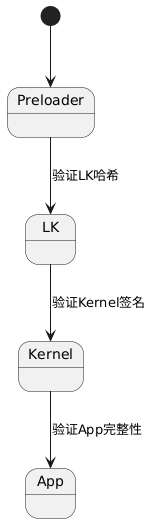
- Toolchain: For example, use TI Uniflash to generate encrypted images and store keys via eFuse.
- Trust chain-based boot process:
Penetration Testing Practice
- Simulated attacks: For example, use Metasploit’s
<span>auxiliary/scanner/ssh/ssh_login</span>module to brute-force device SSH passwords. - Defensive measures: Set limits on login failure attempts and enable SSH key authentication.
System Architecture Design
“Embedded System Design: Modular Programming Based on C Language” emphasizes that a layered architecture can reduce code maintenance costs by 40%.
Embedded software engineers looking to advance can consider transitioning from “modular programming” to “layered architecture design”, mastering state machines, layered models, and design patterns.
-
Layered Architecture Practice
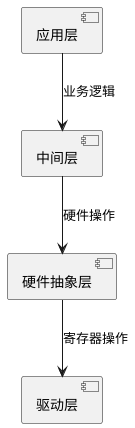
For example: In industrial control systems, encapsulate the Modbus protocol stack in a middle layer to achieve hardware-independent communication logic.
- Four-layer architecture model:
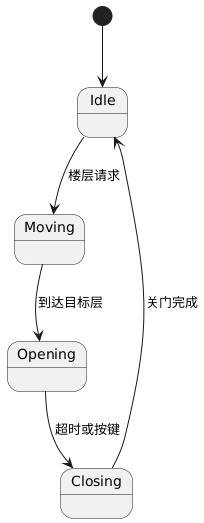
State Machine Design: For example, the elevator control system uses a state machine to manage various states. State transition diagram:
Design Pattern Application
- Factory pattern: Dynamically create different types of sensor drivers.
- Singleton pattern: Ensure a globally unique logger instance.
- Previous related articles:Embedded Programming Models | Observer Pattern
- Previous related articles:Embedded Programming Models | MVC Model
- ……
Power Management
TI in the “Low Power Design White Paper” points out that software strategies can account for over 40% of system power consumption, requiring deep optimization from three dimensions: code efficiency, task scheduling, and hardware collaboration.
Embedded software engineers looking to advance can consider transitioning from “hardware drivers” to “software strategies”, mastering dynamic voltage frequency scaling (DVFS), sleep mode optimization, peripheral dynamic management, and RTOS power scheduling techniques to achieve energy efficiency leaps in embedded software.
Previous related articles:Key points of low-power software design!
1. Dynamic Voltage Frequency Scaling (DVFS)
Based on the Linux cpufreq subsystem and RTOS, dynamically adjust CPU frequency to balance performance and power consumption.
-
Linux System DVFS Configuration
-
Use the
<span>cpufreq</span>subsystem to implement dynamic frequency adjustment:# View available frequency levels cat /sys/devices/system/cpu/cpu0/cpufreq/scaling_available_frequencies # Set ondemand policy echo "ondemand" > /sys/devices/system/cpu/cpu0/cpufreq/scaling_governor
RTOS Lightweight DVFS Implementation
-
Customize frequency adjustment interface in FreeRTOS:
void vTaskAdjustFrequency(uint32_t freq) {
    if (freq > MAX_FREQ) freq = MAX_FREQ;
    if (freq < MIN_FREQ) freq = MIN_FREQ;
    HAL_RCC_ClockConfig(freq, RCC_PLLSOURCE_HSE);
}
2. Sleep Mode Optimization and Wake-Up Mechanism Design
-
Deep Sleep Mode Configuration
-
STM32L476 Stop mode configuration:
RCC->APB1ENR1 |= RCC_APB1ENR1_PWREN; // Enable power interface
PWR->CR3 |= PWR_CR3_SCUDS;            // Configure deep sleep mode
HAL_PWR_EnterSTOPMode(PWR_LOWPOWERREGULATOR_ON, PWR_STOPENTRY_WFI);
Wake-Up Event Management
-
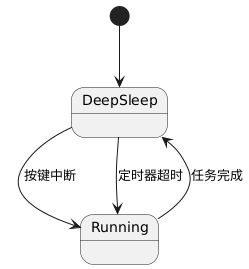
Multi-source wake-up state machine:
Power-Sensitive Peripheral Collaboration
-
For example, Nordic nRF52840’s PPI hardware control:
NRF_PPI->CH[0].EEP = (uint32_t)&NRF_GPIO->EVENTS_PIN0;
NRF_PPI->CH[0].TEP = (uint32_t)&NRF_SPI0->TASKS_START;
NRF_PPI->CHENSET = 1 << 0; // Enable PPI channel
3. Peripheral Dynamic Management and Power Consumption Modeling
-
Peripheral Power Consumption Analysis
- Use specialized instruments to record current waveforms and identify abnormal power consumption points.
Dynamic Start-Stop Strategy
-
Peripheral management for industrial camera systems:
void Camera_Init(void) {
    HAL_GPIO_WritePin(CAM_PWDN_GPIO_Port, CAM_PWDN_Pin, GPIO_PIN_RESET); // Wake up camera
    HAL_Delay(100);
    Camera_Configure();
}

void Camera_Deinit(void) {
    HAL_GPIO_WritePin(CAM_PWDN_GPIO_Port, CAM_PWDN_Pin, GPIO_PIN_SET); // Turn off camera
}
Power Behavior Modeling
-
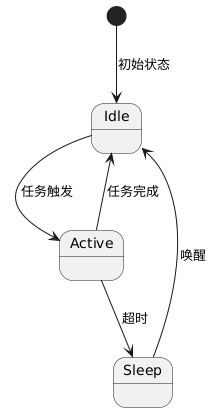
Establish a state machine power model:
4. RTOS Power Scheduling and Task Optimization
-
Tickless Idle Mode
-
FreeRTOS configuration:
#define configUSE_TICKLESS_IDLE 1
#define configEXPECTED_IDLE_TIME_BEFORE_SLEEP 100 // Expected idle time (ms)
Task Priority and Power Balance
-
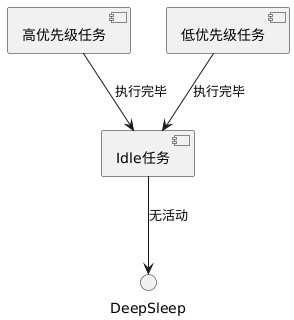
Task scheduling strategy:
Power-Sensitive Algorithm Design
-
Optimize the memory access pattern of the FFT algorithm:
void FFT_Optimized(float *data, int n) {
    for (int i = 0; i < n; i += 4) {
        float a = data[i];
        float b = data[i+1];
        // Vectorized computation
    }
}
This concludes today’s sharing. The advancement direction of embedded software certainly includes more than just the points listed above. Actual learning should be combined with one’s industry relevance or development direction.
———— END ————

● Column “Embedded Tools”
● Column “Embedded Development”
● Column “Keil Tutorials”
● Selected Tutorials from Embedded Column
Follow the public account and reply “Join Group” to join the technical exchange group according to the rules, reply “1024” to see more content.
Click “Read the Original” for more shares.