Currently, the Artificial Intelligence and Robotics industry (referred to as the “AIR industry”) is becoming a core area of global technological competition and industrial transformation. The deep integration of artificial intelligence with various sectors of the economy and society will reshape human production and lifestyle paradigms.
The development of the AIR industry relies heavily on deep financial empowerment. From basic research to technology transfer, from commercialization to large-scale expansion, the financial needs at different stages vary significantly. Building a financial support system that adapts to the development of the AIR industry requires strengthening long-term capital supply, cultivating a patient capital ecosystem, and unleashing the effectiveness of strategic capital.
As a pioneer in reform and opening up and a strong province in technological innovation, Guangdong has a solid industrial foundation and vast application space. This time, it is taking the lead nationwide in exploring innovative paths for the AIR industry to promote the high-level circulation of “technology-industry-finance,” which has significant demonstration significance and will provide a “Guangdong model” for promoting high-quality development of the AIR industry across the country.
Artificial intelligence has moved from the laboratory to various industries, and the era of robotics is gradually becoming a reality.
On September 19, the Guangdong Province AI and Robotics Industry Innovation Products and Services Release Conference (Guangzhou Session) officially opened, lasting four days.
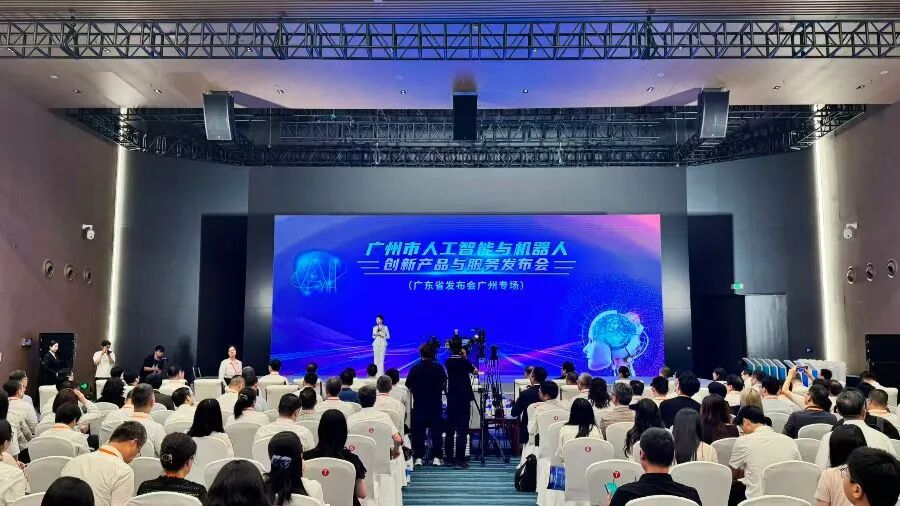
Guangdong Province AI and Robotics Industry
Scene of the Innovation Products and Services Release Conference in Guangzhou
The AIR industry has become a core track for countries and regions to seize the high ground of technological innovation. The industry’s heat has brought about a rise in capital. According to IT Juzi statistics, as of mid-September, the total financing amount in China’s AI industry has reached 866.29 billion yuan, while the total financing in the robotics industry has reached 124.36 billion yuan. The primary market continues to increase investment, and the secondary market concepts are active, with diverse capital such as banks, insurance, and venture capital all showing high interest in this emerging industry.
Guangdong has been vigorously promoting the development of the AIR industry this year, continuously making efforts in policy support, technological breakthroughs, and creating application scenarios.
How to leverage financial power to accurately empower new industry development, guide rational investment of capital, and promote the construction of a high-level circulation of “technology-industry-finance” has become a key issue for Guangdong to promote leapfrog development of the AI and robotics industry and build a new pillar of the industry.
Why initiate a series of activities?
Core issues of industry-finance collaboration await exploration
The high-quality development of the AIR industry cannot be separated from a high-level circulation of “technology-industry-finance.” Guangdong still has many key issues that need in-depth exploration to find the right direction for financial support of industrial development and to unblock bottlenecks.
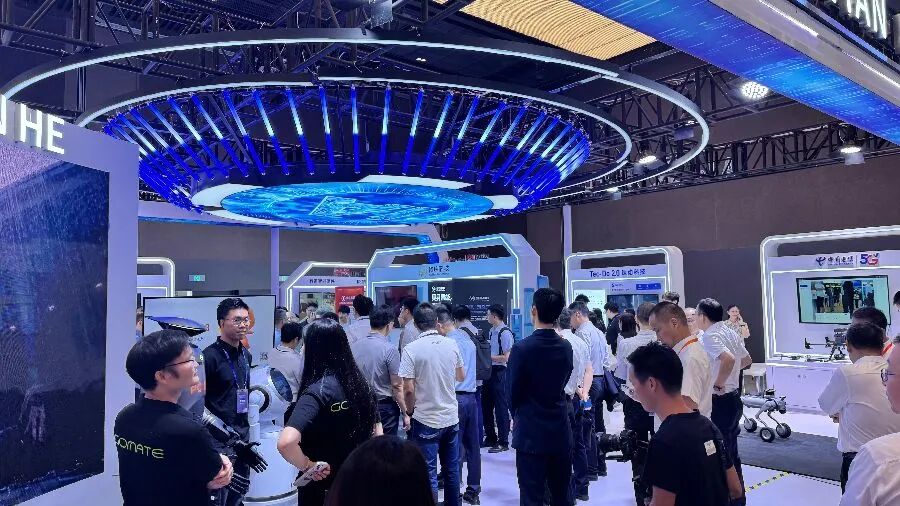
Scene of the release conference
Issue One: How to clearly outline the industry “panorama” to allow capital to accurately target its focus?
As a strong province in technological innovation, Guangdong’s AIR industry has formed certain scale advantages, but the “competitiveness portrait” of the industrial chain still needs further clarification.
From the perspective of industrial structure, does Guangdong’s AIR industry advantage lie in technological research and development, scenario applications, or in the supporting links of the industrial chain? In the new round of technological revolution, which fields have core competitiveness, which “bottleneck” technologies need to be broken through, and which emerging application scenarios are worth early capital layout? Only by clarifying these issues can capital be accurately matched with industrial needs and avoid resource misallocation.
Issue Two: How to build a matching system between capital and industry to solve the problem of “early, small, and hard technology” investment?
The AIR industry is in its early development stage, characterized by long R&D cycles, high initial investment, and uncertain profitability, which places higher demands on the patience and professionalism of capital. How to attract more long-term capital and social capital to participate and provide stable funding for industrial development? How to establish a scientific “hard technology” value assessment model to solve the “global problem” of AI enterprise valuation and reduce project selection difficulty? How to broaden channels to ensure capital flow? For banks, how to break through traditional credit thinking and construct more flexible valuation and risk control models targeting the intangible assets of AI enterprises and the growth characteristics of robotics companies?
In addition, how to promote insurance institutions to design risk protection products covering the entire life cycle of the AIR industry to safeguard capital and industry? The answers to these questions will directly affect the efficiency and depth of financial services for the industry.
Issue Three: How to strengthen the guiding role of policies and build a “bridge” for industry-finance collaboration?
Policies are an important support for promoting industry-finance collaboration. How do enterprises, investment institutions, and financial institutions experience existing AIR industry policies during implementation? Do policy tools meet the needs of different entities? How to guide capital to tilt towards early hard technology enterprises through policy combinations such as risk compensation, special funds, and tax incentives, and cultivate a patient capital ecosystem that invests early, small, long-term, and in hard technology? How to improve the supporting policies for intangible asset pledge financing in the AI field to “unshackle” banks and other financial institutions, allowing more funds to flow into innovative fields? The exploration of these policy issues will provide a more solid institutional guarantee for industry-finance collaboration.
What will we do?
Exploring Solutions for Industry-Finance Collaboration through “Six Ones”
In response to the above issues, this series of activities will focus on “Six Ones” as the core approach, aiming to provide practical solutions for industry-finance collaboration in Guangdong’s AIR industry.
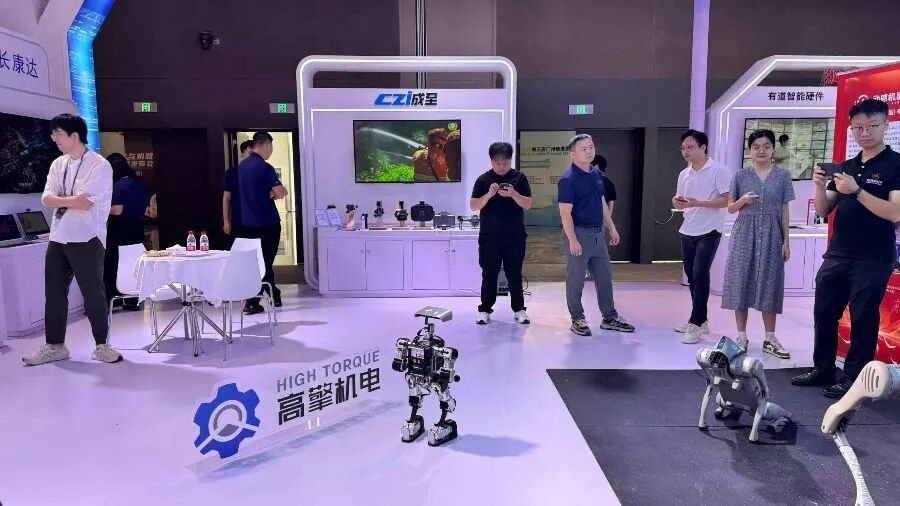
Scene of the release conference
01Form a professional research team to gather diverse insights and solidify the research foundation
Under the guidance of the Office of the Leading Group for the Innovative Development of AI and Robotics Industry in Guangdong Province, the Guangdong Provincial Department of Science and Technology, and the People’s Bank of China Guangdong Branch, the research team is jointly led by the Southern Finance All-Media Group and the Guangdong Fund Industry Association, with support from the Guangdong AI and Robotics Industry Alliance, Guangzhou Industrial Development Research Institute, Guangdong Hengjian Asset Management Co., Ltd., and Minsheng Bank Guangzhou Branch.
At the same time, the research team has received professional support from renowned universities and think tanks such as Sun Yat-sen University Lingnan College, Sun Yat-sen University Digital Economy and Policy Research Institute, Renmin University of China Shenzhen Research Institute, and Guangdong-Hong Kong-Macao Greater Bay Area Research Institute.
Additionally, support has been provided by investment institutions such as Yueke Financial Group, Yuecai Holdings, Shenzhen Capital Group, Guangzhou Financial Holdings Fund, KJ Holdings, Zhongke Kexin, Xie Nuo Investment, Chuangyu Investment, and Huacheng Venture Capital.
This team, covering government departments, industry organizations, university think tanks, and financial institutions, will enter industrial enterprises to conduct research from a comprehensive, objective, and professional perspective, laying the foundation for subsequent output of results.
02Conduct a comprehensive survey, visiting the entire industrial chain to clarify the AIR “panorama.”
“New Industry Financial Survey: AI and Robotics (Guangdong Tour)” will cover the entire chain of the AIR industry and multiple entities. On the industrial side, it will focus on visiting representative enterprises across the entire life cycle in areas such as AI foundational layer, AI models and tools, AI + robotics, AI + biomedicine, and AI + traditional manufacturing and service industry transformation to understand the difficulties and bottlenecks in enterprise financing.
On the capital side, the survey will visit major state-owned venture capital, national market-oriented investment institutions, and local investment institutions in Guangdong to grasp the logic of investment layout and the current situation of “raising, investing, managing, and exiting”; on the financial side, it will cover state-owned banks, joint-stock banks, internet banks, and insurance institutions to survey the direction of financial service innovation and practical difficulties. Through extensive on-site visits, a comprehensive overview of the current development status and investment financing ecology of Guangdong’s AIR industry will be compiled to provide first-hand data support for subsequent analysis.
03Form a professional think tank report, outlining the industrial context and providing decision-making references.
Based on the first-hand data and in-depth interview content obtained from the comprehensive survey, the research team will write a financing report on the AI and robotics industry in Guangdong Province. The report will systematically outline the Guangdong AIR industry map, analyze the competitiveness and development trends of the industrial chain.
It will summarize the experiences and practices in the development of the industry and the investment financing process, outline key issues to be resolved; and, in conjunction with the experiences of advanced regions at home and abroad, propose targeted development suggestions to provide think tank support for government policy formulation, enterprise development strategy planning, and investment institution layout decisions.
04Write a series of in-depth thematic reports, revealing the logic of industry-finance collaboration and decoding the “Guangdong model.”
As one of the event organizers, the Southern Finance All-Media Group will leverage its advantages as a professional financial media outlet to construct a multi-channel publicity matrix with a “media +” approach.
Through its all-media channels, a series of in-depth thematic reports will be launched: focusing on the technological innovation achievements and commercialization explorations of Guangdong AIR enterprises, interpreting the investment institutions’ layout logic and risk control experiences, showcasing the service innovations and practical cases of financial institutions, and presenting the healthy development of the “government-industry-university-research-finance” ecosystem in the AIR industry as a “Guangdong model.”
05Provide a set of pragmatic policy recommendations, focusing on solving bottlenecks and assisting policy optimization.
The research team will focus on collecting the needs and suggestions of enterprises, investment institutions, and financial institutions regarding policy support for the AIR industry, refining a set of pragmatic and feasible policy recommendations around key directions such as “how to enhance policy precision,” “how to solve financial empowerment bottlenecks,” and “how to cultivate a patient capital ecosystem,” assisting the government in optimizing policy design, promoting precise implementation of policies, and solving the difficulties and bottlenecks of industry-finance collaboration.
06Build an industry-finance matching platform to promote supply-demand matching and activate collaborative momentum.
The event will hold investment and financing supply-demand matching meetings for segmented tracks of the AIR industry based on the actual needs of enterprises and institutions during the research process, promoting precise matching of projects and capital; at the same time, it is planned to organize start-ups along the industrial chain to visit leading enterprises in the industry to understand the technological strength, product applications, and strategic layouts of leading enterprises, promoting deep cooperation among all links of the industrial chain, breaking down information barriers, achieving resource sharing and complementary advantages, and activating the collaborative development momentum of the industry.
All parties are well aware that in the current context of AIR technology triggering a new round of technological revolution, opportunities and challenges coexist. Only by immersing ourselves in the field, listening to the real voices of the industry and institutions, and through multi-party collaboration, can we truly grasp the pulse of the industry and solve the challenges of industry-finance collaboration.
Editor | Su Yunjia, Southern Finance BayProofreader | Zheng Shuifeng, Southern Finance BayExecutive Editor | Gao Chao, Publicity DepartmentContent Source | 21st Century Economic Report
Recommended Reading

Xi Jinping: The development prospects of the private economy are broad and promising; it is the right time for private enterprises and entrepreneurs to shine.

Leading the development of new productive forces and building a modern industrial system—The Guangdong Province private enterprise conference on advancing the construction of a modern industrial system was held in Dongguan.

Gathering industry technological wisdom to create a highland of industrial innovation—The first member meeting and founding conference of the Guangdong AI and Robotics Industry Alliance was held in Guangzhou.