
On March 5, 2010, Premier Wen Jiabao clearly stated in the government report at the Third Session of the Eleventh National People’s Congress: “We must vigorously cultivate strategic emerging industries… and accelerate the research and application of the Internet of Things.” The introduction of this policy made the previously unfamiliar concept of the Internet of Things quickly ‘popular’. Before the industry could flourish, talent was needed first. The national strategic system introduced the Internet of Things major into universities. In July of the same year, 30 universities, including Beijing Institute of Technology, University of Science and Technology Beijing, and Harbin Institute of Technology, became the first batch of universities authorized to offer the Internet of Things Engineering major, with some universities enrolling students for the first time in 2011.
In February 2012, the Ministry of Education issued a notice approving 80 universities, including Beijing Jiaotong University, Xi’an University of Electronic Science and Technology, and Jinan University, to offer the Internet of Things Engineering major. By 2015, nearly 250 universities in China had established the Internet of Things major. However, for many candidates and parents, the Internet of Things Engineering major is still a relatively unfamiliar field, and they are not well aware of its future development and employment prospects. Today, we will explore this major in detail to help candidates and parents.
What is the Internet of Things?
Please imagine the following life scenarios. As the end of work approaches, you sit in your office and ‘talk’ to your home appliances, and the rice cooker starts cooking; on your way home, you send a command to the air conditioner with a finger, and it automatically adjusts to a comfortable temperature; when you arrive home and open the door, the security system activates its recognition function, and the electronic door lock opens automatically to welcome you home. Every weekend, your refrigerator can also ‘talk’ to your food, informing you of what is stored inside, including expiration dates and quantities, and reminding you to purchase items that are out of stock, etc.
With the help of smart sensors, everything in the world, from cars and buildings to home appliances and keys, can ‘speak’. This is no longer just a scene in science fiction movies but a portrayal of life in the upcoming era of the Internet of Things.
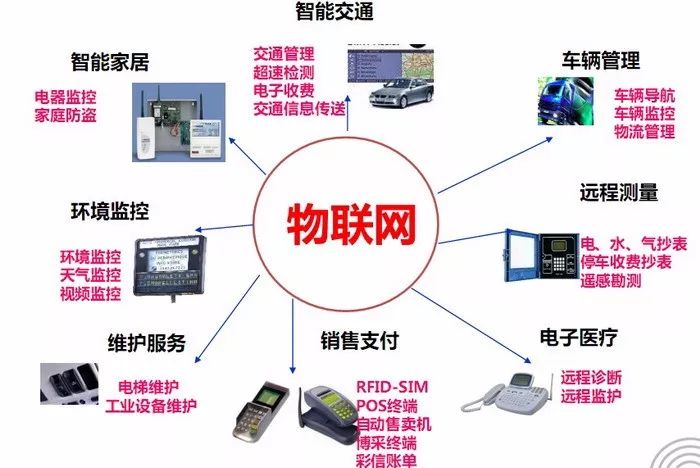
The so-called Internet of Things is an internet that connects everything. Through various information sensing devices, such as sensors, Radio Frequency Identification (RFID) technology, IPv6 (next-generation IP protocol) technology, Global Positioning System, infrared sensors, laser scanners, gas sensors, and other devices and technologies, it collects real-time information about any object or process that needs to be monitored, connected, or interacted with, combining various information such as sound, light, heat, electricity, mechanics, chemistry, biology, and location into a vast network.
Internet of Things technology can connect all items to the internet through information sensing devices like RFID, achieving intelligent identification and management. In simple terms, it means connecting all objects and enabling perception, operation, and management. The Internet of Things is considered the third wave of the global information industry following computers and the internet.
What do students learn in the Internet of Things Engineering major?
In the latest undergraduate program directory issued in 2012, the Internet of Things Engineering major falls under the computer category of engineering, with a standard duration of 4 years, and graduates are awarded a Bachelor of Engineering degree.
The Internet of Things Engineering major offers two main categories of courses: foundational courses and core professional courses. Students mainly learn methods and technologies for studying the interactions and transformations between information flow, material flow, and energy flow, with a strong emphasis on engineering practice.
Students are required to study dozens of courses, including computer series courses, information and communication engineering, analog electronics technology, Internet of Things technology and applications, and Internet of Things security technology, while also solidifying their foundation in mathematics and physics. Additionally, proficiency in foreign languages is essential, as the research and application of the Internet of Things are mainly concentrated in Europe and the United States, and students need to read foreign materials and engage in international communication.
According to Han Jing, the director of the Admissions and Employment Office at the University of Science and Technology Beijing, the courses include Introduction to Internet of Things Engineering, Embedded Systems and Microcontrollers, Wireless Sensor Networks and RFID Technology, Internet of Things Technology and Applications, Cloud Computing and the Internet of Things, Internet of Things Security, Internet of Things Architecture and Comprehensive Training, Introduction to Signals and Systems, Modern Sensor Technology, Data Structures, Computer Organization Principles, Computer Networks, Modern Communication Technology, Operating Systems, and various elective courses.
The Internet of Things major is an interdisciplinary field that involves foundational knowledge in computer science, communication technology, electronics technology, measurement and control technology, as well as knowledge in management, software development, and other areas. As an emerging major still in the exploratory stage, universities have developed specific talent training programs for the Internet of Things.
Professional Analysis and Employment
Currently, among the undergraduate majors approved by the Ministry of Education related to strategic emerging industries, there are three majors related to Internet of Things technology: “Internet of Things Engineering”, “Sensor Network Technology”, and “Smart Grid Information Engineering”.
According to Professor Wang Zhiliang, director of the Internet of Things and Electronic Information Department at the University of Science and Technology Beijing, the university’s Internet of Things major has been recognized by industry enterprises. Some well-known companies have extended olive branches to them, inviting students for internships. It is well-known that interning at large companies is often a stepping stone for many fresh graduates to enter prestigious enterprises.

The Industry Space is Vast
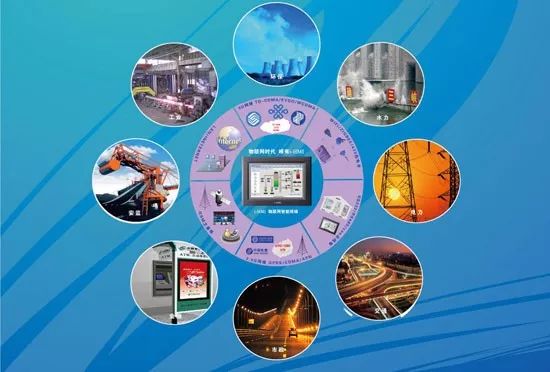
Currently, the global Internet of Things industry system is being established and improved. According to the authoritative consulting firm Forrester, the global Internet of Things market size is expected to reach $330 billion by 2015, and the output value of China’s Internet of Things industry will reach 750 billion yuan, growing rapidly at a rate of 30% each year. By 2020, the business ratio of the Internet of Things to the internet will reach 30:1, and the Internet of Things will become a trillion-dollar industry! In the next decade, the Internet of Things will be widely applied in various fields such as transportation, logistics, security, electricity, home, healthcare, mining, and military. It is foreseeable that it will bring significant changes to the global economy and society.
In 2009, after Barack Obama became President of the United States, the U.S. government first proposed the concept of a ‘Smart Earth’ and listed new energy and the Internet of Things industry as two key strategies for economic revitalization and competition. In 2010, China’s Two Sessions work report also clearly proposed to ‘accelerate the research and application of the Internet of Things’, placing the Internet of Things on a ‘national-level’ development track. Some predict that in the next 10 to 15 years, the Internet of Things industry will usher in a period of rapid development.
Controversial Introduction at This Stage
However, some experts believe that the Internet of Things industry in China is still in its infancy. Although the application prospects are very broad, the standards, technologies, business models, and supporting policies are not yet mature. To date, the applications of the Internet of Things in academia and social research institutions are still in the exploratory stage, with a limited number of practitioners and uneven teaching resources. It is common for universities to ‘borrow’ teachers from related majors such as electronics, computer science, and communications. In addition to soft power like faculty, some universities also have weak hardware capabilities in offering the Internet of Things major. Bai Siwei, vice president of the China Internet of Things Industry Association, has stated that the undergraduate level is not the golden period for establishing the Internet of Things major.
Some university teachers believe that pilot programs for IoT and cloud computing education should be implemented at the master’s and doctoral levels or at a few universities with strong research capabilities. Introducing the Internet of Things major on a large scale at the undergraduate level may be premature.
Bai Siwei believes that many existing undergraduate majors are components of the Internet of Things, and there is no need to blindly establish independent courses. For example, some computer-related majors are closely linked to the Internet of Things, and it would be better to incorporate the concepts and knowledge of the Internet of Things into existing courses.

Talent Gap: Undergraduates Cannot Meet Demand
Academician He Jifeng, dean of the Software College at East China Normal University, stated that for the future development of Internet of Things technology, breakthroughs are needed in information collection, improvement, chip promotion, and algorithm design, and the key to achieving this is talent cultivation. Bai Siwei also pointed out that overall, the Internet of Things industry is in dire need of talent.
In fact, from the perspective of talent market demand, both Internet of Things and cloud computing professionals are in high demand, but companies also have high requirements for talent. Many organizations and companies not only require applicants to have a master’s degree or higher but also several years of relevant work experience. In this regard, companies express that core R&D work or core infrastructure requires some experience, which recent undergraduates generally do not possess.
Because the Internet of Things is an interdisciplinary field involving communication technology, sensing technology, network technology, RFID technology, embedded systems technology, and more, it is very challenging to deeply learn these subjects at the undergraduate level. Moreover, positions in core technology research institutes often require a master’s degree. Therefore, undergraduate students should focus on related knowledge of the Internet of Things, identify their professional direction, solidify their foundation, and enhance their practical and application skills.

Application Guide
Most candidates facing the emerging major of Internet of Things Engineering are unsure whether they should apply or how to apply. Due to the complexity of the Internet of Things system, which involves many fields, the country does not have unified textbooks and course requirements for the Internet of Things major. Therefore, universities are still in the exploratory stage of talent cultivation.
We remind you to consider your interests, future career development, further education, and employment direction when choosing a major. Here are some suggestions for candidates and parents, for reference.
Choose Schools with Strong Related Majors
Since the Internet of Things Engineering major is a typical interdisciplinary field involving knowledge from electronics, computer science, measurement and control, communication, and software, some universities have not clearly defined which department it belongs to, and some universities’ Internet of Things Engineering majors are jointly planned and constructed by several departments.
Therefore, candidates should first understand the strength and background of the department related to their major when choosing, prioritizing schools with strong related majors. For example, for candidates applying to the Internet of Things major, they can prioritize schools with a strong background in computer science and communications, as the direction of professional training determines the employment development path of talent. Schools with outstanding strong majors can certainly drive the development of this discipline in a specific field.
Do Not Fixate on the Internet of Things Major
According to Bai Siwei, vice president of the Internet of Things Industry Association, what the industry lacks is versatile talent. Therefore, candidates interested in entering the Internet of Things industry can choose directions in interdisciplinary and foundational disciplines that support the Internet of Things major.
Due to the interdisciplinary nature of the Internet of Things Engineering major, it is impossible for students to thoroughly and comprehensively learn all the knowledge related to the Internet of Things at the undergraduate level. Candidates who aspire to enter the Internet of Things industry do not need to limit themselves to just one major; they can start from other related foundational or interdisciplinary majors, choose a specific direction to master, and engage in higher-end specialized work and research in the future. After all, good professional development relies on a solid foundational support.

Reference Previous Years’ Admission Data
The Internet of Things major is an emerging field with an increasing number of institutions offering it each year, but most institutions have a small number of enrollments and high score requirements.
Statistics from the Sunshine College Entrance Examination platform show that in 2012, nearly 120 universities admitted students to the Internet of Things major, with a total of over 7,300 students. By 2015, nearly 250 undergraduate universities had established the Internet of Things Engineering major. Taking Beijing as an example, in 2011, the University of Science and Technology Beijing admitted 5 students to the Internet of Things Engineering major, with the highest score being 596 and the lowest being 579, which was 95 points higher than the 2011 Beijing science first batch admission line. In 2015, the highest score for the same major at the University of Science and Technology Beijing was 653, and the lowest was 648, which was 100 points higher than the 2015 Beijing science first batch admission line.
Beijing University of Posts and Telecommunications began enrolling students in the Internet of Things Engineering major in 2012, and this major is a Sino-foreign cooperative education program. Candidates can only be adjusted to this major if they have applied for one of the three Sino-foreign cooperative education programs at BUPT. In 2014, the University of Posts and Telecommunications admitted 35 students to the Internet of Things Engineering major, with the highest score being 619, the lowest being 547, and the average score being 578.
Candidates can choose universities that have enrollment plans for this major in their province (city, district) and carefully read the admission regulations, comparing the enrollment numbers and score data of this major across different universities to select institutions that match their interests, scores, and batch requirements.
Recommended Majors
Recommended majors are based on real-name recommendation data from university students. Currently, the total number of votes exceeds 3.1 million. Through real-name registration, senior students or graduates vote based on the performance of various majors in their universities, recommending advantageous or characteristic majors. The following image displays some recommendations for the Internet of Things Engineering major from various universities, with asterisks indicating recommendation indices. Click the image to view more professional recommendation data.
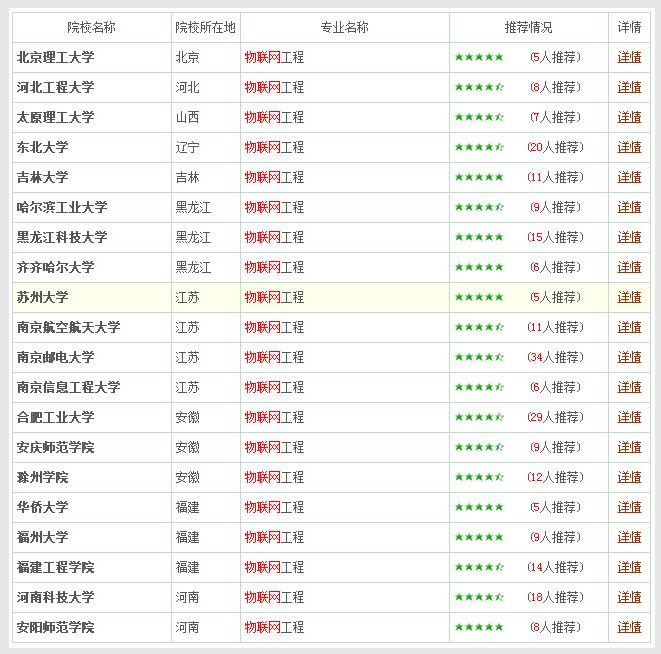
Source | Sunshine College Entrance Examination Information Platform