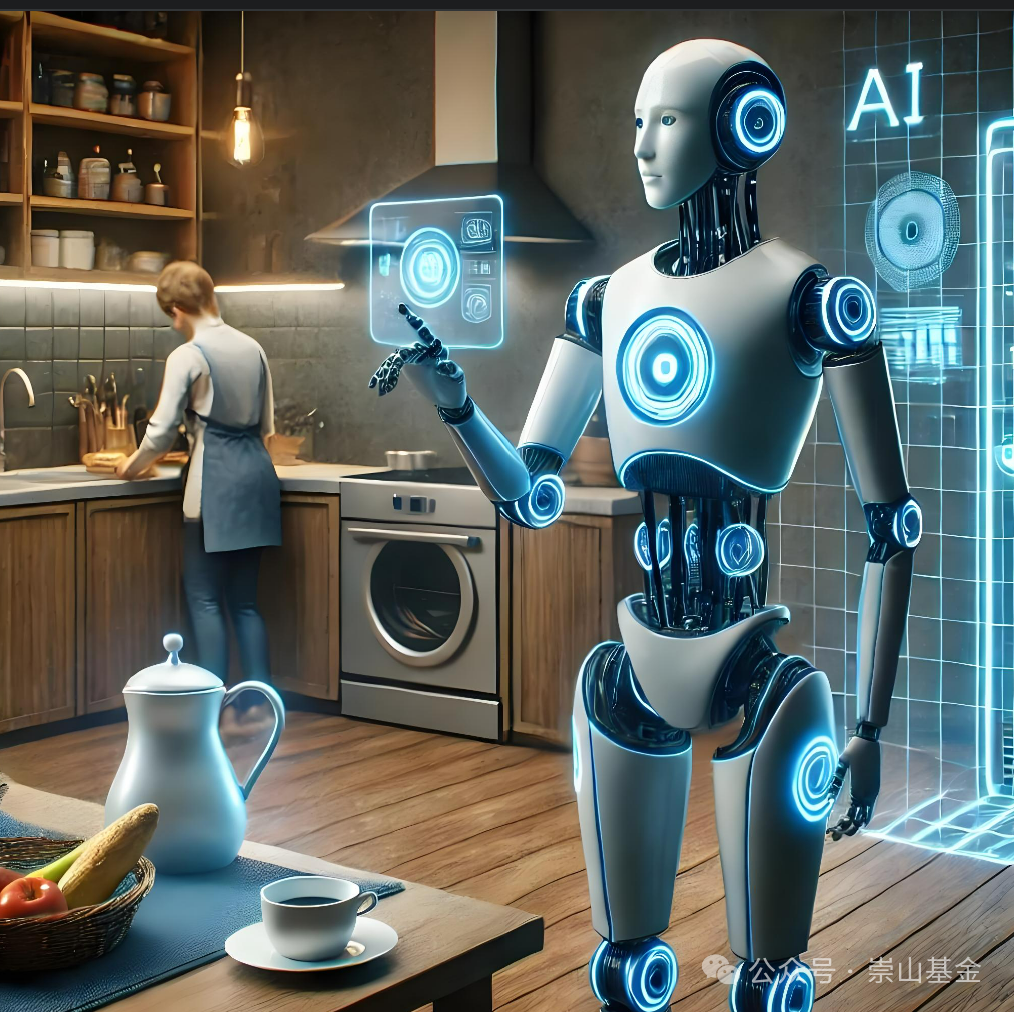
1. The “World Robot + Consumer Festival” in Beijing Yizhuang, humanoid robots enter the homes of ordinary people
The 2025 World Robot Conference kicked off on August 8 in the Beijing Economic and Technological Development Zone (Beijing Yizhuang). As one of the major events of the conference, the world’s first Robot Consumer Festival – the “E-TOWN Robot Consumer Festival” is scheduled to be held from August 2 to 17. Official statistics show that over 200 domestic and foreign companies have placed the latest humanoid robots directly in coffee shops, pancake stalls, and classrooms—audiences lined up to have robots make lattes, flip pancakes, and even let a 1.2-meter tall humanoid robot named Yuzhu box in the ring. More significantly, the world’s first intelligent robot 4S store, Robot Mall, opened to the public, providing full lifecycle services from display, sales, to custom development and after-sales maintenance, which is seen as a key turning point for the robotics industry from “selling hardware” to “selling services.” A relevant official from the Beijing Economic Development Zone revealed that over 120,000 offline experiences occurred during the three days of the festival, with online live streaming views exceeding 80 million, directly driving a 340% month-on-month increase in robot orders.
2. Shanghai releases a three-year action plan for “AI + Manufacturing,” with 3,000 factories collectively “upgrading their brains”
On August 25, the Shanghai Municipal Commission of Economy and Information Technology, the Development and Reform Commission, and the State-owned Assets Supervision and Administration Commission jointly released the “Implementation Plan for Accelerating the Development of ‘AI + Manufacturing’ in Shanghai,” pressing the “fast forward button” for the intelligent transformation of the national manufacturing industry. The plan clearly states that within three years, 3,000 large-scale factories will use self-controllable AI models, create 10 industry-level benchmark models, 100 benchmark intelligent products, and 100 demonstration application scenarios, and establish 10 “AI + Manufacturing” demonstration factories. To ensure the goals are met, Shanghai will simultaneously open government public data, issue model vouchers, subsidize intelligent computing power, and introduce five comprehensive service providers along with a number of vertical “small giants.” Following the announcement, several brokerage firms quickly upgraded their ratings for industrial software, edge AI chips, and robot integration sectors. Industry insiders commented that this is the first time a local government has included “scenarios—models—products—ecosystem” in the same timeline, indicating that the AI penetration rate in China’s manufacturing industry is expected to leap from the current 8% to over 30% by 2028.
3. Apple in talks with Google Gemini, aiming to equip the new Siri with the “strongest brain”
According to a report by Bloomberg on August 23, Apple is in “very early” negotiations with Google to deeply integrate Google’s latest large model, Gemini, into the 2026 version of Siri, in an effort to catch up with Microsoft and OpenAI, who are far ahead in the generative AI field. Insiders revealed that Google has initiated model training optimized for Apple’s servers, while Apple is still wavering between “building in-house or outsourcing”—previously, it had contacted Anthropic and OpenAI regarding Claude and ChatGPT. If this comes to fruition, it would mark the first time in iPhone history that core AI capabilities are outsourced to a competitor, and it would mean that Gemini would gain access to over 2.2 billion active iOS devices. Following this news, Google’s stock rose 3.7% in after-hours trading, while Apple’s rose 2.1%, although industry insiders are concerned about whether Google will take the opportunity to gain control over core data in the iOS ecosystem.
Summary: Technology, industry, and ecosystem progress in parallel, AI and robotics enter a “resonance moment”
From the humanoid robots that can be touched on the streets of Beijing, to the AI quality inspection workers tirelessly working in Shanghai workshops, to the future Siri that may speak human language and understand human emotions, we outline the three main lines of the artificial intelligence and robotics track: hardware experience is becoming commonplace, industrial intelligence is scaling up, and the ecological discourse power is being restructured. When technology, policy, and capital form positive feedback within the same timeframe, we have reason to believe that 2025 will not only be the “year of mass production of humanoid robots” but may also be the “year of popularization of intelligent services.”