I am Lao Wen, an embedded engineer who loves learning.Follow me, let’s become better together!The situation is as follows: our team encountered a client (the investor) who wants to develop an HMI hardware product with edge computing capabilities, and this product needs to include facial recognition functionality. This product can be understood as a combination of an edge computing server and an industrial HMI.This client has a rather special requirement, which is to specify the use of a Allwinner processor chip, (I didn’t ask why specifically), and they require the use of domestically produced components. The nature of the client’s organization does not allow the use of imported chip solutions, and they also require the product to have the following hardware functional interfaces.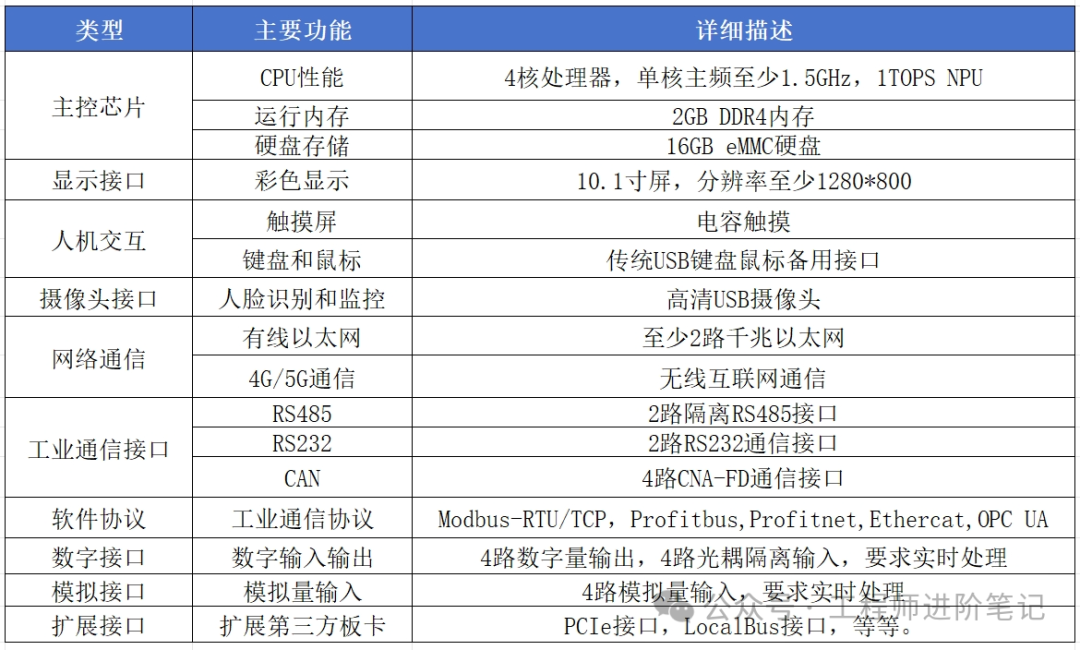 Client’s hardware customization requirementsAlright, the processor can only be selected from Allwinner’s chips. According to the information on Allwinner’s official website, the processor chips are mainly categorized into the T series for industrial power and automotive scenarios, the A series for consumer electronics, the MR series for robotics, the V series for security vision, and so on.As a side note, I find Allwinner’s chip classification quite interesting,engineers can discern the application direction of the chip just by the first letter of the chip model,which I think is a good classification method that is very helpful for selection.Since this edge computing HMI is used in an industrial scenario, I focused on Allwinner’s T series chips. Overall, the T527 is a high-performance octa-core industrial-grade AI chip, while the T536/T517/T507/T3 are mid-range industrial or automotive processors, and the T113 is an entry-level low-performance industrial processor.
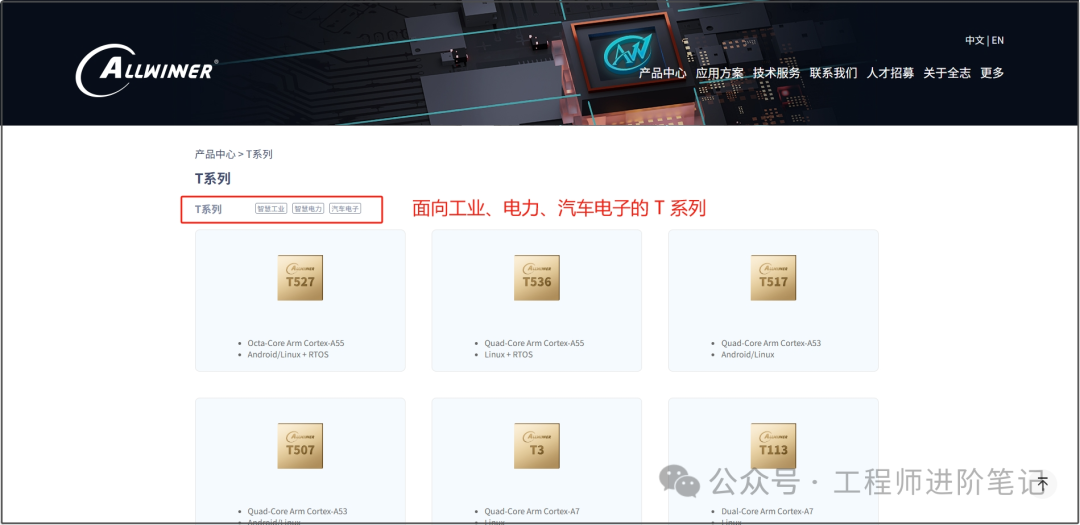 Allwinner T series processorsFor the above requirements, the performance of the T527 is indeed a bit redundant, and it is unnecessary to use it. The T517/T507 do not support NPU, and processing real-time signals may be relatively weak, so only the T536 remains to meet the requirements.The T536 features a 4-core Cortex-A55 and a RISC-V E907 co-processor, where the RISC-V can handle real-time signals, and the 2TOPS NPU computing power can perform small model inference.It supports 17 UART channels, meeting the RS485 and RS232 interface requirements, supports 4 CAN-FD channels, USB3.1, and LocalBus interfaces, etc. (Preliminary estimates suggest that it should meet the client’s customization requirements).Since the official evaluation board for the Allwinner T536 is quite expensive and the purchasing channels are limited, it is relatively difficult for startups to contact the chip manufacturer, so we chose to use a third-party solution provider’s evaluation board for preliminary functional verification.I searched online and found that Feilin Embedded seems to be the first solution provider for the T536 core board, so I contacted Feilin and requested a T536 development board, planning to use the development board to initially evaluate the general situation of the T536 industrial processor.
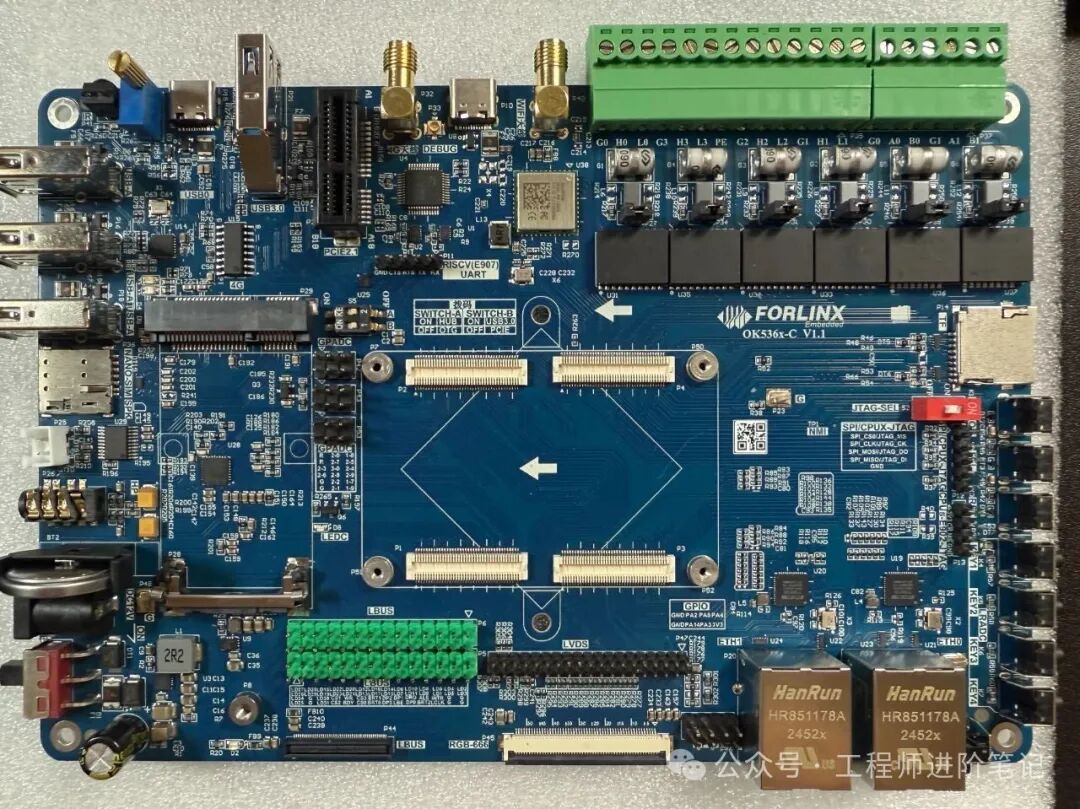
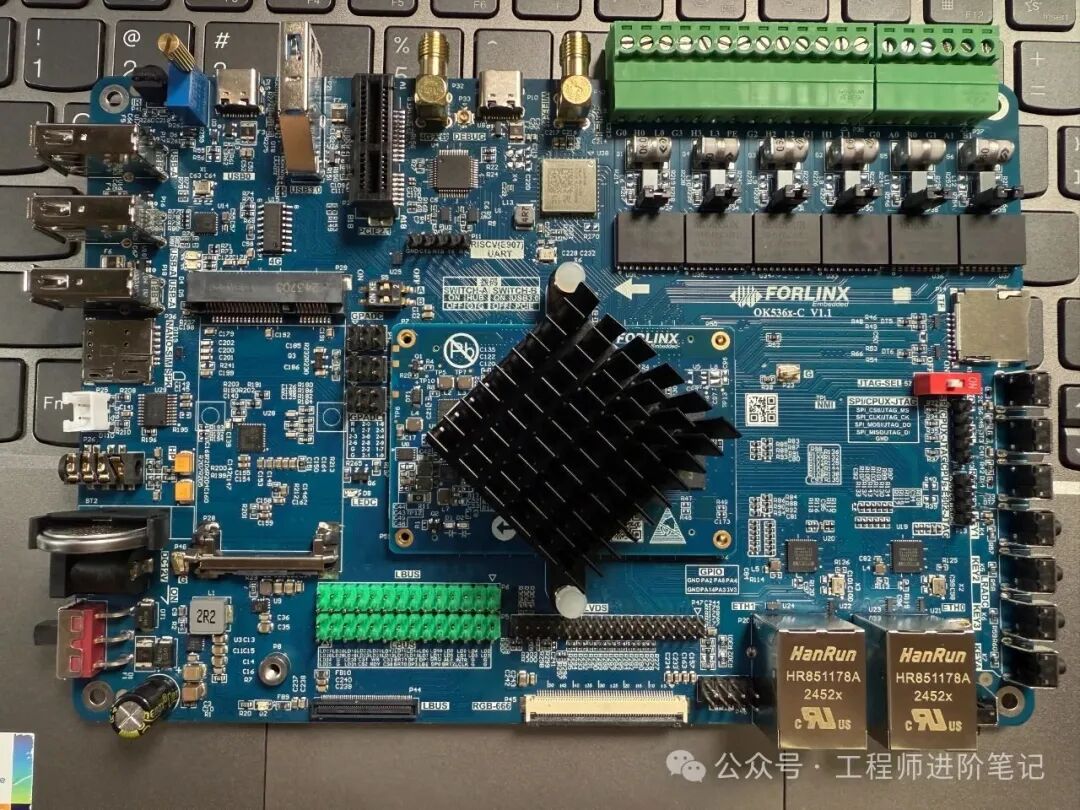
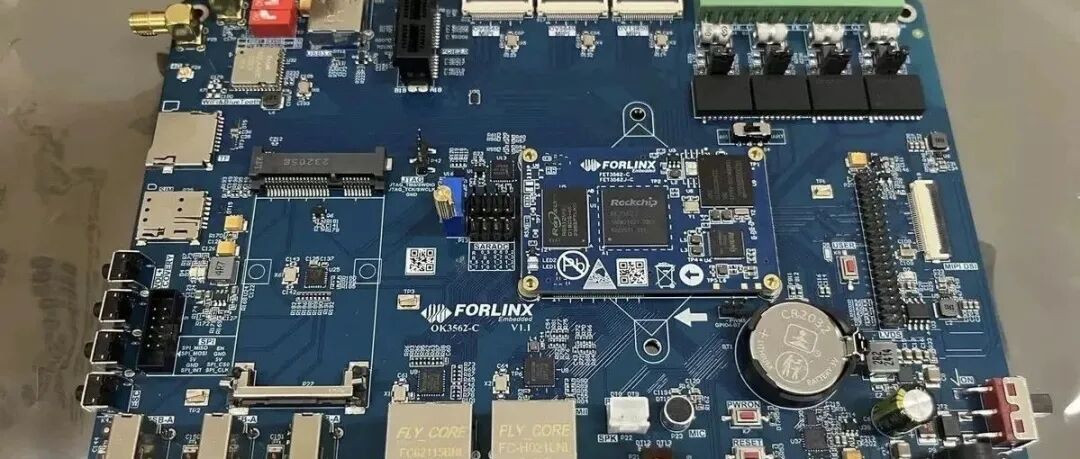
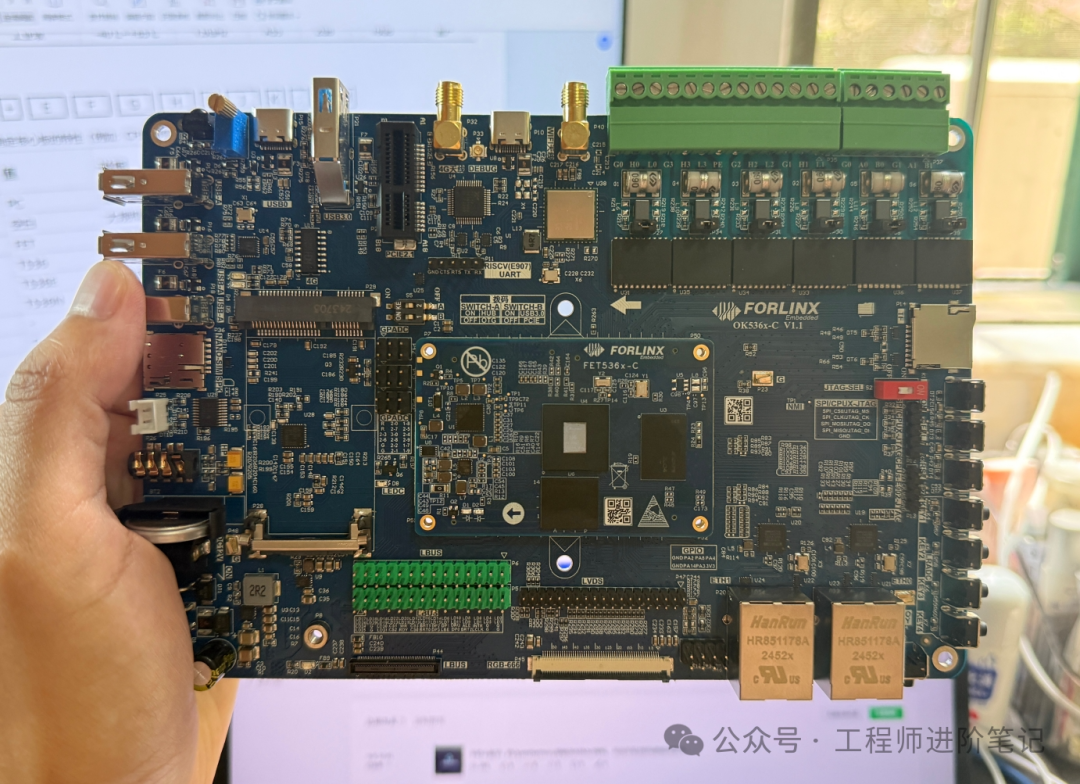 Front view of the OK536-C development boardThe relevant information for this OK536-C development board has been made into an online document by Feilin, which can be accessed at the following URL:
https://forlinx-book.yuque.com/pxh4d1/ok536
(Copy to the browser to open, or click [Read the original text])
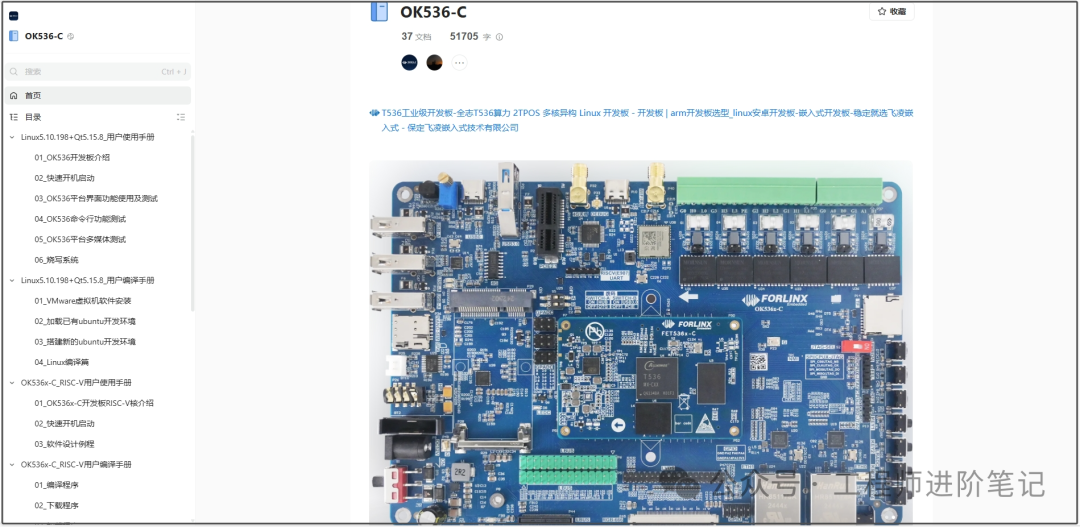
Official online documentation
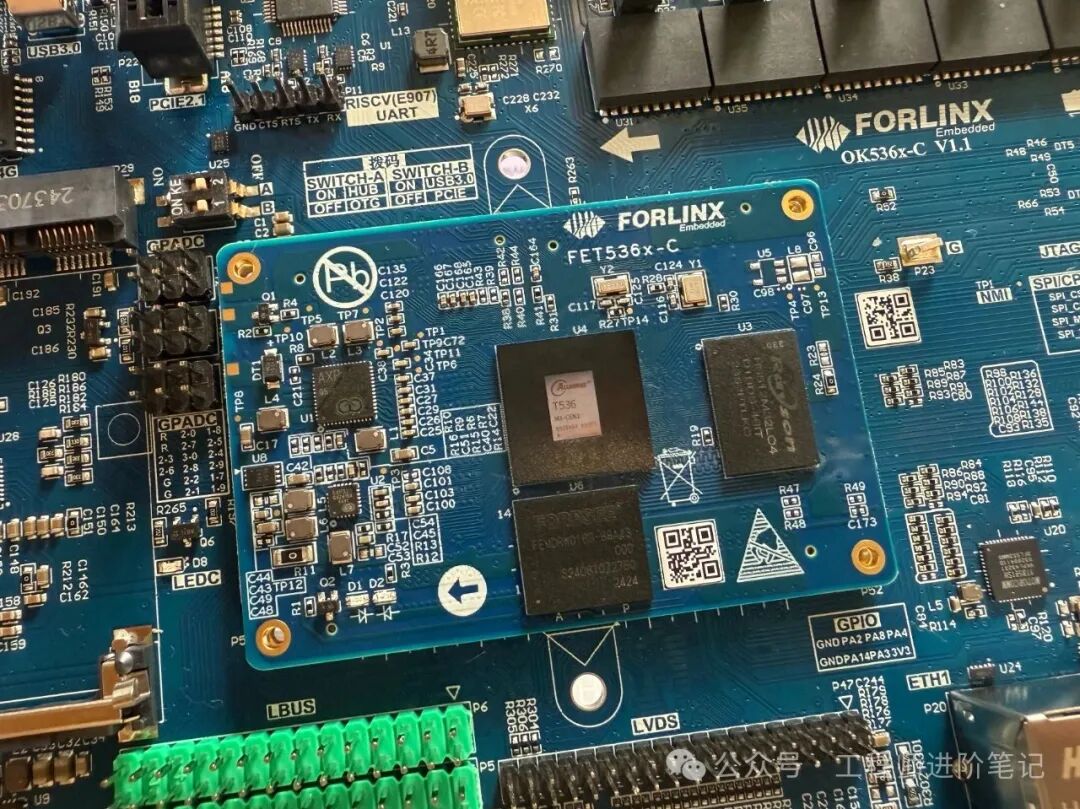
In Allwinner’s processor product line,the T536’s multimedia processing capability is not the most powerful. My overall impression of this chip is that it is multi-core heterogeneous, MPU+MCU+NPU, with most peripheral resources aimed at industrial applications, such as: 17 serial ports, 28 ADCs, CAN-FD, Gigabit Ethernet, etc.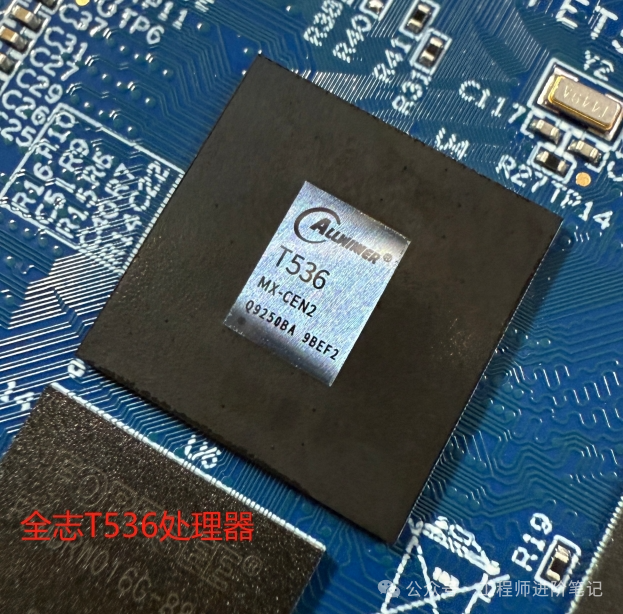 Allwinner T536 processorThanks to the multi-core heterogeneous design, the T536 integrates a 64-bit Xuantie E907 RISC-V MCU, giving it both the real-time capabilities of an MCU and the powerful network processing capabilities of Linux, as well as NPU artificial intelligence model inference capabilities.The core board has a B2B interface and comes with 4 fixed screw holes. I am using a core board with 2GB of memory and 16GB of eMMC storage configuration, with memory from Jingcun Technology’s LPDDR4 and eMMC from Jiangbolong’s chip, both of which are domestically produced solutions.However, it is said that Feilin will adjust the suppliers of memory and eMMC based on material supply conditions.
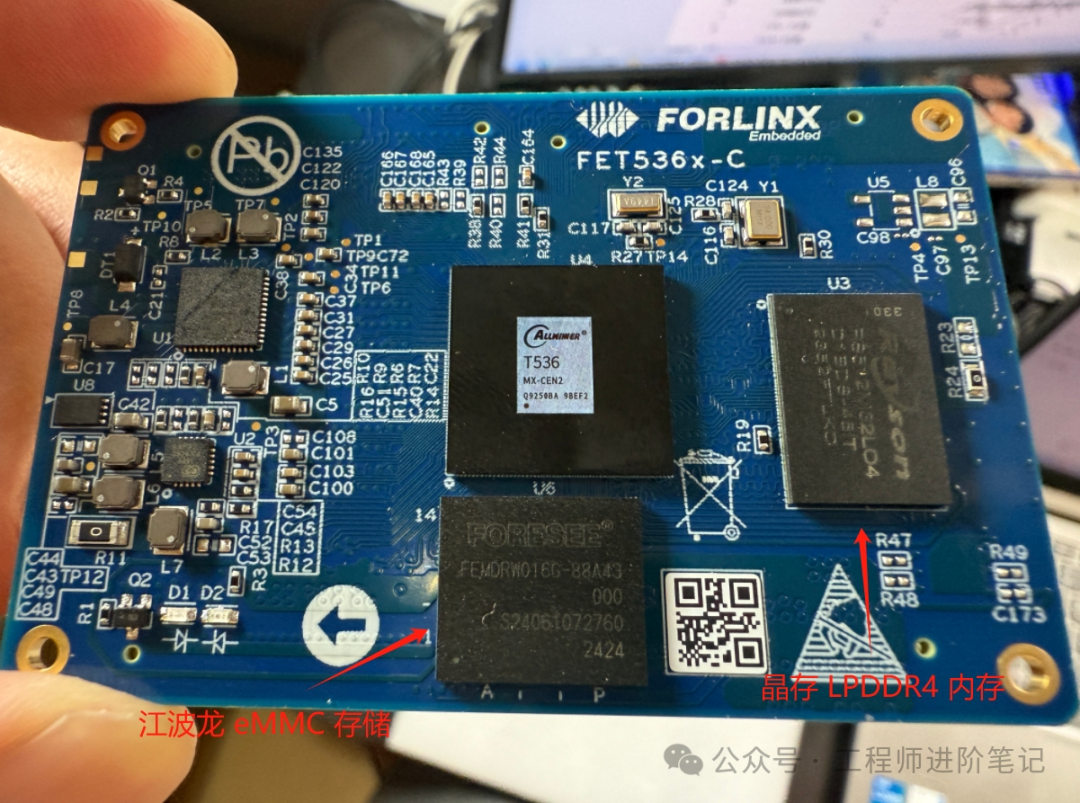 Front view of the FET536x-C core board
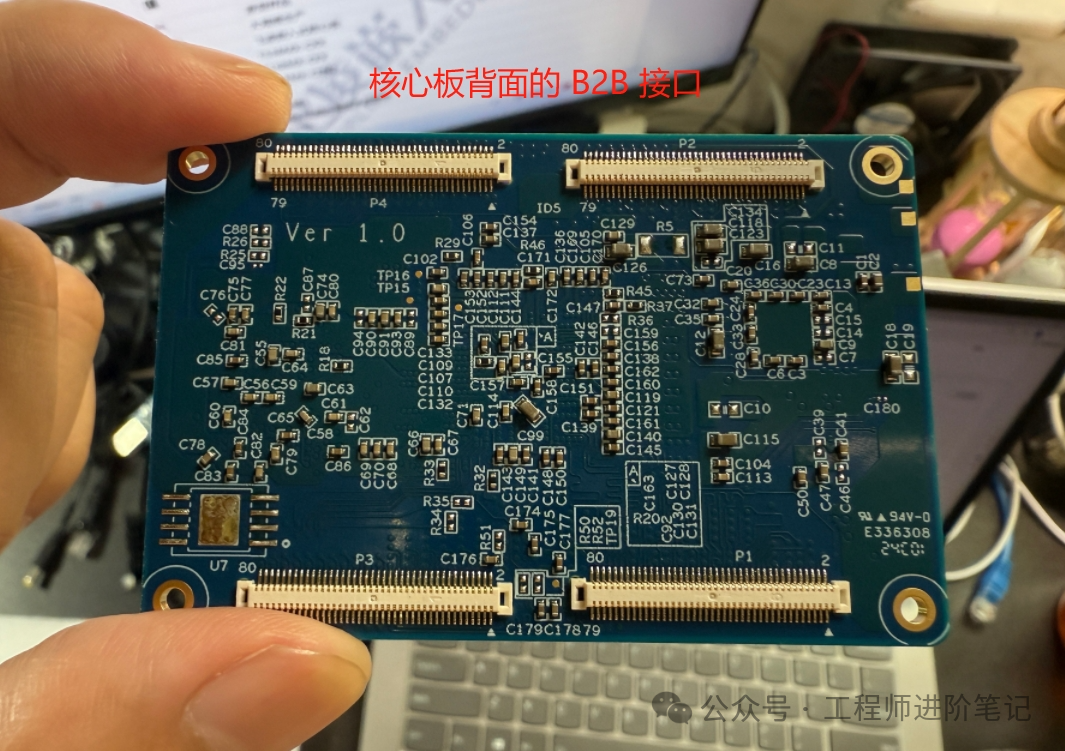 Back view of the FET536x-C core board
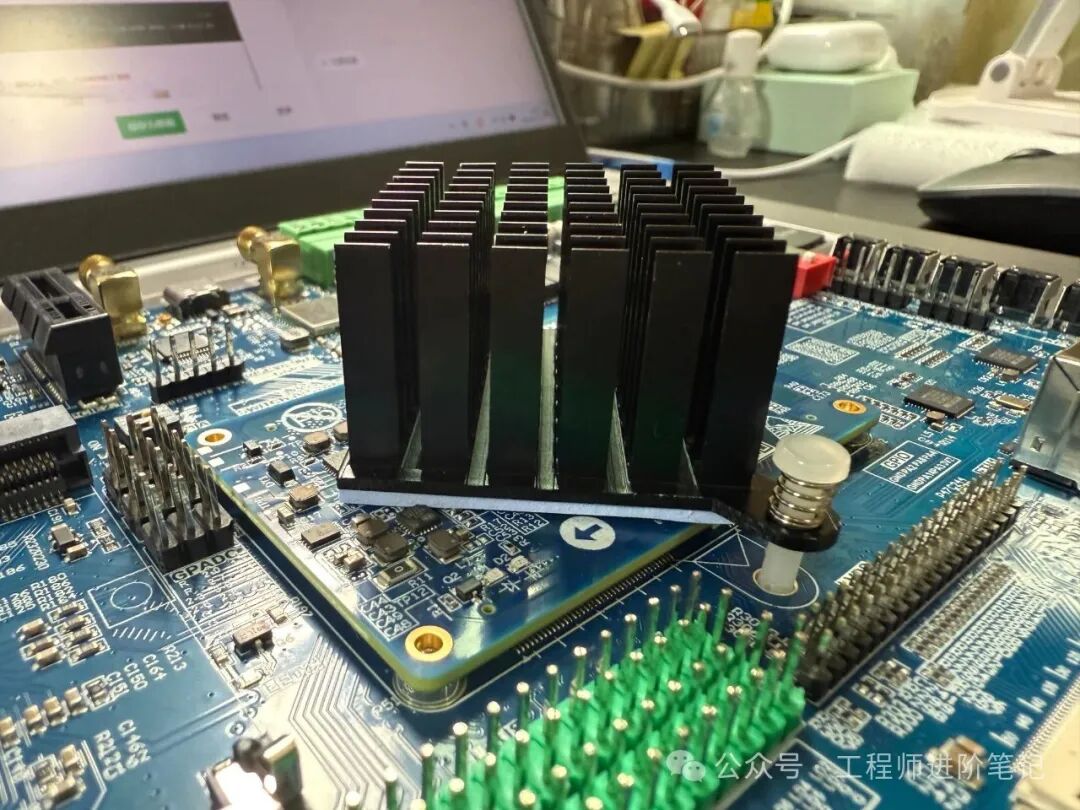
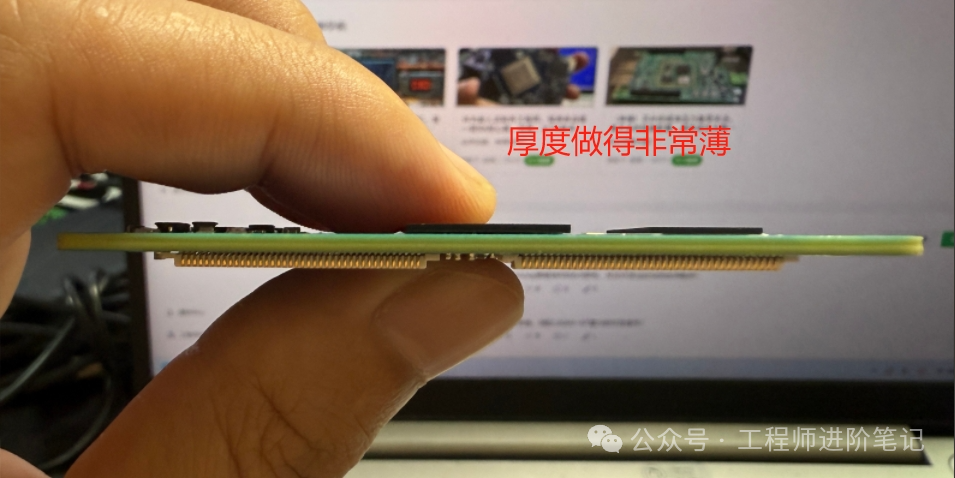 Thickness of the FET536x-C core boardThe T536’s quad-core Cortex-A55 can reach temperatures above 65°C under full load. Using a slotted aluminum heat sink can effectively dissipate heat, and using a small fan will improve the cooling effect.
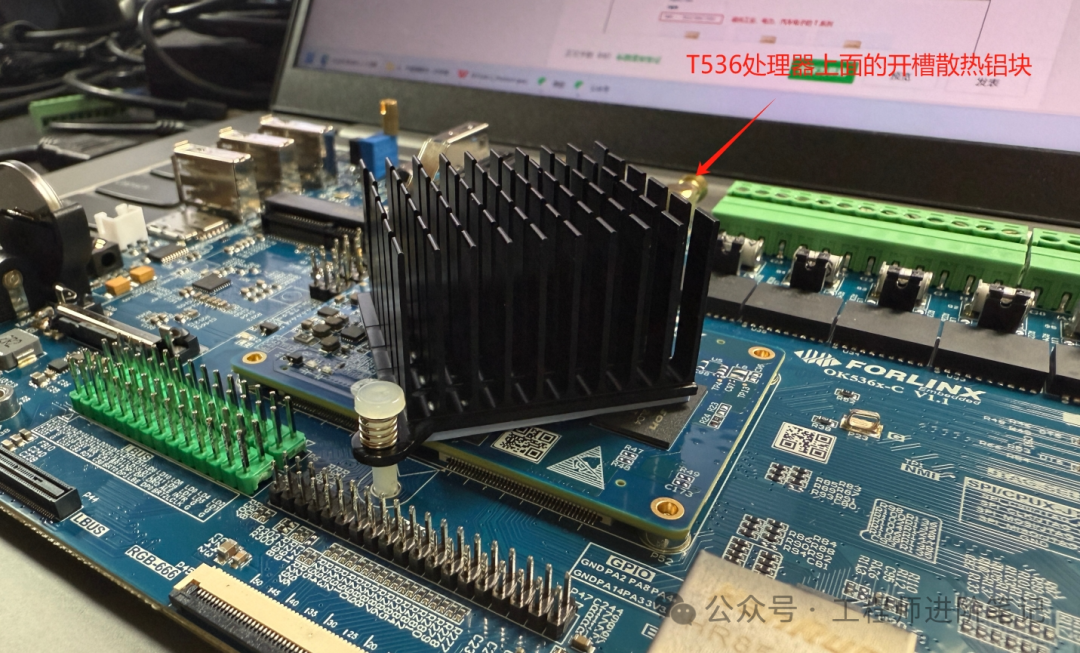 Slotted aluminum block on top of the T536The development board has two Gigabit Ethernet interfaces, with the RJ45 network transformer from HanRun (汉仁电子) brand, and the PHY transceiver chip is from Yutai Micro’s YT8521, both of which are mature and widely used network chip solutions.
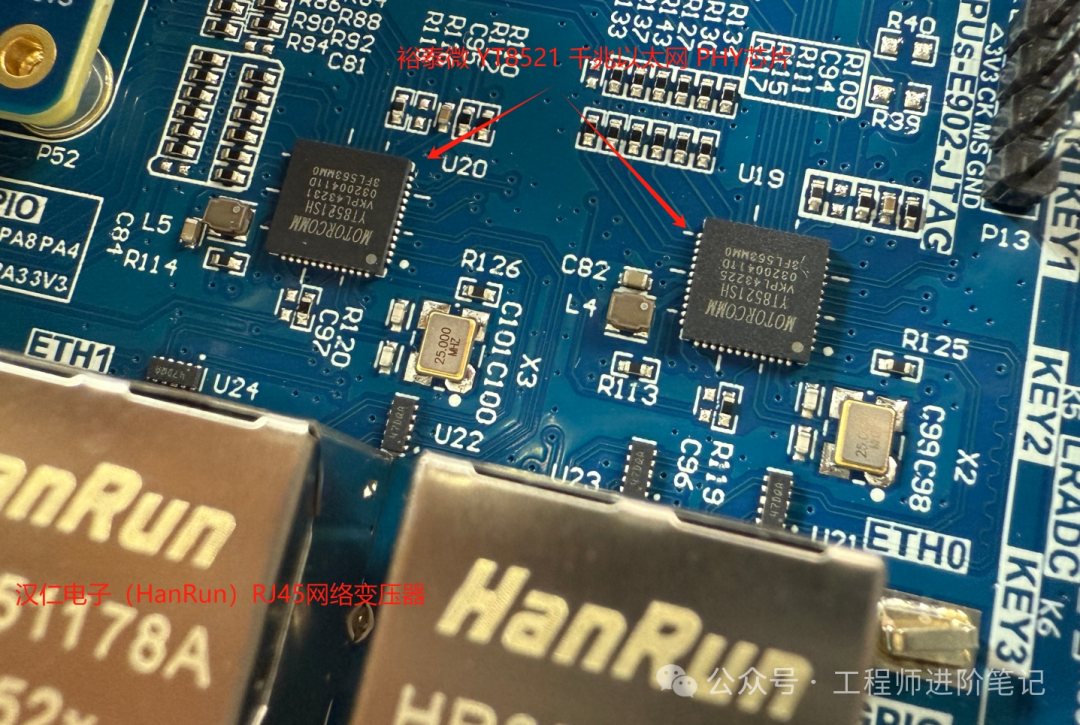 HanRun RJ45 network transformer + Yutai Micro YT8521 chipAdditionally, the two common industrial communication interfaces are RS485 and CAN-FD. The OK536 development board uses the transceiver chip solution from Jingshengyang, which provides 4 CAN-FD interfaces and two RS485 interfaces, with common green phoenix terminals used for wiring.
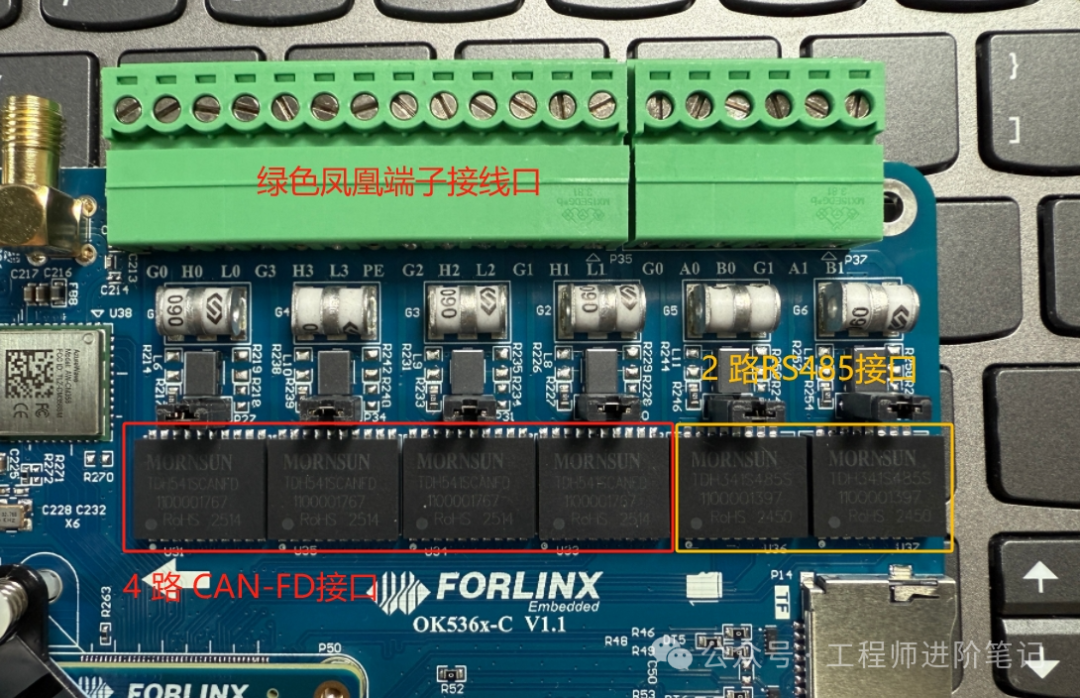 4 CAN-FD interfaces + 2 RS485 interfacesThe development board provides LVDS and RGB-LCD display interfaces, where LVDS supports a maximum resolution of 1920*1080@60fps, and RGB-LCD supports a maximum resolution of 1920*1200@60fps. Detailed parameters can be found in the core board’s data sheet.
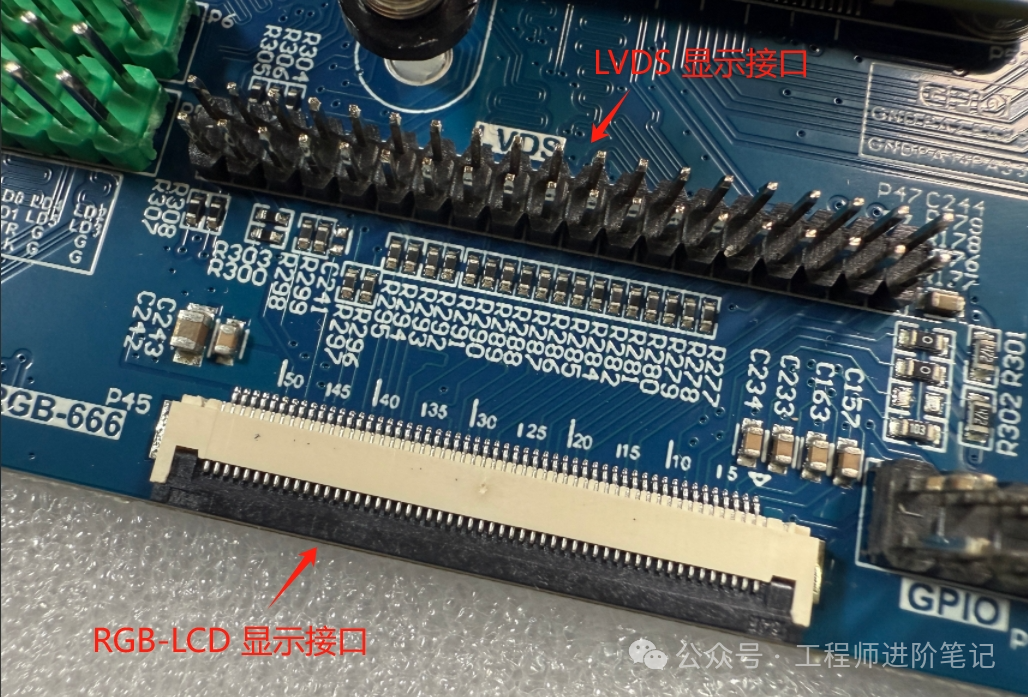 LVDS and RGB-LCD display interfaces(In fact, the T536 processor also supports MIPI-DSI, but due to the pin multiplexing relationship with the previous two display interfaces, the MIPI-DSI display interface is not brought out on the development board.)In addition to the display interfaces, the development board also brings out MIPI-CSI and Local Bus interfaces. MIPI-CSI can be used to connect camera modules, and the Local Bus interface can be used to connect Allwinner’s FPGA sub-modules. However, MIPI-CSI and Local Bus have pin multiplexing, and both cannot be used simultaneously, which needs to be noted during design.
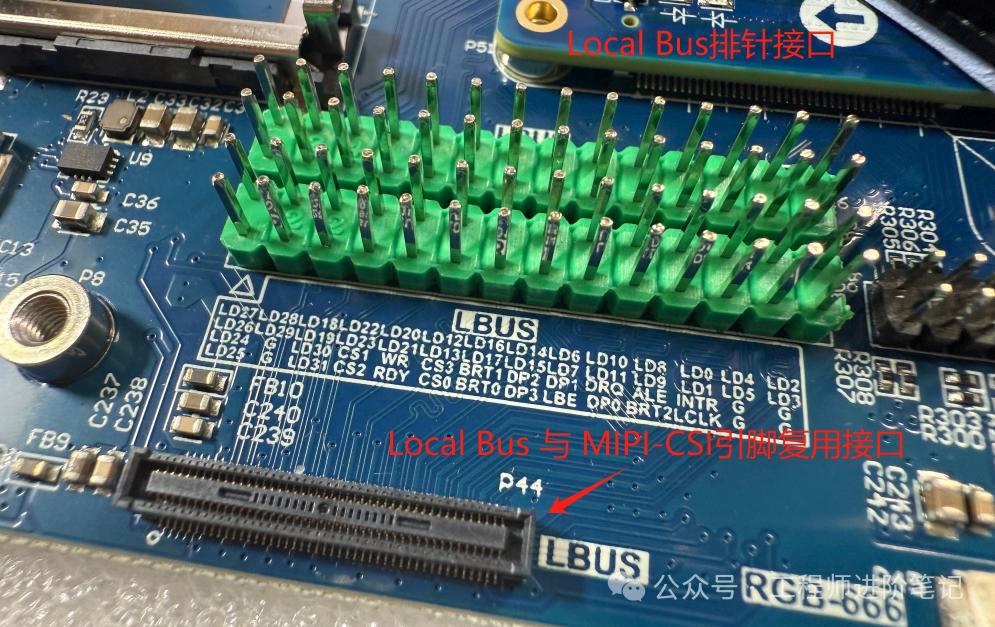 MIPI-CSI and Local Bus interfacesUpon observation, the development board also provides three USB2.0 and one USB3.1 interfaces, where the USB2.0 interface is expanded through the Qinheng CH440G chip, and the USB3.1 is directly connected to the T536’s USB pins. However, USB3.1 and PCIe interfaces have pin multiplexing, and both cannot be used simultaneously.
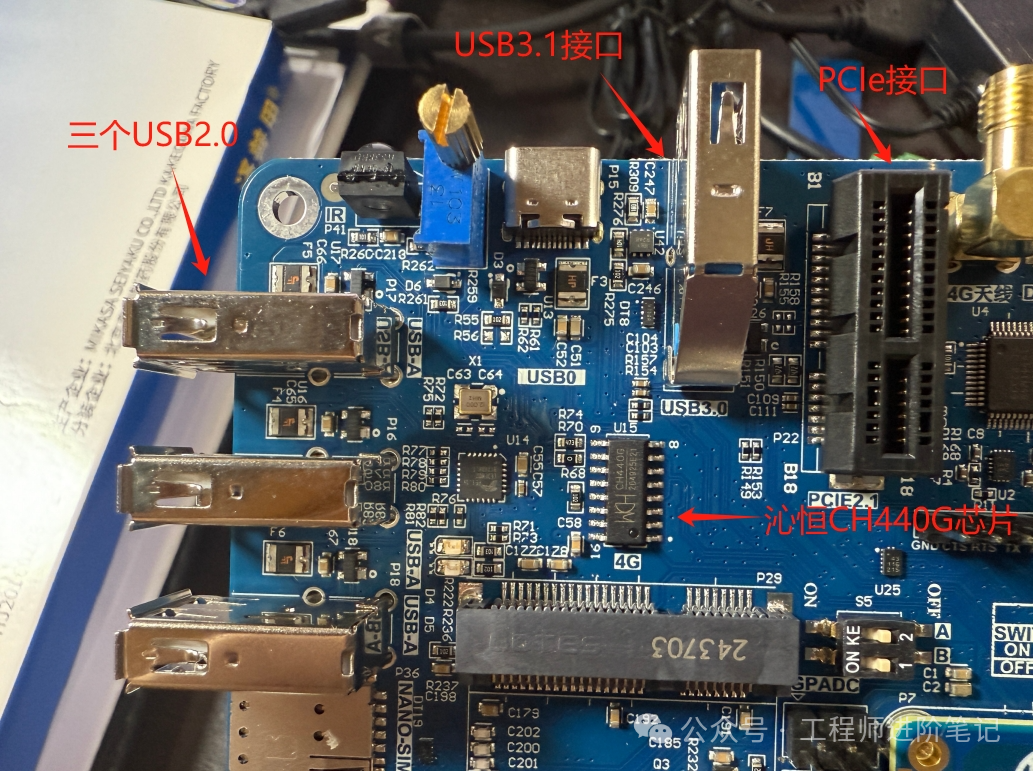 USB2.0 and USB3.1 interfacesIf you need to use a 4G module for wireless networking, you can connect a 4G module through the Mini-PCIe interface on the development board, allowing the development board to have wireless networking capabilities. In industrial control applications, 4G communication is still widely used, eliminating the hassle of wired network cabling.
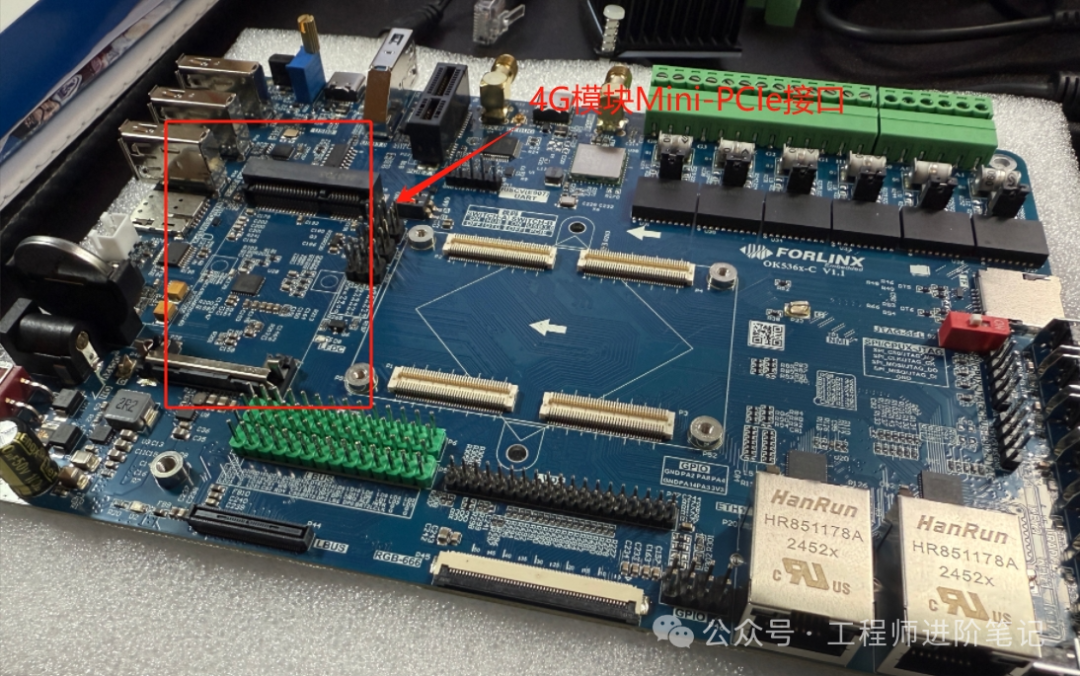 4G module interface, next to the USB-A is the SIM card slotThe core board and the base board adopt a separated design, connected through a B2B interface. After the preliminary research, the team can directly use the core board on the development board to design the functional base board according to the client’s mold size, improving the utilization rate of the core board.
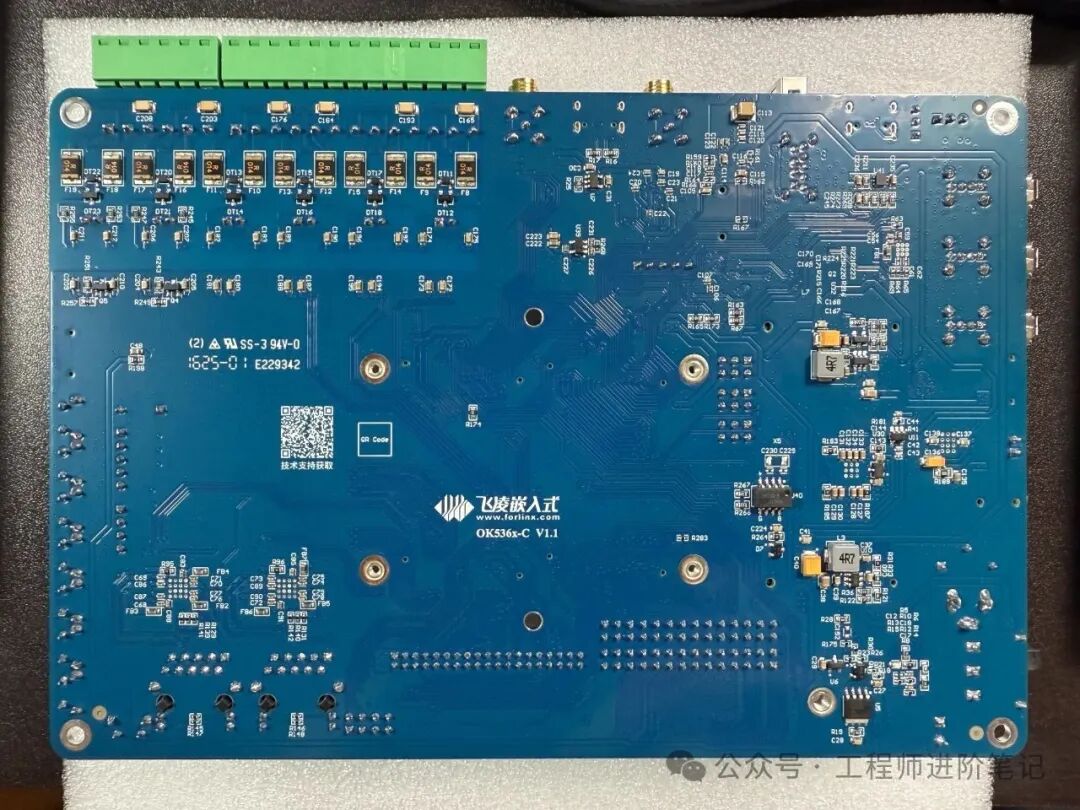
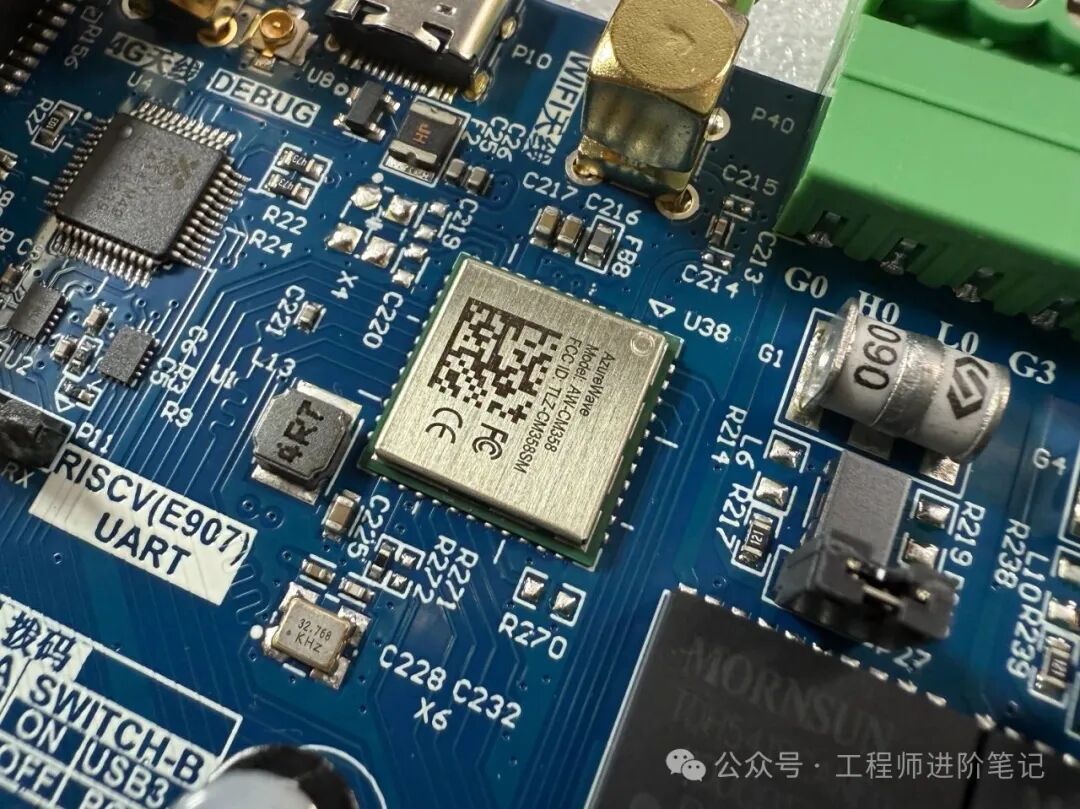
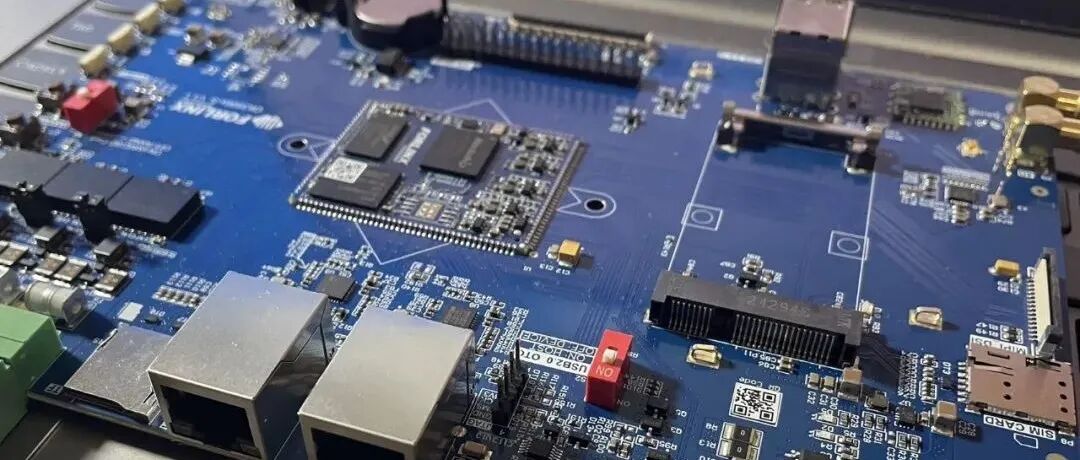
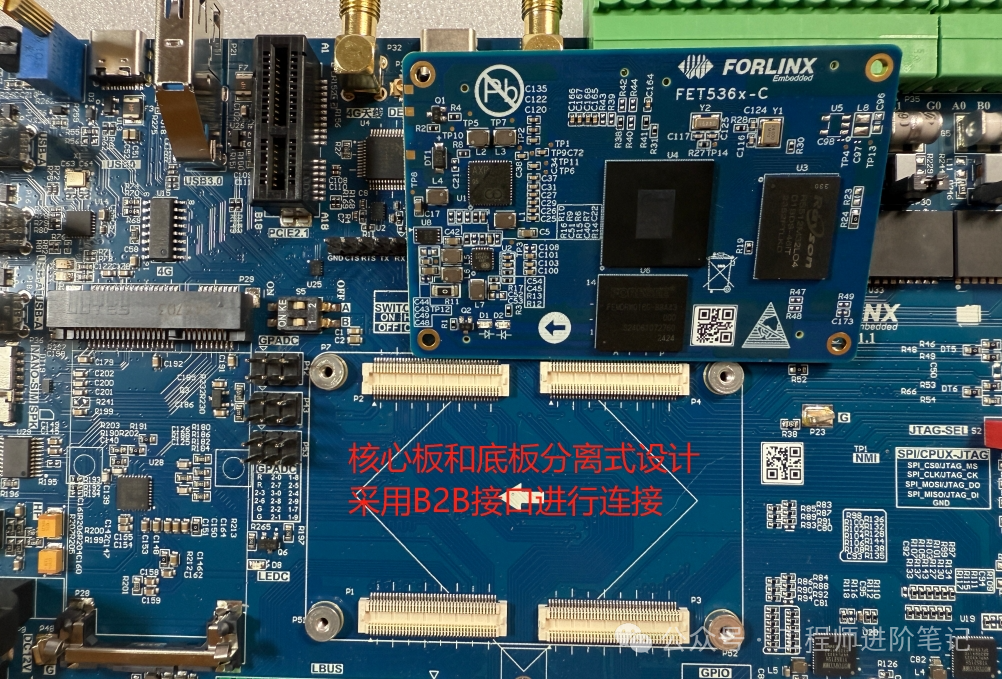 Separated design of the core board and base boardOverall, this OK536 development board’s onboard hardware interfaces can basically be used to conduct preliminary research on the client’s customization requirements. In addition to the hardware interfaces, it is also necessary to check the software documentation and the compatibility of the Linux drivers for this development board, (We will cover software analysis in the next article).Below are some photos of the core board and development board for appreciation.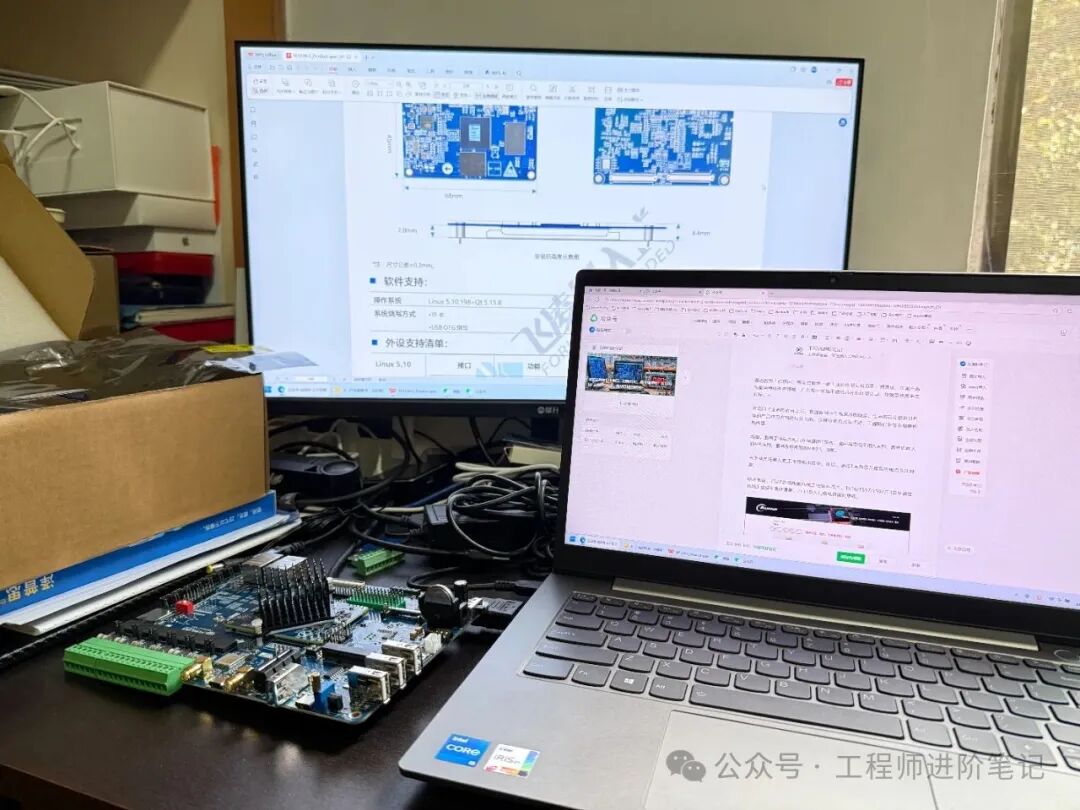
-END-
Previous recommendations: Click the image to jump to read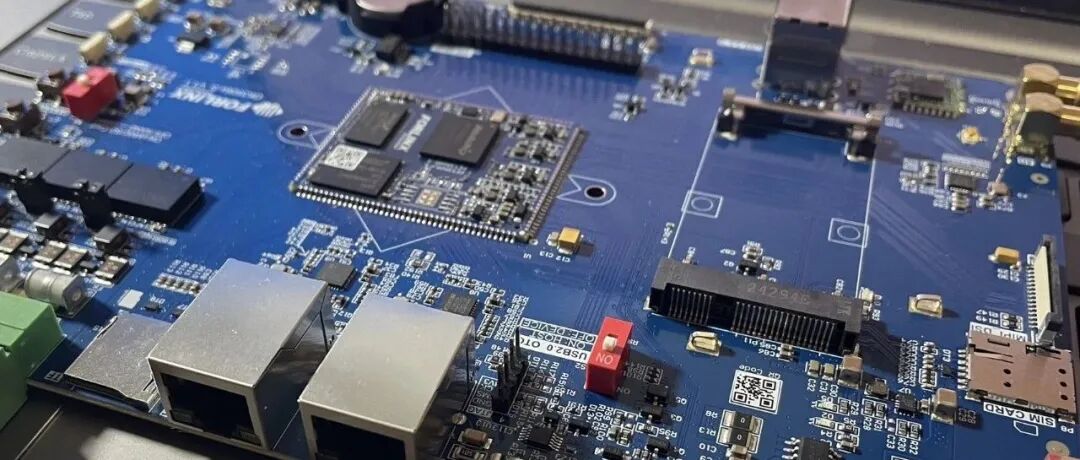
Embedded Linux industrial gateway design cannot do without this key core communication module.
A friend wants to self-develop an embedded industrial gateway, sharing my design ideas!
In embedded hardware and software development, engineers need to start considering how to reduce costs and increase efficiency during the preliminary research phase!
I am Lao Wen, an embedded engineer who loves learning.Follow me, let’s become better together!