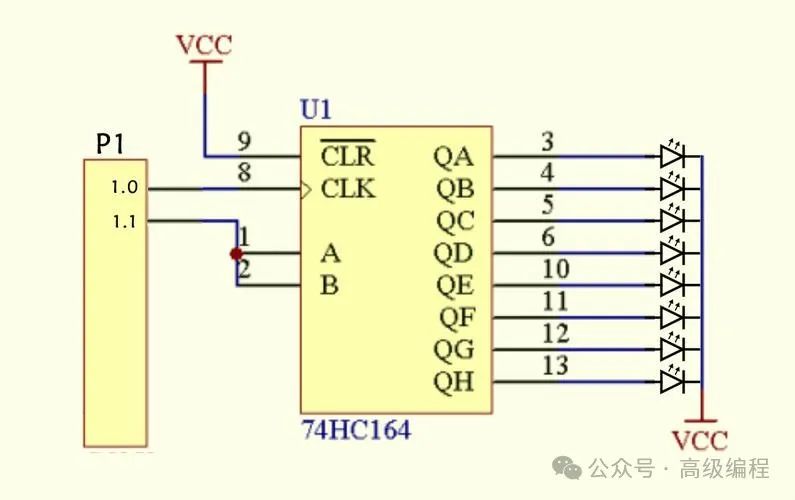
Embedded programming is a complex and challenging field, especially for developers transitioning from PC programming to embedded programming. In this process, it is crucial to understand and adapt to the unique mindset of embedded programming. This article will gradually delve into the essence of embedded programming from the perspective of PC programming, using practical examples to illustrate some common issues in embedded programming and their solutions.
Step 1: Viewing Embedded Programming from the Perspective of PC Programming
PC programming is typically based on high-level languages and rich library functions, allowing developers to focus less on low-level hardware details. However, in embedded programming, the boundaries between hardware and software become blurred, requiring developers to have a deep understanding of hardware characteristics such as CPU architecture, memory layout, and interrupt mechanisms. This shift necessitates that developers possess stronger system-level thinking and learn to optimize and debug under limited resources.
Step 2: Learning the Mindset of Embedded Programming
Embedded programming emphasizes real-time performance, low power consumption, and reliability. Developers need to learn how to achieve efficient functionality with limited resources, which includes but is not limited to:
- Real-time performance: Ensuring critical tasks are completed within specified timeframes to avoid system timeouts or crashes.
- Low power consumption: Reducing system power consumption and extending device lifespan through code and hardware design optimization.
- Reliability: Maintaining stable system operation in harsh environments and improving the system’s fault tolerance.
Step 3: Combining PC and Embedded Programming Mindsets in Practical Projects
In practical projects, combining the flexibility of PC programming with the rigor of embedded programming is key to enhancing project quality. This requires developers to have a cross-disciplinary knowledge base, such as operating system principles, computer networks, and hardware interface design. Additionally, they need to learn to use embedded development tools, such as JTAG debuggers and oscilloscopes, for effective debugging and testing.
Case Study Analysis
Case 1: Issues with Serial Port Driver
In a serial port driver developed under uC/OS-II, a common mistake is frequently disabling and enabling interrupts within a loop. This can lead to the CPU not responding to UART interrupts in a timely manner, resulting in data loss. By adding a delay function to give the CPU time to execute interrupt code, this problem can be effectively avoided. This case illustrates that handling interrupts in embedded programming requires extra caution to ensure system real-time performance and stability.
Case 2: Issues with 14094 Serial to Parallel Chip Driver
When driving the 14094 serial to parallel chip, failing to correctly set the duration of the high and low levels of the clock signal led to unstable parallel signals. Adding a low-level delay loop resolved this issue. However, to ensure code portability and stability, it is best to use nanosecond-level delay functions and leverage compiler features to prevent the delay loop from being optimized away. This case emphasizes the importance of a deep understanding of hardware characteristics and code optimization in embedded programming.
Conclusion
Embedded programming is a challenging field that requires developers to possess a cross-disciplinary knowledge base and rigorous system-level thinking. By starting from the perspective of PC programming and gradually delving into the essence of embedded programming, along with practical case analyses, we can better understand the complexity of embedded programming and continuously improve our skill levels. In this process, maintaining a deep understanding of hardware characteristics and a continuous pursuit of code optimization is key to becoming an excellent embedded developer.