The pandemic has revealed the real demand scenarios for artificial intelligence and has tested the technical strength of AI companies. Can robots walk faster?
Written by|Wu Zhaohan, Reporter for “China Entrepreneur”Edited by|Li WeiImage Source|Interviewee
The COVID-19 pandemic remains severe. In this life-and-death battle against the virus, artificial intelligence has become an indispensable force.
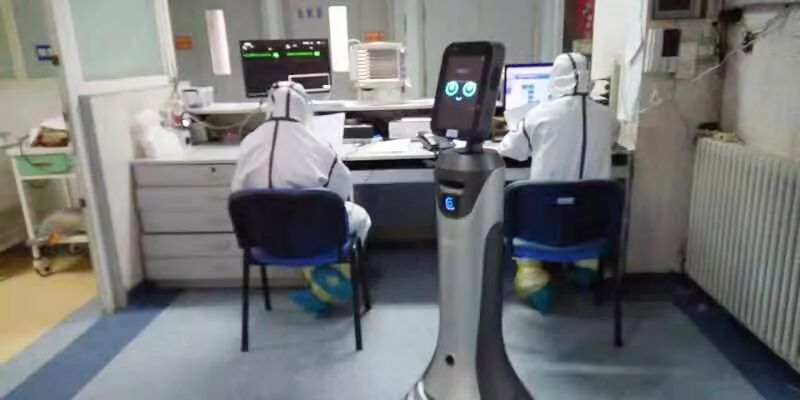
Starting from February 10, a group of special “workers” appeared in Wuhan Central Hospital, Wuhan University People’s Hospital, Wuhan Pulmonary Hospital, and Wuhan Chutian Hospital. They flexibly navigated through the hospital’s isolation areas, responsible for delivering meals and medications to medical staff and patients.
These special “workers” are meal delivery robots. They not only reduce the risk of infection for medical staff but also improve delivery efficiency and save on disposable protective equipment. After the Huoshenshan and Leishenshan hospitals were put into use, medical-grade delivery robots and unmanned delivery robots have also been employed.
More and more artificial intelligence forces have joined the fight against the pandemic.
On February 4, the Ministry of Industry and Information Technology issued a proposal to fully leverage the empowering effects of artificial intelligence in the fight against the novel coronavirus pneumonia epidemic, advocating for the organization of scientific research and production forces to prioritize the rapid development and application of related products that effectively support epidemic prevention and control.
According to statistics from the Forward Industry Research Institute, the market size of medical robots was approximately $510 million in 2018. Overall, it is relatively small and still in its infancy. In contrast, the sales of industrial robots reached $5.41 billion in 2018, far exceeding that of medical robots. During this pandemic, from delivery robots in isolation areas to AI temperature measurement systems coming online, people have witnessed a new force in epidemic prevention.
At the same time, people are also questioning how much of a role artificial intelligence can actually play. Can robots walk faster?

Entering the Frontline
On January 24 at 10 AM, flight TR188 from Singapore arrived at Hangzhou Xiaoshan Airport. Due to two passengers having fever, 219 passengers were placed under centralized medical observation at the Hangzhou Municipal Party School.
On New Year’s Eve, the Municipal Party School was already short-staffed, and they had to solve the meal problem for 219 passengers while avoiding cross-infection, which was extremely challenging. Therefore, the Hangzhou government thought of “asking for help” from robots.
Qinglang Intelligent Technology received this special task. However, it was impossible to ship directly from the factory in time, so Qinglang’s founder and CEO, Li Tong, immediately negotiated with the Hangzhou chain restaurant Xinbailu, which was renting Qinglang robots, to directly transfer 16 robots to the isolation point at the Hangzhou Municipal Party School.
It was not very difficult to have robots that were originally used in more complex restaurant scenarios work in a relatively closed isolation point. “They can quickly start operating in the isolation area,” Li Tong was confident.
Unmanned delivery is just a glimpse of the power of robots during this pandemic; this new force has also entered hospitals to assist medical staff.
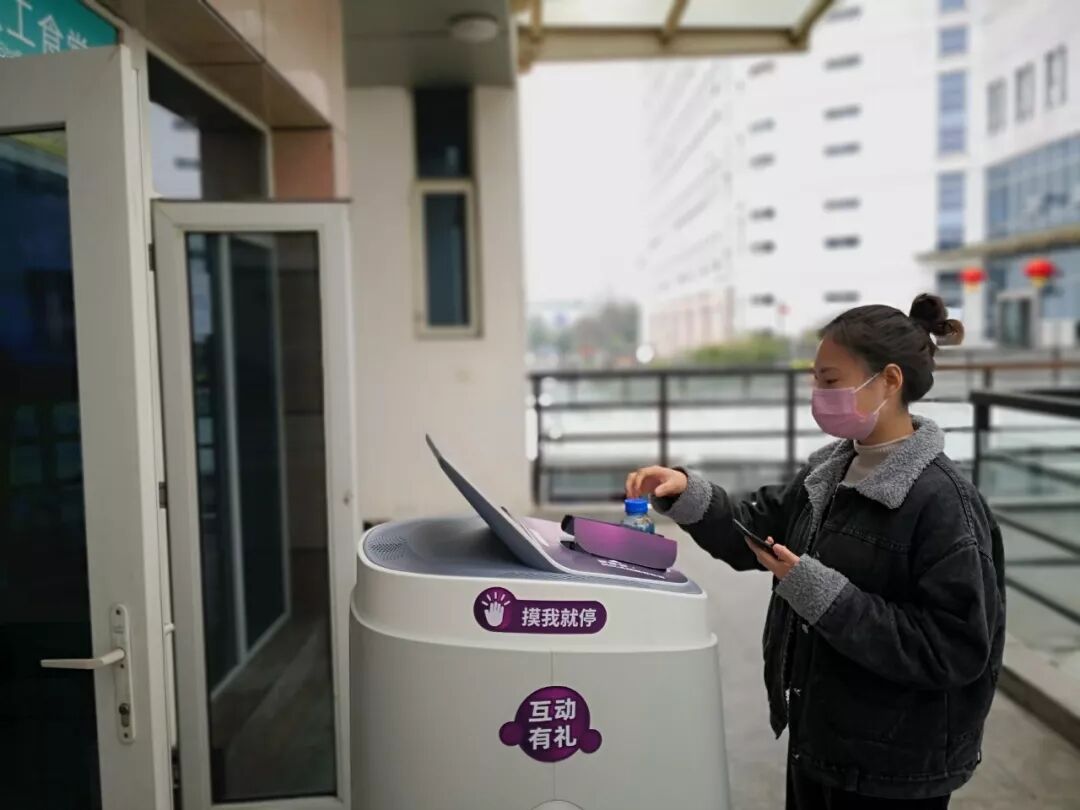
Yuefan Technology transformed robots originally suitable for retail scenarios and mobile explanations and services into robots for hospital use.
On February 1, Chengdu High-tech Zone company Yuefan Technology provided three categories of robots, “Zhi Ping,” “Xiang Di,” and “Xiao Fan,” free of charge to the 10th People’s Hospital of Chengdu (Chengdu Public Health Medical Clinical Center) to alleviate the workload of frontline medical personnel.
Yuefan’s sales director, Hu Song, told “China Entrepreneur” that they received the epidemic prevention notice from the Chengdu government on the 28th day of the twelfth lunar month (January 22), and began transforming robots originally suitable for retail scenarios into robots for hospital use.
“This modification is not complicated; it mainly involves software-level changes, such as rewriting the voice library and redesigning the UI. Currently, these three types of robots are already operating in hospitals, and they will be deployed in other epidemic prevention centers next,” Hu Song introduced.
In Beijing, two intelligent service robots from Leopard Mobile’s Huoxing Kong have also been delivered to the Beijing University Shougang Hospital, which is under great pressure for patient reception, on January 27. On February 4, Beijing Haidian Hospital also received a donation and began using epidemic prevention collaboration robots. This was a rapid development of functions based on existing intelligent service robots by Huoxing Kong after the outbreak of the pandemic, according to actual application scenarios and needs.
“This force in the fight against the epidemic is very important and indispensable,” said Huang Shan, founder and CEO of Yuefan Technology. “As carriers of artificial intelligence, robots play an irreplaceable role in hospitals, such as delivery robots, disinfection robots, guidance robots, temperature measurement robots, etc., all of which can effectively prevent and control the epidemic, reduce cross-infection, and lower labor costs. The industry is also utilizing artificial intelligence for vaccine research and development. This shows that artificial intelligence is playing an important role in this pandemic.”
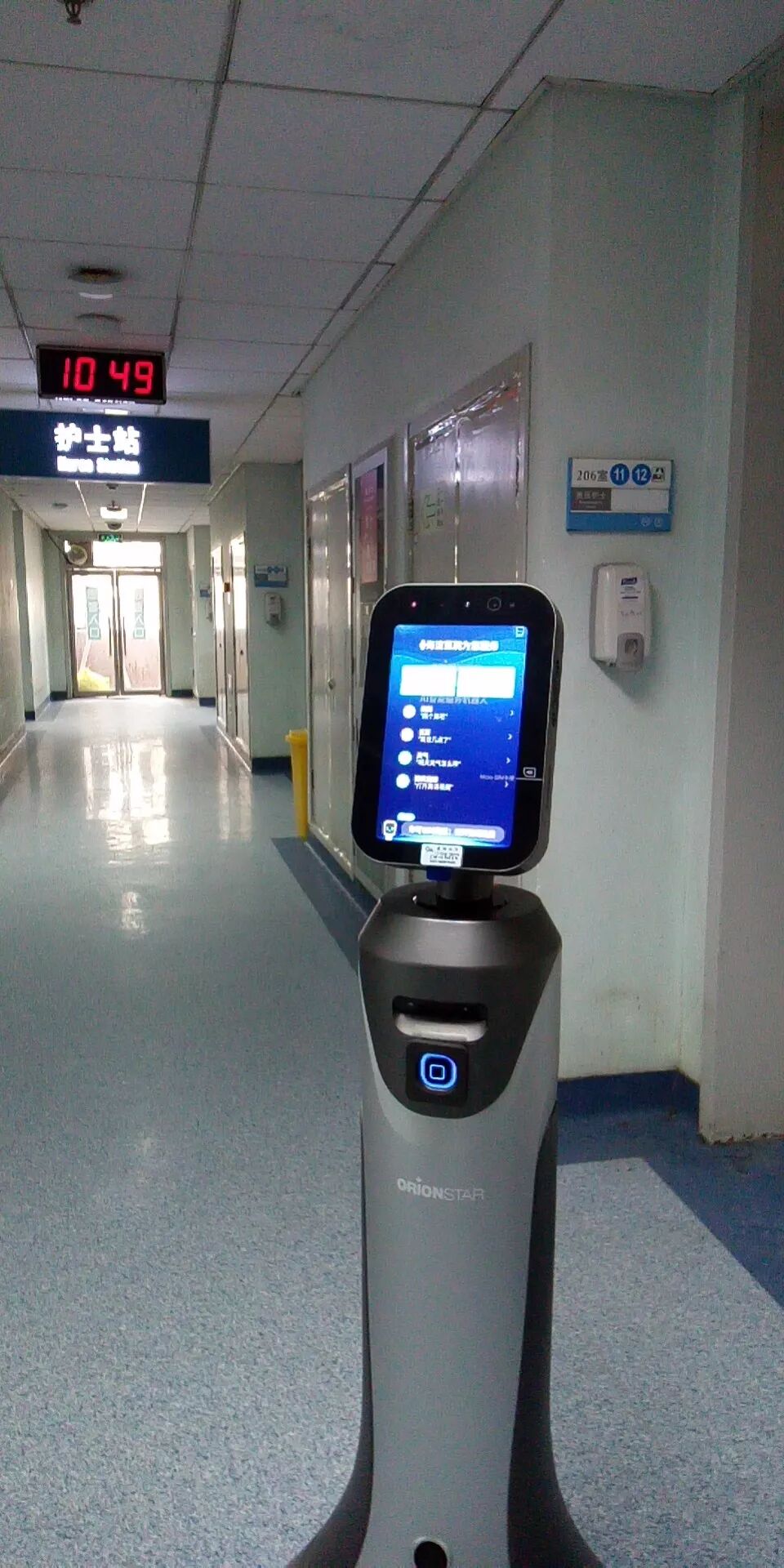
Huoxing Kong quickly developed epidemic prevention collaboration robots based on actual application scenarios and needs after the outbreak of the pandemic.
“Crisis” and “Opportunity”
“These (hospital and isolation point) scenarios were previously unconsidered. The ability of existing products to be applied to current scenarios in a short time indicates that intelligent robot products in the market have matured significantly, and it also shows us the potential for application in more scenarios,” Li Tong stated.
Qinglang Intelligent mainly produces indoor unmanned delivery robots, primarily used in restaurant delivery, hotel services, and express/takeout delivery scenarios. Therefore, the company’s orders are mainly concentrated in the catering and hotel industries, but this pandemic has severely impacted the catering industry, and their business has also been affected.
Li Tong candidly stated that in the short term, the demand for delivery robots in the catering industry will significantly decrease before the end of the pandemic, inevitably impacting Qinglang Intelligent. “However, for artificial intelligence companies, the market education significance brought by the pandemic is more important. The short-term pain brought by the disaster will drive the industry to develop faster.”
For the robot industry, technology, products, and costs are not the most critical factors restricting development; the challenge lies in market education. “Even if a robot’s monthly rental price is only 3,000 yuan, far below the labor costs in the catering industry, the current application is still very niche. After this pandemic, almost everyone in the country will know that robots have been scaled up and can be applied in various scenarios and fields, which will have a profound impact on the industry,” Li Tong stated.
Huang Shan also described this pandemic as a “catalyst,” objectively stimulating industry demand and effectively educating the market about artificial intelligence products with intelligent and unmanned characteristics. “Whether it is artificial intelligence or intelligent robots, they will accelerate their pace after the pandemic passes, and the market prospects will definitely be huge. Especially in the fields of healthcare and community services, artificial intelligence and robot products will accelerate their deployment.”
The pandemic has revealed the real demand scenarios for artificial intelligence and has tested the technical strength of various AI companies. Megvii stated, “Only teams with sufficient technical accumulation and R&D capabilities can turn ‘crisis’ into ‘opportunity’ and quickly present effective product solutions.”
Similarly, the AI company Xiao i Robot has also extended product demand driven by the pandemic. Yuan Hui, founder, chairman, and CEO of Xiao i Robot, introduced that Xiao i Robot provides free epidemic prevention outbound robots, initially hoping to solve the large number of surveys and community inquiries conducted daily by various government agencies, providing public services. Now they have found that the demand is extending, with more data analysis and interaction; a restaurant company in Hubei even proposed the need for an interactive intelligent robot that can provide psychological comfort. “Xiao i Robot will launch more products based on their needs and our capabilities,” Yuan Hui stated.
Yuan Hui believes that while artificial intelligence has played a significant role during this pandemic, its application is still relatively limited. However, the COVID-19 pandemic will certainly change people’s lifestyles and work methods, presenting both opportunities and challenges for AI companies.
Bottlenecks in Market Explosion
Currently, China accounts for 38% of the global robot industry market share, with applications covering a wide range of fields from ground transportation to aerial exploration, from home entertainment to medical rescue, and from industrial to service robots.
A sudden pandemic has not only made robots famous overnight but has also accelerated the pace of AI companies entering the medical field.
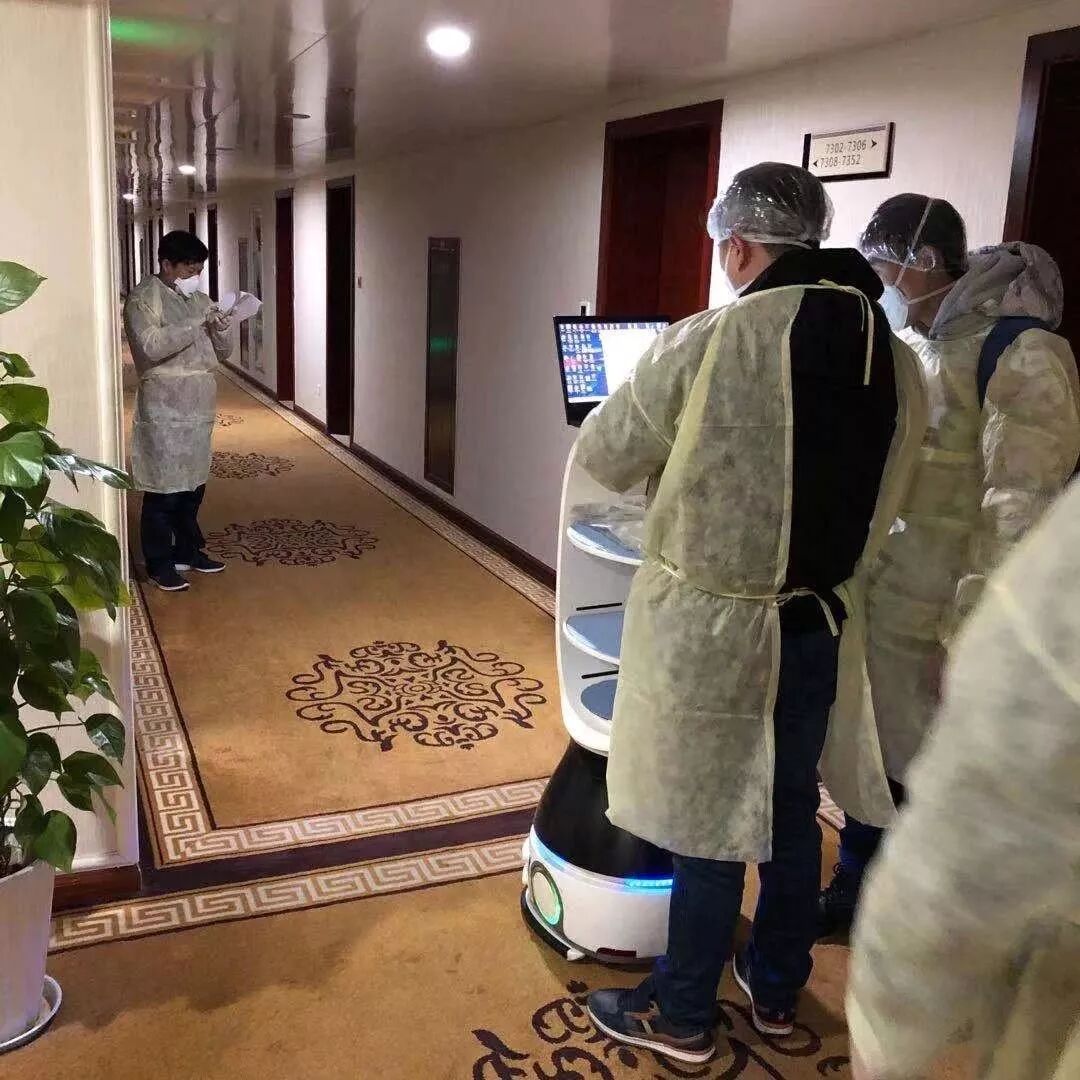
Qinglang has been deeply involved in the catering industry, but seeing the usage in medical scenarios during this pandemic has led to more thoughts about entering new scenarios.
Huang Shan reflected on previous layouts during an interview with “China Entrepreneur.” She stated that before the outbreak of this pandemic, artificial intelligence and robots were more focused on utilizing technology to serve consumer scenarios, with very few applications in medical scenarios. The outbreak of this pandemic has concentrated the demand for the landing of AI software and hardware technology in related fields.
Hu Song believes that Yuefan Technology has taken a big step forward due to the pandemic: “We originally planned to delve into the medical field in 2020, and epidemic prevention has accelerated our pace.” According to Yuefan Technology’s plan, the company will layout in hospitals, creating benchmark cases in Chengdu before moving into the Beijing market.
Hu Song revealed that Yuefan Technology has always been in contact with hospitals, but the progress was relatively slow. “After the outbreak of the pandemic, we saw that both defense robots for presentations in hospitals and delivery robots are essential needs for hospitals. For disaster prevention and epidemic control, robots have a very wide range of application scenarios, so we are more determined and faster to start laying out in the medical field.”
Li Tong also stated that once the public recognizes and accepts the application of robots in various scenarios, there will be great potential in the future. He also mentioned that although Qinglang has been deeply involved in the catering industry, seeing the usage in medical scenarios during this pandemic has led to more thoughts about entering new scenarios. “We believe that robots can also be quickly popularized in medical settings.”
However, the artificial intelligence driven by the sudden pandemic is not without its doubts.
Shen Meng, executive director of Xiangsong Capital, stated that domestic companies lack original development and are more application-oriented, so they can only forcibly convert their application scenarios to epidemic prevention, unable to fundamentally promote technology for epidemic prevention. “After all, the impact of the pandemic is short-term; ultimately, it will still fall to the cost-performance competition in daily scenarios. At that time, the lack of core technology and underlying technology will be exposed.”
In addition, most medical robots are innovative technology products, and their performance stability still needs to be tested. The application of medical robots will also bring varying degrees of adjustments and changes to hospital environments, business processes, and operating personnel, requiring a period of acceptance for hospitals. Overall, the market education for medical robots is a long-term task, and there is still significant room for improvement in their technical performance.
Moreover, greater demand exists in industrial robots and service robots, which poses greater challenges to the R&D capabilities of AI companies.

.END.
Produced by: Cui Yunyuan Proofread by: Zhang Gegge Reviewed by: Chen Ruiya

[ Recommended Reading ] Click the image to read