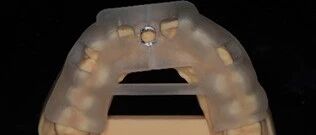
Digital Design and 3D Printing Technology in the Treatment of Malocclusion
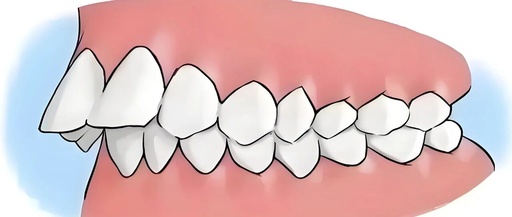
Digital Design and 3D Printing Technology in the Treatment of Malocclusion

Malocclusion is one of the most common facial deformities, affecting the aesthetics and function of the jaw, and even impacting the psychological health of patients. Depending on the severity of the malocclusion, treatment options can be categorized into orthodontic treatment, surgical treatment, and combined orthodontic-surgical treatment. There are numerous classification methods for malocclusion, which vary … Read more
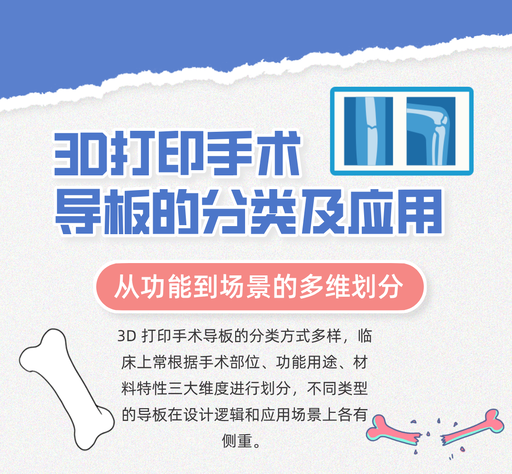
Applications of 3D Printing Technology in Orthopedics

Applications of 3D Printing Technology in Orthopedics

In recent years, as a leader in the third industrial technological revolution,3D printing technology has rapidly penetrated the medical field. Compared to traditional medical technologies,3D printing technology can be customized according to the patient’s injury needs. 1.Reconstruction of preoperative models simulating bones, soft tissues, blood vessels, organs, etc.; 2.Customized surgical guides that fit the patient’s … Read more

Application of 3D Printing Technology in Orthopedics

Application of 3D Printing Technology in Orthopedics

3D printing technology, also known as additive manufacturing, is a type of rapid prototyping technology that constructs physical objects based on digital model files using various adhesive materials through a layer-by-layer printing method. 3D printing technology includes laser or electron beam sintering and melting technology, thermoplastic extrusion deposition manufacturing technology, and photopolymerization molding technology, among … Read more

Application of 3D Printing in Digital Implant Surgical Guides

Application of 3D Printing in Digital Implant Surgical Guides

This is Luojia Morning Repair‘s 281st post Introduction Three-dimensional printing (3D printing) technology, also known as additive manufacturing (AM), allows designers to obtain three-dimensional digital models through volumetric imaging technology or reverse engineering (RE). After obtaining the model, it is sliced into two-dimensional contours using computer-aided design (CAD) software. The DICOM files are then converted … Read more