1. Overview
1. What is Cloud Computing,What is Shaanxi Finance Cloud?
Cloud computing utilizes technology to aggregate various types of data from the network through application software, working collaboratively to provide data storage and business access functions. This model allows for efficient and on-demand access to shared resources, characterized by: powerful computing capabilities, elastic scalability, open collaboration, security, reliability, and flexible provision of rich and diverse information services.
Shaanxi Finance Cloud adopts a fully cloud-based model, achieving cloud transformation of regional infrastructure + microservice-based fiscal applications, breaking down large applications into smaller applications for rapid iteration, continuous delivery, elastic resource allocation, quick response to business needs, fully leveraging the advantages of cloud computing, and thoroughly addressing long-standing issues faced by finance departments such as complex data standards, disjointed business processes, dispersed information resources, and data sharing challenges.
2. What is the Strategic Vision of Shaanxi Finance Cloud?
In 2017, the Party Group of the Shaanxi Provincial Department of Finance proposed the strategic vision of “accelerating the integration of fiscal information construction and building ‘Shaanxi Finance Cloud’, which focuses on ‘Shaanxi Finance Cloud’ as the core, constructing a new model of fiscal management; leveraging big data to enhance fiscal management and decision-making levels; and achieving full coverage of fiscal business informatization based on a unified portal and fiscal network.”
3. What are the Construction Goals of Shaanxi Finance Cloud?
To implement the national and Ministry of Finance’s requirements for fiscal reform and cybersecurity, adhering to top-level design and a principle that balances provincial centralization with the needs of all parties, based on a unified standard and regulatory system, focusing on the integration of business systems, supported by innovative big data applications, and ensuring network information security and unified management across the province, we aim to construct an integrated fiscal information system and a fiscal data resource pool, creating an intelligent finance cloud characterized by management intelligence, business integration, data standardization, application service orientation, and resource cloudification (the “Five Transformations”), supporting the comprehensive advancement of Shaanxi’s “Five-Type Finance” and establishing a new fiscal management and service model that is standardized, scientifically decided, and efficient in operation.
4. What is the Overall Approach to the Solutions and System Construction of Shaanxi Finance Cloud?
Overall Approach: By buildingone core, establishingtwo foundations, implementingthree types of models, empoweringfour major businesses, and achievingfive goals, supporting the construction of Shaanxi’s “Five-Type Finance” and aiding the modernization of fiscal governance systems and governance capabilities.
Ø One core: Data as the core, achieving data standardization and controllable data flow.
Ø Two foundations: Establishing a resource cloud platform and an operational maintenance and security system as the two foundational guarantees.
Ø Three types of models: Front-end “release” to enhance user experience; middle-end “management” to service functions and interfaces, following unified technical standards; back-end “service” to build a data foundation and provide data services.
Ø Four major businesses: Intelligent decision-making, intelligent operations, enabling intelligence, and supervisory intelligence.
Ø Five goals: Management intelligence, business integration, data planning, application service orientation, and resource cloudification.
5. What are the Innovations of Shaanxi Finance Cloud?
Five major innovations:
Ø New model: Business systems based on data flow control.
Ø New capability: Intelligence based on big data analysis.
Ø New architecture: Information management based on equal rights and responsibilities.
Ø New ecosystem: Application management based on the “release, management, service” concept.
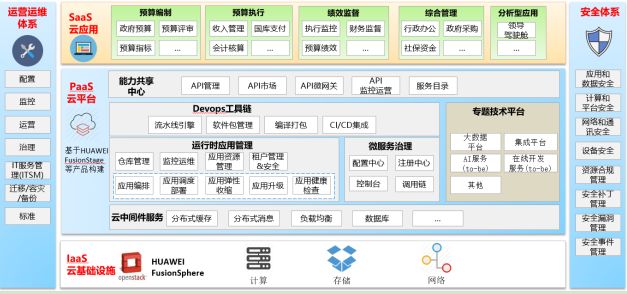
Ø New platform: Comprehensive cloudification based on a unified IaaS/PaaS cloud platform.
6. What are the Main Advantages of Shaanxi Finance Cloud?
Through the construction of Finance Cloud,
Ø Establishing a new business collaboration model based on data flow control, achieving intelligent analysis based on big data..
Ø Constructing a new data management organizational structure based on equal rights and responsibilities and information management requirements under the new technology background..
Ø Introducing new service providers through the construction of new platforms to build a more dynamic fiscal informatization ecosystem.
7. What Elements are Included in the Overall Architecture Design of Shaanxi Finance Cloud?
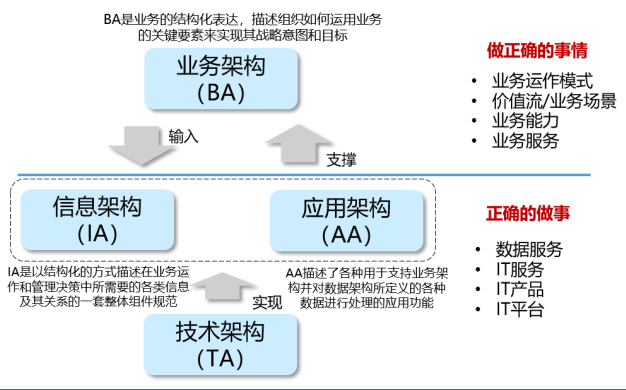
The overall architecture design of Shaanxi Finance Cloud follows the industry’s advanced “4A” architecture design methodology, integrating the core fiscal business processes, data, and information resources to form four major architecture designs: business, application, information, and technical.
① Business Architecture (Business Architecture): Defines business classifications and their structural relationships, sorting out business from the perspective of overall fiscal management, forming standardized management processes, describing the interconnections between business modules, organizing key documents and standards within the business, and solving core issues such as inconsistent standards, difficult connections, and process breaks. The Shaanxi Finance Cloud business architecture includes 45 processes, over 1000 business nodes, over 130 business documents, and 83 interconnection relationships between businesses, breaking through the existing breaks in connections between different business systems and streamlining the fiscal business management processes centered around budget preparation, execution, and accounting.
② Application Architecture (Application Architecture): Defines application function groups and their structural relationships, describing the application functions of each business, delineating the functional boundaries of each business application system, and avoiding business collaboration difficulties caused by functional redundancy between different systems. The application architecture covers five major business areas related to fiscal management: budget, execution, final accounts, comprehensive, and internal control supervision, comprising 45 business application groups and 134 business applications, essentially covering all fiscal applications and all fiscal levels, forming a unified business collaboration.
③ Information Architecture (Information Architecture): Defines business data classifications and their structural relationships, describing the various types of information required in business operations and management decision-making in a structured manner, with a core focus on standardization, complying with the Ministry of Finance’s “Unified Core Elements” requirements and the “Fiscal Basic Data Specification 3.0”, forming a fiscal data resource directory, data standards (including departmental post standards, process standards, entity standards, and basic data standards), and data flow relationships to lay the foundation for business connectivity.
④ Technical Architecture (Technical Architecture): Defines the overall structure and internal composition of the Finance Cloud’s software and hardware, conducting comprehensive design based on the idea of full cloudification, performing layered and graded design for business and technology, requiring clear responsibilities for each component, allowing for flexible splitting or merging of cloud systems, and designing business functions for microservices, making it smarter and easier to use, enabling independent deployment and improvement of each module and application, supporting rapid online requirements for new businesses.
8. What Major Values Does Shaanxi Finance Cloud Bring to System Users??
Ø One-stop cloud portal entrance, facilitating user login and enhancing user experience.
Ø Unified layered authorization, user permission applications/ approvals save time and effort.
Ø Business integration, reducing cross-process/ system data duplication.
Ø Electronic payment, self-service at counters, efficient, secure, and environmentally friendly.
Ø Process visualization, everything is under control.
Ø Data standardization, improving data quality, reducing data “translation”, making report generation more convenient, bidding farewell to “report emperor” and “report sister” titles.
Ø Fully cloudified resources, upgraded computing capabilities, elastic scalability, enhancing system performance and reducing idle waiting.
Ø Capability as a service, platform-oriented, responding to business needs faster and more steadily.
2. Technical Features
1. What are the Technological Innovations Adopted by Shaanxi Finance Cloud?
Huawei follows open architectural standards, integrating cloud computing, distributed storage, and virtualization technology, allocating resources on demand to build the Shaanxi Finance Cloud IT infrastructure platform; building cloud-native application management for all fiscal operations, providing one-stop services for microservice application development, monitoring, and security operations;
Domestic database localization: For the first time, a domestic database (Huawei Gauss DB 300) has been applied to the core production system of the fiscal industry, establishing a GSDB data resource center, utilizing big data governance and analysis tools to achieve intelligent fiscal operations.
Microservice application: To facilitate rapid iteration of applications, the core systems of the fiscal industry have been microservice-enabled for the first time.
2. What are the Features of the Cloud Technology Platform Construction?
1) On-demand resource allocation IaaS platform, achieving virtualization and pooling of computing, storage, and network resources, enhancing management and operational automation levels.
2) A unified, open PaaS cloud platform system, including cloud application platforms (microservice frameworks, common services, etc.) and data platforms (including big data), supporting comprehensive cloudification construction of SaaS applications.
3. What are IaaS, PaaS, and SaaS?
IaaS (Infrastructure as a Service), providing infrastructure as a service.
PaaS (Platform as a Service), providing platform as a service.
SaaS (Software as a Service), providing software as a service.
4. What is APaaS?
APaaS is a public technology service platform or technical middle platform, extracted from numerous business systems, possessing commonality and reusable technical capabilities.
5. What Role Does APaaS Play in the Finance Cloud Platform?
Ø Capability reuse – Standardized, service-oriented design improves the reuse capabilities of different business systems.
Ø Capability evolution – Continuous integration of new businesses leads to self-improvement and evolution of capabilities, quickly adapting to new business scenarios.
Ø Quick response – Interface design allows for flexible combinations between services and interfaces, quickly responding to user needs and business changes.
6. What Does “Cloud Native” Refer To?
“Cloud native” is a method of building and running applications that leverages the advantages of cloud computing delivery models. It focuses on how to create and deploy applications rather than where. The main idea is to package each part of an application in its own container, dynamically orchestrating them for proactive scheduling and management, optimizing resource utilization, and enhancing flexibility and maintainability of applications oriented towards microservices.
7. What are Microservices?
The microservices architectural style is a loosely coupled architecture pattern that advocates dividing a single application into a set of small services that coordinate and cooperate to deliver final value to users. Each service runs in its independent process and communicates with other services through lightweight communication mechanisms (usually based on HTTP protocol’s RESTful API). Each service is built around specific business functions and can be independently deployed in production and pre-production environments. Moreover, a centralized service management mechanism should be avoided; instead, based on business context, appropriate languages and tools should be chosen for building specific services.
8. Gauss DB 300 Related
1) What is Huawei Gauss DB 300?
Huawei Gauss DB 300 is a distributed parallel relational database system that supports standard SQL and database storage management features.
2) What is the Product Positioning of Huawei Gauss DB 300?
Huawei Gauss DB 300 is an enterprise-level distributed HTAP database (Hybrid Transaction and Analytical Processing), which emphasizes building enterprise-level capabilities of traditional databases and high scalability and availability of internet distributed databases, fully compatible with SQL standards, providing transaction processing capabilities at a million TPC-MC level and enterprise-level reliability.
3) What Features and Advantages Does Huawei Gauss DB 300 Have?
It features high scalability, high availability, high performance, ease of management, online upgrades, online expansion, etc.; low cost, high performance, and supports massive data.
4) What are the Advantages of Using Gauss DB 300 in the Finance Cloud?
① High data reliability, high service availability.
Huawei Gauss DB 300 adopts a distributed multi-active architecture, supporting various high-reliability solutions.
② High concurrency, high performance.
As a distributed HTAP database, it represents the future direction of database development from an architectural perspective, featuring linear scalability, multi-level parallel execution, and cost-optimized core database technologies. It has been tested using industry standards such as TPC-C, TPC-H, and TPC-DS.
③ Distributed scalability.
Huawei Gauss DB 300 adopts a Shared-Nothing distributed architecture to meet the growing capacity and performance requirements of microservice application data, supporting the large-scale centralized construction of Shaanxi Finance Cloud.
④ Easy migration.
Based on PostgreSQL ecology, it is compatible with SQL2003, enhancing compatibility with Oracle syntax, enabling rapid migration of business statements and stored procedures.
⑤ Open ecology.
Huawei Gauss DB 300 is derived from the open-source PostgreSQL database, which has a rich ecosystem, easy maintenance support, and continuous evolution.
⑥ Secure and trustworthy.
Huawei has independently controllable code and has established core R&D teams for databases in multiple global regions, with significant investment in database technology, strong technical control capabilities, and the ability to solve deep-seated issues within the database kernel.
⑦ Comprehensive vendor service capabilities.
Huawei has a standardized operational support system, providing online services, on-site services, professional services, operational training, etc., to meet the normal delivery and stable operation of fiscal projects.
9. What Storage Products Does the Finance Cloud Use? What are Its Main Advantages??
The Finance Cloud uses Huawei’s distributed storage product FusionStorage, which supports object, block, and file storage; FusionStorage features high performance, high reliability, easy scalability, super-large capacity, parallel fast fault recovery, and computing-storage integration.
10. What is Virtualization? What is the Purpose of Virtualization?
Virtualization is a broad term that can generally be understood as a method of abstracting computer resources. Through virtualization, the representation, access, and management of computer resources, including infrastructure, systems, and software, can be simplified, providing standard interfaces to accept inputs and provide outputs. The purpose of system virtualization is to enhance the utilization of computer hardware resources and improve IT support efficiency by virtualizing and running one or more virtual machines on a physical machine using a virtualization manager (Virtual Machine Manager, or VMM).
11. What is I-MOC?
I-MOC (Intelligent Maintenance and Operation Center) is a unified operational platform independently developed by Huawei, providing enterprises with unified authentication, centralized monitoring, alarm management, operational automation platform, asset configuration management, service desk, and a one-stop operational service for digital operations, also supporting APP mobile operations. It significantly enhances enterprise operational efficiency and quality, standardizing operational practices.
3. Business Features
1. What is the Positioning of the Unified Entrance of Shaanxi Finance Cloud?
Shaanxi Finance Cloud uses a unified portal as an entrance to achieve single sign-on for different user business application systems and unified display of pending matters.
2. What is Fiscal Core Business Integration?
It refers to managing the complete lifecycle of core businesses such as project library rolling management, mid-term fiscal planning, budget preparation, performance indicator target management, budget execution, budget adjustment, performance indicator report monitoring, account processing, and comprehensive government financial reporting, centered around budget preparation, execution, and final accounts management.
3. What is Provincial Application Centralization?
Provincial application centralization refers to deploying a large system on the Finance Cloud that integrates all provincial fiscal users, processing business within the same system. This approach is more conducive to data aggregation, integration, and sharing, creating conditions for centralized fiscal management and application of big data in finance.
4. What are the Advantages of the Electronic National Treasury Centralized Payment System?
The electronic reform of national treasury centralized payment is an important development direction in current fiscal payment management, characterized by the complete electronicization of previously paper-based stamping processes, achieving paperless payments and electronic signatures. By leveraging modern electronic information technology, it significantly improves the efficiency of fiscal national treasury centralized payment management, reduces payment management costs, and enhances payment management security.
5. What is an Electronic Seal??
An electronic seal is a visual representation of an electronic signature that transforms the electronic signature operation into a visual effect similar to that of stamping on paper documents, while utilizing electronic signature technology to ensure the authenticity and integrity of electronic information and the unalterable and non-repudiable nature of the signer. It has the same legal effect as a physical seal.
6. What is an Electronic Voucher Library, and What is Its Business Value?
An electronic voucher library is the “safe” for electronic vouchers, a software that manages the entire lifecycle of electronic vouchers, forming a complete “electronic management system” together with the business system. As a carrier for electronic management, its core function is to ensure the secure management of electronic vouchers while also acting as a medium, establishing a high-speed information channel between finance and the People’s Bank and agent banks, facilitating collaborative work between all parties and security infrastructure.
7. What is the Self-Service Counter Business System??
The self-service counter business system is a platform for online payment processing, standardized and developed uniformly by agent banks according to the electronic management business specifications and technical standards formulated by the Ministry of Finance, integrating internal review of authorized payments and electronic transfers into one business process, forming a closed-loop business management. Budget units utilize dedicated lines already established with the finance department to submit relevant authorized payment applications within the fiscal treasury payment system, completing the internal review process, and submit the authorized electronic vouchers for payment through dedicated lines to the agent bank’s self-service counter business system, where the fiscal funds are disbursed.
8. What is a UKey??
A UKey is a small storage device that connects directly to a computer via USB (Universal Serial Bus interface), featuring password verification functionality, reliable and high-speed. The greatest characteristic of UKey is its high security, strong consistency in technical specifications, good compatibility with operating systems, and flexible portability.
9. What is a Digital Certificate??
A digital certificate is an electronic document issued by a CA (Certificate Authority), representing a string of numbers that can indicate the identity of a network user, providing a way to verify the identity of network users over a computer network. Therefore, digital certificates are also known as digital identifiers. Digital certificates ensure the integrity and security of information and data exchanged by network users on the computer network through encryption or decryption.
10. Personal Digital Certificates
Personal digital certificates are client certificates stored in a dedicated USB key. The certificates stored in the key cannot be exported or copied, and the key requires a protective password for use. To use this certificate, one must physically possess the storage medium (USB key) and know the protective password for the key, which is also known as two-factor authentication. This authentication method is currently one of the most secure identity verification methods on the internet. Existing personal UKeys contain four types of digital certificates: RSA signature certificates, encryption certificates, and SM2 signature certificates and encryption certificates.
4. Security,Maintenance
1. What are the Issues and Answers Regarding Network Security?
1) What is a Firewall, and What is Its Function?
A firewall is a combination of various software or hardware devices used for security management and filtering, helping to build a relatively isolated protective barrier between the internal and external networks of a computer network to protect user data and information security.
1) What is IPS (Intrusion Prevention System)?
IPS is a software or hardware device that detects data packets (Deep Packet Inspection, DPI), defending against attacks such as worms, viruses, trojans, and denial of service.
2) What is a Bastion Host?
In a specific network environment, to protect the network and data from potential damage and data leaks caused by non-compliant operations from internal legitimate users, various technical means are used to collect and monitor the system status, security events, and network activities of each component in real-time, enabling centralized alarms, recording, analysis, and processing. Its main function is to comprehensively track, control, record, and replay the maintenance processes of operational personnel, aiding in planning prevention, real-time monitoring of violations, responding to non-compliance, and post-incident compliance reporting and tracking.
2. How is the Finance Cloud Maintained??
The Finance Cloud and the business applications running on it are centrally maintained by the Provincial Information Office. By introducing a unified operational platform, I-MOC, it achieves end-to-end real-time status and performance monitoring from physical devices like servers to business applications, notifying maintenance personnel automatically at the first instance. The goal is to “discover issues before users” to transform passivity into proactivity, continuously enhancing the stability of the Finance Cloud and business applications.
3. How to Handle Issues When They Arise, and Who Will Handle Them?
During the province-wide launch and promotion phase, the promotion team will oversee the process. After promotion is complete, the 96702 hotline will provide unified support. The hotline will respond to operational issues and classify non-operational issues for forwarding: business issues for budget units will be answered by relevant business departments, technical issues of business applications will be handled by backend operations personnel, and user terminal (PC) issues, terminal network issues, and access system issues will be addressed by information centers and cooperative personnel at all levels.
(Source: County Finance Bureau Party Committee)
Supervisor: Cao Yuanyu Review: Lu Yan Editor: Bu Yuhang

WeChat public account of Wangxin Ganquan Wangxin Ganquan Today’s Headlines


Ganquan Promotion Daily Report Ganquan Promotion Sina Weibo