Are you experiencing sudden stalls or sluggish movements in semiconductor equipment? Pressing the start button but the robotic arm remains still? This comprehensive analysis of equipment motion breaks down the motion logic, abnormal judgment, and maintenance key points of the 6 core components of cutting, grinding, and packaging equipment clearly. Whether you are a beginner or an experienced operator, keep this handy for quick reference to troubleshoot issues without having to guess around the equipment!
1. Understand First: The Core Value of Equipment Motion Analysis
The precise operation of semiconductor equipment (such as dicing saws, grinders, and packaging machines) relies on the “coordinated motion of mechanical components”—any delay or stall in one part can lead to production interruptions and a significant drop in yield. The core of motion analysis is:
- Clarifying Normal Motion Logic: Knowing “how each part should move and for how long”;
- Quickly Identifying Abnormalities: Locating fault points from “slow motion, no motion, misalignment”;
- Proactively Predicting Maintenance: Avoiding sudden failures by observing wear marks from motion.
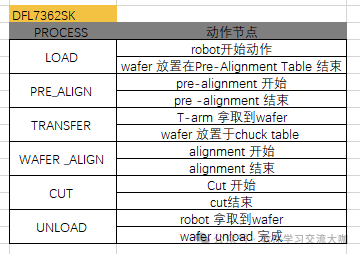
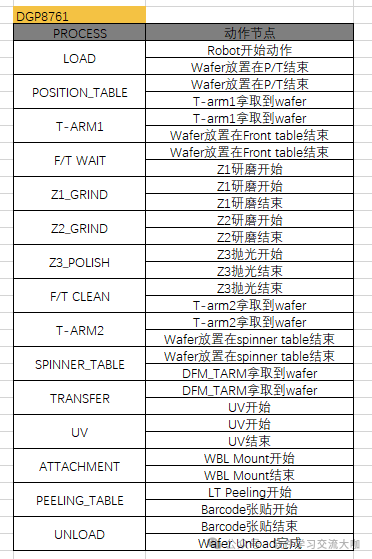
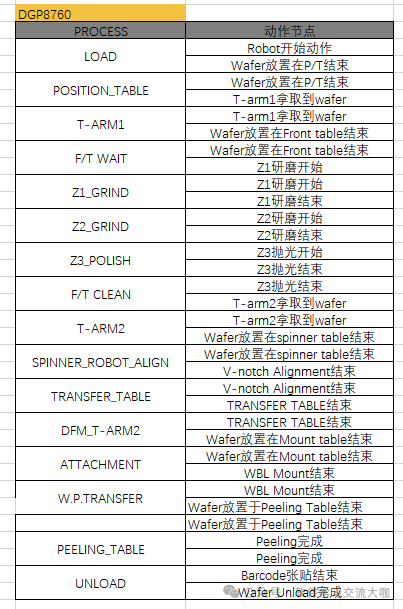
2. Essential Reference: Analysis of 6 Core Component Movements (Presented in Table Format)
Organized by “Component Function + Normal Motion + Abnormal Performance + Fault Causes + Handling Methods” for direct reference:
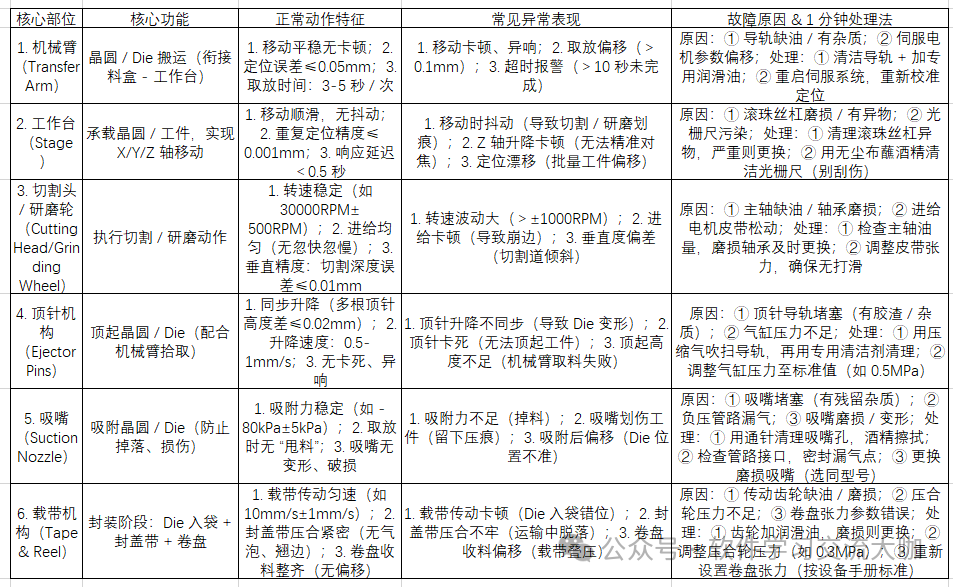
3. Key Techniques: Predicting Failures from “Motion Details” (A Must-Read for Maintenance)
Many faults do not occur suddenly; they can be detected early from motion details to avoid batch scrapping:
- Listen for Sounds:
- If the robotic arm moves with a “buzzing sound” → the guide rail is lacking lubrication, lubricate it promptly;
- If the cutting head makes a “clunking sound” → the spindle bearing is worn, replace it in advance;
- Look for Marks:
- If there are “scratches” after the workbench moves → there are impurities on the surface, clean immediately;
- If there are “indentations” after the suction nozzle adheres → the suction nozzle is deformed, replace it with the same model;
- Check Parameters:
- If the positioning error of the robotic arm changes from 0.03mm to 0.08mm → servo parameters are drifting, recalibrate;
- If the suction force drops from -85kPa to -60kPa → there is a leak in the pipeline or the suction nozzle is blocked, investigate and resolve.
4. Daily Maintenance: 3 Key Motion Protection Points (To Extend Equipment Life)
- Regular Cleaning: Clean the workbench, suction nozzle, and ejector pin daily before production (use lint-free cloth + alcohol, avoid using hard cloths that may scratch);
- Timely Lubrication: Apply specialized lubricant to the robotic arm guide rails and ball screws weekly (do not use the wrong type to avoid corrosion);
- Parameter Recording: Record key motion parameters (such as positioning error, suction force, rotation speed) monthly, comparing for abnormal changes (investigate if exceeding ±10%).
Interaction Time
What motion abnormalities do you most often encounter in equipment maintenance? Is it the robotic arm stalling or the suction nozzle dropping materials? Share your fault scenarios and handling experiences in the comments!
#Semiconductor Equipment Maintenance #Mechanical Motion Analysis #Equipment Fault Troubleshooting #Dicing Saw Maintenance #Packaging Equipment #Semiconductor Manufacturing #Maintenance Insights #Beginner Pitfalls