According to Hong Kong media, scientists in mainland China have developed a type of transistor that will significantly enhance chip performance while greatly reducing their energy consumption.
As reported by the South China Morning Post on May 27, the most advanced computer chips on the market today use 7-nanometer transistors. Yin Huaxiang, an expert in microelectronic devices and integrated technology at the Chinese Academy of Sciences, stated that his team has developed a 3-nanometer transistor—equivalent to the width of a human DNA strand—which can accommodate billions of such transistors on a chip the size of a fingernail.

▲ Screenshot from the South China Morning Post report
Yin Huaxiang said, “The smaller the transistors become, the more can be installed on a chip, which will significantly enhance the performance of processors.” Transistors are the fundamental components of processors. Yin Huaxiang mentioned that processors made with 3-nanometer transistors will increase computing speed and reduce energy consumption. For instance, a smartphone user could play resource-intensive games all day without needing to recharge the battery.
Yin Huaxiang also noted that his team must overcome several significant obstacles. Their research findings were partially published this month in the peer-reviewed journal IEEE Electron Device Letters. One of the challenges is the “Boltzmann Tyranny.” Ludwig Boltzmann was a 19th-century Austrian physicist. The “Boltzmann Tyranny” describes issues related to the distribution of electrons in a space. For chip developers, this means that as more smaller transistors are installed on a chip, the heat generated by the current required for the transistors will burn out the chip.
Reports indicate that physicists have provided solutions to this problem. Yin Huaxiang stated that his team is using a method called “negative capacitance,” which allows them to power the transistors with half the theoretical minimum energy required. It may take several years for these transistors to be commercially applied. The team is currently working on materials and quality control.
Yin Huaxiang said, “This is the most exciting part of our work. This is not just another discovery in the lab. It has enormous potential for practical applications, and we hold the patent for it.”
Reports also state that Yin Huaxiang believes this breakthrough will allow China to “compete head-to-head with the world’s leading players in chip research and development.” He said: “In the past, we watched others compete. Now, we are competing with others.”
It is reported that China is also developing a transistor at the atomic scale (0.5 nanometers), while other countries have already joined the race to bring 3-nanometer transistors to market.
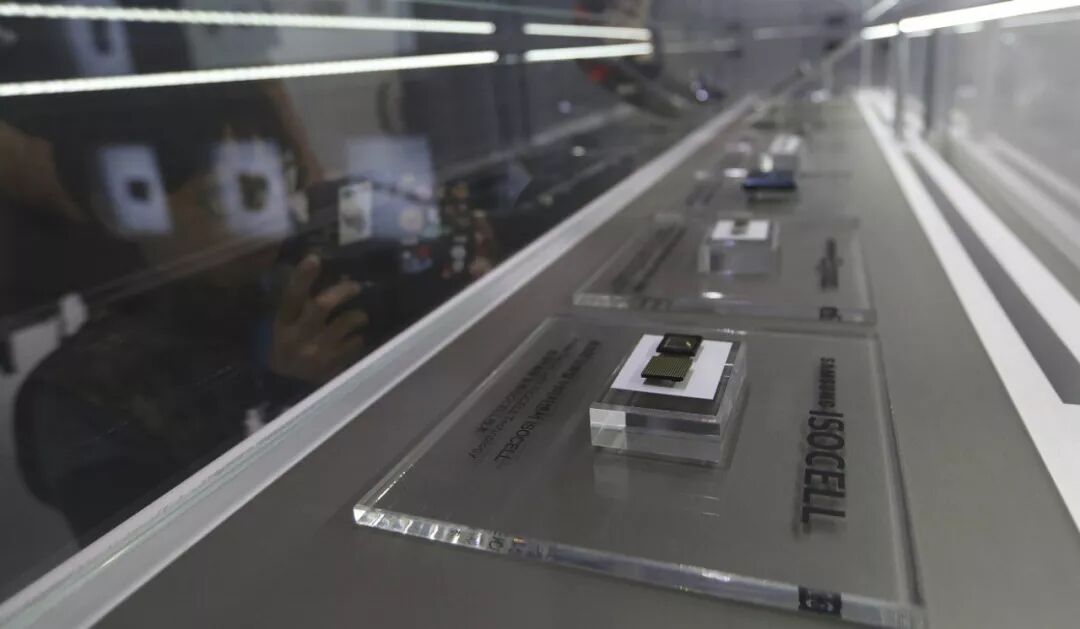
South Korea’s Samsung has announced plans to complete the development of 3-nanometer transistors by the first half of next year. Samsung claims that processors made with its 3-nanometer transistors will require only half the power compared to 7-nanometer technology while improving performance by 35%. Samsung did not specify when it expects these chips to go into production.

◆ Heavy Dependence! 78% of Rare Earths Come from China
◆ Is the U.S. Preparing to Skip 5G and Jump Straight to 6G?
◆ Foreign Netizens Congratulate Chinese Manufacturing: The U.S. Doesn’t Have This Technology
◆ Thursday at 8 AM! Chinese and American Hosts “Debate” Trade War
◆ U.S. Chip Companies Are “Feeling Unsafe”…
◆ Why is China’s Industrial Rise Unstoppable?
◆ Playing Golf, Watching Sumo… Abe Goes to Great Lengths to Entertain Trump
◆ Cui Tiankai Accepts Interview: China Will Take All Necessary Measures to Protect Its Rights
Article Edited by | Wang Lulu
WeChatEditor | Tian Xin
WeChat Review | Zhu Shun
Open the Reference News Client for More Foreign Media Information>>