The EU Takes Action! Chinese Lawn Mowers Invade European and American Backyards, Industry Experts Say: Chinese Companies Overtake, Traditional EU Firms Face Impact

Over 1.2 million Chinese lawn mowers have quietly entered the backyards of European and American households. This situation has left many traditional European companies bewildered, as they have seen their market share eroded by one-third within a few years, and the friendship boat has capsized; The EU has taken direct action, implementing trade barriers and technical standards to clearly set obstacles for Chinese companies. Many industry insiders have directly stated that this wave represents a “curve overtaking” by Chinese smart manufacturing.01/Why Can Chinese Lawn Mowers Sweep Across Europe and America?

Let’s take a look at what makes these products so impressive. In short, the lawn mower industry has long been established in Europe, with old brands like Husqvarna and STIHL from Sweden and Germany having decades of patent accumulation. Their products are indeed solid but outrageously expensive, often costing two to three thousand euros, with features that are quite lacking, relying on outdated buried cable navigation, and are cumbersome to operate. How have Chinese manufacturers managed to succeed? They have directly adopted drone navigation solutions, utilizing RTK differential positioning, AI visual recognition, and one-click mobile control, along with Lidar (laser radar) and multi-sensor fusion—it’s not an exaggeration to say that the technical content is maximized. Even more impressive is the price. For the same performance, domestic robots cost only half or even a third of European brands, with quick after-sales service, and the app available in both Chinese and English. When European and American consumers see this cost-performance ratio, who would still want the old foreign products? Thus, you can see why in 2023, exports of Chinese lawn mowers surged by 70% year-on-year, while orders for local European companies dropped by 40%—the money and experience are all laid out.02/The EU is Anxious, Implementing Technical Barriers and Tariffs
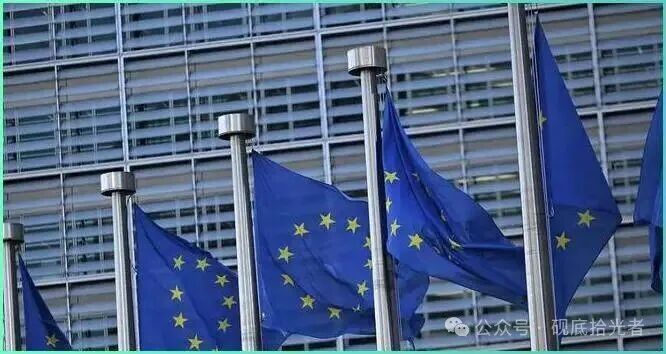
So the question arises, if traditional companies are not willing to back down, how can the EU remain passive while the market is being taken over by Chinese companies? They have taken direct action; by spring 2024, new EU regulations will require lawn mowers to connect to local data centers, with some AI algorithms subject to review, and noise and energy consumption standards significantly raised. What sounds good is called “green and environmentally friendly” and “data sovereignty,” but in essence, it is just a way to choke Chinese companies, hoping to drag them down. There are also tariffs; the EU has indeed included Chinese lawn mowers in the “anti-dumping investigation” list, preparing to impose a special tax of 20%. This combination of measures puts immense pressure on domestic brands, shrinking profit margins instantly, and some small manufacturers are unable to sustain themselves and are exiting the European market. But friends, can this really stop the progress of Chinese products? It’s not that easy. On one hand, large companies like Ecovacs, Roborock, and Stone have already started local factories and acquired European R&D teams, so whatever standards you set, we will optimize accordingly. On the other hand, European and American consumers have long been spoiled by high cost-performance ratios; would they really go back to buying outdated European products? Is it worth it? 03/Industry Perspectives? Chinese Manufacturing’s “Curve Overtaking” Caught European Companies Off Guard Many in the industry had actually predicted this, but when the moment arrived, European companies were still caught off guard. Many European engineers privately admit that they have been too complacent over the past decade, with slow technological innovation and exorbitant prices, relying solely on brand and channel to maintain their status. To put it bluntly, lawn mowers in Europe are essentially “lazy person’s tools”; they were originally slow to update, but suddenly, with a wave of AI and smart home integration from Chinese companies, the entire industry has been reshuffled. Chinese companies are more flexible in their approach, with rapid supply chain response times, and local overseas teams can be established quickly, while the growth speed of their apps and after-sales systems directly crushes their European counterparts. There is a saying in the industry that now, in European and American appliance stores, four out of ten lawn mowers are Chinese brands, and the “comfort zone” of local European manufacturers is gone. This battle of Chinese smart manufacturing has been brilliantly executed, showcasing China’s technological and supply chain strength to the world.04/The Underlying Reasons Are Deeper Than You Think: A Triple Attack of Technology, Cost, and Market In fact, many people only see that Chinese products are cheap, but they do not realize how robust the underlying system is. The key lies in China’s unique hardware supply chain; motors, motherboards, batteries, and sensors—no other country can produce a new mold in three days and a new solution in seven days like China. On the software side, AI algorithms, app ecosystems, and smart home interconnectivity are being developed rapidly, with Chinese manufacturers recruiting engineers globally while domestic teams work overtime, achieving astonishing speed. Furthermore, in terms of market, China has the world’s largest consumer-level smart home market, with hundreds of millions of users using vacuum cleaners, lawn mowers, and floor washers daily, providing abundant feedback data, allowing products to become increasingly precise. In contrast, European manufacturers iterate their products once a year, with slow channel responses, making it impossible to keep up. In short, Chinese manufacturers’ ability to capture the European and American markets is not solely based on “cheapness” but on systematic innovation and extreme efficiency. The EU’s actions this time appear to be trade protectionism, but fundamentally, they reflect anxiety and disbelief towards Chinese manufacturing. So, who will ultimately come out on top in the future? It’s hard to say; whether the EU can use policy to slow down Chinese companies or whether the Chinese will continue to break through with their strength remains to be seen…