Introduction
The humidity sensor is a key component of the Dynamic Vapor Sorption (DVS) instrument. To obtain accurate results, the humidity sensor needs to be calibrated regularly. It is recommended to calibrate at least once every six months.
Please note: Calibration is only to verify the accuracy over the past period, not for the future.
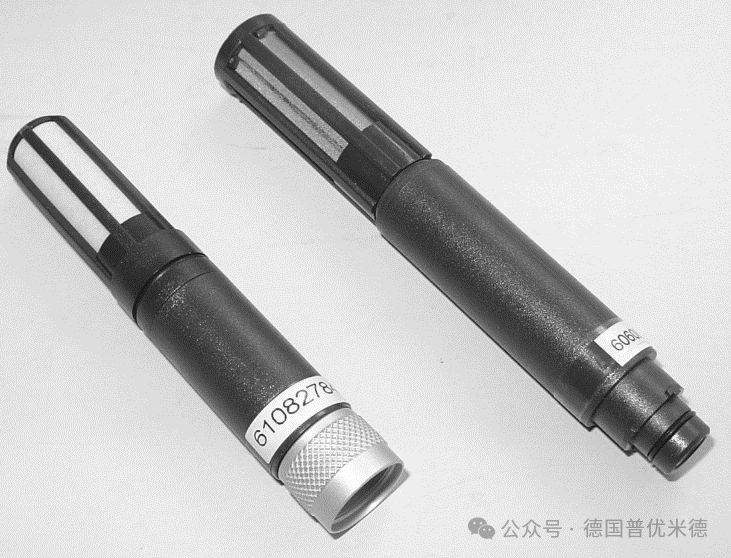
Fig. 1: Humidity sensors used in SPS and Vsorp devices
Generally, calibration refers to the process of using an instrument to detect a universally recognized standard substance, comparing the detected results with reference values, and then adjusting for errors.
For humidity calibration, saturated salt solutions are typically used. By adding specific salts to the aqueous solution, the vapor pressure of water vapor above the solution is reduced.
To reach equilibrium with the environment, a saturated salt solution generates a specific relative humidity that is temperature-dependent. Utilizing this property, saturated salt solutions become standard substances for humidity calibration.
By selecting different types of salts, this method can cover the entire range of humidity calibration.
To obtain reliable calibration values, the selected standard salt and water should meet the standards for reference materials. It is recommended to use salts of at least analytical grade to eliminate impurities that may affect the detection results.
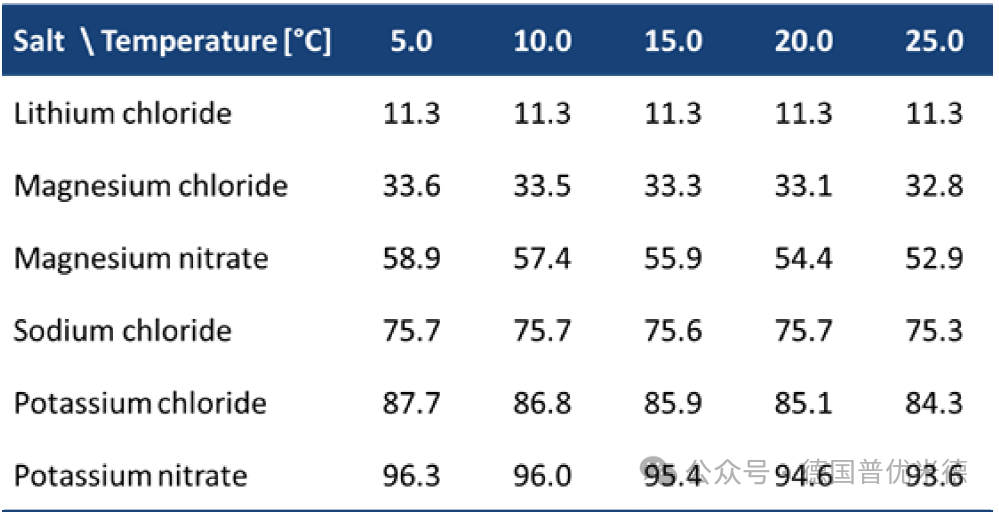
Additionally, there are many tables of reference materials in the literature, so it is advisable to only cite officially recognized data. The source of the reference values should be noted to trace the calibration data. Generally accepted reference data is cited in Table 1 from Greenspan [1].
Table 1: Reference values of relative humidity for saturated salt solutions at different temperatures, cited from Greenspan [1]
Sample Preparation
To calibrate the humidity sensor of SPS/Vsorp, a calibration substance—a saturated salt solution—should first be prepared using heavy distilled water, more accurately, a suspension.
If a saturated solution is used, excessive undissolved salt crystals deposited at the bottom can lead to concentration differences, thus affecting the results.
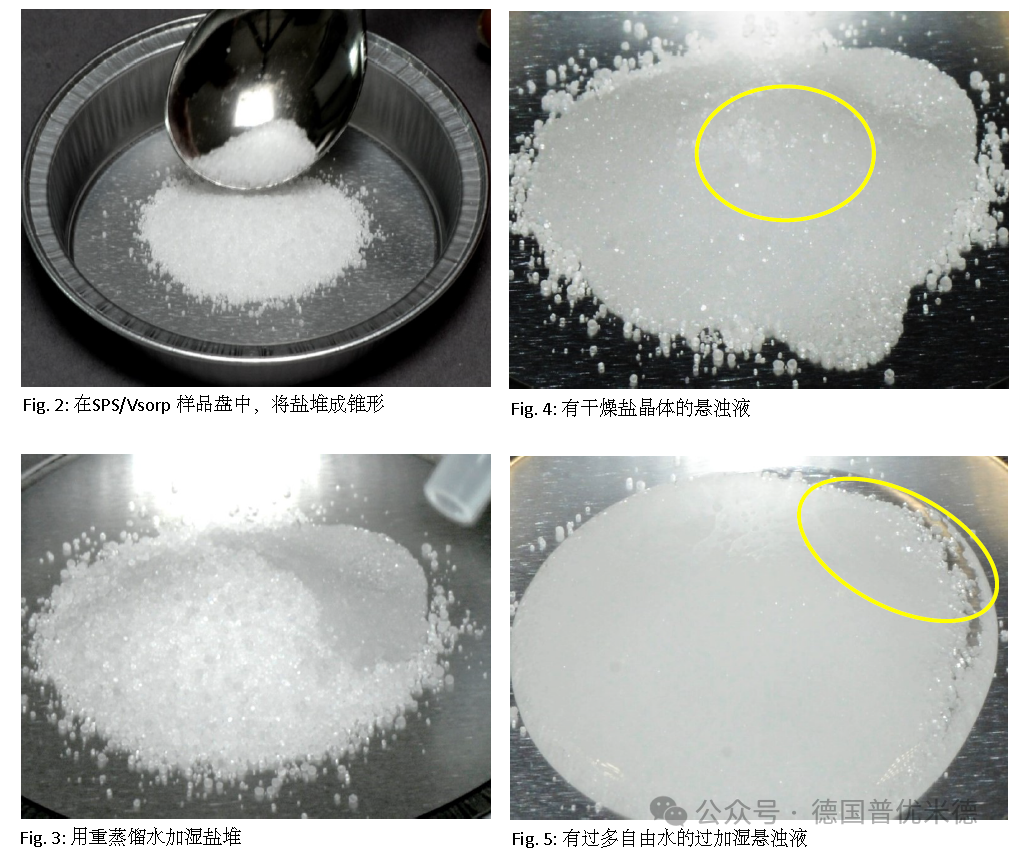
As shown in Figures 2 and 3, prepare the calibration sample in the SPS/Vsorp sample tray, where the standard salt sample is placed in a tray with a conical accumulation (Fig. 2).
The humidification process is best done drop by drop using a pipette, starting from the edge of the salt pile (Fig. 3).
To avoid delays and prolongation in the adsorption-desorption process, it is important to maintain the correct solid-liquid ratio: excessive dry crystals (Fig. 4) and excessive humidifying liquid (Fig. 5) should both be avoided.
The optimal condition is to still see a few individual dry crystals present, which can adsorb excess water vapor during the calibration process.
Calibration Steps
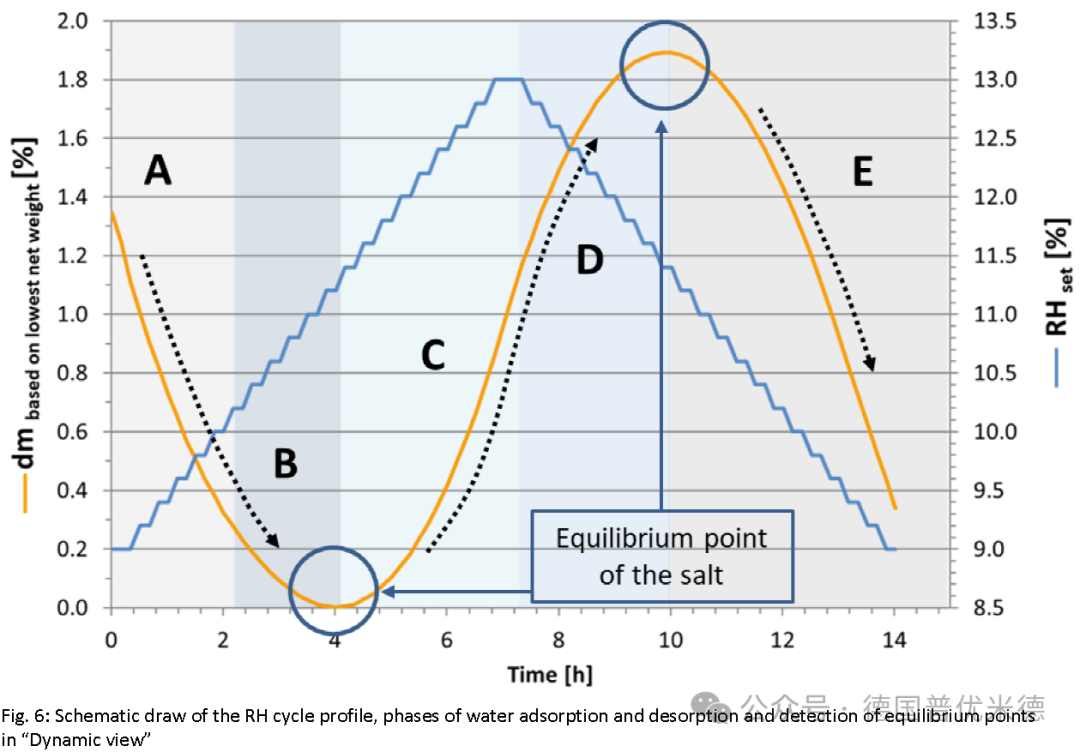
To calibrate the humidity sensor of SPS/Vsorp, the humidity range should be set to ±2% of the standard value of the calibration salt (Table 1). The relative humidity settings are shown in Fig. 6, along with the states of water vapor adsorption and desorption and the determination of equilibrium points.
The standard value corresponds to the equilibrium point of the calibration salt. As shown in Fig. 6A and B, when the RH value is below the equilibrium point—here it is 11.3%—it will lead to the drying and weight loss of the salt pile.
As the RH in the instrument sample chamber is gradually increased towards the equilibrium point, the drying process begins to slow down until the salt reaches the equilibrium state under the current environment (Fig. 6B). At the equilibrium point, the rate of change in sample weight (dm/dt) is zero.
Continuing to increase the relative humidity will lead to water absorption, and the mass of the salt crystals begins to increase, as shown in the stage of Fig. 6C. After exceeding the set maximum humidity of 13%, the next step is the desorption process in Fig. 6D, where water absorption weakens until a second equilibrium is reached.
Next, as the RH is further reduced below the equilibrium point, the desorption of moisture begins, and the weight of the salt pile starts to decrease (Fig. 6E).
According to the calibration results of LiCl shown in Fig. 7, equilibrium was detected after approximately 4 hours and 10 hours of measurement time. Based on the recorded measurement data (Table 2), the equilibrium state was obtained at the points of minimum and maximum weight change (dm[%]) (Table 2, red marks). The humidity at these points corresponds to the relative humidity values measured by the sensor. In this case, the measured relative humidity values were 11.2% and 11.4%, respectively. The average value corresponds to the reference value of 11.3% for LiCl. This indicates that recalibrating the sensor is unnecessary.
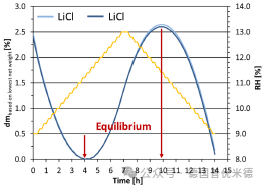
Fig. 7. LiCl calibration results under “Dynamic View”
Table 2: Measurement Data
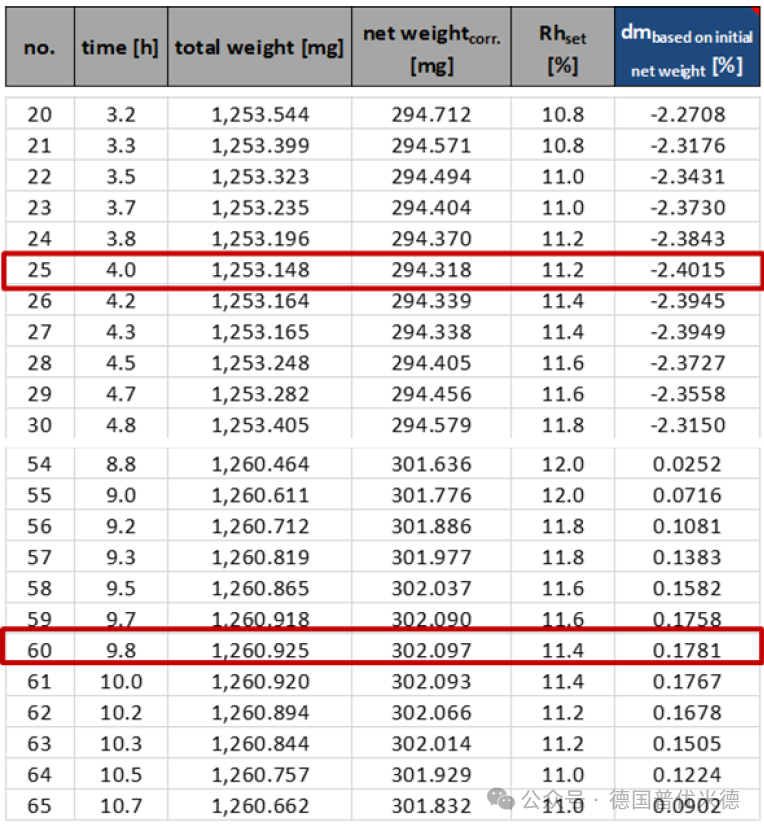
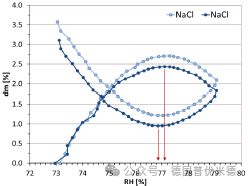
Fig. 8: Results of sodium chloride (NaCl) under “Equilibrium View”
Conclusion
By default, the calibration of SPS and Vsorp devices is performed using the reference salts listed in Table 1 at a temperature of 25°C.
The methods and settings used in the calibration procedure are stored as standard procedures in the SPS software.
The proposed method allows for simple and standardized calibration of SPS and Vsorp humidity sensors. Coupled with subsequent validation procedures using microcrystalline cellulose MCC012 certified by ProUmid as a reference standard, this ensures the reliability of studies on the water vapor adsorption behavior of various materials.
References
[1] Lewis Greenspan, ‘Humidity fixed points of binary saturated aqueous solutions’, J. of Research, National Bureau of Standards, 81A (1977) pp 89-96
[2] ProUmid Application Note 18-01 Certification of Microcrystalline Cellulose as a humidity reference for gravimetric DVS instruments
[3] ProUmid Application Note 18-02 Microcrystalline Cellulose as a humidity reference for gravimetric DVS instruments
Contact: Ms. Zhang 15801386461
ProUmid GmbH China Representative Office