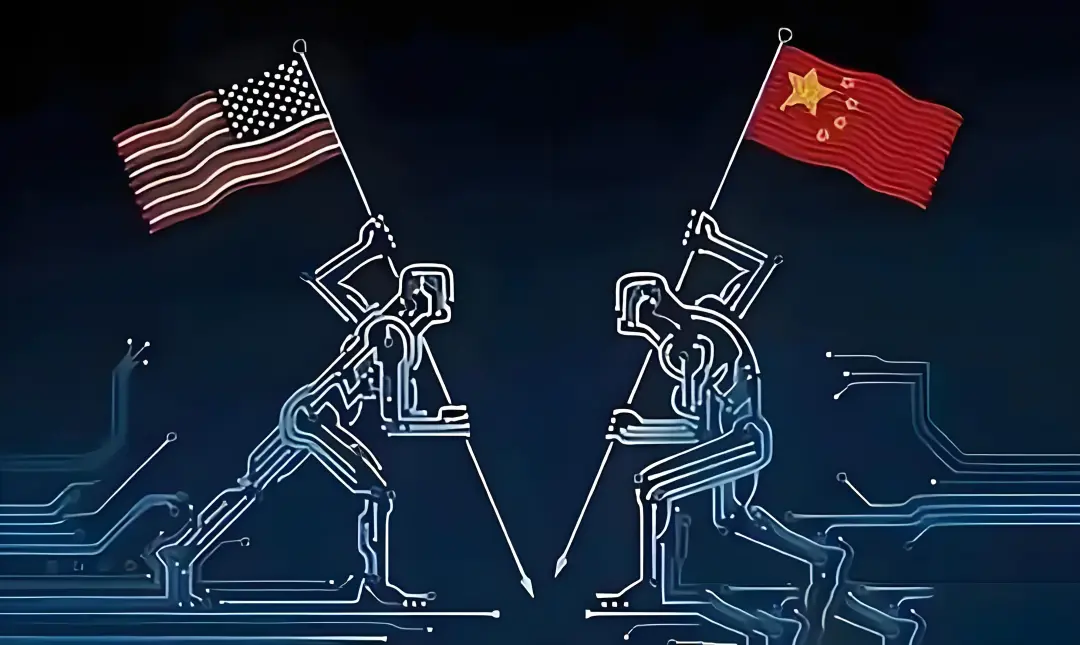
“Choking the neck”? Not at all! Just as the United States insists on implementing semiconductor technology blockades against China and attempts to restrict China’s development with equipment bans, we have quietly stepped out of the traditional track and made two key moves on the battlefield of chips that could rewrite the global landscape: on one hand, we are tackling the hard bones of mainstream manufacturing, and on the other, we are seizing the high ground of next-generation technology, each step precisely targeting the pain points of America’s technological hegemony.
In the past, whenever chip manufacturing was mentioned, it was impossible to avoid the EUV lithography machine. This “crown jewel” of industry, comparable in size to a basketball court and costing billions, has long been monopolized by the Dutch company ASML, while the United States has firmly controlled its flow through technological hegemony. However, China’s way to break through has never been about “following and copying,” but rather about “disruptive breakthroughs.”
Recently, Anhui Guangchuang Technology launched a “desktop-level EUV lithography light source,” delivering a “dimensionality reduction attack” to the global semiconductor industry.
This palm-sized device targets the “lifeblood” of electric vehicles, industrial automation, and the Internet of Things: 14-nanometer chips. While these chips are not the most advanced, they are produced in massive quantities, supporting half of the semiconductor market.
The United States intended to restrict our mid-to-high-end production capacity by limiting large EUV equipment, but we have directly made the equipment smaller and the costs lower, not only freeing ourselves from dependence on imported “behemoths” but also quickly establishing a local supply chain.
From now on, China can produce 14-nanometer chips without having to look at ASML’s face, and we are no longer constrained by the United States. This move directly undermines their technological blockade’s “confidence.”
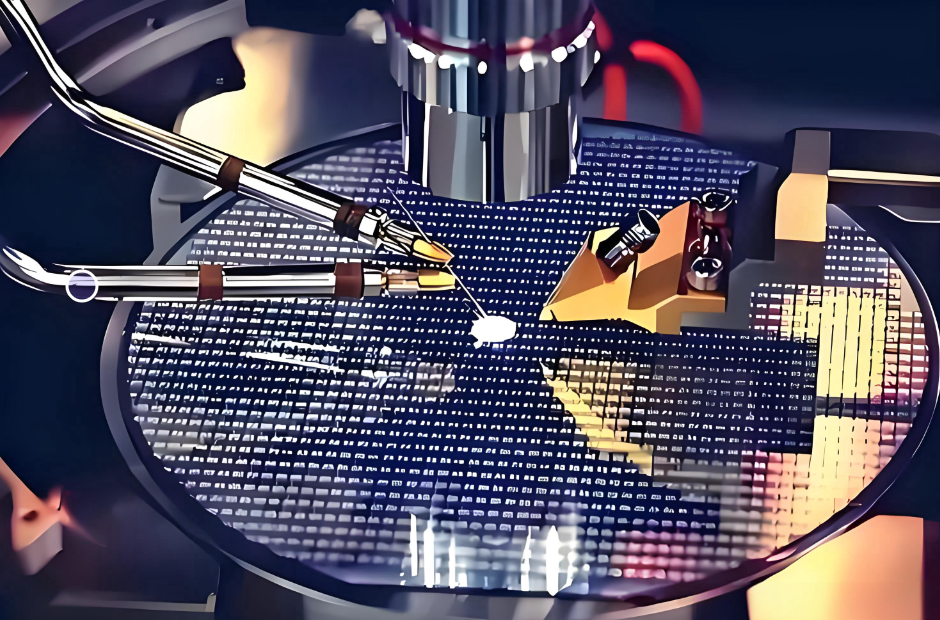
If the desktop lithography machine is a “frontal breakthrough,” then Tsinghua University’s photonic chip technology can be considered a “lane change overtaking.” While the United States is still pushing towards 3-nanometer and 2-nanometer processes for electronic chips, we have simply switched tracks, opting for photonic computation instead of electronic.
How shocking is this technology? Laboratory data shows that the computation speed exceeds 1PHz, which is over a hundred times that of current high-end CPUs; yet the energy consumption is less than 1% of traditional chips, perfectly resolving the “energy consumption anxiety” of AI and data centers.
It is important to note that the global demand for AI computing power is growing exponentially, while electronic chips are approaching physical limits. The reason the United States can maintain its lead in the AI field is precisely due to the computational power supported by advanced chips. The emergence of photonic chips directly bypasses the technological bottleneck of electronic chips.
Once mass production is achieved in the coming years, America’s computational power hegemony will be completely overturned, and the discourse power in cutting-edge fields such as AI and autonomous driving will quietly shift to China.
These two moves are precise, directly targeting America’s three major weaknesses: first, they break through the ceiling of technological monopoly, completely shattering America’s absolute control over high-end chip equipment; second, they undermine the foundation of its industrial hegemony, allowing China to occupy positions in both mainstream and next-generation chip fields, shaking its dominance over the global supply chain; third, they seize the initiative in future competition, with breakthroughs in photonic chips rendering America’s advantages in cutting-edge technology null and void.

In the past, we were often criticized for being “lacking chips and soul,” but this time, Chinese chips have taken a path of self-control with the wisdom of “breaking the norms.” America’s hegemony has never been a solid block; when we no longer passively follow but actively open up new tracks, the so-called technological blockade will ultimately become a paper tiger that can be easily pierced!
The rise of Chinese chips has never been accidental. Behind it are the results of countless researchers and enterprises working day and night. This bold move is not only a turning point for China’s semiconductor industry but also a watershed in the global technological landscape. Hegemony will eventually collapse, and China, which insists on independent innovation, is ushering in its own “chip era.”