As the Internet of Things market matures, Bluetooth technology, as one of the mainstream wireless connection technologies that supports the “Internet of Everything,” is also accelerating its evolution, bringing greater application space. Speaking of Bluetooth, we often use devices related to Bluetooth functionality in our lives. Although they are all Bluetooth, there are many differences, both large and small, when broken down. In our years of communication with friends in the electronics industry or other industries, we have found that there are still many misconceptions that are easily overlooked or confused when understanding or choosing Bluetooth products. This article aims to introduce these classifications in a simple and understandable manner, hoping to provide a reference for those interested in or considering Bluetooth products. Any shortcomings or different understandings are welcome for discussion.
Before getting into the main topic, let’s briefly talk about the origin of Bluetooth itself. Bluetooth is named after a Viking (Harald Blatand), later referred to as Harald Bluetooth. This king was known for unifying the rebellious tribes of Denmark. At that time, the person responsible for defining this wireless technology was reading books about this king and found similarities between him and this technology, unifying many wireless protocols under one standard. The Bluetooth logo is also a combination of the initials of Harald Bluetooth (H+B). Another similarity is that this king also used slavery, and Bluetooth technology is somewhat similar; when Bluetooth devices connect to each other, they are referred to as a master-slave relationship, where one device is the master and the other is the slave.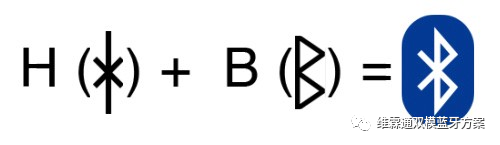 This origin of Bluetooth is something most people who have come into contact with Bluetooth already know to some extent. It is an interesting story and a very distinctive name. In this article, we hope to clarify some knowledge about Bluetooth classification from a relatively professional yet easily understandable perspective.1. Bluetooth VersionsThe specific version definitions can be found on Baidu Encyclopedia. I will focus on the characteristics of the mainstream products that may be used based on our years of experience. Broadly speaking, we generally categorize Bluetooth into Classic Bluetooth and Low Energy Bluetooth.Classic Bluetooth (Classic BT): Refers to Bluetooth that supports protocols below 4.0, generally used for transmitting larger amounts of data, such as voice and music. Classic Bluetooth can be further divided into traditional Bluetooth and high-speed Bluetooth. The main representative is modules that support the Bluetooth 2.1 protocol (Basic Rate/Enhanced Data Rate), which were widely used during the explosion of smartphones, with high-speed Bluetooth defined in the 3.0 protocol. The Bluetooth file transfer, Bluetooth speaker music playback and control, Bluetooth headsets, and car Bluetooth hands-free calls we encounter now all fall under the category of Classic Bluetooth.Low Energy Bluetooth (BLE): Refers to Bluetooth that supports the 4.0 protocol or higher, also known as BLE Bluetooth. The biggest feature is the reduction in cost and power consumption, making it applicable in products that require high real-time performance, such as smart home devices, sensor data transmission, and a wider market for consumer electronics. Low Energy Bluetooth and Classic Bluetooth are actually quite different, mainly in terms of power consumption and implementation protocols.Strictly speaking, Bluetooth 4.0 and subsequent version protocols encompass both Classic Bluetooth and Low Energy Bluetooth because the Classic Bluetooth protocol itself has not changed much since 3.0. The general saying is that Bluetooth after 4.0 is referred to as Low Energy Bluetooth, emphasizing its low power consumption protocol part. The current Bluetooth protocol version has progressed to 5.1, with the main changes also focused on the continuous development and optimization of Low Energy Bluetooth.2. Typical Types of Bluetooth ModulesBased on the differences in Bluetooth protocol versions described earlier, corresponding chips and modules can be classified in many ways based on version, combination, and function implementation. This is also where confusion often arises in our previous communications. I will focus on module classification. Simply put, the main Bluetooth modules we encounter can be classified according to protocol implementation as follows:1. Classic Bluetooth Module, mainly standalone Classic Bluetooth data modules or audio modules, such as general Bluetooth speakers, Bluetooth headsets, or car hands-free Bluetooth modules, as well as Classic Bluetooth data modules. These still exist mainly in the audio market, but now more are transitioning to dual-mode Bluetooth with some BLE data functionality support. Generally, there are fewer Bluetooth module companies in the market that provide standalone Classic Bluetooth modules.2. Dual-mode Bluetooth Module, where dual-mode generally refers to supporting Classic Bluetooth protocols as well as Low Energy Bluetooth protocols from 4.0 onwards. In simple terms, it supports Classic Bluetooth data + audio + BLE. The main products can be categorized into a few subcategories based on application:
- Classic Data (SPP Protocol) + BLE Data Module, mainly focused on data transmission applications, because Classic data transmission rates are higher and compatibility is better. Some applications still use different data protocols based on different devices when connecting, such as portable printers.
- Classic Data + BLE Data + Audio Module, Usually targeted at dual-mode data with additional audio applications. Applications may use only BLE data or dual-mode data transmission, plus audio processing functions. For example, in some speaker products and smart instruments with accompaniment functions, or on treadmills and massage chairs, both data transmission and audio playback are required. For instance, the WLT8761M module from Wi-Link Tech.
3. Standalone BLE Module, which generally refers to Bluetooth 4.2 or Bluetooth 5.0 modules, mainly for transmitting BLE data, such as Wi-Link Tech’s WLT8266 or WLT8258. There are currently many such BLE data modules in the market, but they are mixed, so caution is needed when selecting.Currently, there are also some simplified dual-mode Bluetooth modules that mostly do not support or cannot support high-rate Classic Bluetooth data, mainly focusing on BLE data + Classic Bluetooth audio, adding BLE data control to the original Classic Bluetooth audio functions, with relatively weak data communication capabilities and lower costs, such as Wi-Link Tech’s WLT3266/WLT5856. More comprehensive dual-mode data + audio modules, like Wi-Link Tech’s WLT8761M and Qualcomm’s CSR8670, support comprehensive Classic Bluetooth protocols and BLE protocol functions, offering rich and powerful functionalities with high flexibility.The above is a major classification of Bluetooth modules based on protocol support. In practical applications, there are also various different classification methods, typically as follows:1. Distinguished by the integration method of the main Bluetooth chip, it can be divided into HCI and SoC Bluetooth as well as MCU + HCI integrated Bluetooth modules.
- HCI (Host Control Interface) refers to Bluetooth modules that only provide the Bluetooth RF transceiver part and the Host control interface, with the protocol part running on an external Host controller. Both Classic Bluetooth and Low Energy Bluetooth have this approach, considering flexibility and cost in protocol implementation. The Host can be more flexible, and for applications that can share Host resources, the cost is lower. For example, Wi-Link Tech’s dual-mode Bluetooth HCI modules WLT2564/WLT8761, where the Bluetooth protocol stack is relatively independent and can be ported to a separate Host controller.
- SoC (System On Chip) Method refers to the integration of the controller and Bluetooth transceiver. It usually contains an MCU core, and the protocol typically runs on the SoC. There are both dual-mode SoCs and BLE SoCs. The benefits are high integration and relative simplicity of use, and the internal MCU resources can be opened up, meaning simple applications may not require a separate controller. Currently, most BLE module products on the market are of the SoC type, with differences in the core and resources of the main controller, such as external IO resources and whether the core is ARM architecture, Flash/RAM size, etc.
2. Classified by software and hardware functionality, typical external software interfaces are AT command interfaces. In terms of data, we refer to transparent transmission methods that achieve simple data transmission through AT commands, making it easy to use. Here are some main categories:
- Support for master-slave mode, usually meaning whether it can be scanned and connected by other Bluetooth devices or scan and connect to other devices. Typically, BLE is used as a slave device, being scanned and connected by master devices like phones. Many applications also require master functionality. Alternatively, modules can support master-slave switching together. For example, WLT8258 can support master-slave integration using the same firmware. Many Bluetooth modules in the market can only work as a master or a slave separately, or the same module uses different firmware. Wi-Link Tech modules are relatively flexible in this regard.
- Support for one-to-many connections, allowing the master module to connect multiple slave modules simultaneously. For example, Wi-Link Tech’s WLT8258/WLT8761 BLE or dual-mode modules can support being a master that connects to multiple slave devices.
- Support for Bluetooth Mesh networking, the Bluetooth standards organization has defined a set of Mesh networking standards, referred to as SIG mesh to distinguish it from previous proprietary mesh solutions. Some low-end Bluetooth modules only support BLE data and have not yet supported the SIG Mesh protocol. Currently, smart home or lighting control applications often use mesh networking. For instance, Wi-Link Tech’s WLT8258 module can support SIG mesh.
- Support for integration with platforms like Tmall Genie, Huawei Hilink/ Huawei Sports Health, Amazon Echo, Apple Protocols (Homekit/Gymkit), etc. These platform protocol supports typically require a certification process, and there are certain thresholds in the protocol integration and connection process, requiring significant resources and time. For example, WLT8258 can support integration certification with Tmall Genie and Huawei Sports Health software, as well as Apple smart home or sports health protocols, widely used in industries like treadmills and massage chairs.
- Support for some special application protocols, many of which require technical differentiation implementations based on the basic Bluetooth protocol. Here are a few examples:i. For example, the MIDI protocol, used in smart instruments, is a special application protocol based on BLE data. For instance, Wi-Link Tech’s WLT8258 implements the MIDI protocol, widely used in the smart instrument industry.ii. For Bluetooth audio transmission (Source), most Bluetooth audio on the market can only receive audio from devices like phones (as Sink ends), while some applications require acting as the master device and transmitting Bluetooth audio to receiving devices like speakers or headsets. For example, WLT8761M can support such applications. iii. For Bluetooth Beacon, based on a simplified Bluetooth broadcasting protocol, used for positioning detection or information broadcasting applications.
- By BLE Software Protocol Version Support, whether it supports 4.2 or 5.0. The difference in protocol versions also has a certain relationship with performance. For example, Bluetooth 5.0 defines support for long distances and high speeds, providing better performance under the same power consumption conditions. If the application does not have high power consumption and distance requirements, products with better cost performance like 4.2 can be selected (4.0/4.1 have gradually phased out). For long-term future applications or those with higher rate and distance requirements, versions 5.0 and above can be considered.
- By power supply, power consumption, hardware interface, packaging method, internal and external antenna support, for example, whether it supports 1.8V power supply, whether it supports deep sleep and ultra-low standby power performance, which will directly affect user choices. For battery-powered or power-sensitive applications, the corresponding requirements will be higher. Typical hardware interfaces are UART serial ports, and there are also USB interfaces, though these are relatively rare in BLE modules. The supported baud rates of serial ports may differ among modules. Packaging and usage methods also differ, including SMT packaging, pin insertion, or Dongle methods. Antennas generally use PCB antennas, but many applications also require external antenna support.
3. Distinguished by certifications, the main relevant certifications include the following:
- Bluetooth Standards Organization’s BQB Certification Strictly speaking, to claim support for Bluetooth, a product must include certification from the Bluetooth Standards Organization(BQB), which includes testing for RF and Profile. After testing, a certification device ID (QDID) can be purchased from the Bluetooth Standards Organization, which can be checked within the organization for the legal use of the product’s certification. This ID is based on the final product declaration, allowing a series of products without Bluetooth design changes to share an ID. If the Bluetooth module used in the terminal product has already passed testing, it can reference that test report, and products using that Bluetooth module do not need to undergo further testing, only needing to purchase an ID, saving testing costs and time. Currently, many Bluetooth products in China have not been strictly certified, and for export or branded products, a lack of certification may pose potential legal risks.
- In addition to Bluetooth certification itself, there are also mandatory certifications for communication products from different regional governments, such as FCC/CE and domestic wireless radio committee SRRC certifications, as well as Korea’s KC certification, etc. Some have quicker processes, while others take longer. Most of Wi-Link Tech’s mainstream modules have passed BQB/FCC/CE/SRRC certifications. Although this increases some costs, it provides convenience and safety for customers, making it a reliable choice for branded products or international market applications.
4. Classified by the main application industries, such as the currently popular TWS headsets, which use Bluetooth that supports stereo separation of left and right channels, distinguishing them from previous non-stereo Bluetooth headsets. This is a major category of single applications, usually with complete integration of chip manufacturers’ solutions, allowing for rapid product design. There is also the Bluetooth speaker industry, focusing on audio, using either standalone Classic audio Bluetooth modules or dual-mode Bluetooth modules with BLE data + audio, as well as higher-end modules that support dual-mode data + audio + stronger DSP audio processing (like WLT8761M). Audio applications are a relatively concentrated market, with core software functionalities being relatively homogeneous. In contrast, various data applications are more dispersed, with a broader range of industry applications using various Bluetooth data modules. In summary, Bluetooth applications are becoming increasingly widespread, and Bluetooth technology itself is evolving. For instance, the latest Bluetooth 5.1 version has begun to support centimeter-level precise positioning functions, as well as the development of BLE audio. In the future, there will be more Bluetooth application scenarios, and no single module product can fully meet the diverse application requirements. Even after selecting a module, there will be various detailed differentiated needs. Ongoing in-depth support services and customization are equally important. When selecting a solution, comprehensive consideration of application functionality, performance, and cost is essential, requiring a professional and in-depth understanding to choose the most suitable solution. Wi-Link Tech has been deeply engaged in the Bluetooth market for a long time, continuously tracking the latest Bluetooth technology, and deeply collaborating with upstream chip and technology resources. Our product range is rich and comprehensive, maximizing the matching of various customer applications, and we have accumulated rich experience in recommending and selecting solutions. We can also provide in-depth support and customized services, hoping to develop long-term cooperation with customers and become a reliable long-term partner in wireless connectivity, jointly promoting the application of the Internet of Things. If you have any feedback or questions, feel free to contact us for communication!Email:[email protected]