Source: Electronic Enthusiasts
From Human Interface Devices (HID) to Internet of Things (IoT) remote sensors, designers face many choices for wireless connections across numerous applications. One of the most fundamental design decisions, and one that many designers find tricky, is whether to use a standard RF interface (such as Wi-Fi, Bluetooth, or ZigBee) or a proprietary RF physical layer (PHY) design with its own protocol.
The reasons for choosing one standard over another are numerous, but factors such as cost, security, power consumption, interoperability, design time, interference resistance, coexistence, latency, and verification requirements must also be considered. Many of these trade-offs are interrelated, so designers must first determine their design requirements before optimizing accordingly.
This article will discuss the factors to consider when choosing between a standard Bluetooth interface and a proprietary RF protocol. It will then introduce a Bluetooth 5 module and a silicon solution that can implement a proprietary protocol, providing guidelines on how to quickly establish and run the solution.
Pros and Cons of Proprietary RF
If the design requirements prioritize security, low power, small form factor, and performance optimization, a proprietary PHY and protocol are suitable.
Security is crucial for many applications, from garage door openers to IoT devices. Proprietary wireless can address this issue in several ways. First, proprietary designs ensure that “security through obscurity” is maintained, as unknown RF interfaces are harder to breach. Additionally, proprietary interfaces are increasingly used in point-to-point modes or in closed systems that are not connected to larger networks, thus maintaining a hidden state. Finally, designers of proprietary interfaces can freely develop their own advanced encryption algorithms or adjust existing ones without needing to interoperate with security algorithms from other manufacturers. This uniqueness itself is a security advantage.
Using proprietary radio designs helps ensure robust connections against interference from Wi-Fi networks, microwaves, cordless phones, and other low-power wireless networks. Without being bound by standards, designers can flexibly employ techniques such as Direct Sequence Spread Spectrum (DSSS) and Frequency Hopping Spread Spectrum (FHSS) to better utilize the frequency band. Furthermore, they can adopt their preferred encoding schemes based on the expected link budget to achieve higher throughput or lower power consumption.
This flexibility also applies to packet structures. The packet structure does not require overhead to ensure interoperability with standard-based wireless devices, allowing it to be streamlined according to application needs.
From a hardware design perspective, since designers of proprietary RF interfaces have a clear understanding of performance requirements and can confirm that these requirements will not change in later stages, they can optimize the design in terms of space, power consumption, and performance. On the other hand, they can achieve this optimization by only including the necessary functions that meet the application needs.
Despite the many advantages of proprietary RF, several other factors must also be considered. The first is cost: the justification for the non-recurring engineering (NRE) costs of custom RF IC designs and related software must be proven, especially for low-cost devices where expected production volumes should exceed 100,000 units.
Closely related to cost is design time, especially given the unpredictable nature of RF design, the well-known scarcity of RF expertise, and the time required to develop the firmware and software needed for a successful design.
Bluetooth is Widely Adopted and Continues to Evolve
Bluetooth, on the other hand, is at the other extreme. Originally designed as a simple point-to-point cable replacement technology for HIDs and other user-involved devices, it quickly evolved into a wireless audio and device-to-device connection solution. Thanks to the strict controls of the Bluetooth Special Interest Group (SIG), Bluetooth has become a well-known standard, allowing designers to be confident that their devices can connect and interoperate with other Bluetooth-enabled devices regardless of the hardware source.
The widespread adoption of Bluetooth, coupled with numerous interoperable devices, has led to a rich ecosystem of hardware and software, allowing designs that require wireless interfaces to come to market quickly and at lower costs. Furthermore, Bluetooth has undergone years of development.
It has consistently operated in the 2.4 GHz Industrial, Scientific and Medical (ISM) band, initially modulating its 79 1 MHz carriers using GFSK to provide a throughput of 1 Mb/s, known as Bluetooth Basic Rate (BR). Bluetooth maintains stability in the face of interference through its adaptive FHSS encoding scheme, even as IoT continues to introduce more wireless-connected devices. To achieve higher data rates, Bluetooth 2.0+ Enhanced Data Rate (EDR) employs π/4-DQPSK (Differential Quadrature Phase Shift Keying) and 8DPSK modulation to achieve rates of 2 Mb/s and 3 Mb/s, respectively.
Despite the strict controls of the SIG, designers still need to delve into the changes brought about by the Bluetooth 4.0 core specification released in 2010. This specification references Bluetooth Low Energy (BLE), previously known as Smart Bluetooth. BLE is not backward compatible with classic Bluetooth, which designers need to pay special attention to.
The main goal of BLE is low power consumption. This is achieved by shifting from the connection-oriented approach of classic Bluetooth (where devices are always connected) to an unconnected approach (where devices connect only when needed for short intervals). Such applications include wearable devices like smartwatches and IoT sensors.
Bluetooth SIG continues to improve the specification to meet the various needs of its members and applications. For detailed information on the evolution of Bluetooth, see “Low Power Bluetooth SoCs and Tools Compatible with Bluetooth 4.1, 4.2, and 5 to Address IoT Challenges (Part 1).”
The latest version, Bluetooth 5, employs a stronger Forward Error Correction (FEC) algorithm, doubling BLE data rates from 1 Mb/s to 2 Mb/s and expanding the connection range from 128 kb/s to 50 meters. Higher data rates allow more packets to be transmitted within a given time slot, enabling devices to maintain low power or standby mode for longer periods, thereby reducing device power consumption.
Greater distances allow designers to make more flexible trade-offs between data rates and distances for any Bluetooth device, including beacons. Beacons are battery-powered BLE devices that broadcast their identifiers to nearby mobile devices, enabling those devices to perform specific actions when close to the beacon. Beacons are widely adopted by advertisers and can also enable precise indoor and outdoor tracking.
However, the SIG has also implemented another interesting adjustment that proprietary RF designers can explore: they have reduced the overhead-to-payload ratio, which decreases the number of transmissions required to send a given amount of “real” data, further lowering power consumption.
Bluetooth, originally a simple cable replacement technology, has now evolved into a highly practical technology. As a result, designers are now more inclined to adopt quick and simple Bluetooth solutions rather than invest significant costs and expenses in designing their own RF interfaces.
Establishing and Running Bluetooth Solutions
As the time-to-market window for designs continues to narrow and design budgets tighten, the trend of adopting Bluetooth interfaces has gradually become a necessity. Fortunately, there is still enough room for many designs to accommodate off-the-shelf Bluetooth modules, allowing design teams to focus on their final applications and gain a competitive advantage.
Rigado’s BMD-330 Bluetooth 5 module is one such module (Figure 1). Although there are many Bluetooth modules on the market, this particular module is particularly interesting and practical because it comes with an integrated antenna. Antenna matching and mounting is one of the delicate tasks in RF design; relieving designers of this task saves time and ensures optimal signal coupling.
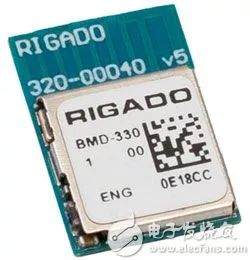
Figure 1: The BMD-330 Bluetooth 5 module comes with an antenna and matching circuit, simplifying implementation and speeding up deployment. (Image Source: Rigado)
This module is a complete solution that meets regulatory licensing requirements, featuring its own onboard DC-DC converter and intelligent power control, with dimensions of 9.8 x 14.0 x 1.9 mm. Despite having an antenna, it still requires a proper ground plane to effectively radiate the signal. Additionally, there should be no copper or other metals in the area extending from the module’s antenna section, and the module should be placed at the edge of the PCB with the antenna facing outward.
When installing the module inside a housing, ensure that there is no metal near the antenna, as this may affect performance. Since the module’s design and tuning are targeted for operation in non-enclosed spaces, potting, epoxy, molding, or conformal coatings may affect performance, requiring additional measures after application to ensure that the link budget meets specification requirements.
The module is built on Nordic Semiconductor’s nRF52810 System on Chip (SoC) (Figure 2). This SoC uses an Arm® Cortex®-M4 CPU with a clock frequency of 64 MHz and has 192 KB of flash memory and 24 KB of RAM.
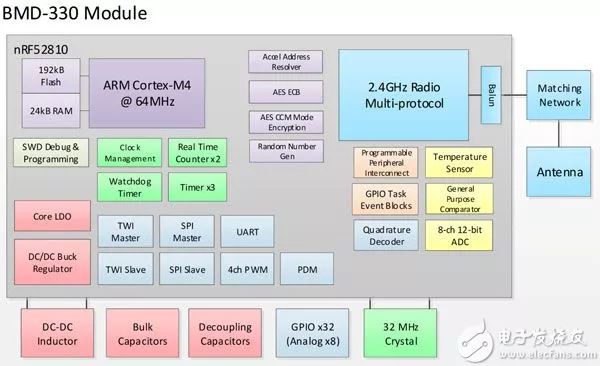
Figure 2: The BMD-330 module is based on Nordic Semiconductor’s nRF52810 SoC, which includes an Arm® Cortex®-M4 CPU and a 2.4 GHz radio. (Image Source: Rigado)
The module’s flash memory is limited, so Rigado has not provided any factory firmware on the module. Since there is no bootloader, any firmware needs to be loaded through the Serial Wire Debug (SWD) interface. However, once this is done, Nordic provides numerous protocol stacks known as soft devices. These protocol stacks are pre-compiled and pre-linked binaries that can be downloaded from the Nordic website. The BMD-330 using the nRF52810 SoC supports the S132 (BLE central and peripheral) soft device as well as the memory-optimized S112 (BLE peripheral) soft device.
The main specifications of the BMD-330 module include a +4 dBm transmit power and -96 dBm (in BLE mode) receiver sensitivity. It operates on a 3V power supply, consuming 7.0 mA current in transmit mode at +4 dBm and 4.6 mA current at 0 dBm. In receive mode, it consumes 4.6 mA at 1 Mb/s and 5.8 mA at 2 Mb/s. The transmit and receive specifications assume that the DC-DC converter is enabled; current will increase when disabled.
Optimal Combination of Proprietary RF and Bluetooth
There is another option between a complete custom proprietary radio design and standard Bluetooth: designers can develop their own protocols and encoding schemes based on off-the-shelf radio transceivers or adopt existing versions like Ant, Thread, or ZigBee. As the cost of available silicon solutions continues to decline, combined with extensive software support, designers looking to gain a competitive edge, optimize space, and enhance security can find this option to provide the best combination bandwidth while keeping costs extremely low without altering design schedules.
Silicon Labs’ EFR32FG14 Flex Gecko proprietary protocol series SoC (Figure 3) offers a good option for designers interested in this design path.
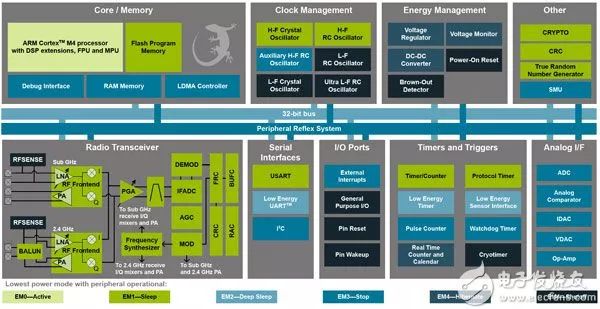
Figure 3: Silicon Labs’ EFR32FG14 Flex Gecko provides a reliable hardware platform, allowing designers to add or develop proprietary software based on this platform. (Image Source: Silicon Labs)
Like the BMD-330, the EFR32FG14 also uses an Arm® Cortex®-M4 core, but with a maximum frequency of 40 MHz instead of 64 MHz, as this chip is specifically targeted for low-power IoT applications. It has up to 256 KB of flash memory and 32 KB of RAM. Note that this chip supports both 2.4 GHz and Sub-GHz (915 MHz) operation and provides antenna network matching guidelines. It also supports antenna diversity to mitigate the effects of frequency-selective fading.
Additionally, it features a variety of flexible I/O and security functions, including a 12-channel peripheral reflex system that enables MCU peripheral autonomous interaction; up to 32 GPIOs; and a hardware autonomous encryption accelerator and true random number generator. The chip also integrates power amplifiers for both 2.4 GHz and Sub-GHz operation.
To assist in the development process, Silicon Labs also provides the SLWRB4250A board (Figure 4) for the EFR32FG series. It includes the SoC, socket, crystal, antenna matching circuit, and software.
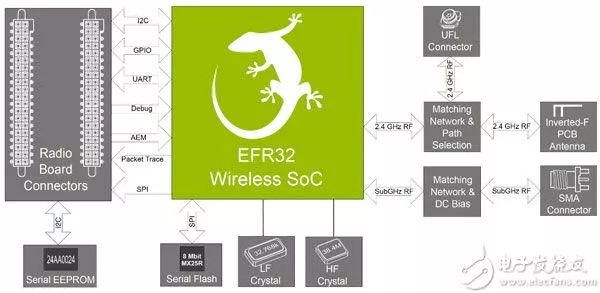
Figure 4: The SLWRB4250A Flex Gecko radio board provides the necessary hardware to work with proprietary low-power wireless interfaces for experimentation. (Image Source: Silicon Labs)
Conclusion
There are many reasons to choose either a complete proprietary RF design path or a standard Bluetooth radio. Each option has its merits in meeting design and application requirements related to cost, time, performance, size, security, and other factors. However, if designers want to benefit from the many cost and time-saving advantages of off-the-shelf silicon solutions while also flexibly adding a degree of proprietary competitive advantage, suppliers now offer reliable hardware platforms for constructing such solutions.