
Hello, September
Learning in August, exams in September
The results from last month are out, but let’s not keep you in suspense

Let’s start learning
Knowing shame leads to courage
Through the seasons of hard work, the fruits of labor are abundant; on the three-foot podium, brilliance shines.
Today is Teacher’s Day, wishing all teachers a happy holiday!
Now, let’s get into today’s main topic
Learning About Sensors
(1) Brake Sensor / Brake Pad Wear Sensor
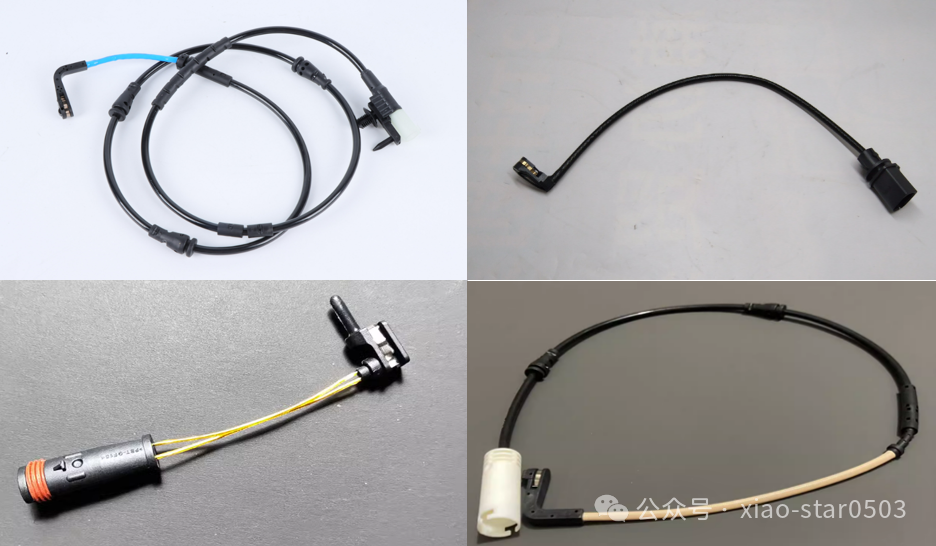
Function:
When the brake pads wear down to a critical value, it promptly alerts the driver to replace the brake pads, preventing decreased braking performance or failure due to excessive wear.
Reasons for Replacement: (1) Physical damage (2) Abnormal signal alarm (3) Irreversible contamination
Installation Location:
Specifically, the brake wire is usually located under the vehicle chassis, extending along the handbrake line until it connects to the rear brake pads.
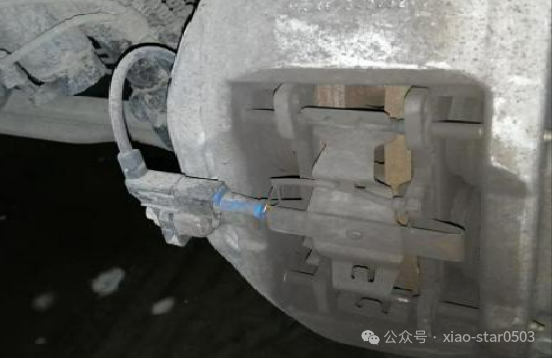
– Brake Sensor Installation Location –
So the question arises???
Question 1: Why do front brake pads wear faster than rear ones?
Front brake pads typically wear out faster than rear ones!!!
Reason Analysis:
(1)Mechanical Structure Differences: Most passenger cars usefront-engineandfront-wheel drive designs, with the front axle bearing the weight of heavy components like the engine and transmission,braking force distribution exceeding 70%.
(2))Center of Gravity Shift: During braking, the vehicle’s center of gravity shifts forward, further increasing the braking force on the front wheels.
(3)Driving Habits Impact: Frequent hard braking or driving down long slopes accelerates front brake pad wear.
Question 2: How many brake sensors are installed on the front and rear wheels?
Generally, there are a total of 4 brake sensors in the vehicle, although some models may vary slightly due to design differences.
Tips: According to the teacher’s teaching version: install in a front-rear diagonal pattern, with 2 sensors per vehicle.
This reference is subjective!!!
(2) ABS Wheel Speed Sensor
Function:
Monitors wheel speed: The ABS sensor interacts with a toothed ring that rotates with the wheel, outputting a set of quasi-sinusoidal AC signals whose frequency and amplitude relate to wheel speed. This enables real-time monitoring of wheel speed, preventing wheel lock-up, vehicle speed detection, and tire pressure monitoring.
Installation Location:The ABS sensor is typically installed on the inner side of the tire, specifically near the brake disc or brake drum (near the hub unit position).
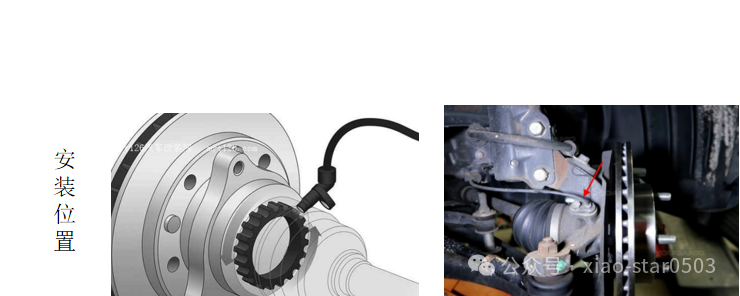
–ABS Sensor Installation Location –
(3) Air Flow Meter
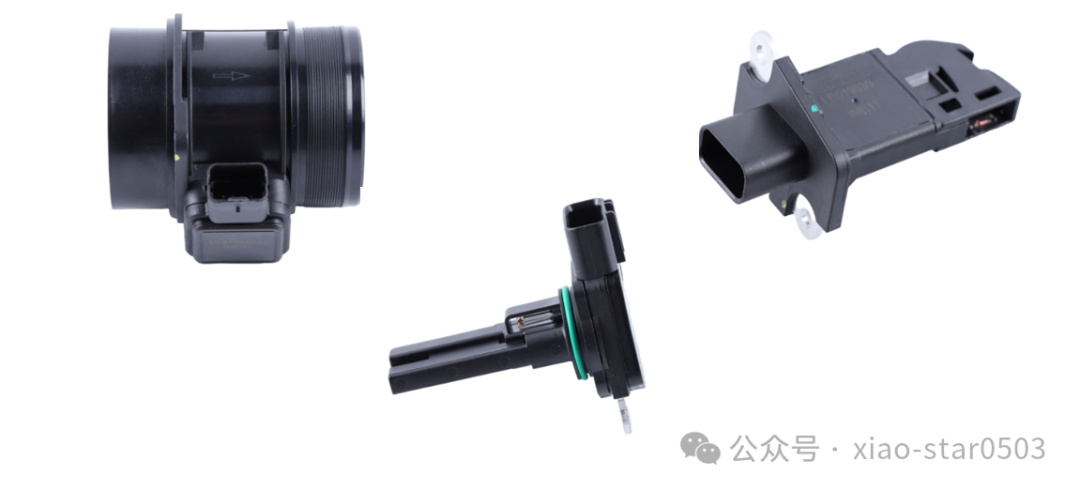
Function:
Measures the amount of air entering the engine and calculates the fuel injection amount (the core of air-fuel ratio control).
(1) Provides a reference basis for fuel injection.
(2) Optimizes engine power performance.
(3) Reduces fuel consumption and emissions.
Installation Location:
– Near the throttle position.
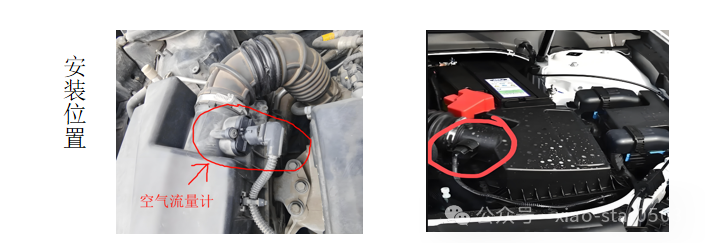
– Air Flow Meter Installation Location –
So the question arises???
Question 1: How many air flow meters are installed in a vehicle?
Typically, a vehicle has only one air flow meter.
The automotive air flow meter is a device used to detect the amount of air entering the engine, converting this information into an electrical signal and sending it to the ECU (Engine Control Unit).
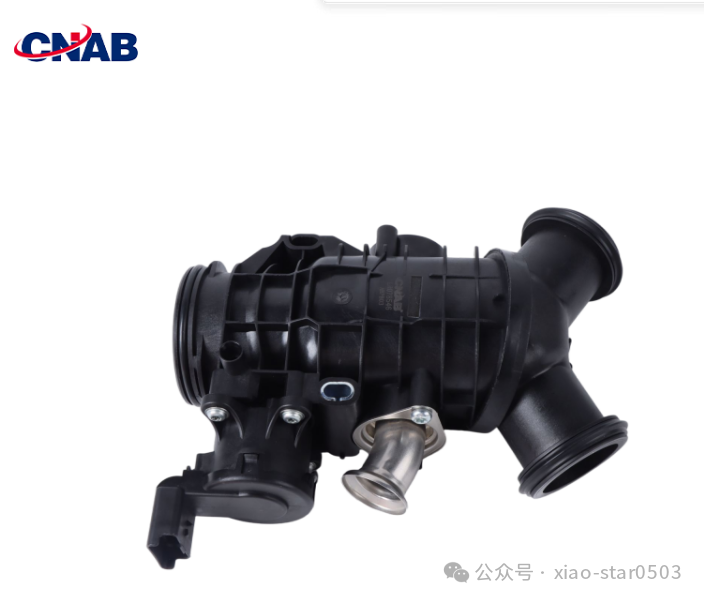
Tips: The KONA does not have a sensor on the throttle.
(4) Intake Pressure Sensor
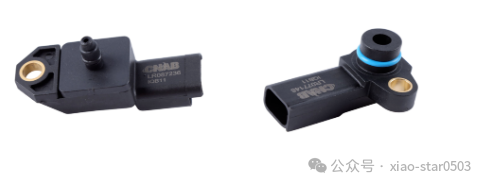
Function: Calculates the intake amount based on the pressure in the intake manifold (especially in turbocharged vehicles, monitoring the pressure after boost).
Installation Location: On the intake manifold (near the throttle).
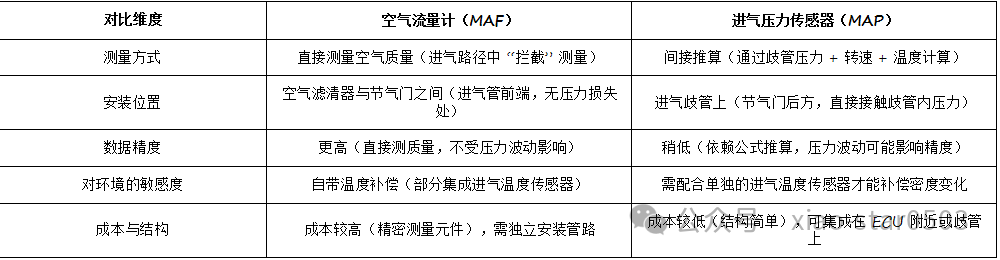
Question 1:What is the difference between the air flow meter and the intake pressure sensor?
(5) Oxygen Sensor
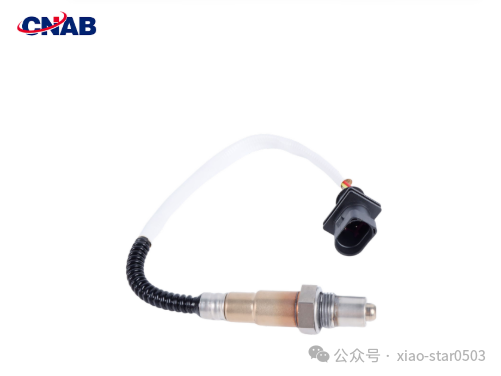
Function:
(1) Monitors the oxygen content in the exhaust pipe and feeds the signal back to the ECU, dynamically adjusting the fuel injection amount to ensure the mixture is at its optimal concentration.
(2) Precisely controls the air-fuel ratio, optimizing combustion efficiency.
When the oxygen content in the exhaust is low, the sensor sends a corresponding signal to the ECU, which reduces the fuel injection amount; when the oxygen content is high, the ECU increases the injection amount, reducing harmful gas emissions to meet environmental standards. When the mixture is too rich, unburned fuel produces a large amount of carbon monoxide and hydrocarbons (while being too lean may lead to a spike in nitrogen oxides).
(3) Reduces fuel consumption, enhancing economy.
A mixture that is too rich leads to fuel waste (unburned fuel is directly expelled), while being too lean may cause a drop in engine power and frequent adjustments to fuel injection, resulting in additional fuel consumption.
(4) Protects the engine, extending its lifespan. Long-term rich mixtures can lead to carbon buildup on spark plugs, oil accumulation in the exhaust pipe, and even damage to the catalytic converter.
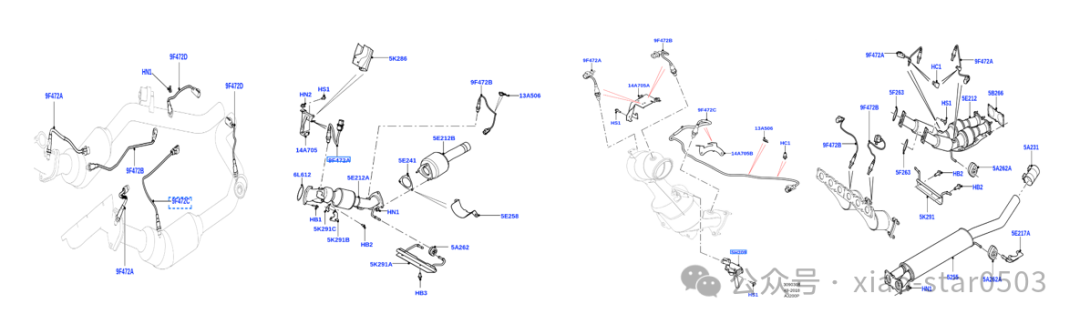
Installation Location:
Front oxygen sensor: Typically installed near the engine in the exhaust pipe (before the catalytic converter).
Rear oxygen sensor: Installed after the catalytic converter.
Middle oxygen sensor: Usually installed on the catalytic converter.
Question 1:How many oxygen sensors does a car typically have?
A car typically has two oxygen sensors, with some having three.
These two oxygen sensors are located at the front and rear of the catalytic converter. The primary function of the front oxygen sensor is to detect the oxygen content in the exhaust and feed the data back to the ECU, allowing the ECU to adjust the air-fuel ratio based on this data.
(6) Height Sensor
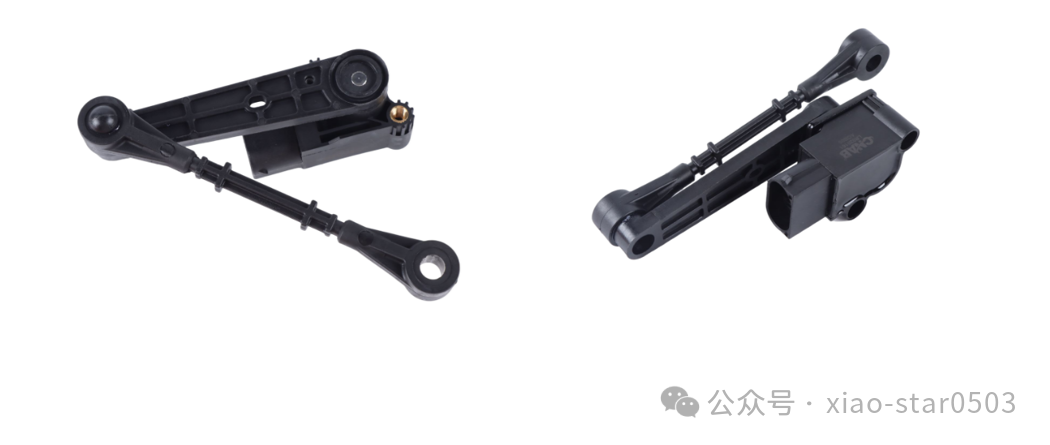
Function:
Real-time monitoring of the relative height between the vehicle body and the ground (or the compression/stretch state of the suspension system), converting height information into electrical signals sent to the vehicle control unit, automatically adjusting ground clearance, coordinating the angle of light projection to assist the anti-lock braking system.
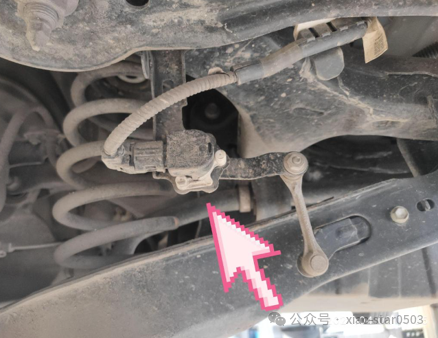
– Height Sensor Installation Location –
Question 1: What type of vehicles have height sensors?
(1) Vehicles with air suspension, equipped with a pump (4 units).
(2) Vehicles equipped with adaptive suspension (electronically controlled suspension).
(3) Vehicles equipped with dynamic steering headlights or adaptive lighting adjustment functions.
Question 2: How many height sensors does a car typically have?
The vehicle body height sensor typically has 1 unit.
Tips: According to the teacher’s teaching version, the number is not fixed.
(7) Tire Pressure Sensor
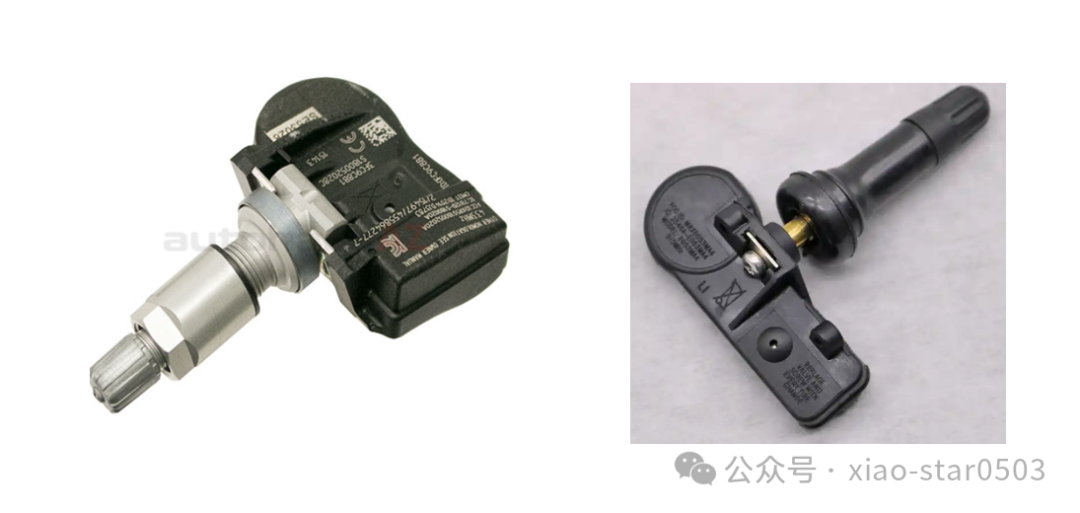
Function:
Direct (installed inside the tire) or indirect (calculated through wheel speed differences) monitoring of tire pressure, triggering alarms when pressure is too low/high.
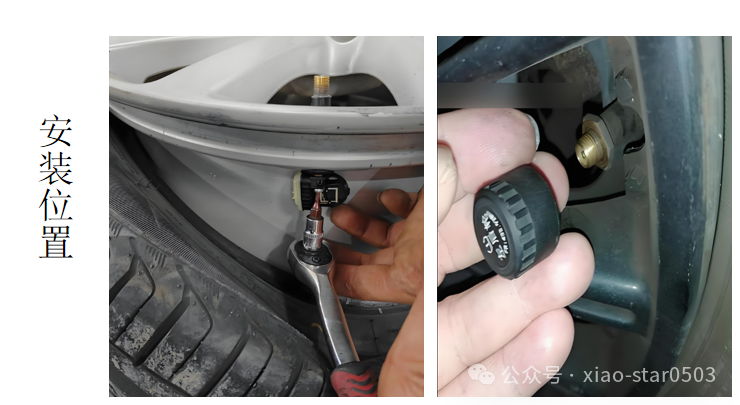
– Tire Pressure Sensor Location –
(8) Fuel Pressure Sensor
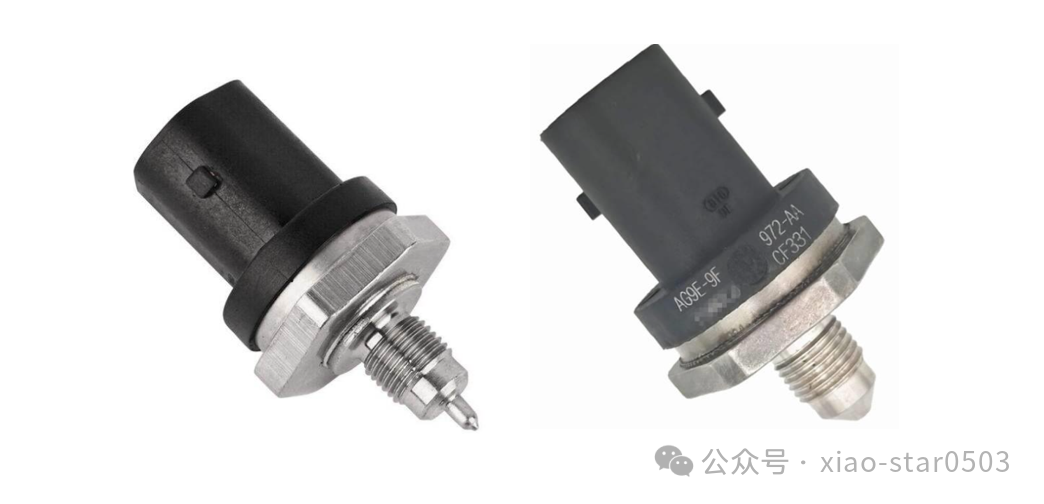
Function:
Provides precise basis for fuel injection amount, monitors fuel system pressure status, triggers protective mechanisms, and assists in adjusting fuel pump operation.
Location:
Typically located at the fuel supply manifold, fuel rail, inlet pipe, or end of the return pipe.
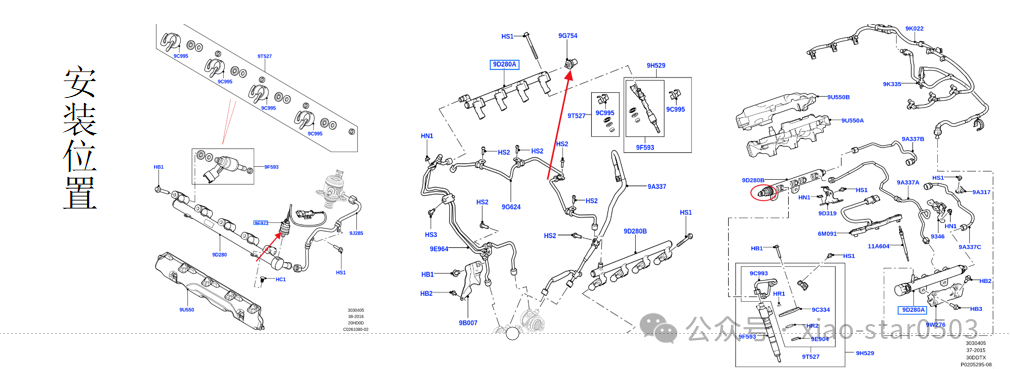
– Fuel Pressure Sensor Installation Location –
(9) Fuel Level Sensor
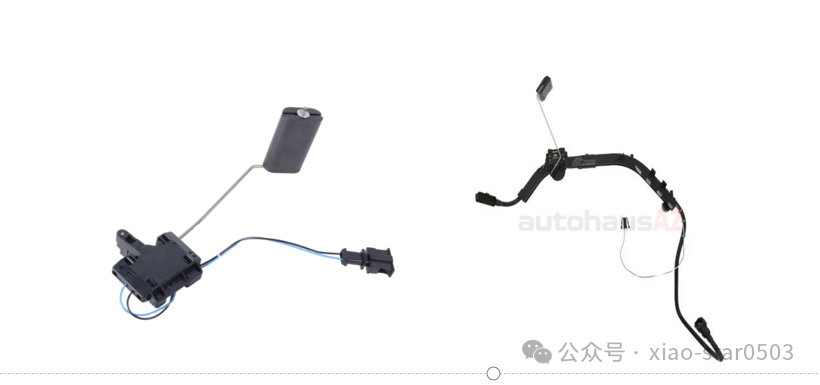
Function:
Real-time monitoring of fuel level height, providing feedback to the driver about fuel quantity, triggering low fuel warnings.
Composition:
The mainstream fuel level sensor currently uses a float structure, consisting of “float, connecting rod, variable resistor”.
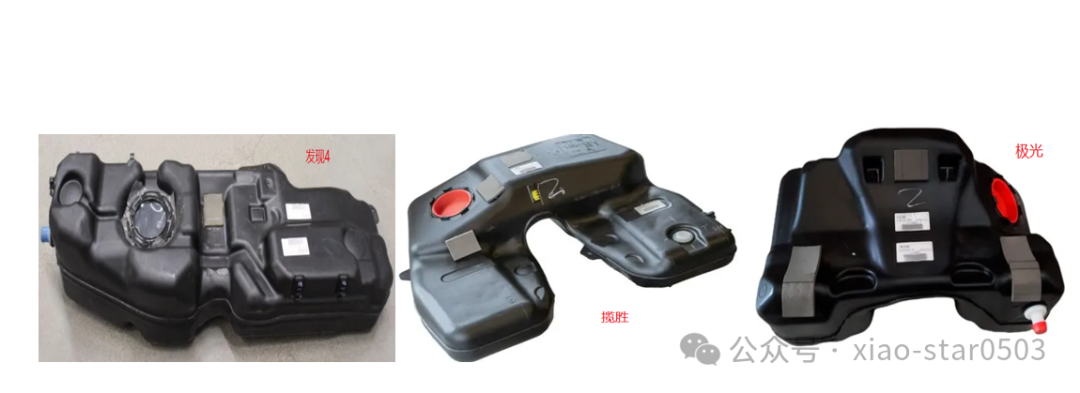
Tips: For models like the Range Rover and Evoque, the saddle-shaped fuel tank or larger fuel tank usually has two fuel level sensors!!!
(10) Engine Oil Level Sensor
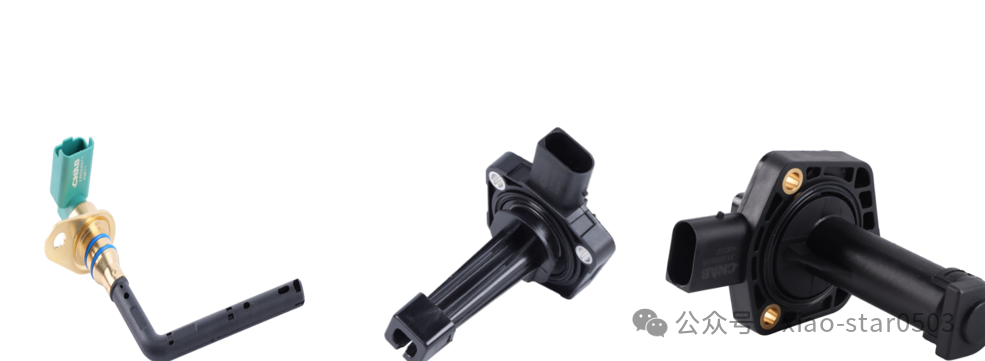
Function:
Accurately monitors the oil level in the engine oil pan (liquid level height).
Installation Location:
Most common location: on the engine oil pan.
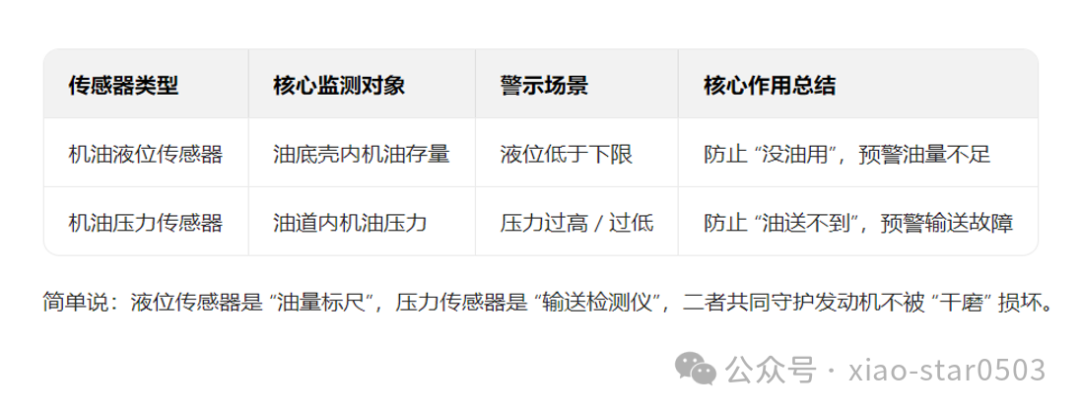
Question 1:Difference between oil level sensor and oil pressure sensor function.
(11) Crankshaft Position Sensor
Function:
Detects crankshaft speed and rotational position, determining ignition timing, fuel injection timing, and working cylinder sequence, serving as the “core reference” for engine start and operation.
Installation Location:
Most common location – installed at the front end, rear end, or near the flywheel of the crankshaft.
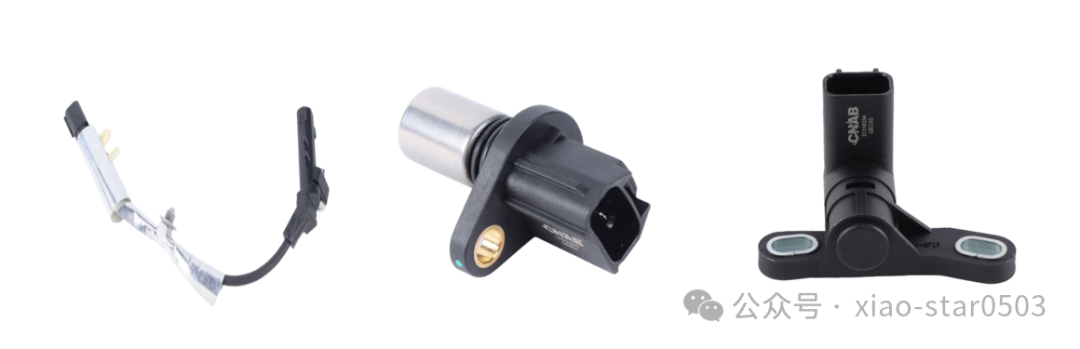
(12) Camshaft Position Sensor
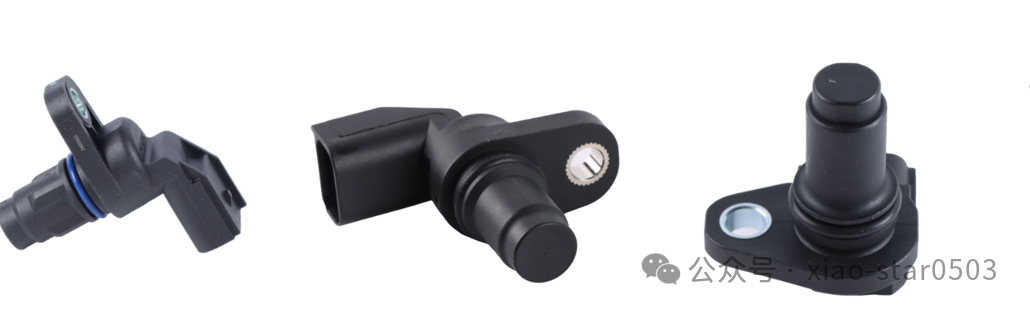
Function:
Identifies the working order of the cylinders, achieving precise fuel injection and ignition, assisting in optimizing ignition timing and fuel injection timing, supporting closed-loop control of variable valve timing systems (VVT).
Installation Location:
At the front end of the camshaft, rear end of the cylinder head.
Question 1: Difference between crankshaft position sensor and camshaft position sensor.
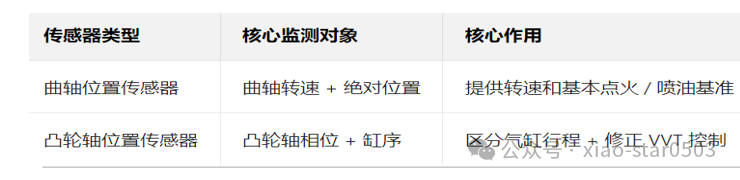
Question 2: How many crankshafts and camshafts does a car typically have?
-
Crankshaft: The crankshaft is one of the core components of the engine, converting the linear motion of the pistons into rotational motion. Generally, a typical car has only one crankshaft.
-
Camshaft: The camshaft controls the timing of the opening and closing of the valves, and its quantity varies depending on the engine type. In a single overhead cam (SOHC) engine, there is usually one camshaft; in a double overhead cam (DOHC) engine, there are typically two camshafts.
In summary, a car typically has one crankshaft and one or two camshafts. The specific number depends on the actual configuration of the vehicle.
(12) Knock Sensor
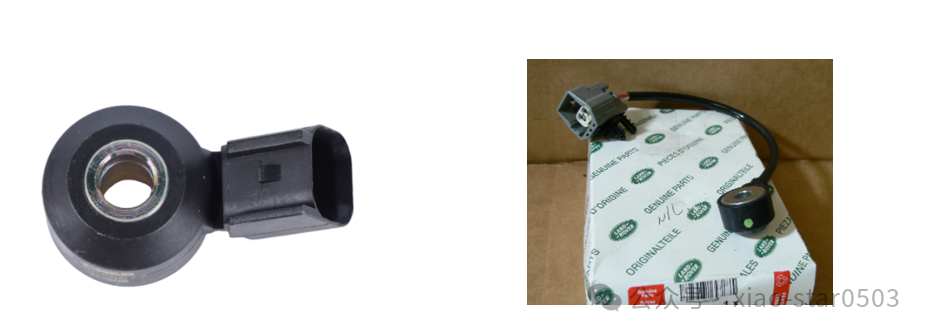
Function:
By sensing the vibration frequency of the engine block, it identifies the “unique vibration signal of knocking” and transmits the signal to the engine computer.
Installation Location:
On the engine block or cylinder head.
(14) Water Temperature Sensor
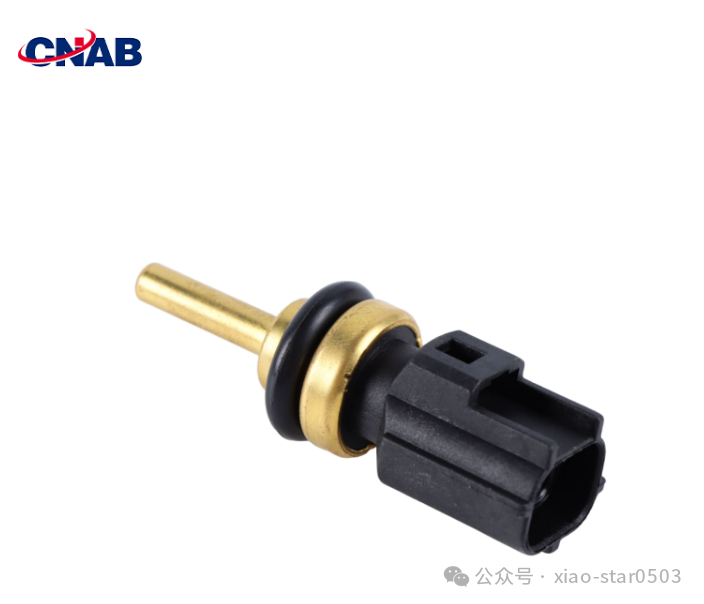
The water temperature sensor is a key component of the automotive engine management system, with its core function being to convert the coolant temperature into an electrical signal sent to the electronic control unit (ECU), enabling dynamic adjustment of engine operating parameters. Its specific functions are as follows:
- (1) Corrects fuel injection amount by increasing the injection amount at low temperatures to ensure sufficient fuel atomization during cold starts, enhancing combustion efficiency; reducing injection at high temperatures to prevent overly rich mixtures that lead to incomplete combustion.
- (2) Adjusts ignition advance angle by increasing the ignition advance angle in low-temperature environments to optimize starting performance; delaying ignition at high temperatures to prevent engine knocking.
- (3) Links auxiliary systems by controlling the electronic fan’s start/stop (triggering cooling when temperatures are too high), air conditioning compressor operation (in some models), and providing temperature data for the temperature gauge.
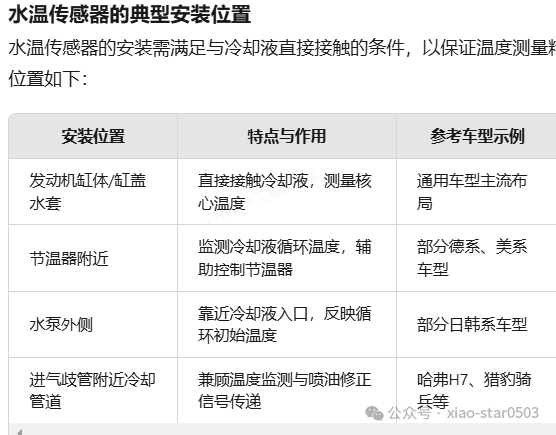 Tips: Some models are equipped with multiple water temperature sensors, used for ECU control, temperature gauge display, and electronic fan triggering, with installation locations possibly varying..
Learning About Fluids
Five Oils, Four Filters, Three Waters
The five oils refer to: engine oil + brake fluid + transmission fluid + clutch fluid + power steering fluid.
These five types of oil have similar functions:
(1) Lubrication
(2) Cleaning
(3) Rust prevention
(4) Cooling
(5) Sealing and preventing fouling
(1) Transmission Fluid Knowledge:
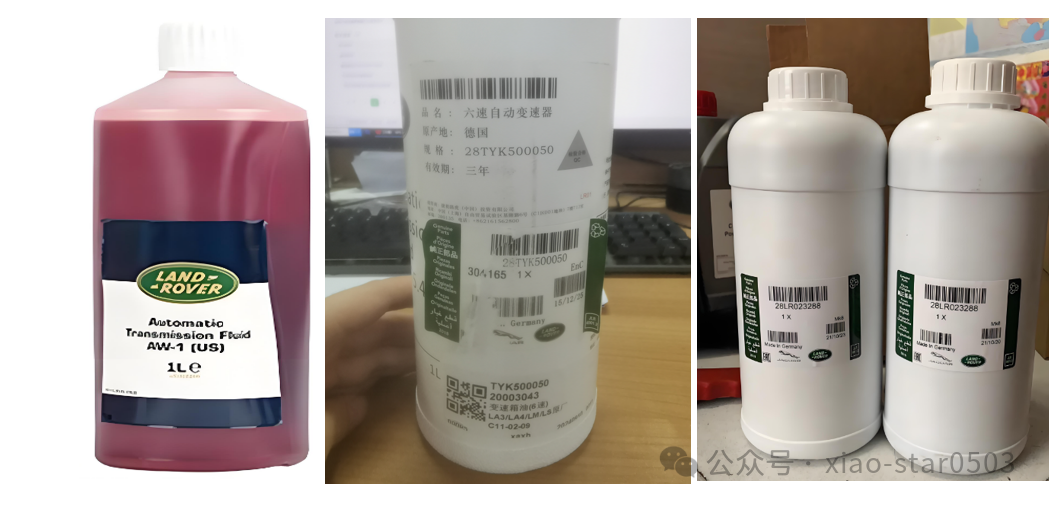
6-speed: TYK500050 yellow (original, ZF)
LR022460 brown (original, Aisin)
8-speed: LR023288 light green (original)
Types of transmissions:
(1) Manual Transmission (MT),
(2) Automatic Transmission (AMT),
(3) Continuously Variable Transmission (CVT),
(4) Dual-Clutch Transmission (DCT)
Functions of the transmission:
(1) Changes the gear ratio
(2) Enables reverse driving
(3) Interrupts power transmission
(2) Brake Fluid Knowledge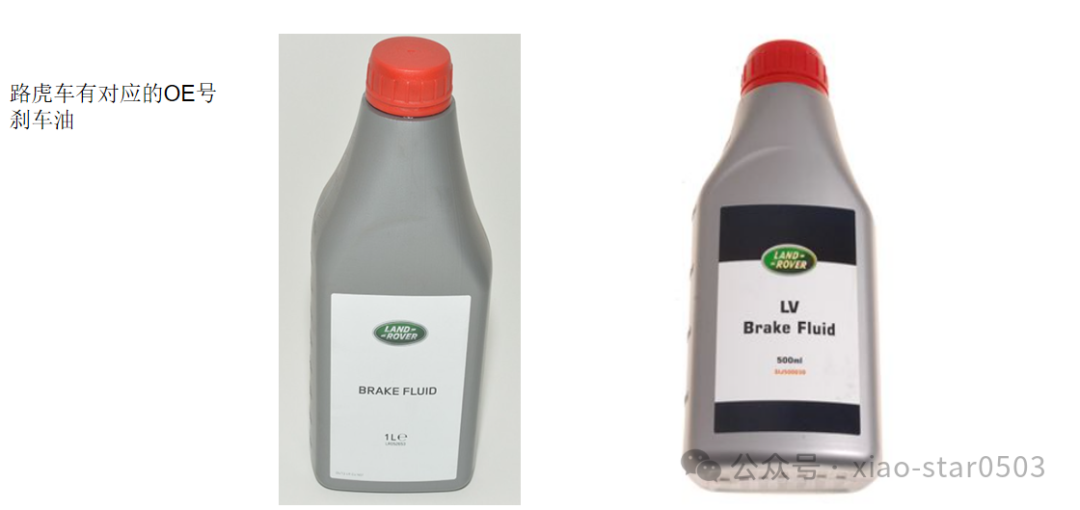
(3) Differential Oil / Transmission Oil / Gear Oil / Rear Axle Oil Knowledge
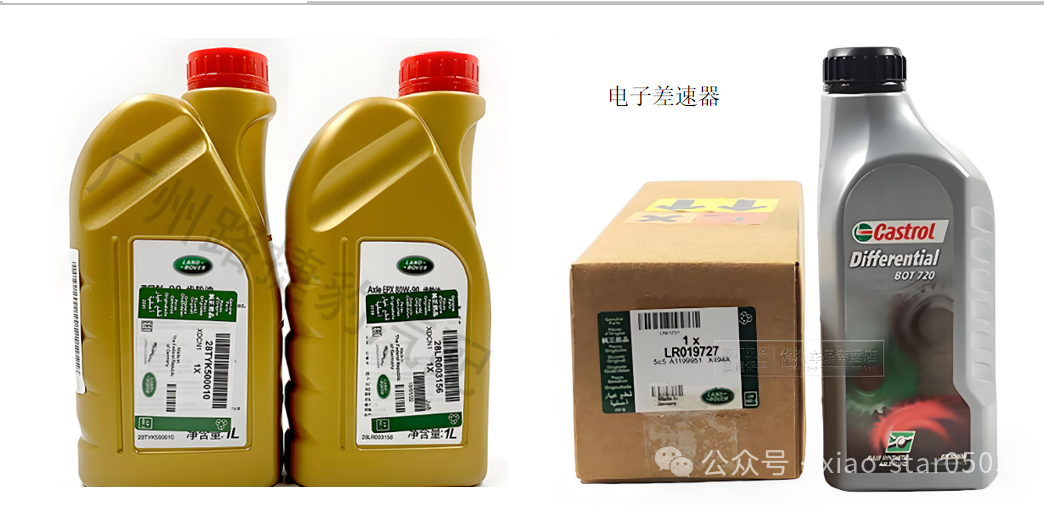
Function of the differential:
(1) Allows the left and right wheels to rotate at different speeds:
When the vehicle turns, the outer wheel travels a longer distance; the differential adjusts the speeds of the two wheels to prevent tire slippage, wear, or steering difficulties.
(2) Ensures smooth power transmission:
Balances the power distribution between the two wheels during non-linear driving.
Two-wheel drive vehicles have only one differential, with front-wheel drive in the front and rear-wheel drive in the back.
Four-wheel drive vehicles have both front and rear differentials, using the same type of differential oil; electronic differential oil cannot be mixed.
(4) Engine Oil Knowledge
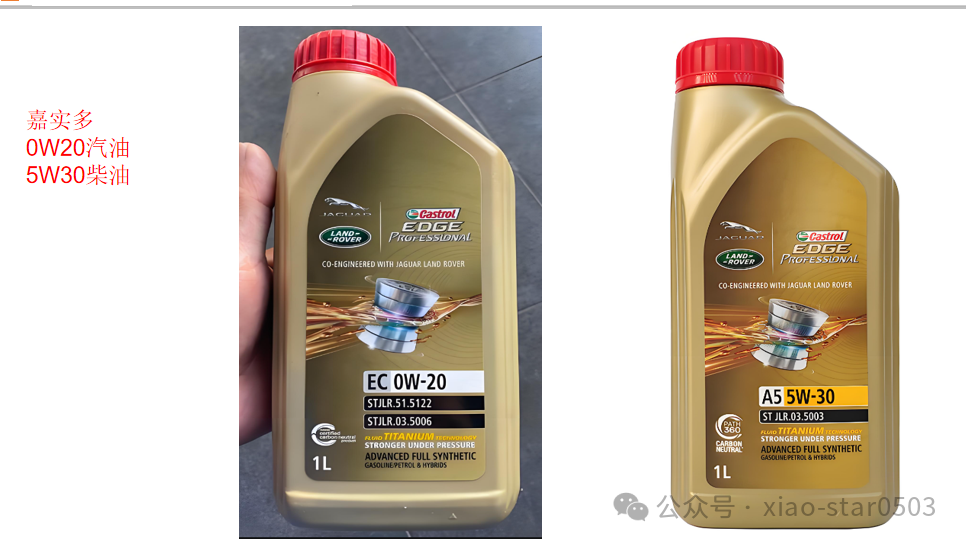
Types of lubricating oil:
Mineral oil – low cost, high cost-performance ratio, but poor viscosity stability and oxidation resistance, with more impurities and weaker cleaning ability (for motorcycles).
Semi-synthetic oil – performance between mineral and fully synthetic oils, moderately priced; better oxidation and wear resistance than mineral oil, suitable for ordinary passenger cars and taxis.
Fully synthetic oil – more uniform molecular structure, strong oxidation, high-temperature, and wear resistance; longer oil change intervals.
Good low-temperature fluidity, suitable for cold regions, turbocharged, or high-performance engines.
Common models: Common engine lubricating oil models include 0W16, 0W20, 0W30, 5W20, 5W30, 5W40, 15W40, and 15W50.
Tips: The most commonly sold oils are 0W20 and 5W30 diesel oils!!
In these models, the “W” stands for winter; the smaller the number before the W, the lower the viscosity of the oil at low temperatures, and the better its cold resistance; the larger the number after the W, the higher the kinematic viscosity of the oil at 100 degrees Celsius, and the better its high-temperature performance.
(5) Power Steering Fluid Knowledge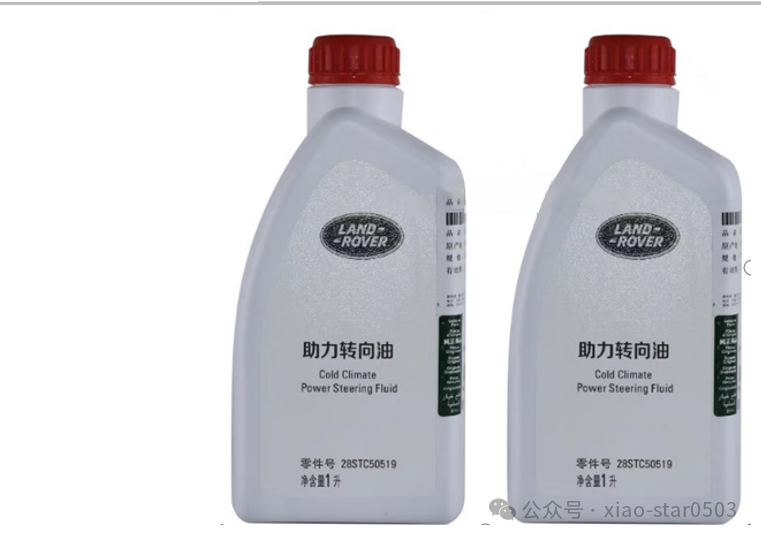
Common international brands: Mobil 1, Shell, Castrol, Total, Fuchs, and Valvoline.
Common Chinese brands: Great Wall (Sinopec), Kunlun (China National Petroleum), Uni-President, and Antec.
Four filters refer to: air filter, oil filter, fuel filter, and air conditioning filter.
The so-called “four filters” of the car refer to the oil filter, fuel filter, air filter, and air conditioning filter. They ensure the smooth operation of the engine.
Three waters refer to: antifreeze, windshield washer fluid, and battery water.
① Antifreeze: A key medium in the automotive cooling system, playing an important role in ensuring stable engine operation.
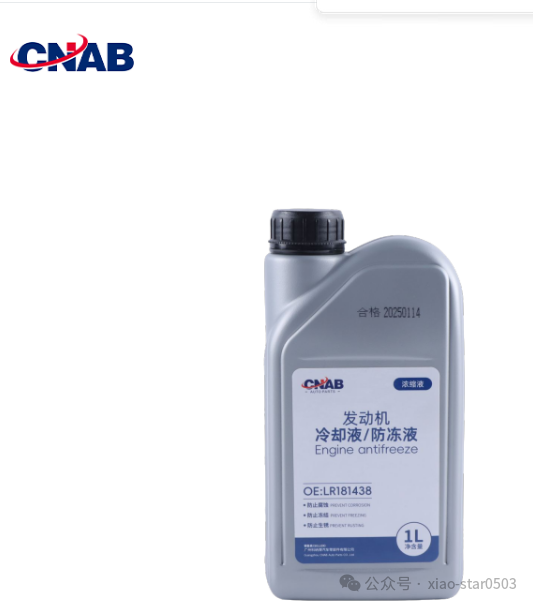
Function:
Antifreeze: Prevents the liquid in the cooling system from freezing in low-temperature environments, protecting the engine from damage.
Boiling prevention: Prevents the coolant from boiling in high-temperature environments, maintaining the engine’s normal operating temperature.
Rust and corrosion prevention: Protects the metal and rubber components in the cooling system from corrosion, extending their lifespan.
Heat dissipation: Removes heat generated by the engine, ensuring the engine operates at normal working temperatures.
Indicators for evaluating antifreeze quality: The first is the antifreeze effect; the freezing point of water is 0°C, and ordinary antifreeze can reach -40°C, while high-quality antifreeze should reach around -60°C, which is an important indicator of antifreeze quality; another is the boiling point of antifreeze, which should be at least 108°C. This means that the lower the freezing point, the higher the boiling point, and the greater the temperature difference, the better the quality of the antifreeze.
② Windshield Washer Fluid: An essential product for cleaning the windshield of the car.
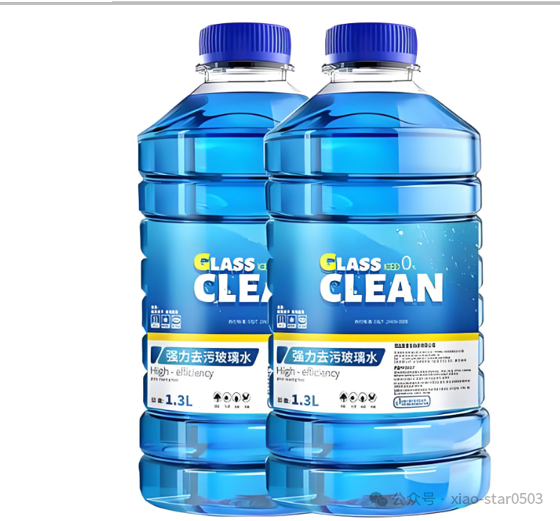
Function:
(1) Cleaning: Contains surfactant components that can quickly remove dust, oil stains, insect remains, and other stains, with significant wetting, penetration, and solubilization capabilities.
(2) Antifreeze protection: Using in winter can lower the liquid’s freezing point (for example, choosing a -20°C freezing point product in -10°C environments), preventing low temperatures from causing damage to the pipes.
(3) Anti-fog effect: Forms a monomolecular protective film on the glass surface, reducing fog attachment and maintaining clear visibility.
(4) Lubricates wipers: Contains lubricating components that reduce friction between the wipers and the glass, preventing scratches.
(5) Corrosion prevention: Contains corrosion inhibitors that protect the paint and rubber components from chemical corrosion.
③ Battery Water: Most cars are now equipped with maintenance-free batteries, and during daily use, owners only need to perform maintenance checks without needing to add or replace battery water.
Transfer Case Oil Knowledge
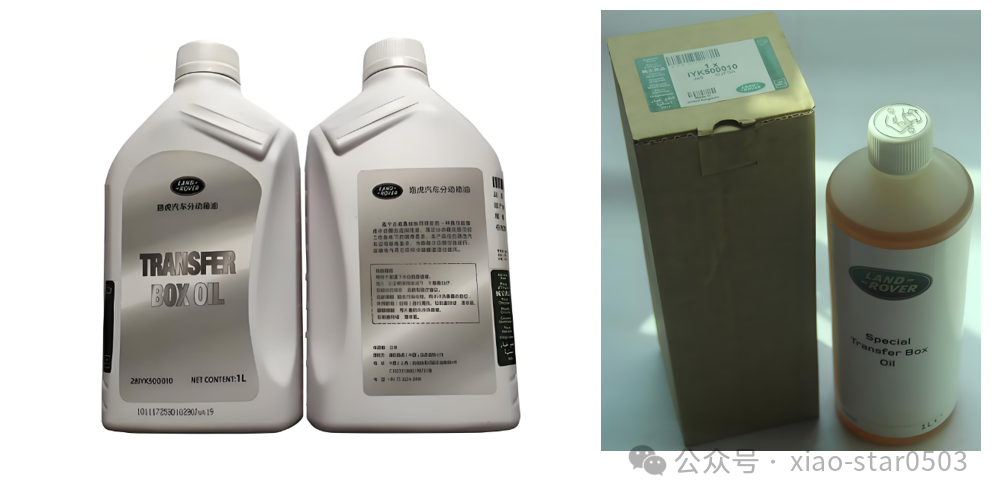
Only four-wheel drive systems have transfer cases: full-time four-wheel drive – the vehicle maintains four-wheel drive at all times; part-time four-wheel drive – operates in two-wheel drive mode under normal conditions, automatically switching to four-wheel drive in special situations; manual four-wheel drive – requires the driver to manually switch between two-wheel and four-wheel drive modes.
Function:
Power distribution: Distributes power proportionally to the front and rear axles.
Improves passability: Achieves low-speed, high-torque transmission in off-road or muddy conditions.
Slip suppression: Limits power output during slippage to prevent other wheels from spinning freely.
Mode switching: Supports switching between two-wheel and four-wheel drive modes.
Refrigerant/Snow Type Knowledge
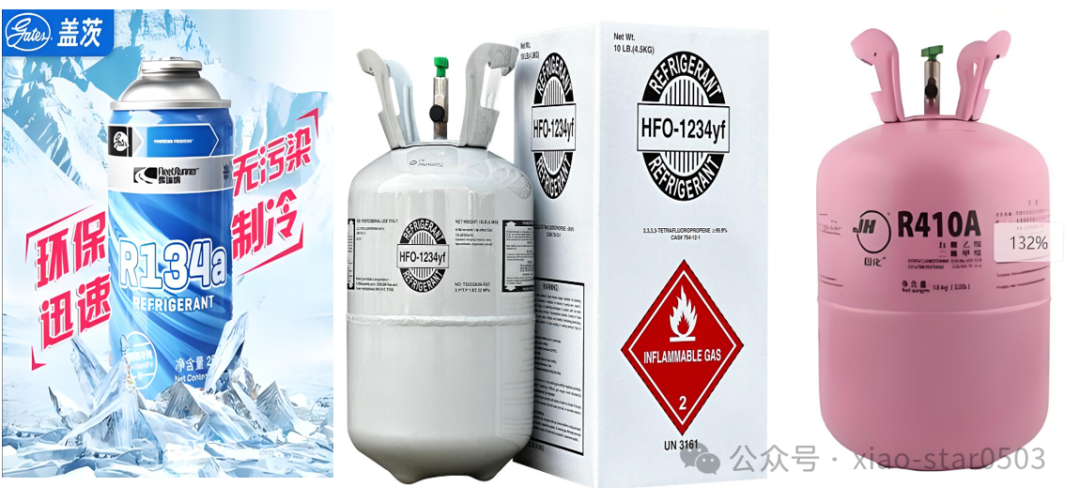
Common refrigerant types: R134a, R1234yf (higher price), R410A (new type, requiring high pressure resistance of the system).
Cooling Principle:
The refrigerant turns into a liquid under high pressure, releasing heat; after passing through the expansion valve, it rapidly vaporizes, absorbing a large amount of heat, and is compressed again by the compressor to release heat, completing the cycle.
During normal use of passenger cars, the cooling system is a closed-loop circuit, and the refrigerant theoretically does not naturally deplete.
Refrigeration Lubricating Oil Knowledge
(Mainly for compressors)
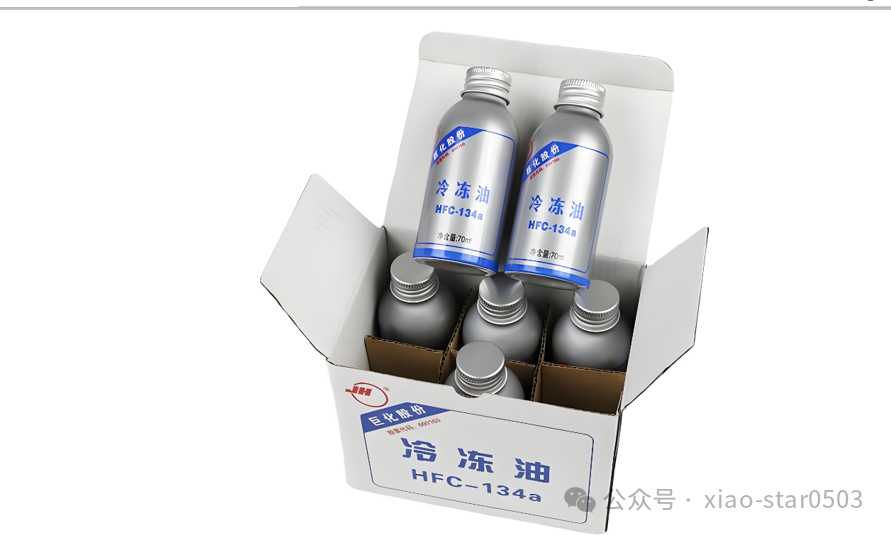
Function:
Lubrication: Reduces friction and wear of moving parts, extending equipment lifespan.
Cooling: Circulates to remove friction heat and heat generated by compressed gas, maintaining low-temperature operation of the equipment, enhancing efficiency and reliability.
Rust prevention: Cleans friction surfaces of impurities, preventing rust.
Sealing: Forms an oil film in the gaps between the piston and cylinder, preventing refrigerant leakage.
Urea Knowledge
(For diesel vehicles)

Function:
Purifies exhaust: Automotive urea reacts with nitrogen oxides in the exhaust, generating nitrogen and water vapor, reducing harmful gas emissions.
Optimizes engine performance: Reducing nitrogen oxide emissions can enhance engine operating efficiency, with some models improving fuel efficiency by about 6%.
Extends engine lifespan: Reduces corrosion and wear, lowering maintenance costs due to exhaust issues.
The urea tank capacity for Land Rover diesel models is typically 18 liters, with one liter of urea solution allowing for approximately 1600 kilometers of travel; after filling, the vehicle can travel 20,000 to 30,000 kilometers.
Land Rover’s original urea is expensive, and it is rumored that using Mercedes-Benz’s original urea in Land Rover vehicles is a viable option.
Summary of Last Month’s Exam:

According to the exam standard, a score of 90 is considered passing.
I scored 80, which is not a good result.
So I will put these two questions here.

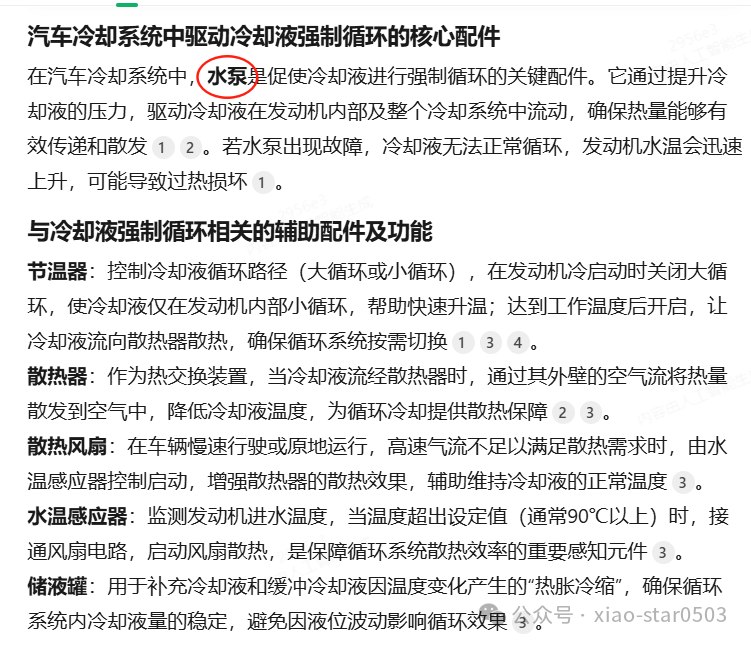 Answer: B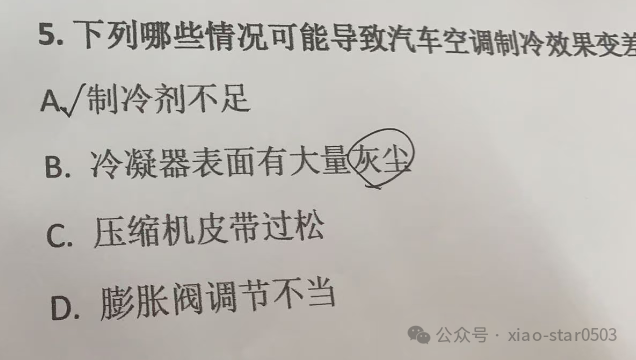
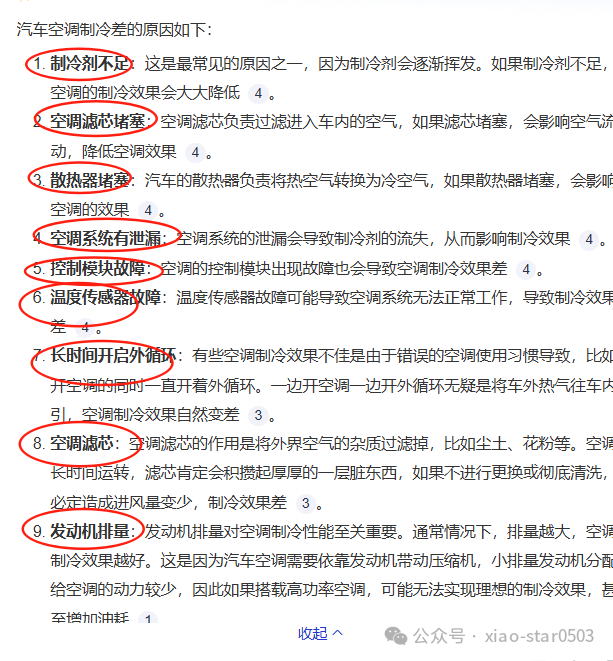 Answer: ABCDStudy hard, make progress every day,In a group of three, there must be a teacher for me.Choose the good and follow it, and correct the bad. When it comes to automotive parts, it’s all about the essentials.If there are any mistakes, please correct me.