Follow Huide, wishing you rapid development in the medical device industry

What are the applications of robotics in healthcare?




In recent years, with the deep integration of artificial intelligence, precision machinery, and biomedicine, medical robots have become a core force driving innovation in modern medical technology. Their application ranges from surgical procedures and rehabilitation training to medical logistics services, gradually reshaping the ecosystem of the healthcare industry.
Based on different functions, they can be categorized into the following types:
01
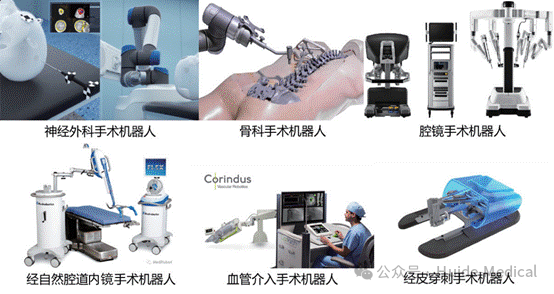
Surgical Robots
Functionality:
Assist or autonomously perform high-precision surgical procedures, breaking through the limits of human operation.
Technical Features:
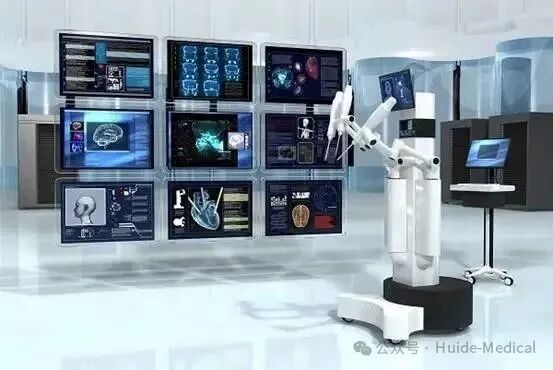
Multi-degree-of-freedom robotic arms: Simulate wrist movements, with flexibility far exceeding traditional instruments (e.g., the Da Vinci robot has a 7-degree-of-freedom robotic arm).
3D high-definition visual system: Provides a 10-15 times magnified three-dimensional view, accurately identifying fine structures such as blood vessels and nerves.
Tactile feedback technology: Simulates surgical touch through force sensors, avoiding excessive manipulation that could damage tissues.
AI path planning: Automatically plans the optimal surgical path based on preoperative CT/MRI data (e.g., orthopedic robots have a positioning error of ≤0.5 mm).
Application Scenarios:
1. Minimally invasive surgery:
Laparoscopic surgery: The surgical robot performs radical prostatectomy, reducing intraoperative blood loss and shortening recovery time.
Thoracoscopic surgery: The surgical robot assists in lung cancer resection, with incisions as small as 1 cm, allowing patients to get out of bed the next day.
2. Orthopedic surgery:
Spinal surgery: The surgical robot assists in implanting pedicle screws, with a success rate higher than traditional surgery.
Joint replacement: The surgical robot achieves precise matching of knee joint prosthetics through real-time navigation.
3. Remote surgery:
Through 5G networks, doctors can remotely control surgical robots to perform surgeries for patients in distant locations.
02
Rehabilitation Robots
Functionality:
Assist patients in regaining motor functions or replace damaged limbs, enhancing quality of life.
Technical Features:
Biological signal recognition: Captures patients’ movement intentions through electromyography and electroencephalography sensors.
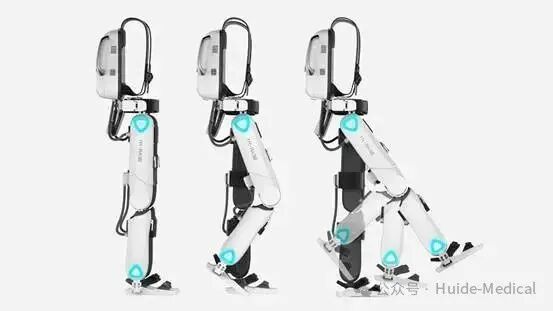
Exoskeleton drive: Hydraulic or motor systems provide joint assistance, simulating natural gait.
Data-driven training: Monitors joint angles and muscle strength in real-time, dynamically adjusting rehabilitation plans.
Application Scenarios:
1. Lower limb rehabilitation:
Exoskeleton robots assist patients with spinal cord injuries in walking training, improving gait symmetry by 40%.
Exoskeleton robots assist paraplegic patients in standing and walking, achieving an average daily activity distance of 1.5 kilometers.
2. Upper limb rehabilitation:
Robotic arms assist stroke patients in grip training, improving hand function recovery speed by 30%.
3. Neurological rehabilitation:
Brain-computer interface (BCI) robots decode brain signals to help ALS patients control robotic arms for eating.
03
Nursing Assistant Robots
Functionality:
Replace healthcare personnel in repetitive tasks, reducing infection risks.
Technical Features:
Autonomous navigation: Achieves complex environment path planning based on laser radar and SLAM technology.
Multi-functional modules: Integrates ultraviolet disinfection, voice interaction, material transportation, and more.
IoT collaboration: Interfaces with hospital HIS systems to respond to demand instructions in real-time.
Application Scenarios:
1. Material delivery:
Transport robots perform 300 deliveries of medications daily, with an error rate of less than 0.1%, saving nurses 30% of their work time.
2. Disinfection and sterilization:
Ultraviolet robots can kill 99% of pathogens in 5 minutes, effectively reducing ICU infection rates.
3. Patient care:
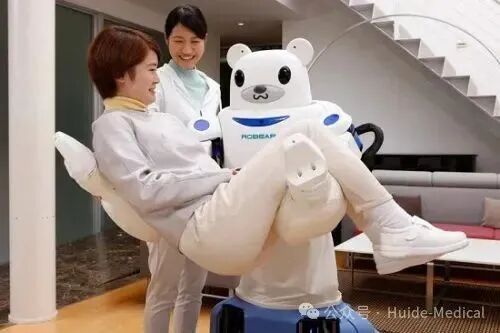
Nursing robots can lift patients weighing 80 kg to complete turning and transferring, reducing nurses’ back strain.
04
Diagnostic and Testing Robots
Functionality:
Enhance the efficiency and accuracy of disease diagnosis, reducing missed and misdiagnoses.
Technical Features:
AI image analysis: Deep learning algorithms identify abnormal lesions in CT and MRI images.
Automated operations: Robotic arms precisely execute standardized procedures such as blood sampling and endoscopic examinations.
Multi-modal data fusion: Combines genetic testing and biochemical indicators for comprehensive diagnosis.
Application Scenarios:
1. Imaging diagnosis:
For example, AI ultrasound robots have a breast cancer detection accuracy higher than that of human recognition.
2. Blood sampling and testing:
Blood sampling robots use infrared and ultrasound to locate veins, achieving a first-puncture success rate of 95% (compared to 83% for humans).
3. Endoscopic robots:
Colonoscopy robots autonomously navigate to complete intestinal examinations, reducing patient pain scores by 70%.
05
Medical Education and Research Robots
Functionality:
Simulate real medical scenarios to accelerate talent training and research breakthroughs.
Technical Features:
High-fidelity simulation: Human models can simulate over 200 pathological states such as bleeding and respiratory failure.
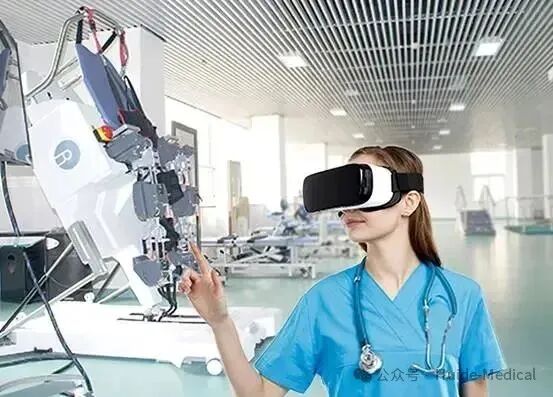
VR/AR immersive training: Provides realistic surgical environments, supporting risk-free repeated practice.
Application Scenarios:
1. Medical education:
Robots are used for emergency training, improving the success rate of trainees.
2. Drug development:
Automated laboratory robots screen 100,000 compounds daily, achieving a 100-fold increase in efficiency compared to manual processes.
Future Trends and Challenges
Intelligentization: AI will enable autonomous decision-making in surgeries (e.g., the next generation of Da Vinci products supports AI real-time avoidance of blood vessels).
Miniaturization: Nano-robots for targeted tumor treatment and thrombus removal will usher in a new era of minimally invasive treatment.
Human-machine integration: Brain-machine interface technology allows amputees to control prosthetic limbs through thought, achieving “human-machine unity”.
Cost reduction: The price of domestic surgical robots is decreasing, promoting their adoption in grassroots hospitals.
Medical robots are evolving from a single tool to an ecosystem that covers the entire diagnosis and treatment chain. With the integration of AI, 5G, and nanotechnology, future medical robots will be smarter and more accessible, ultimately realizing the vision of “precision medicine without boundaries, quality resources at your fingertips”.
Note: Content sourced from the internet
[Disclaimer: Respect to the original author. This content is a reprint, and the push is for knowledge sharing. If there are issues regarding the content, copyright, or other matters, please message us! We will address it immediately to protect the rights of all parties involved.]
NEWS
Scan the QR code to contact us

Teacher Li
18680295621

Teacher Tao
18688104434