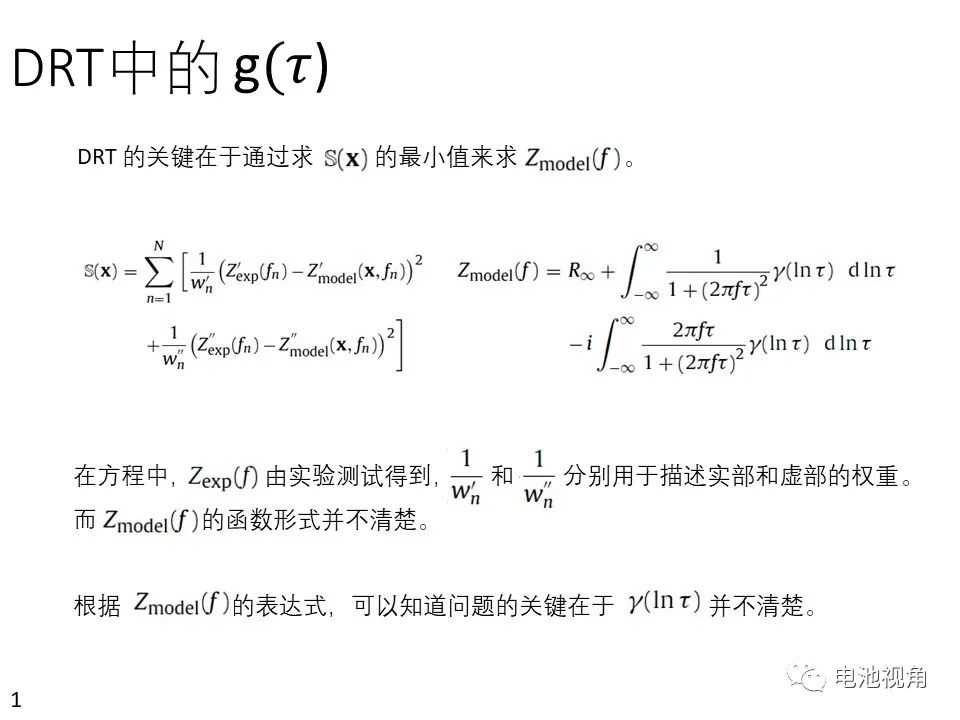
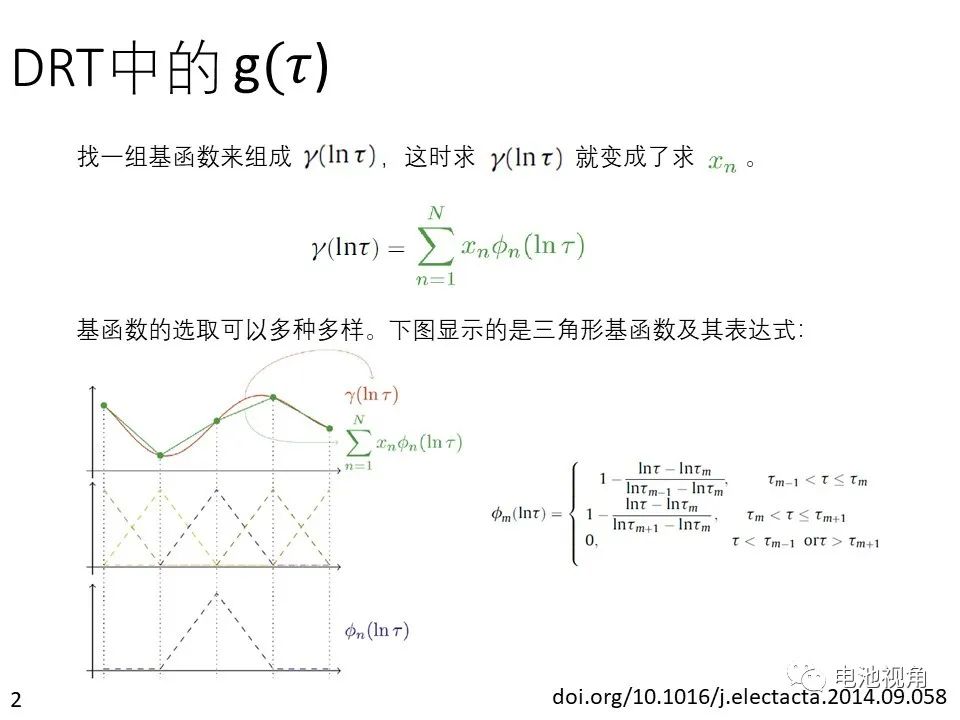
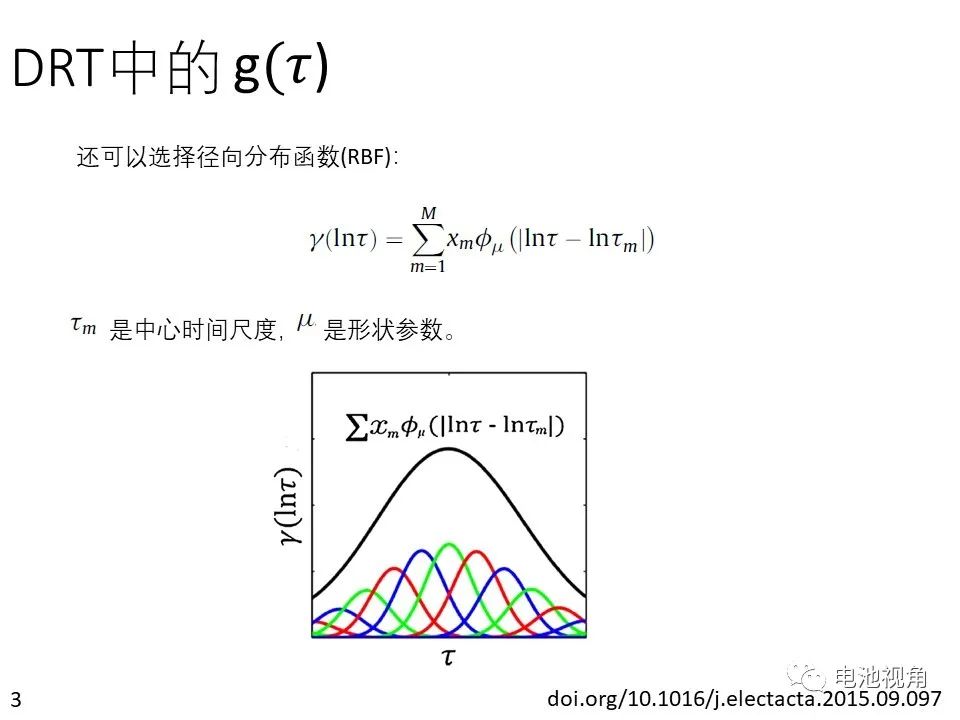
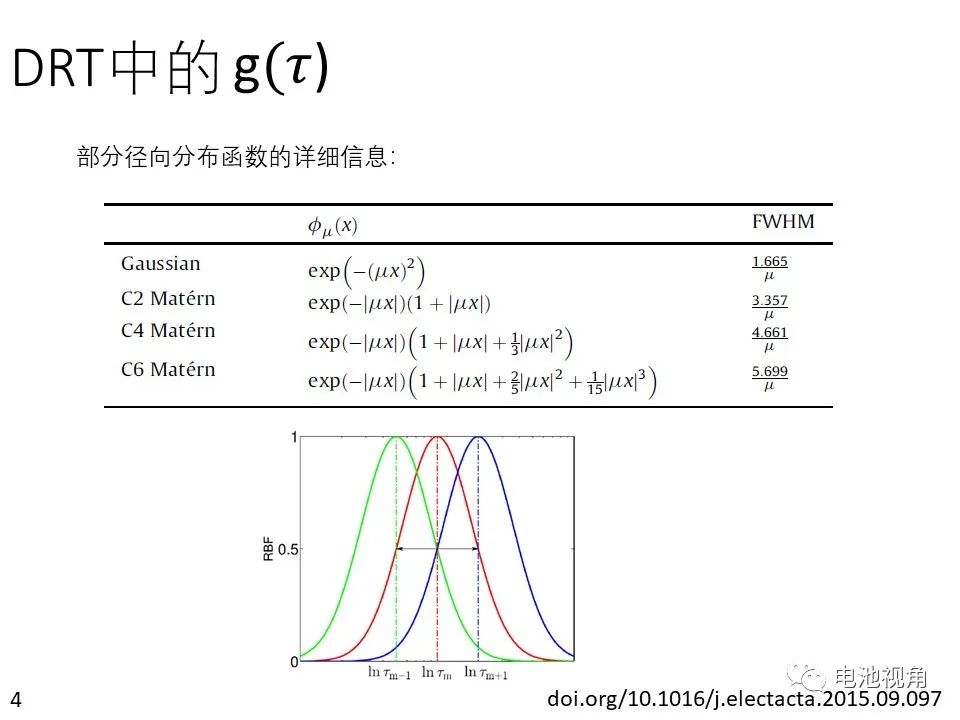
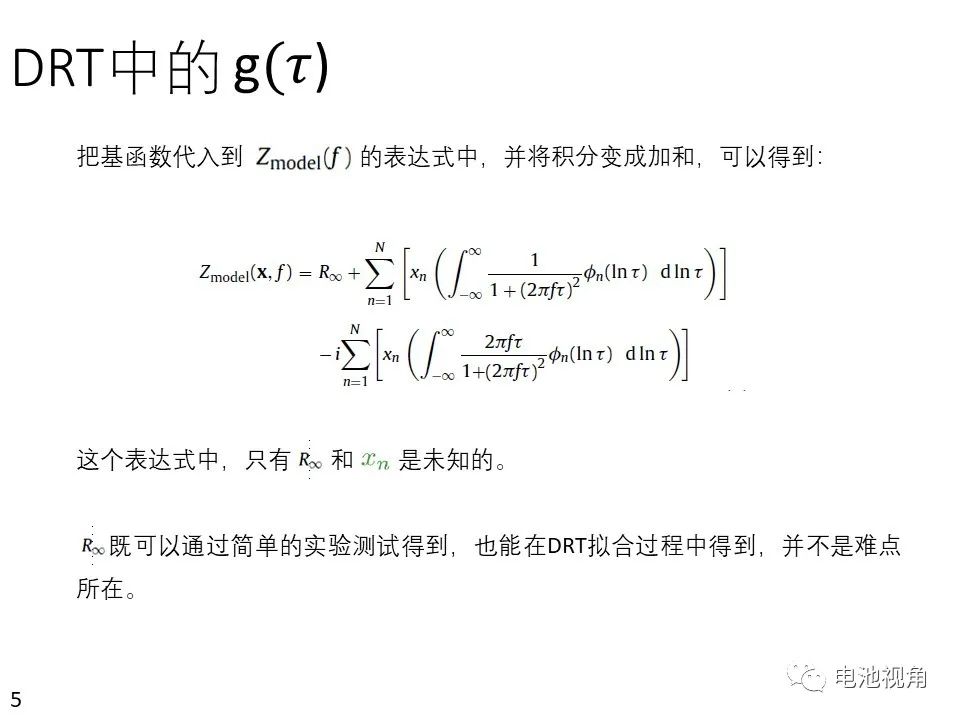
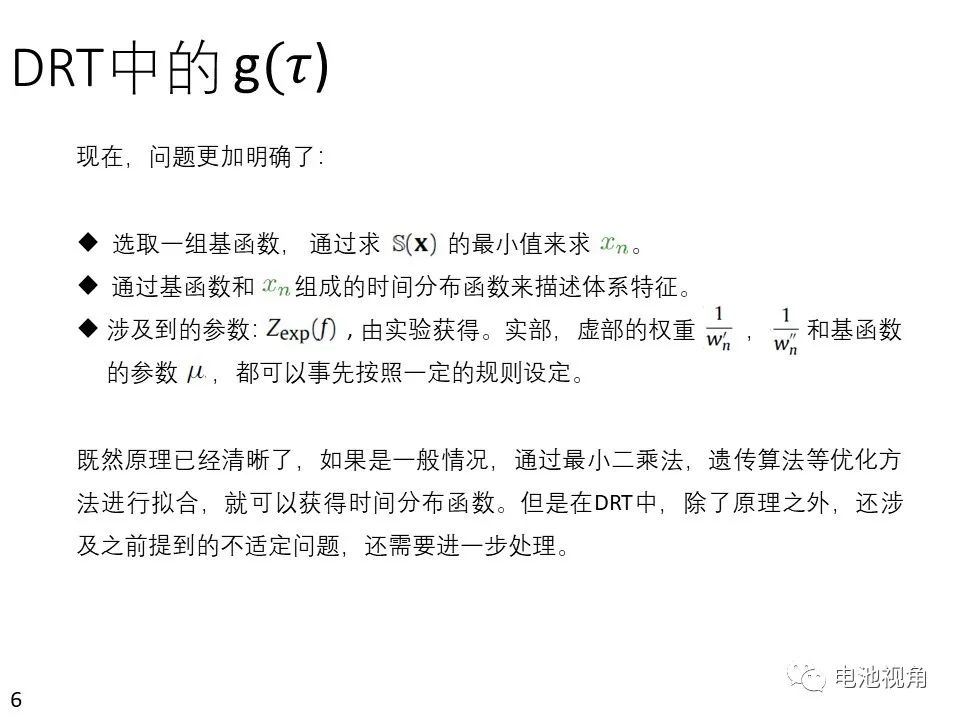
DRT model is a physically meaningful equivalent circuit whose mathematical description has been explained previously. The purpose of this model is to obtain the relaxation time distribution function. Since the expression of the function is unknown, it is difficult to directly obtain the function. Here, we introduce the idea of transforming the problem of finding the function into finding parameters. We typically calculate some unknown parameters through solving equations or optimization algorithms. How can we transform the problem of finding an unknown form of equation into finding a series of parameters? A finite element-like approach can be adopted, designing a set of basis functions to express the unknown function as a linear combination of these basis functions. At this point, knowing the coefficients of the linear combination allows us to obtain the desired function. Clearly, this method easily transforms the problem of finding an unknown function into a familiar problem of finding unknown parameters. Additionally, we can design a library of elementary functions and use machine learning to select some elementary functions from the library and perform various operations to form the relaxation time distribution function. This method will not be discussed here.