This article summarizes the research progress of customized buses, indicating that fairness plays a crucial role in the sustainable development of customized bus service systems. Current route planning research has begun to focus on the travel fairness and spatiotemporal balance issues for vulnerable groups. Future research should emphasize the establishment of fairness evaluation indicator systems, route planning, and scheduling operations under fairness constraints. The design of customized bus systems should balance new passenger fare discounts with loyal passenger benefits, continuously optimizing at each stage of demand evolution to enhance the comprehensive service level and sustainable development capability of the customized bus system.
The mobile internet technology has made urban transportation options more diverse and travel more convenient. By utilizing smartphones and mobile network technology to dynamically respond to travel demands, the demand responsive transit (DRT) system, which first appeared in the 1970s but has been difficult to promote, has regained attention. The concept of demand responsive bus regular operation (customized bus) proposed by Daganzo 45 years ago has become an important part of China’s public transportation system. In September 2013, customized buses began operations in Qingdao and Beijing, significantly improving urban residents’ accessibility to bus travel without or with very little increase in public financial burden. In the rapid urbanization process of most cities in China, customized buses have played a positive role in supplementing the insufficient capacity of conventional buses, effectively alleviating issues such as the long planning and operation cycles of new lines during urban expansion, low bus travel demand, and spatial dispersion. Customized buses have great potential in reducing private car purchase demand and lowering the proportion of private car travel (or reducing morning and evening peak travel demand), meeting the urgent needs of green transportation development in China.
The current role of customized bus systems is mainly to compensate for the accessibility of traditional public transport, with huge potential to enhance transportation fairness, especially the fairness of bus services. However, many customized bus systems in global cities have experienced a sharp decline in passengers and route cancellations after rapid growth, resulting in low survival rates and poor sustainability of routes and systems. The biggest difference between customized buses and traditional bus systems is the way supply and demand are matched. Traditional bus systems prioritize basic accessibility and passively match the majority of general travel demands; customized buses are demand-oriented, matching personalized and specific travel needs through customized routes and proactive service responses.
Fairness is a crucial factor in customized bus route planning, emphasizing how to equitably allocate limited resources and services. Customized bus route planning must consider the impact of fairness from multiple perspectives. On one hand, ensuring fairness in customized buses guarantees service equity among different passenger groups, taking into account the special needs of vulnerable groups such as the elderly, disabled individuals, and children; on the other hand, fairness in customized buses involves service balance among different urban areas and service efficiency equity at different passenger response stages. Therefore, customized bus service resources should be reasonably allocated to different urban areas, and response decisions should strive to meet all passengers’ shortest detour expectations, avoiding spatiotemporal imbalances and unreasonable route responses.
This article focuses on the fairness of customized bus services from the perspective of operation and planning, analyzing the current research status, issues, and development dynamics in three aspects: demand characteristics and demand response mechanisms, route design and optimization methods, and evaluation of customized bus service systems.
Demand Characteristics and Demand Response Mechanisms of Customized Buses
Customized buses provide public travel services that differ from traditional transportation modes. Compared to conventional buses, customized buses are generally more reliable (no transfers) and more comfortable (one seat per person), despite having higher prices. Research by Gao Yiping et al. indicates that the mileage utility boundary between conventional and customized buses in Dalian is 8km; when a passenger’s travel distance exceeds 8km, customized buses have a significant advantage. Unlike traditional taxis, customized buses can tailor departure and arrival times for passengers but require sharing space with other passengers; compared to ride-hailing services, they can use bus-only lanes during peak hours and are priced lower. Customized buses have significantly improved the service level of bus travel. Since their introduction in Beijing and Qingdao in 2013, large and medium-sized cities across the country have experienced about three years of explosive demand growth. However, as initial ticket subsidies have gradually been removed, starting in 2016, some cities have begun to reveal organizational and management issues in customized bus operations, mainly reflected in unstable service levels due to the spatial and temporal dispersion of passenger demands, which in turn affects passenger satisfaction and willingness to continue choosing the service. This instability further complicates route optimization design and the dynamic response of organizational operations. A portion of customized bus demand has gradually shifted toward ride-hailing services and multi-modal travel dominated by subways.
Considering the Demand Characteristics of Vulnerable Groups
Surveys have found that most current users of customized buses come from traditional bus services, with some coming from taxis (mainly ride-sharing users), and only a very small number from private car users. Zheng et al. found that nearly 78% of respondents are willing to try flexible route public transport services. Women, disabled individuals, retirees, bike-sharing users, and commuters who need to transfer to subways have a greater potential to become customized bus users. Ke et al. pointed out that part-time students, well-educated middle-aged individuals, or commuters with bachelor’s or master’s degrees are more inclined to use customized buses, with significant differences in their demand characteristics. Continuously improving spatiotemporal service levels to attract more users (including private car users, ride-hailing service users, and taxi users) has become one of the hot research topics in both domestic and international studies in recent years.
Customized buses provide more travel opportunities for special needs groups (such as the elderly, disabled individuals, and children), ensuring the accessibility of public transport services and serving as an important transportation mode to enhance public transport fairness. To capture the travel demands of special needs groups, researchers have employed various methods and conducted in-depth discussions in relevant studies. Knierim et al. reviewed the relationship between public transport and the changing needs of the elderly, analyzing the characteristics and needs of elderly travel and proposing suggestions for improving public services. Additionally, Wang et al. focused on the personalized travel needs of the elderly and disabled individuals, indicating that personalized mobile travel services have a significant role in enhancing fairness.
Understanding individual user characteristics is crucial for meeting the demands of various travelers. Based on the service levels and spatiotemporal characteristics of customized buses, it is essential to determine their positioning in the travel market and suitable market space, conducting analyses of demand spatiotemporal evolution and demand response mechanisms to maximize the social benefits of the customized bus system.
Diverse Demand Response Strategies
Customized buses can be divided into three categories based on the level of flexibility in customized travel services, as shown in Figure 1. The travel demands received before the vehicle departs are represented in black, while those received after the vehicle has departed are shown in blue. Figure 1 (a) illustrates a lower flexibility model of customized buses that operates according to fixed routes and schedules, with the operation plan periodically optimizing routes based on demand and updating timetables. The basic operational philosophy is to understand passenger mobility demands and provide more flexible and customized services than traditional buses, aiming to improve the utilization of public transport. This model allows potential passengers to submit travel requests through a booking system, specifying their desired departure location and time, destination, and arrival time. If the request can be serviced by one (or more) currently operating routes, passengers can choose a route that meets their request. Otherwise, the request is stored in an unmet request pool and continuously updated during subsequent optimization phases (usually executed every two weeks or monthly).
Figure 1 (b) illustrates a medium flexibility demand response bus, which optimizes routes based on collected requests before the vehicle departs, but does not allow detours once the vehicle is en route. This service follows a two-phase scheme: during operation, the information system collects transport requests submitted by potential passengers. Such requests are dynamically inserted into future routes, and passengers are offered the best match (or an ordered set of potential matches), including estimated pick-up times and fares. If accepted, the route is modified accordingly, and the travel request is stored. Sanaullah et al. emphasized the advantages of demand response travel services and detailed implementation cases in Canada.
Figure 1 (c) depicts a high flexibility demand response bus, where the dispatch center responds to new demands and dynamically updates vehicle routes upon receiving one or a batch of requests. When the pre-scheduled route of the vehicle passes the pick-up/drop-off locations of new passengers, it can directly respond to the demand. However, if a detour is required to meet passenger needs, it is essential to improve the demand response strategy. One effective way to enhance the success rate of responses is to improve the accuracy of short-term travel demand forecasting, designing vehicle routes based on predicted demand spatiotemporal sequences, and dynamically updating them in real time. To simplify the problem, Huang et al. assumed that a set of mandatory stop points is identified before the vehicle departs, and the optimization stage is limited to the route between two consecutive mandatory stop points. Wu et al. conducted sensitivity analysis on multiple parameters in path optimization, such as the width of the time window for input requests, vehicle size, penalties for late or early arrivals, and the minimum vehicle load factor related to profitability. Obtaining travel time predictions and real-time traffic condition information can enhance the flexibility of bus routes and improve the perceived service quality for passengers, thereby potentially increasing the utilization of demand response services.
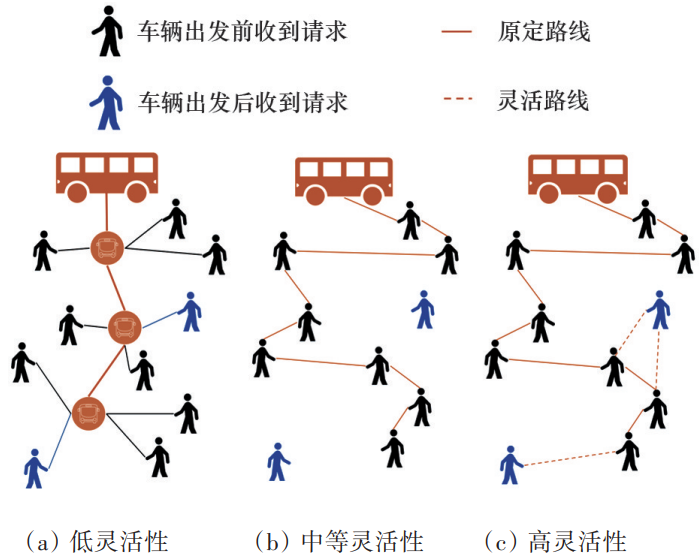
Figure 1 Illustration of Customized Bus Flexibility
Operators can enhance the attractiveness of their services by better meeting the travel demands of potential passengers, reasonably scheduling vehicles based on passengers’ boarding locations and time preferences, improving the identification and forecasting accuracy of diverse passenger demand characteristics, and further designing and providing various flexible services and pricing mechanisms. Currently, customized buses are gradually transitioning from low flexibility to dynamically responsive flexible services. Using various vehicle models can better adapt transport services to demand levels. Research shows that employing smaller vehicles can better achieve flexible services, but it also needs to address fleet size issues. More precise demand forecasting helps determine the required number of vehicles and their capacities. Using modular vehicles to adjust interior capacity can adapt to dynamic demand changes, but it also faces new challenges in optimizing routes and coordinating scheduling with modular vehicles in complex urban road networks.
Customized Bus Route Design Considering Fairness
Customized buses provide comfortable and fast services for passengers with similar travel demands. Their route design must achieve a balance among passenger interests, operator benefits, and social welfare. Different optimization objective functions and constraints need to be considered for different target stakeholders. From the passengers’ perspective, the primary optimization objectives include minimizing travel time, minimizing walking distance, maximizing service coverage, and ensuring high reliability; from the operators’ perspective, the goal is to serve as many passengers as possible at the lowest operational cost, with optimization objectives including minimizing total operational mileage, minimizing the number of operating vehicles, minimizing vehicle operational costs, maximizing profits, and minimizing the total system cost formed by various linearly weighted costs. From the perspective of social welfare, the main optimization objectives for customized bus route design include enhancing the coverage and service level of public transport, alleviating traffic congestion and environmental pollution, and formulating reasonable fare strategies to promote travel fairness. Incorporating fairness indicators into the optimization objectives of customized bus route design seeks to find optimal path planning solutions.
Service Range and Population Served
The primary issue currently facing customized buses is their low market share, with too few routes capable of responding to demands and dynamic scheduling, making it challenging to meet passengers’ irregular travel needs. Most customized bus route designs focus on daily commuting within cities. From a fairness perspective, customized buses should consider expanding service coverage equitably to serve areas often overlooked or inconvenient for public transport. This can help reduce regional disparities and ensure everyone has access to fair transportation services. Additionally, route designs should avoid significant overlaps with traditional buses to enhance the service range of public transport. Zhang et al. studied the route optimization problem for rural demand responsive buses, aiming to minimize operational costs for operators and travel time costs for passengers. The designed optimization model and hybrid algorithm can provide theoretical references for operating demand responsive customized bus routes in rural areas.
Customized buses should offer diverse services based on different passenger needs, including barrier-free facilities for disabled individuals, assistance services for the elderly, and child safety seats for families. By meeting the needs of different groups, service fairness can be ensured. Zhou Zheng et al. conducted surveys and organized analysis of a specific number of bus IC card data, designing customized bus routes and schedules specifically for the elderly based on their travel needs and concerns, improving their bus travel experience and ensuring their travel needs and safety. Customized bus services effectively expand the types of public transport services and create conditions for better public transportation services.
Before designing customized bus routes, it is necessary to collect passenger travel demands and allow sufficient time for route planning. How customized buses can reasonably respond to passengers’ dynamic travel demands during operation while ensuring operational profitability is a key issue for ensuring the fairness and sustainability of customized bus services. Research findings propose various feasible solutions, including considering dynamic demand responses and designing flexible demand response services. Wang Yiran et al. considered issues such as handling late passengers and calculating route operational profits, proposing a dynamic response scheme for customized buses that can address potential dynamic demands and unexpected situations like passengers being late or missing the bus during vehicle operations while ensuring bus operational profits and service fairness. Wang et al. introduced time penalty costs to adapt to the impact of early and late arrivals on passenger satisfaction, establishing a routing optimization model to minimize system operational costs and passenger time loss costs. Wang et al. proposed a more flexible demand response service, considering the soft time windows of bounded rational passengers, establishing compensation mechanisms to alleviate passenger dissatisfaction while significantly improving system efficiency. Dou et al. embedded a random variable describing the potential rejection of bus services by passengers and two related control parameters into a mixed-integer linear programming model to capture the risk-averse level of operators in uncertain demand environments, achieving a tunable robust optimization model for complex decisions regarding bus routes, timetables, and bus scheduling, aiming to generate a set of profitable bus services that meet different commuting travel demands. These schemes can handle unexpected situations, optimize system efficiency, and improve passenger satisfaction while ensuring operational profits and service fairness.
Reasonable Fare Strategies and Public Welfare Guarantees
Traditional buses have significant public welfare attributes, generally adopting low fares below operational costs, with the fare difference requiring corresponding financial subsidies to maintain the continuity of bus service supply. Customized bus fares are higher than traditional buses, but without subsidies, fare revenues are still insufficient to cover vehicle operating costs. The debate over the relative superiority of the public welfare and market development paths of customized buses continues. Yue Hao et al. introduced the concept of price windows to describe the acceptable payment range for passengers during travel; they proposed a fare payment assumption rule of excess sharing, allowing passengers to pay the least amount while ensuring travel. Customized buses are positioned as auxiliary supplements to traditional buses and should develop in a differentiated manner, with distinct operations. As there are currently no urban customized bus operation management measures issued at the national level, most local cities adopt fully market-oriented operational models. It is suggested that moderate subsidies be provided for some public welfare routes in the future to enhance the fairness of public transportation. Jiang Rui et al. established a competitiveness evaluation model through numerical quantification of total travel costs, quantitatively analyzing the competitiveness of customized bus routes relative to conventional bus routes, achieving coordinated development of customized and conventional buses through different guiding strategies. Gong Huawen et al. constructed a fare game model for customized and ordinary buses, maximizing ticket revenue as the game objective, with results indicating that reasonable fare schemes can facilitate balanced development conditions for both customized and ordinary buses, promoting coordinated development of different bus modes and achieving urban public transport prioritization goals.
In summary, customized bus route planning should consider both passenger and operator interests while focusing on broader social benefits and sustainable development.
Evaluation of Customized Bus Systems
Currently, domestic and international research on demand responsive buses primarily focuses on operational scheduling, with limited attention paid to system service level evaluations. The comprehensive evaluation system for customized bus systems is fundamental to gaining a thorough understanding and effective assessment of the system, providing scientific basis for system organization optimization, operational cost control, and government macro-control.
Passenger Perception Evaluation: Satisfaction and Loyalty
Passenger perception satisfaction is a core issue in the study of customized bus travel, helping researchers and decision-makers understand passenger satisfaction levels with customized bus services and providing references for service improvement. In recent years, many studies have focused on the satisfaction of customized bus travel, employing various methods and indicators. Gong Huawen et al. proposed establishing an evaluation system for flexible customized bus systems from three perspectives: passenger perception (service recipients), bus operation (service providers), and government management (service supervision). Amirgholy et al. identified three main factors that directly or indirectly influence the service level of demand responsive bus systems: demand characteristic factors, network factors, and operational factors. Common methods include collecting passenger feedback through surveys. Lu Xiaolin et al. used surveys to assess passenger overall satisfaction with customized bus services, vehicle comfort, waiting times, and other aspects. He Min et al. considered passenger comfort and other satisfaction indicators during route design.
Lai et al. pointed out that passengers’ willingness to use or loyalty significantly depends on their satisfaction. Jomnonkwao et al. found that user satisfaction with bus services has a significant and direct impact on loyalty levels, proving that perceived value, service quality, service expectations, and travel experiences positively influence loyalty. Currently, most research focuses on fare discounts for new passengers, without considering the design of benefits for loyal users, directly affecting demand stability and leading to poor route sustainability, short system lifespan, and low survival rates. Wang et al. established a survival model based on long-term subscription records and OD information of customized bus users in Dalian, confirming that saving travel time and reasonable fare discounts help improve the loyalty of customized bus users, but the effects differ between loyal and non-loyal users. Further research found that reducing fares has a more significant effect on increasing subscription frequency for loyal users, and designing benefit strategies that encourage long-term use for loyal users is beneficial for enhancing the survival rate of customized bus systems. Short-term fare discounts have a strong appeal for new users, significantly increasing their subscription frequency, but they do not convert them into loyal users. The planning of customized bus systems needs to design fare discount strategies for new passengers while also fully considering the design of benefits for loyal users, continuously enhancing the entire demand evolution chain from improving service attractiveness to increasing the conversion rate of loyal users, thereby improving the sustainability and survival rate of customized bus routes and systems.
Operational Evaluation: Fairness, Efficiency, and Sustainable Development
By collecting and analyzing operational data of customized bus systems, such as passenger flow, vehicle operating times, and punctuality rates, the operational efficiency and service levels of the system can be evaluated. Zhang Ruhua et al. extracted factors affecting operational service levels from three dimensions: segment service levels, station service levels, and onboard service levels, including indicators such as station coverage rates and peak load rates, conducting research on the operational service levels of demand responsive buses and evaluating the actual operational service level of Qingdao City as “high.” Transportation fairness is increasingly emphasized in more transportation planning objectives. Jin Yudong applied cumulative opportunity accessibility models and spatial analysis methods to analyze the impact of customized buses on urban transportation fairness and accessibility in Dalian City, showing that customized buses significantly enhance the accessibility of residential areas, industrial parks, transportation hubs, and shopping malls, especially for medium to long-distance travel.
According to sustainable development goals, standards are needed to quantify social benefits and costs. Nguyen-Hoang et al. modeled travel demand as a function of price, system characteristics, factors influencing travel mode choices, other demographic and location characteristics, and error terms, modeling travel costs as a function of unobserved costs (such as output, input prices, and uncontrollable external factors) and efficiency, confirming that the overall benefits of demand responsive customized buses far exceed their cost inputs.
Customized buses respond to the requirements of the dual carbon goals, and the assessment of their impact on energy conservation and emissions reduction is timely. Dytckov et al. studied the carbon emissions and air pollutant emissions of customized bus systems and their environmental advantages compared to traditional bus systems and private cars. Ryley et al. analyzed the contributions of demand responsive bus systems to urban transportation sustainability, proposing corresponding policy guidance for six service scenarios, including rural travel, airport connections, railway station connections, commuting, and medical travel, and suggested that environmental sustainability should be considered from the perspective of alternative solutions (usually buses or cars) rather than merely comparing absolute levels. Dessouky et al. suggested that the environmental impact of demand responsive travel systems should be assessed using a full lifecycle impact assessment method, rather than only evaluating environmental impacts during vehicle routing and scheduling optimization phases. The use of electric buses has also become a research hotspot, as this new type of green energy transportation tool is bound to make a major contribution to urban green transportation. How to combine the operational needs of customized buses with the energy consumption and replenishment limitations of electric buses has also become a significant research issue in recent times.
This article analyzed the research hotspots of customized bus systems over the past decade, summarizing relevant research findings on route planning and system evaluation. Among them, fairness plays an important role in the route planning and system evaluation of customized buses, with researchers considering the service fairness of different passenger groups, including vulnerable groups, and integrating fairness indicators into route planning optimization objectives. The article summarizes evaluation indicators including passenger satisfaction and loyalty, fairness efficiency of customized bus systems, and sustainable development, effectively assessing the evolution of demand for customized bus travel. Future research should focus on the need to consider the demand differences among different passenger groups, integrating demand response strategies with route planning and operational scheduling. Additionally, empirical research and case analysis should be strengthened, segmenting the customized bus service market to test the adaptability of diverse and customized service products in different travel scenarios and varying market shares.
Authors of this article: Liu Kai, Wang Jing, Lian Zhirui, Wang Jiangbo
Author Information: Liu Kai, Professor at the School of Economics and Management, Dalian University of Technology, research direction in transportation behavior analysis and system optimization; Wang Jiangbo (corresponding author), Associate Professor at the School of Economics and Management, Dalian University of Technology, research direction in travel behavior modeling analysis and prediction.
The original article was published in the “Science and Technology Review” 2024, Issue 3. Subscriptions are welcome for viewing.
This content is original from the “Science and Technology Review” public account, and reprints are welcome.Whitelist reply “reprint” in the background.
Highlights Review
Research Progress on the Impact of Community Environment on Leisure Physical Activity from a Health Perspective | Science and Technology Review
Research Progress on the Measurement and Differentiation of Public Transport Accessibility Fairness | Science and Technology Review
Research Progress on the Impact of Subway Accessibility on Life Satisfaction | Science and Technology Review
Review of Research Hotspots on Magnesium-Based Hydrogen Storage Materials in 2023 | Science and Technology Review
Research Progress on the Fairness of Shared Travel | Science and Technology Review
