Device-related thrombus (DRT) remains one of the main issues following left atrial appendage occlusion (LAAO). Among the known risk factors, most are unmodifiable. Device implantation depth, as a modifiable factor, holds promise as a potential means to reduce the risk of DRT. A recent article published in JACC: Cardiovascular Interventions assessed the impact of LAAO device implantation depth on DRT occurrence.
Research Methodology
The study included 1,317 patients undergoing LAAO across 9 centers in Europe and Canada, divided into two groups: the proximal device implantation group (subdivided into two subgroups based on the type of implanted device: covering the pulmonary ridge (PR) (disc occluder group) or <5mm from PR (plug occluder group)) and the distal device implantation group (not covering PR (disc occluder group) or ≥5mm from PR (plug occluder group)).
The primary endpoint was the effect of device implantation depth on the incidence of DRT, while secondary endpoints included evaluating DRT incidence based on the area or angle between PR and the device surface and the type of occluder.
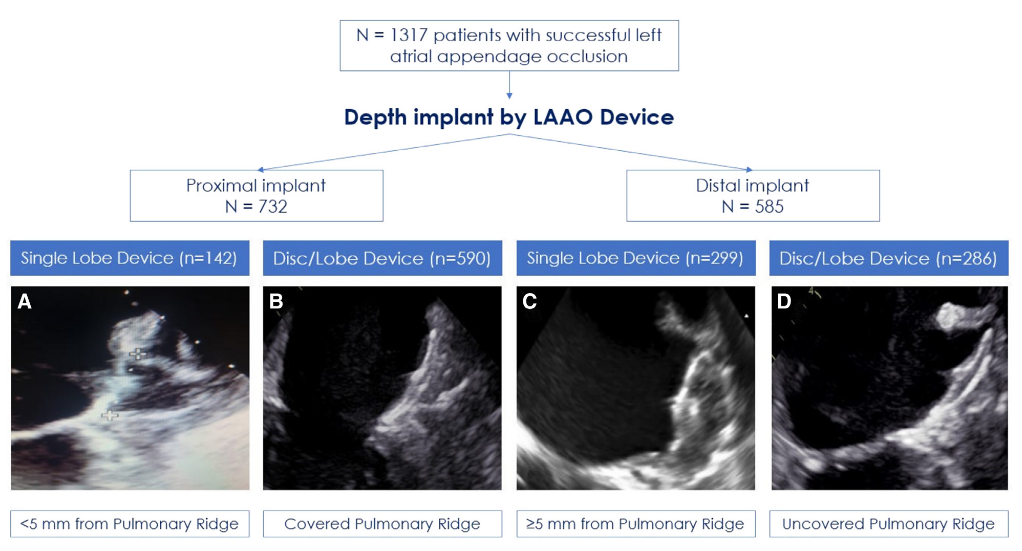
Figure 1: Grouping Diagram
Research Results
In the proximal implantation group, there were 732 cases (55%), including 142 plug devices and 590 disc devices; the distal implantation group had 585 cases (45%), including 299 plug devices and 286 disc devices. The median follow-up period was 21 months (IQR: 12–39 months), with annual rates of ischemic stroke and major bleeding (BARC type ≥3) at 1.09% and 4.9%, respectively, with no statistical difference between the two groups.
A total of 83 patients (6.7%) in both groups were found to have DRT, with the DRT incidence in the proximal implantation group (2.3%) being lower than that in the distal implantation group (12.2%) (P<0.001). For the two clinically commonly used occluders, deeper implantation or larger uncovered area of the left atrial appendage was associated with a higher incidence of DRT (P<0.001).
The incidence of DRT gradually increased with increasing implantation depth. Notably, when the device was implanted more than 15mm from PR, the DRT incidence for plug and disc devices was 21.6% and 18.6%, respectively, while in the proximal implantation group, it was 1.5% and 2.5% respectively (plug group P<0.005, disc group P<0.001). The effect of increased implantation depth on DRT incidence varied by device type; for the disc group, the DRT incidence began to show significant changes when the implantation depth exceeded 1mm (1-5mm was 6.3%, 5-10mm was 9.7%, 10-15mm was 11.6%), while in the plug group, the DRT incidence only began to increase significantly when the implantation depth exceeded 5mm (5-10mm was 3.9%, 10-15mm was 13.8%, >15mm was 21.6%).
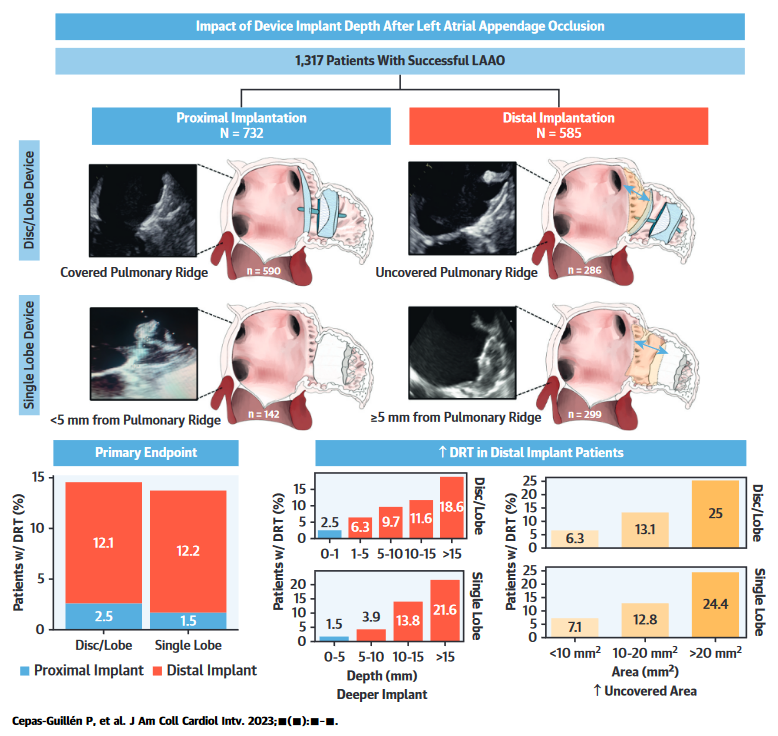
Figure 2: The Deeper the Device Implantation, the Higher the Incidence of Device-Related Thrombus
Research Conclusion
This is the first study specifically evaluating the impact of LAAO device implantation depth on DRT occurrence. The results indicate that the depth of LAAO device implantation affects the incidence of DRT; the deeper the implantation and the larger the uncovered area, the higher the incidence of DRT. For patients undergoing LAAO, proximal device implantation should be the optimal target pursued by operators.
Research Significance
With the accumulation of clinical evidence, LAAO is expected to become a Class IA recommendation for stroke prevention in atrial fibrillation treatment guidelines. Since the initiation of LAAO, regardless of the postoperative antithrombotic treatment strategy (dual antiplatelet, single antiplatelet, oral anticoagulants, or no antithrombotic), the incidence of DRT is approximately 2%-6%. This study shows that, compared to plug occluders, deeper implantation of disc occluders is more likely to lead to DRT. Therefore, optimal implantation depth is particularly important to reduce the incidence of DRT for disc occluders. Additionally, if deep implantation cannot be avoided during the procedure, it is even more crucial to emphasize postoperative dual antiplatelet or oral anticoagulant therapy.
Besides implantation depth, what other factors are related to device-related thrombus in left atrial appendage occlusion? How can patient management be optimized during and after the procedure to avoid device-related thrombus? When deep implantation cannot be avoided, how should postoperative management be enhanced? In response to these questions, a specially selected course on the Yandao Open Class platform addresses these issues. If you want to further learn about device-related thrombus in left atrial appendage occlusion, please scan the QR code to add “Yandao Learning Assistant Xiaoxian” and get the course link.
References:
Cepas-Guillén P, Flores-Umanzor E, Leduc N, et al. Impact of Device Implant Depth After Left Atrial Appendage Occlusion. JACC Cardiovasc Interv. 2023 Jun 30:S1936-8798(23)00909-3.
· END ·
Copyright and Disclaimer:
Yandao Medical Voice Network aims to build a media platform for academic dissemination by medical experts and giving voice to healthcare professionals. All articles published through the “Yandao Medical Voice Network” WeChat official account, APP, and website have their content copyright belonging to the holder; we only provide information transmission services.
1. Yandao Medical Voice Network reserves the right to technically process/delete content;
2. For reprinted or shared content, Yandao Medical Voice Network will indicate the author and source;
3. The published articles do not represent the position/view of Yandao Medical Voice Network; if there are errors in the content, please feel free to correct them; 4. For content whose source cannot be confirmed, if there are copyright or dispute issues, we do not intend to infringe on your rights; please promptly contact us, provide the URL of the content and relevant proof materials, and we will immediately correct or delete the relevant content after verification. This account does not assume any responsibility and has the final interpretation of this statement.
For more information, click “Read Original” to download “Yandao Medical Voice APP”