

Is this a marketing coincidence of players being “off-task”? Or does it truly hint at the future development direction of the industry?
Author I JiepingEditor I WenliangSource I Leiphone (ID: leiphone-sz)
While autonomous driving has not yet truly hit the road, major automotive companies are attempting to further expand their territories, setting their sights on the robot market.On September 7, Xiaopeng Motors released its first intelligent robotic horse, “Xiaobailong”.On August 20, Tesla announced it would launch a humanoid robot, “Optimus”, next year.On August 18, Baidu first mentioned its ideal autonomous driving concept car, the “Car Robot”.On August 10, Xiaomi showcased its first-generation bionic robot, CyberDog “Tiedan”, at its new product launch and announced the establishment of the Xiaomi Robot Laboratory.Within a month, the term “AI robots”, which is not exactly new, has frequently appeared in the intelligent driving industry, sparking numerous speculations.Is this a marketing coincidence of players being “off-task”? Or does it truly hint at the future development direction of the industry? What gives intelligent driving companies the confidence to venture into “AI robots”?If they enter the robot market, what type of robots would be more suitable?
01
Stirring Restlessly
At least Musk has hinted at Tesla’s potential to develop robots early on.During the earnings call on April 27 this year, Musk stated that while people currently view Tesla as a car company or an energy company, in the long run, because Tesla has one of the world’s strongest hardware and AI software teams, it will also be an AI robot company.Tesla is indeed taking steps in practice“Because we have already manufactured wheeled robots (Tesla cars), we now have almost all the components needed to manufacture humanoid robots.” According to information released by Musk on Tesla AI Day on August 20, the prototype of Tesla’s humanoid robot, Tesla Bot, will be launched next year, capable of doing household chores and repairing cars, intended to replace humans in repetitive, dangerous, and boring tasks.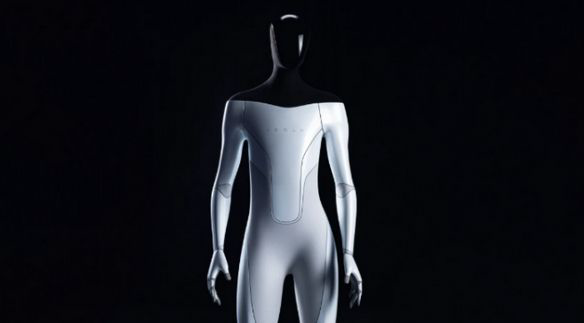 From the official information released, the Tesla Bot prototype resembles a human, standing about 1.73 meters tall, weighing 56.7 kilograms, with a movement speed of 8 kilometers per hour, capable of lifting up to 20 kilograms, and featuring a head screen for displaying information.Specifically, the Tesla Bot is equipped with an FSD computer and Autopilot cameras, has a total of 40 joints, and its feet have force feedback sensors, utilizing almost all the sensors found in Tesla cars.
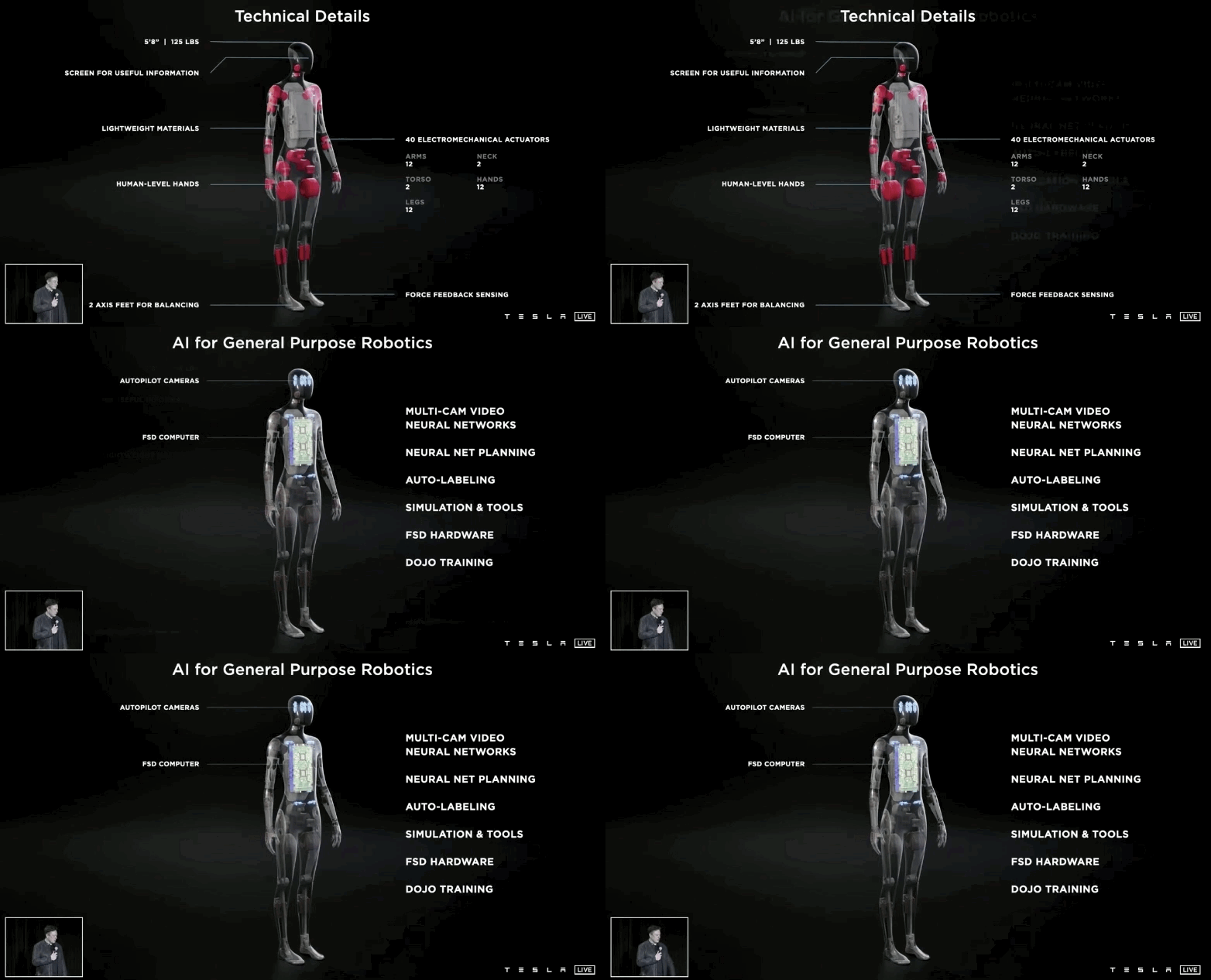 At the end of August, Tesla also began recruiting robot experts related to the Tesla Bot, announcing 12 new positions including mechanical engineers, senior humanoid robotic architects, senior humanoid modeling robotic architects, and embedded firmware engineers.Unlike Tesla’s humanoid robot, Baidu’s concept for its robot is more based on existing autonomous vehicles, making it a broader form of wheeled robot.
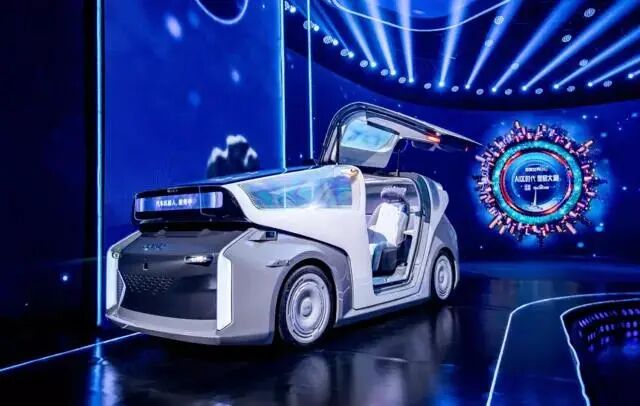 According to Li Yanhong’s vision, the ideal state of the autonomous driving concept car, the “Car Robot”, will have no steering wheel, accelerator, or brake, replaced instead by a large curved screen and an intelligent control panel.
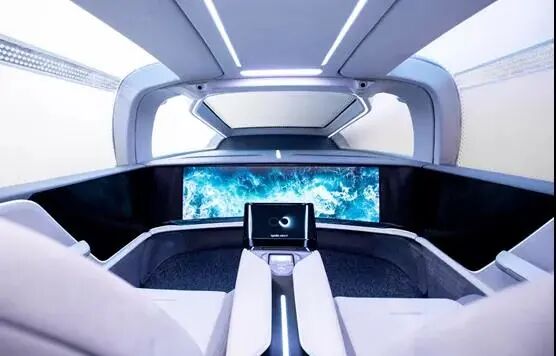 While possessing Level 5 autonomous driving capabilities, the Car Robot will also have voice and facial recognition interaction capabilities, and it should be able to continuously learn and upgrade to provide driving and service that meets passenger preferences.
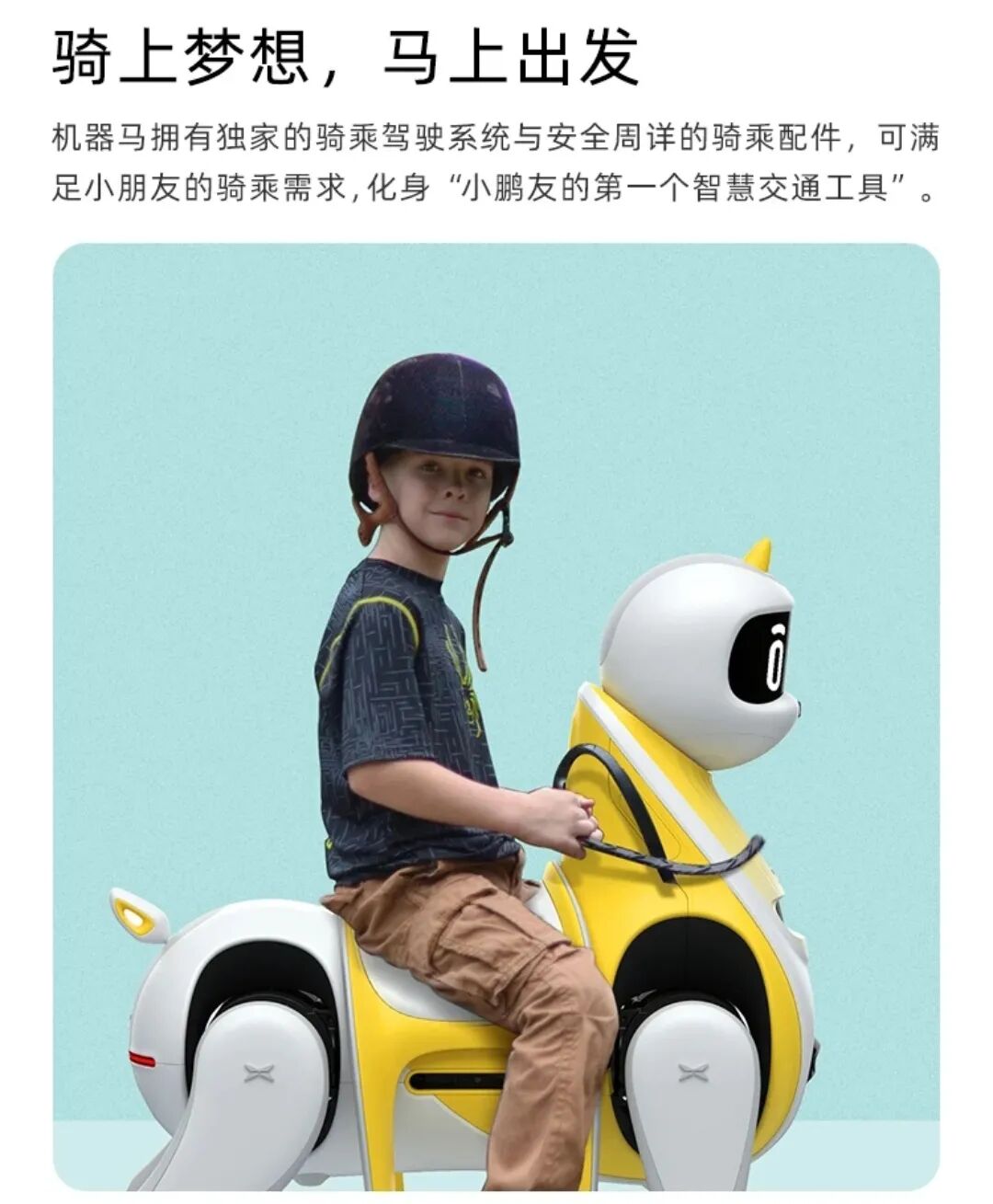
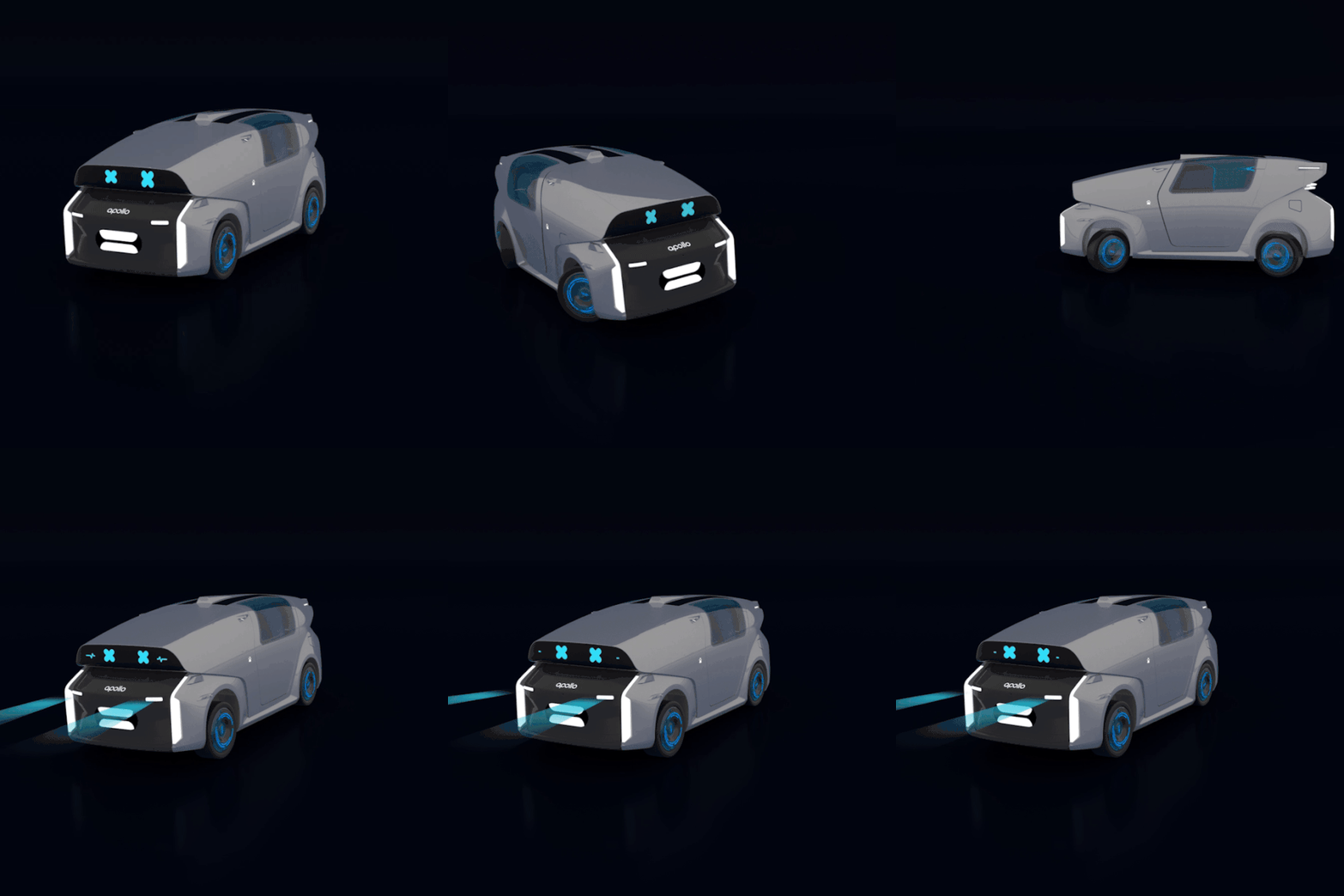 “The Car Robot is different from what everyone imagines a car to be; it will actually be more like a robot, and this will be the direction of the evolution of cars in the future,” Li Yanhong stated at a previous press conference.Compared to the more “technological” robot concepts of Tesla and Baidu, Xiaomi and Xiaopeng’s quadruped robots, “Tiedan” and “Xiaobailong”, are much more down-to-earth. For instance, “Xiaobailong” is designed to be rideable, positioned as a child’s first smart transportation tool, while “Tiedan” has brought the price of quadruped robots down to below ten thousand yuan.
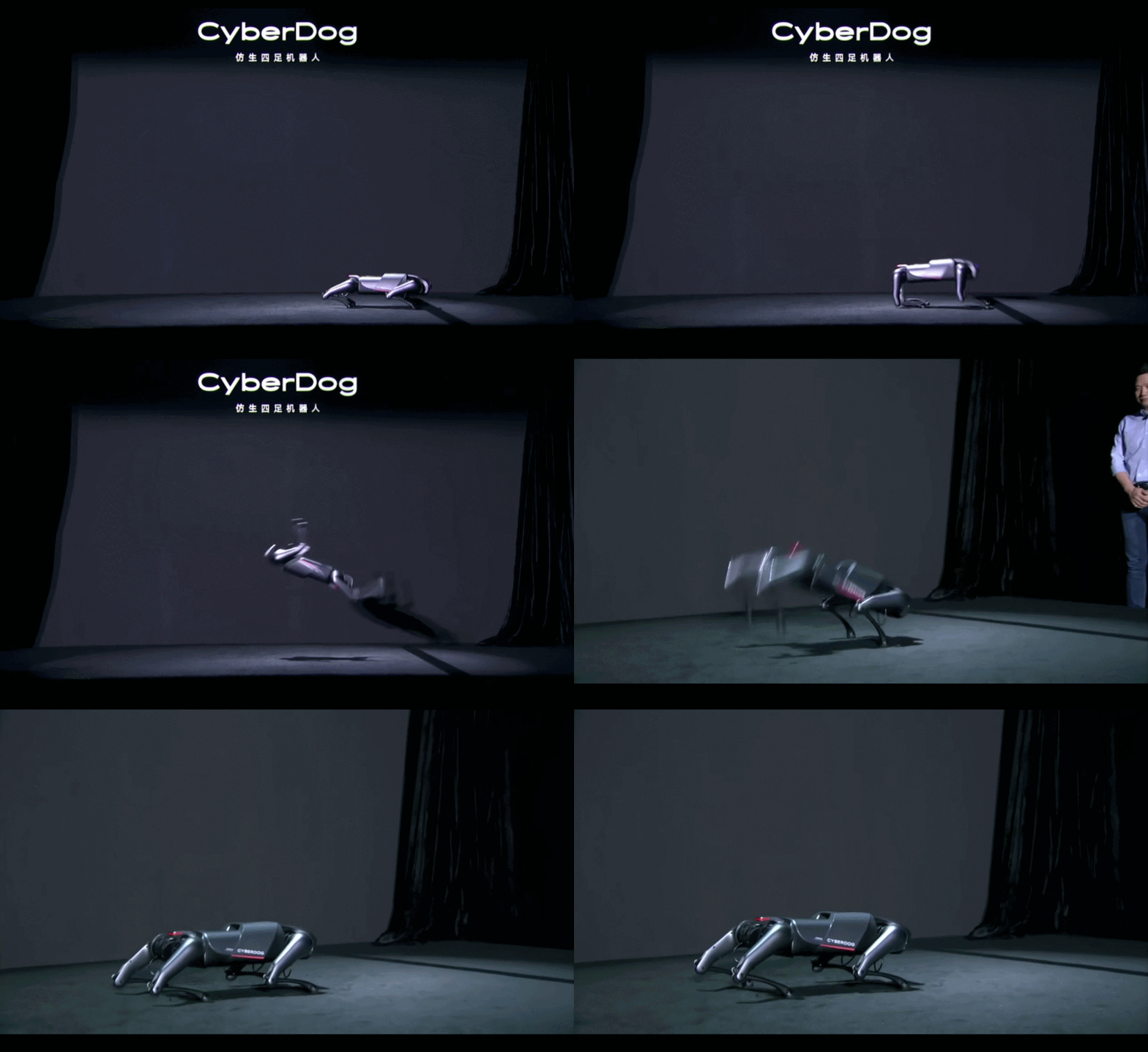 Xiaomi’s “Tiedan”It is understood that the motor technology controlling the leg movements of “Tiedan” comes from Xiaomi’s Mijia vacuum cleaner, and the core algorithm is based on the open-source MIT Mini Cheetah and the open-source Robot Operating System ROS 2. “Xiaobailong” integrates Xiaopeng Motors’ self-developed intelligent driving technology, and to explore more functions of “Tiedan”, Xiaomi will also establish the Xiaomi Robot Laboratory and set up a “robot open-source community”, while Xiaopeng is actively recruiting talent related to robotics through its Pengxing Intelligent Team.
 Traditional automotive companies will certainly not be absent, and they even entered earlier; after all, the world’s first truly bipedal walking robot, ASIMO, was developed by Honda.Among traditional automotive companies, Hyundai is the most aggressive in laying out its robot business.In June of this year, Hyundai announced the completion of its acquisition of the bionic robot development company Boston Dynamics, and prior to that, in September 2020, Hyundai also established a studio focused on Ultimate Mobility Vehicles (UMV), hoping to redefine vehicles through the combination of robotic technology and wheeled motion technology.
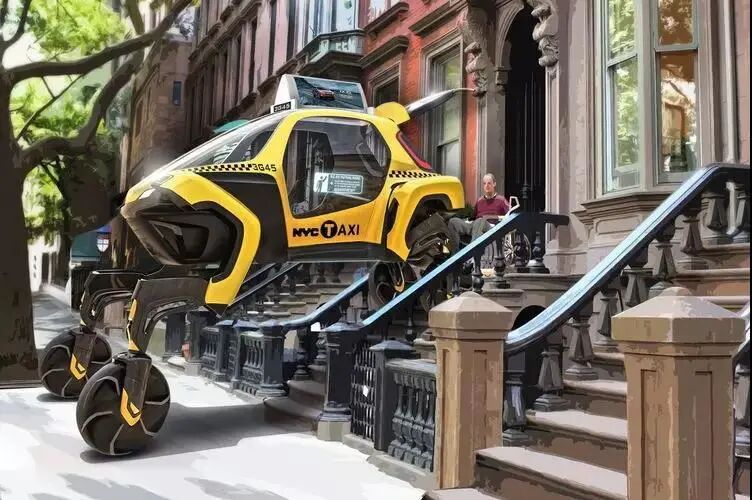 Hyundai’s concept car robot “Elevate”
02
What are the Commonalities?
So what are the commonalities between robots and autonomous driving technology? Or rather, why are companies like Tesla and Xiaopeng capable of developing robots?In fact, the three key technologies common to autonomous vehicles and robots are: environment perception, planning and decision-making, and execution control.Lu Zhangyuan, director of the High-tech Robot Industry Research Institute, told New Intelligence Drive that autonomous vehicles can be seen as another form of robots, with the distinction being that robots focus more on human-like attributes, while cars focus more on vehicle attributes.“In fact, autonomous vehicles are also a form of robots, but autonomous vehicles mimic human driving behavior, while robots mimic humans in a comprehensive manner, including body movements, interaction behaviors, learning abilities, etc.” said Pang Jianxin, vice president and deputy dean of the research institute of UBTECH, to New Intelligence Drive.In recent years, Toyota has been focusing on researching the application of artificial intelligence technology in both cars and robots, and has also released several bionic robots.Toyota’s chief scientist and CEO of the Toyota Research Institute, Gill Pratt, previously stated in an interview that outdoor vehicles and indoor robots actually perform very similar tasks; they both transport people and goods from one place to another to meet people’s living needs.“The level of automation required for different uses varies, but the required sensing, perception, and decision-making technologies are almost the same, so we believe that the research results of artificial intelligence will have very broad applications in both the automotive and home robot fields,” Gill Pratt believes.For example, in 2017, when most vacuum robots had not yet established accurate indoor maps and were far from growing as rapidly as they do today, the autonomous driving team at 360 Company launched a vacuum robot based on Lidar-Slam laser radar, ultrasonic, odometer, gyroscope/accelerometer, achieving mapping, environmental positioning, obstacle perception and avoidance, route planning, and control.In addition, the gradual open-sourcing of the motor drivers and code for MIT’s bionic robot laboratory’s robot dog, Cheetah Mini, and the existence of the open-source Robot Operating System (ROS) have made robot development modular, significantly lowering the threshold for robot software development.In fact, Baidu’s Apollo also uses the ROS operating system, but with corresponding customizations for autonomous driving needs.Moreover, in terms of hardware platforms, autonomous vehicles and robots can also achieve basic compatibility.For instance, NVIDIA’s autonomous driving processor platform (NVIDIA DRIVE) can meet the high performance and high computing power required for both autonomous vehicles and robots.However, the differences between robots and autonomous driving technology are also quite evident. Overall, robots emphasize both software and hardware, while autonomous driving companies may have stronger advantages in software.Pang Jianxin stated that this is due to the different scenarios in which autonomous vehicles and robots are used, and the problems they need to solve will also differ.In most cases, autonomous vehicles operate on roads, in structured environments, and the decisions they make must comply with established traffic rules. For safety reasons, the perception systems of autonomous vehicles need to be foolproof.Most of the work scenarios for robots are unstructured, with no rules, and obstacles are often dynamic, making it comparatively more complex.“Due to limitations in structural form, cost, and other reasons, most robots’ perception capabilities are weaker than those of autonomous vehicles,” Pang Jianxin said.Technically, the challenge for intelligent driving companies to develop bionic robots lies in the fact that while companies currently have a relatively mature control process for vehicles, they only have four wheels, and modern vehicles generally use the Ackermann steering mechanism. In contrast, robots, which focus more on mobility robustness in unstructured environments and often have dozens of joints, require intelligent driving companies to invest more effort in motion control and corresponding engineering capabilities. Tesla has also recognized this, as evidenced by the Tesla Bot-related positions it is currently recruiting for, most of which are related to this.
03
The Logic Behind Automotive Companies Developing Robots
After years of development, robots can be subdivided into industrial robots, service robots, and special robots based on application scenarios. From the perspective of mobility methods, robots are mainly divided into legged robots and wheeled robots.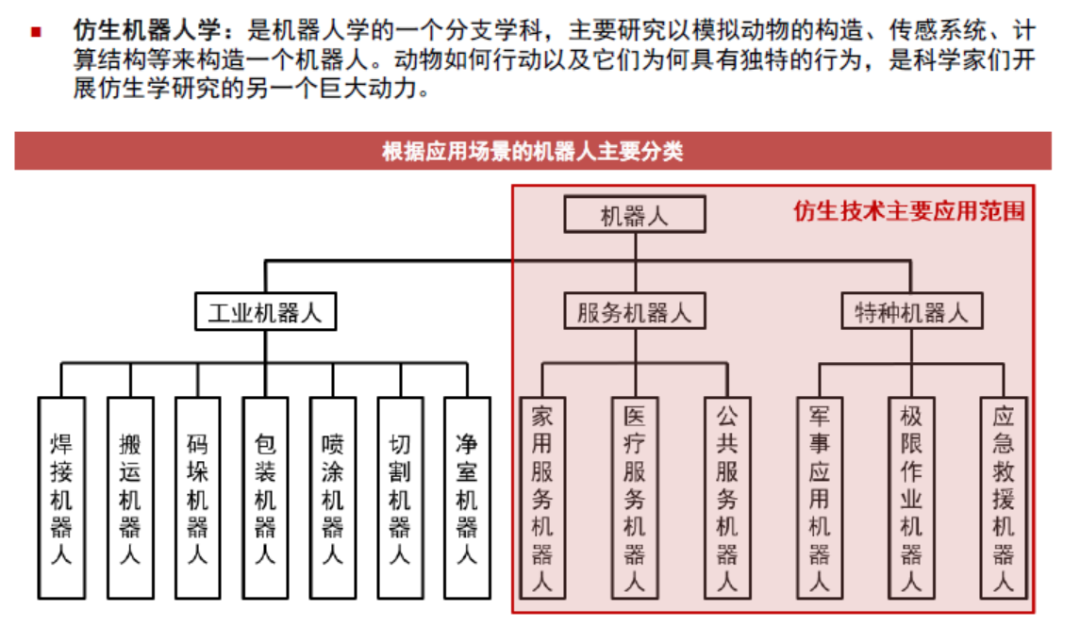 Based on existing autonomous driving technology, both Pang Jianxin and Lu Zhangyuan believe that related intelligent driving companies are more suitable for developing wheeled robots.Smart cars = smart cockpit + wheeled robots + intelligent driving — to some extent, smart cars can be described so broadly.Indeed, as development has progressed, the conceptual boundaries between mobile robots and smart cars are often blurred in certain scenarios.Qin Baoxing, CTO of Gaoxian Robotics, stated in an interview, “If you close your eyes and imagine a spectrum, this spectrum represents the entire mobile robot field, with the infrared end being the household vacuum robots that have already landed, and the ultraviolet end being the L4/L5 level unmanned vehicles with extremely complex scenarios that are still far from realization. The broad visible light area in the middle represents the mid-low speed scenarios.”
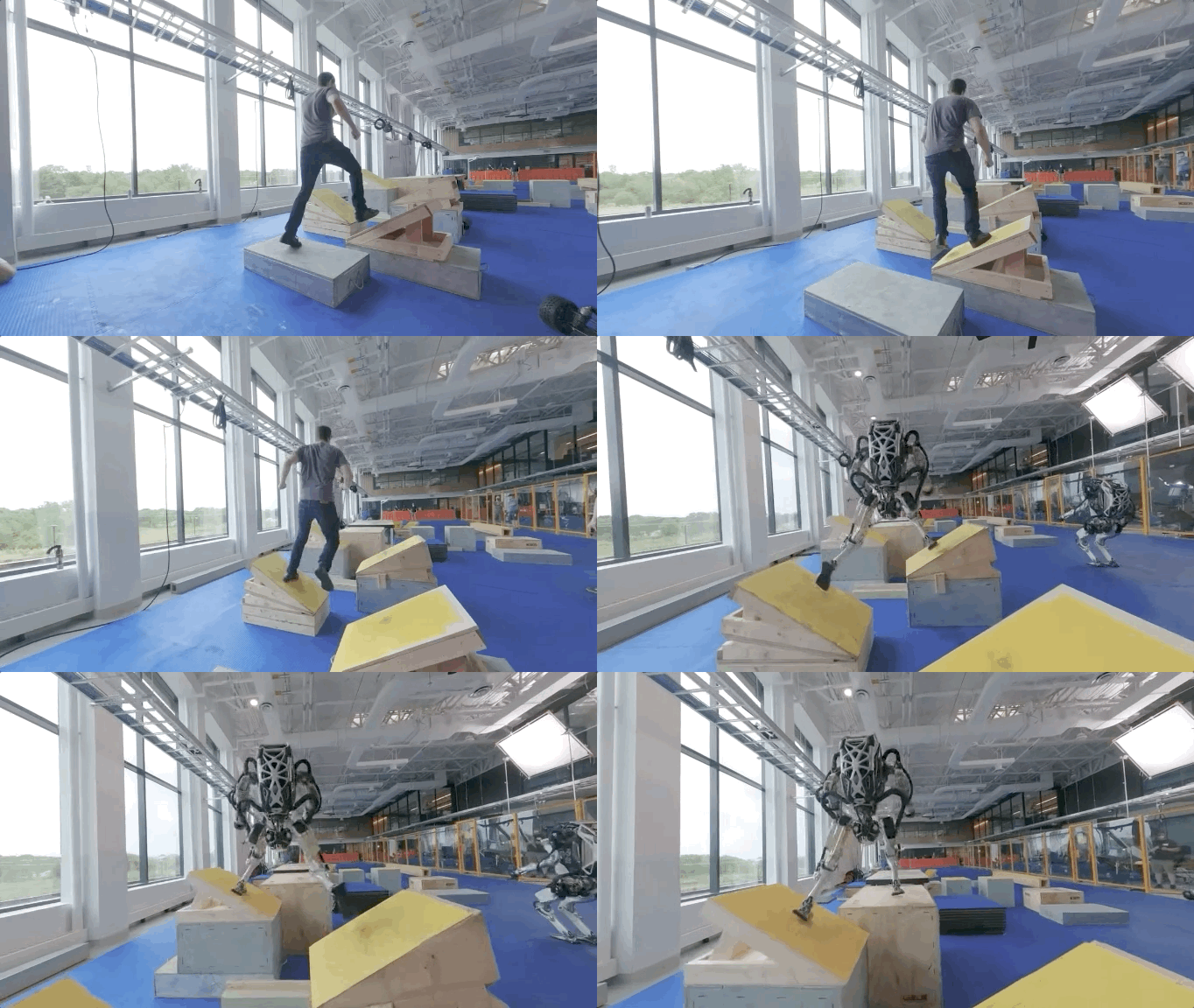
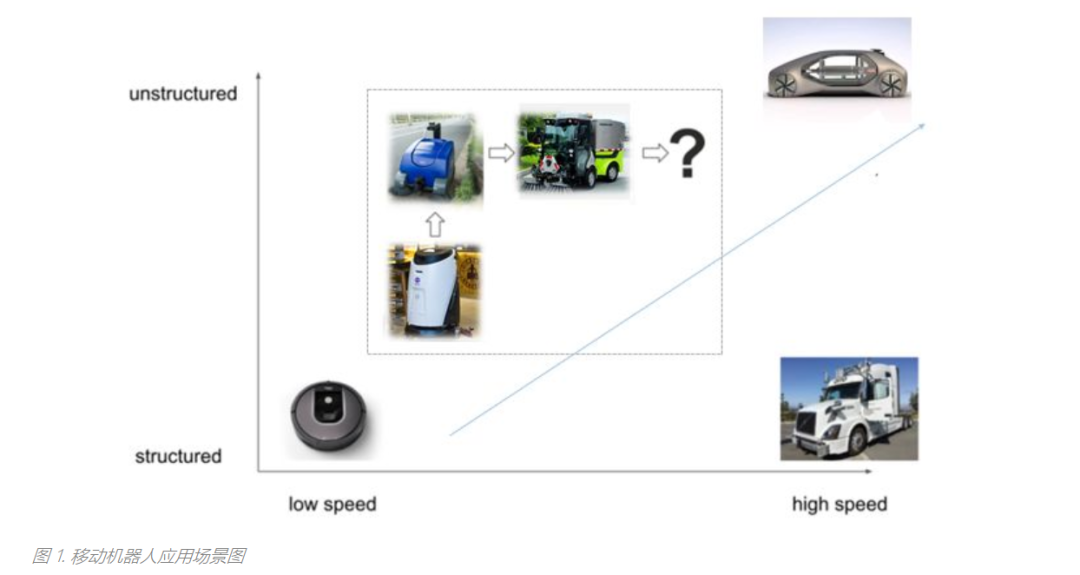 The mid-low speed scenarios he mentioned include security patrols, last-mile delivery, cleaning and sanitation, and campus logistics, all of which are currently the broad markets that mobile robot companies and intelligent driving companies are targeting for development and are ready to make significant moves.Legged robots are also gradually developing; for example, Boston Dynamics’ robot Atlas has now mastered parkour abilities and has developed several commercialized robotic dogs, attempting to be used for extreme operations and emergency rescue.
 However, due to immature technology and high costs, legged robots have remained lukewarm in recent years. “For example, current AI technology cannot even handle basic interactions, and there have been no significant improvements in battery performance or control technology,” Pang Jianxin stated.If companies attempt to expand cash flow through robots in the short to medium term, it may not be so smooth.This is because the commercial development of robots requires not only technological and product advancements and maturity but also the matching and fulfillment of essential scene needs.Lu Zhangyuan also believes that service robots started later than industrial robots; currently, apart from household vacuum robots achieving rapid growth, other 2B market service robots are still in the stage of exploring scenarios. The rapid development of delivery robots after the pandemic is a typical catalytic effect, “while medical robots belong to high technical barrier and high customer barrier fields, where technology and cost remain issues.”As for why automotive companies are diving into the robot market, independent economists and financial commentators explained to New Intelligence Drive:The automotive industry is already in a highly prosperous stage, with traditional cars showing signs of excess and decline. Meanwhile, internet and technology companies have also experienced industry development dividends, leading to fierce market competition. Therefore, traditional automotive companies have the impulse to develop towards intelligence and new energy, while internet technology companies are also motivated to move towards hardware development.“Smart cars and new energy vehicles have become the intersection direction of old and new industries. It should not be surprising that cars are making smart robots, and more automotive companies will follow suit in the future.”Several industry practitioners in robotics have also expressed to New Intelligence Drive that the hype surrounding Tesla, Xiaomi, and Xiaopeng’s robots is greater than their practicality.After the launch of Xiaopeng’s “Xiaobailong”, there were many complaints about its design, functional positioning, and cost-effectiveness, as “Xiaobailong” seems to struggle to find suitable usage scenarios.For instance, the positioning of “Xiaobailong” is for children to ride, which is feasible indoors, but once outdoors on slopes, stairs, grass, or loose surfaces, and carrying a child, achieving balance and navigation in complex conditions with multi-joint coordination algorithms becomes a significant challenge.Additionally, if “Xiaobailong” is to be used outdoors, necessary configurations such as laser + visual navigation modules, following modules, load-bearing capabilities (high load), high-power lithium batteries, IP protection ≥ 5, along with voice interaction modules and facial recognition functions, would not come cheap, likely exceeding ten thousand yuan.“Let me ask all the mothers, who would be willing to spend ten thousand yuan to buy it just to let their son or daughter ride it occasionally? Aren’t flat scooters, balance bikes, or skateboards more appealing?” someone raised such a soul-searching question.
04
Conclusion
Of course, the reasons for companies venturing into robotics should be viewed more specifically, as this involves the specific strategic planning of different companies and relates to the overall business model of autonomous driving technology.For example, Xiaopeng not only has “Xiaobailong”, but is also simultaneously developing “flying cars”, aiming to explore multiple modes of transportation and create an automotive ecosystem. In contrast, Tesla has entered the market because it sees a significant growth opportunity, while Xiaomi, after its smart factory, showcases its industrial design and manufacturing capabilities once again through “Tiedan”, while also reserving technology and attracting talent.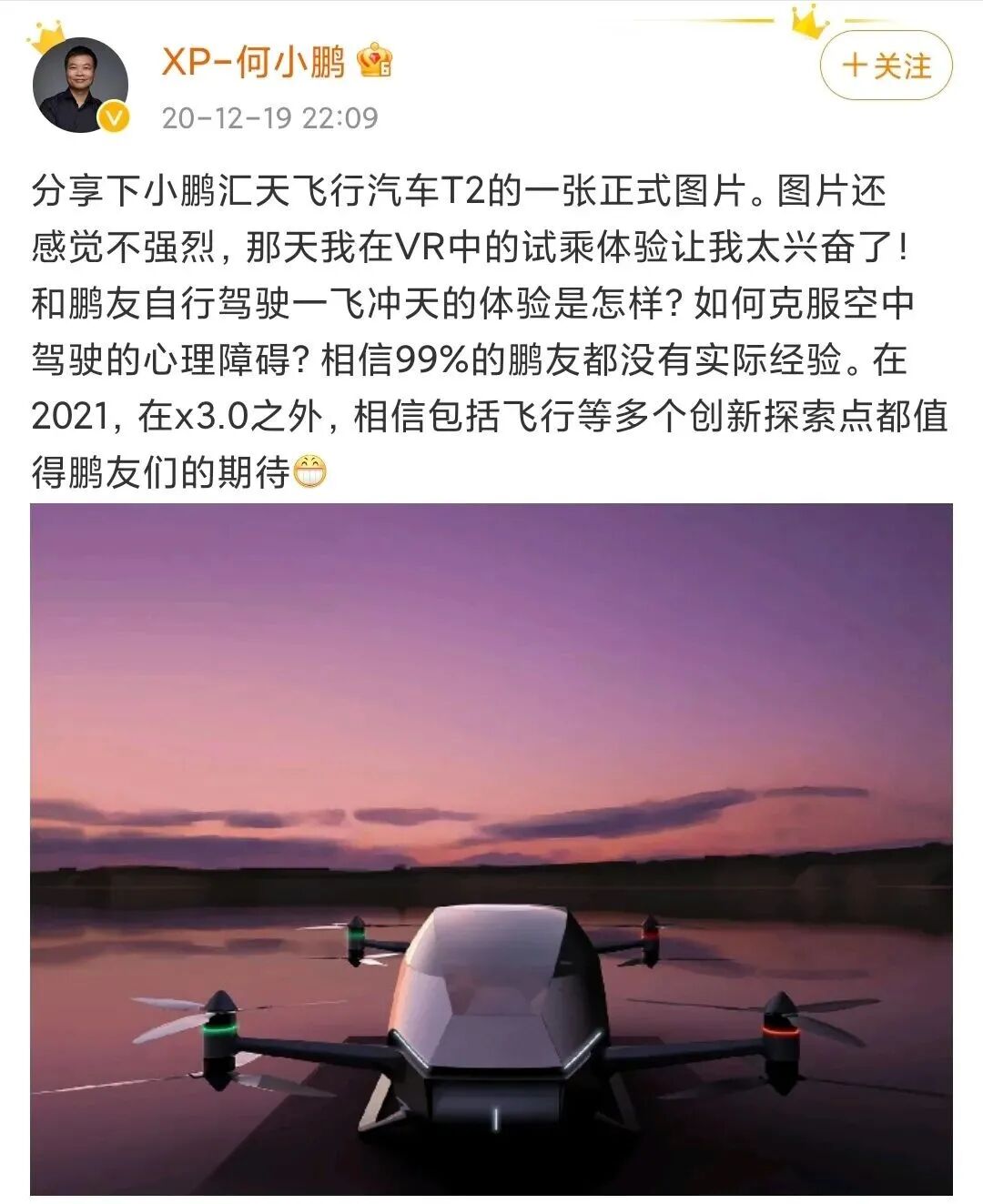 Currently, the exploration of smart driving cars has led to two development paths: one is to find partners, and the other is to find scenarios. Now, there may be a third direction — applying related technologies to other products, as demonstrated by the feasibility of vacuum robots.Whether it’s Tesla Bot or the Car Robot, the likelihood of these conceptual products achieving mass production in the short term is low, and they face numerous challenges. However, their emergence indeed gives us a glimpse of a new problem-solving approach for the future development of cars and autonomous driving technology.
Interactive Topic
What do you think the future of cars will look like?


Understand 7000 Ways to Make Money in China!
Click the card below to follow the Entrepreneur WeChat account