
Recently, a humanoid robot soccer match held in Beijing has gone viral online.
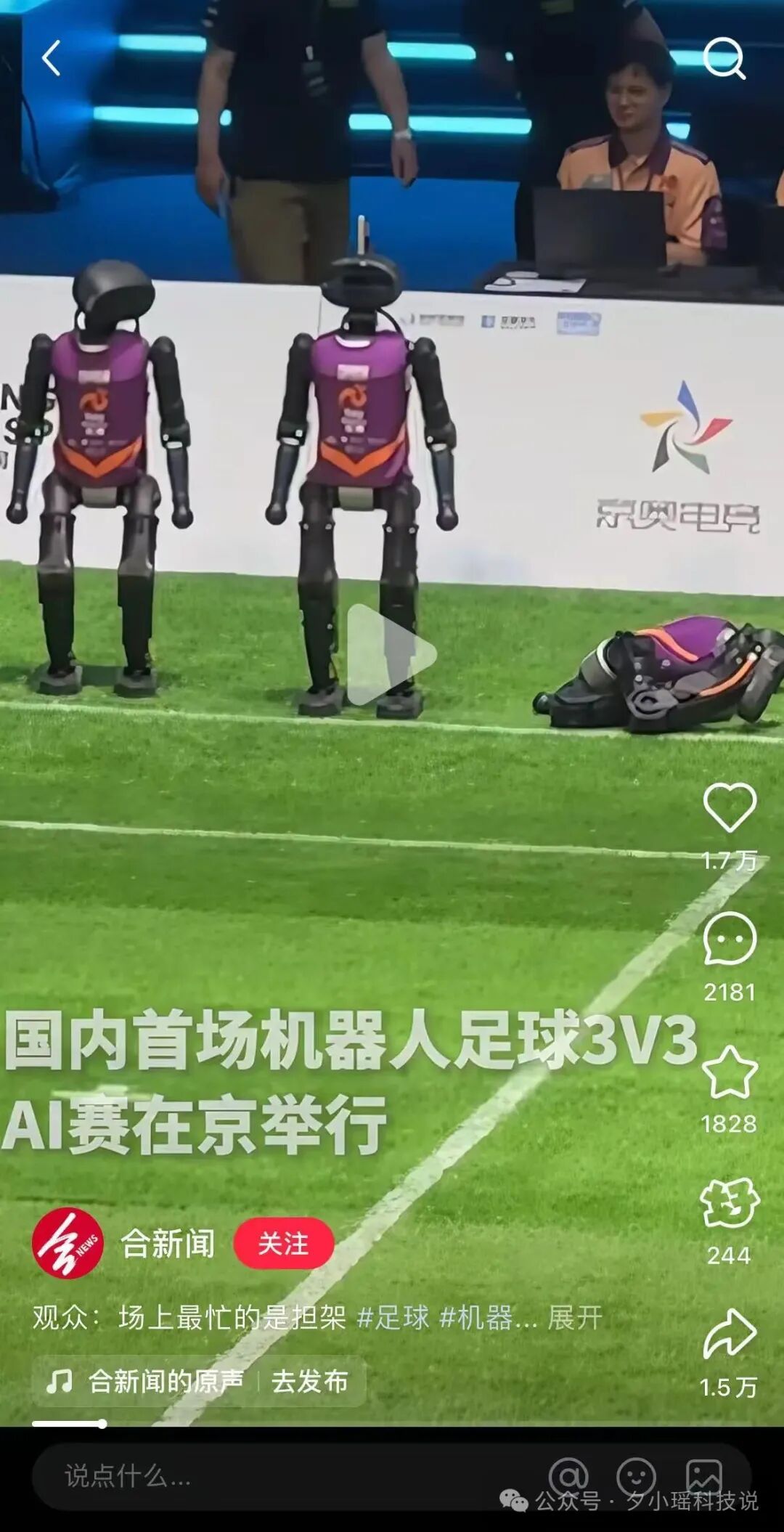
Not only has it become a sensation domestically, but it has also sparked extensive discussions internationally.
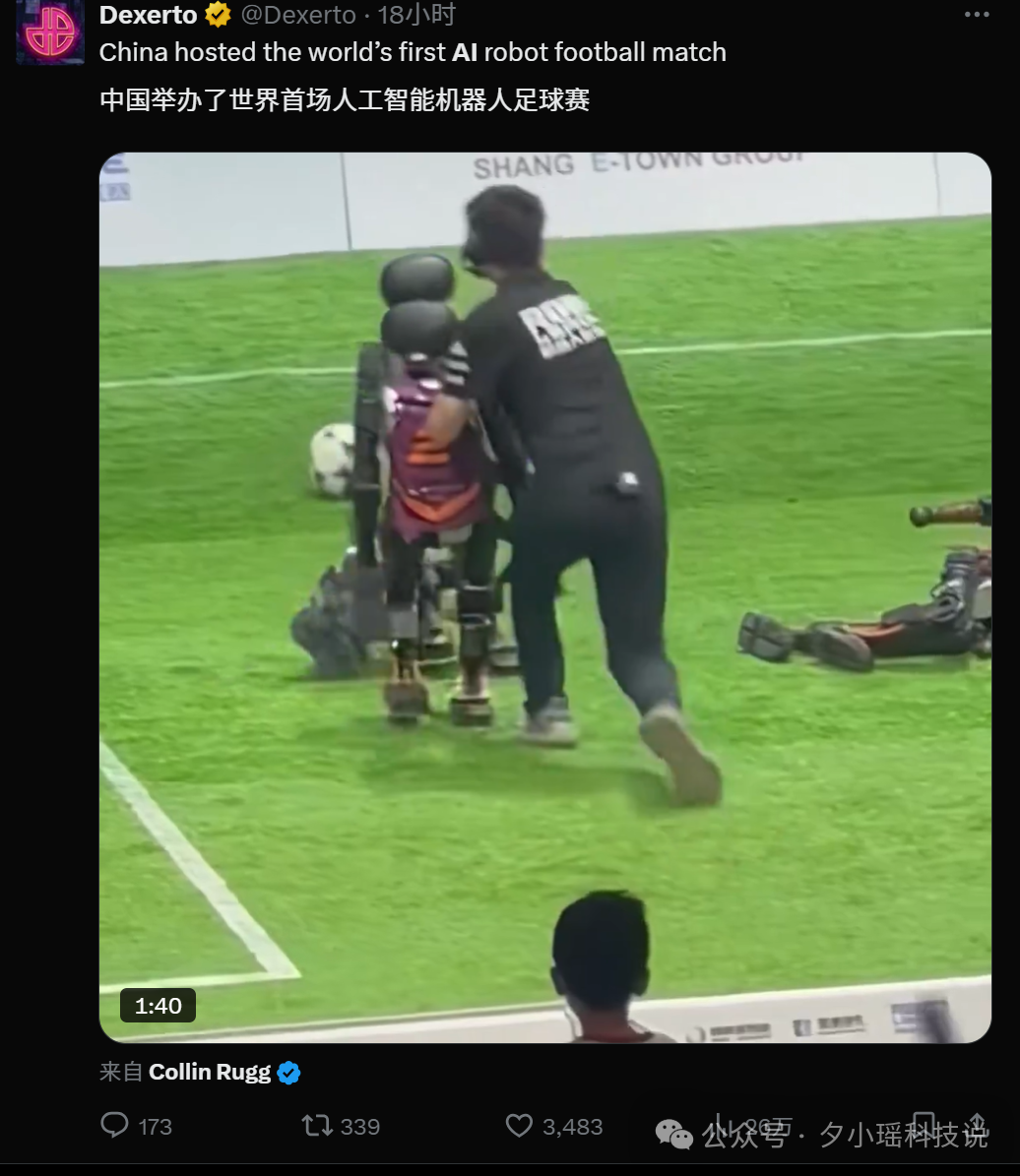
Let’s take a look at some memorable moments that will surely make you laugh.
All the robots were wobbling, and watching them kick the ball made me wonder if someone would pull out a thermos and a health pot at any moment.
A user on Xiaohongshu commented:

Throughout the match, the robots often lost control of their speed, causing them to fall over, resulting in some hilarious tumbles.
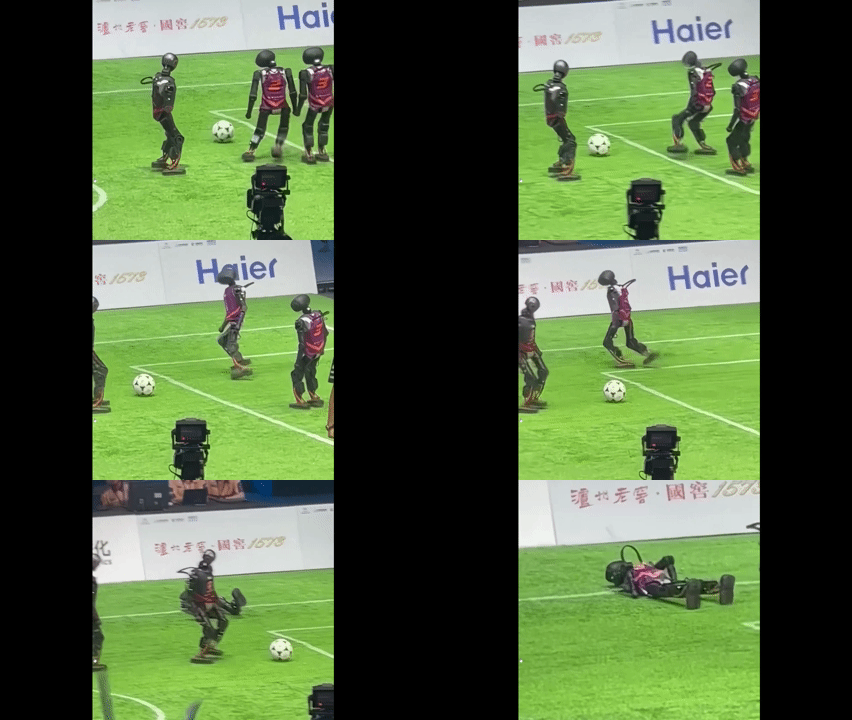
Some were even knocked down by their coach… A sincere question: Why did you push our Zihan?
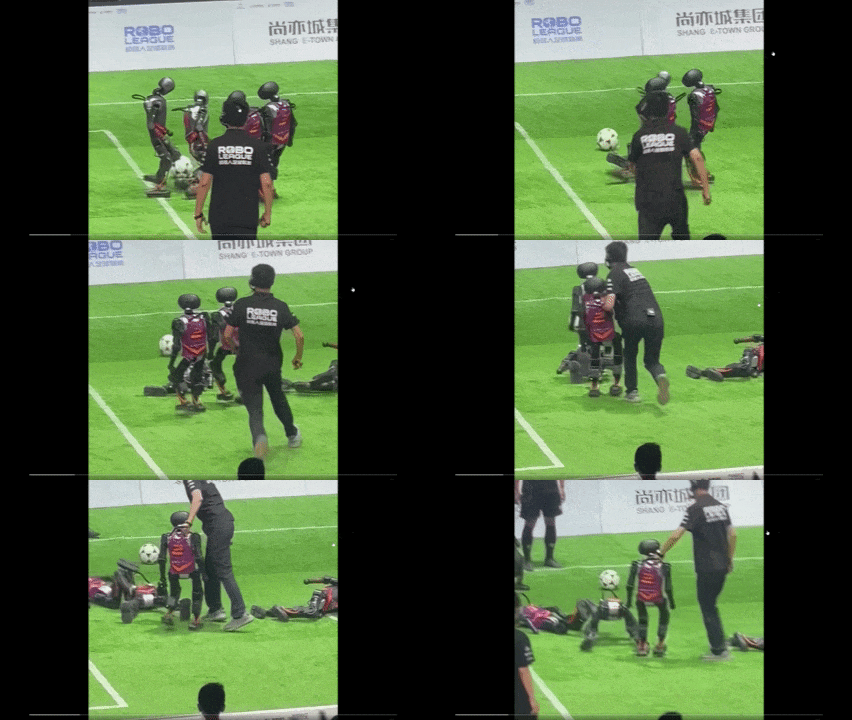
Surprisingly, the stretcher had the highest appearance rate.
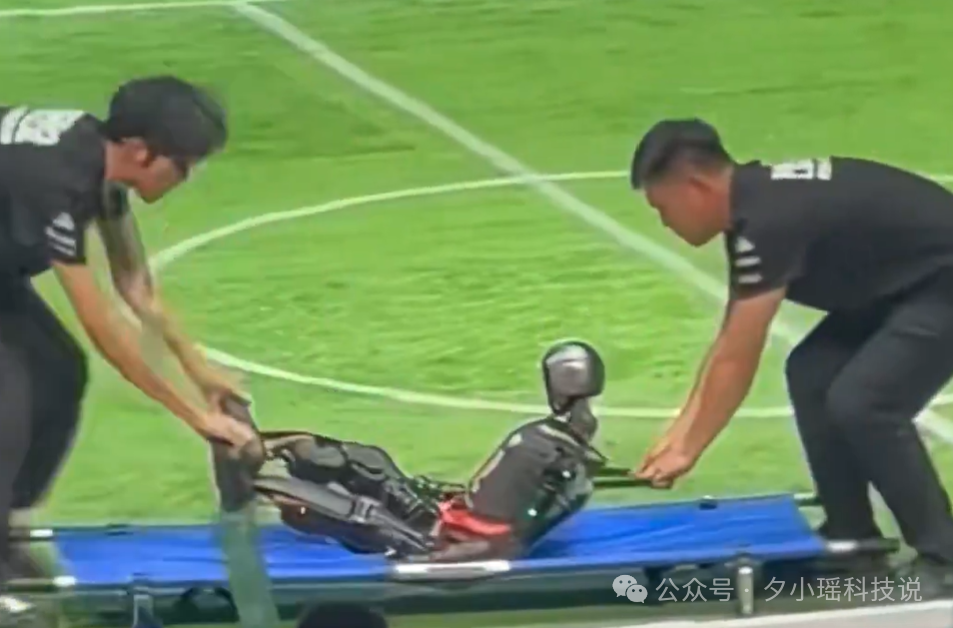

You can’t help but wonder how these people managed to keep a straight face…
These scenes remind me of amateur leagues.
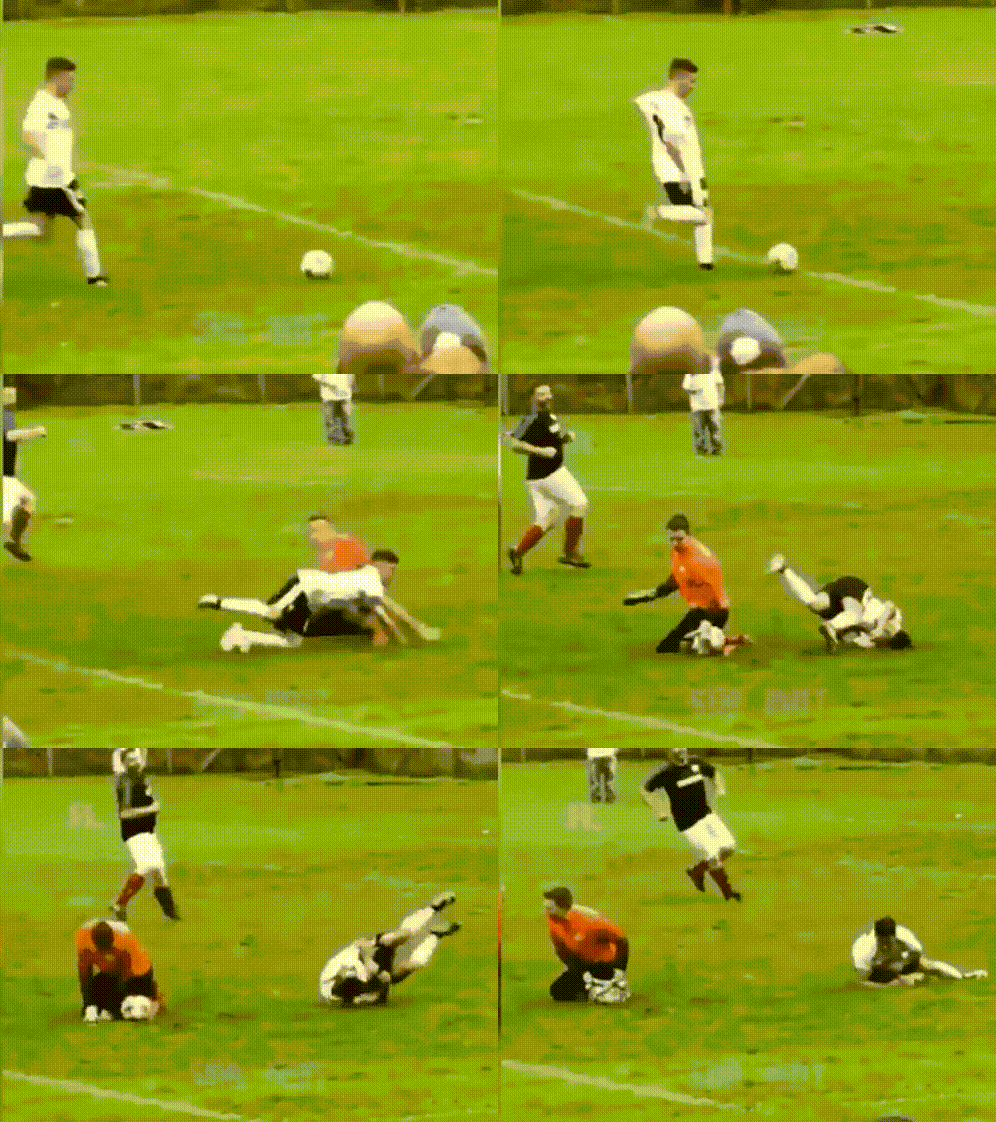
Truly a creation of humanity, their falls are remarkably similar.
Looking back, these memorable moments came from the 2025 RoBoLeague robot soccer league held on June 28 in Beijing.
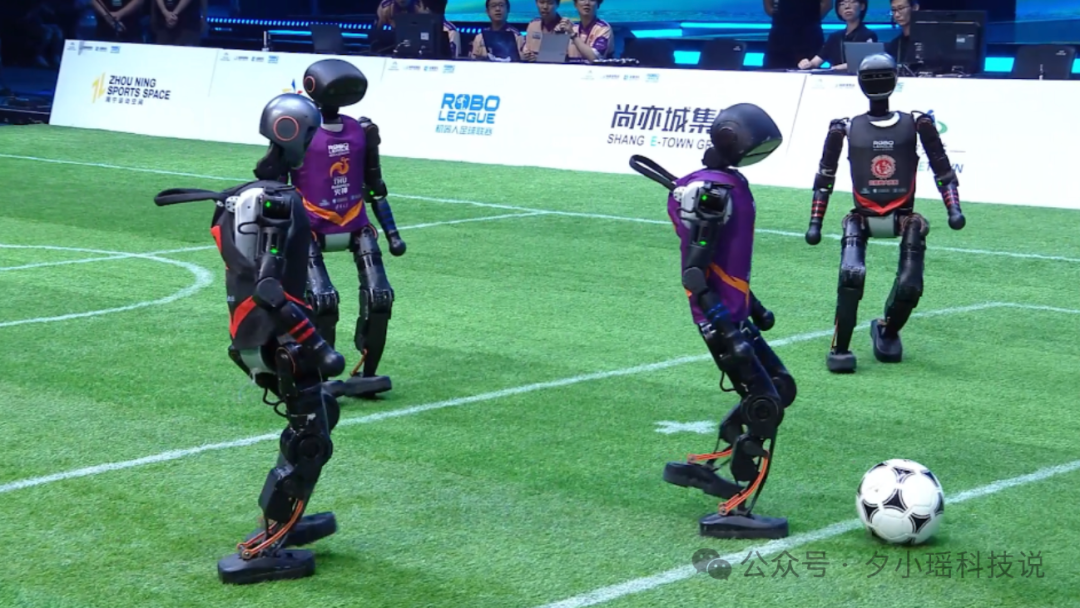
Indeed, it was the familiar setting of Beijing Yizhuang, where these iron brothers appeared on the green field again after the half marathon.
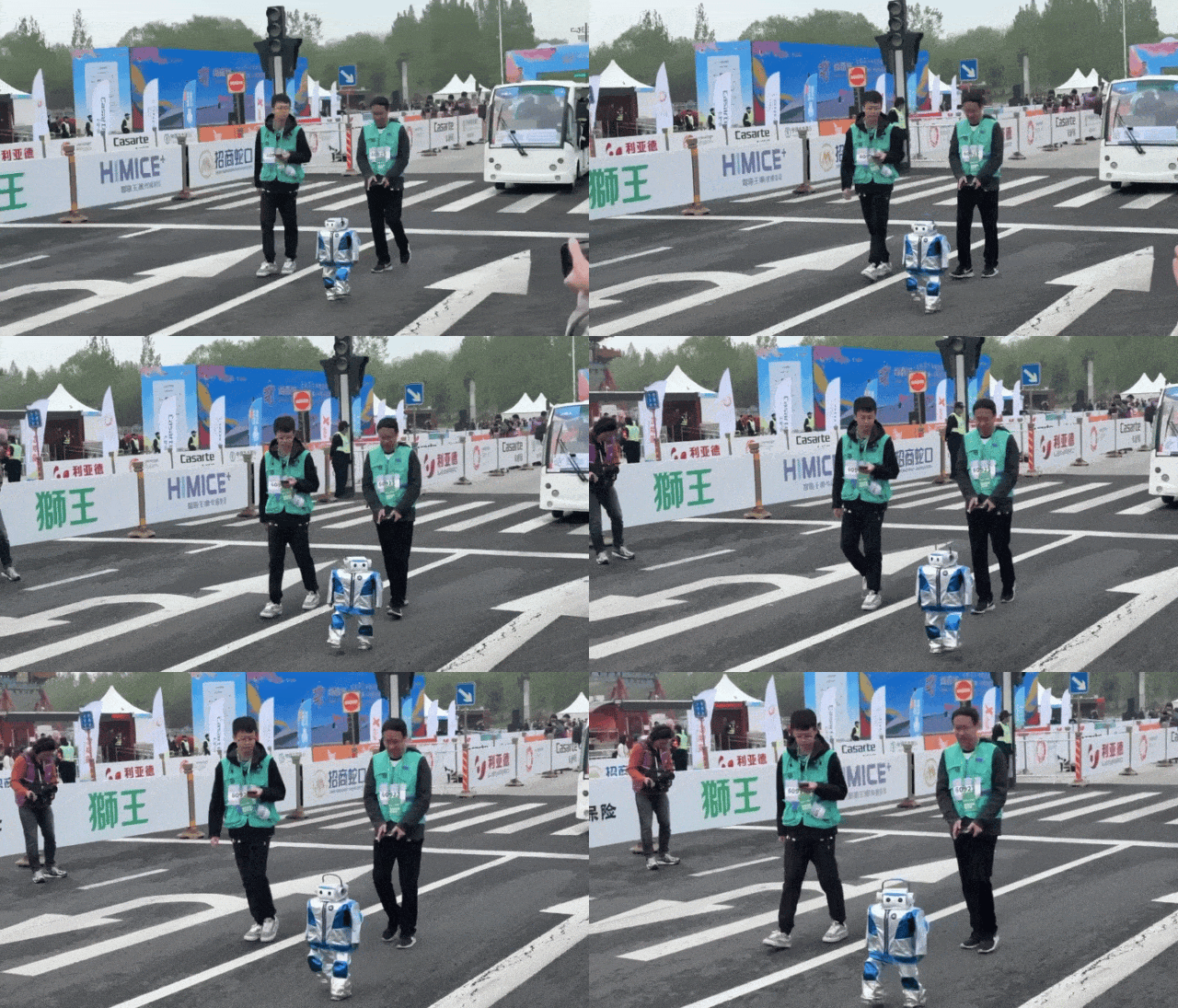
Unlike last time, where a group of people surrounded a robot running in circles, this time AI was genuinely “thinking” while playing the more challenging game of soccer.
The four participating teams were the Blaze team from Beijing Information Science and Technology University, the Power team from Tsinghua University Future Lab, the Fire God team from Tsinghua University, and the Shanhai team from China Agricultural University.
All participating robots were T1 robots developed by Accelerated Evolution Company. The competition rules stated that each team consisted of four robots, with three players on the field and one substitute, competing in a 3v3 format. The playing field was only 14×9 meters, which is quite small compared to a standard soccer field, but sufficient for the robots to maneuver.
I initially watched for entertainment, but as I laughed, I began to take it seriously.
Take that viral video for example; everyone laughed at how they fell like old men playing soccer, but if you look closely, you’ll notice something interesting:
After they fell, no one helped them up, nor did anyone pause the game. The robots would flip themselves over, struggle a bit, and then clumsily get back up to continue playing.
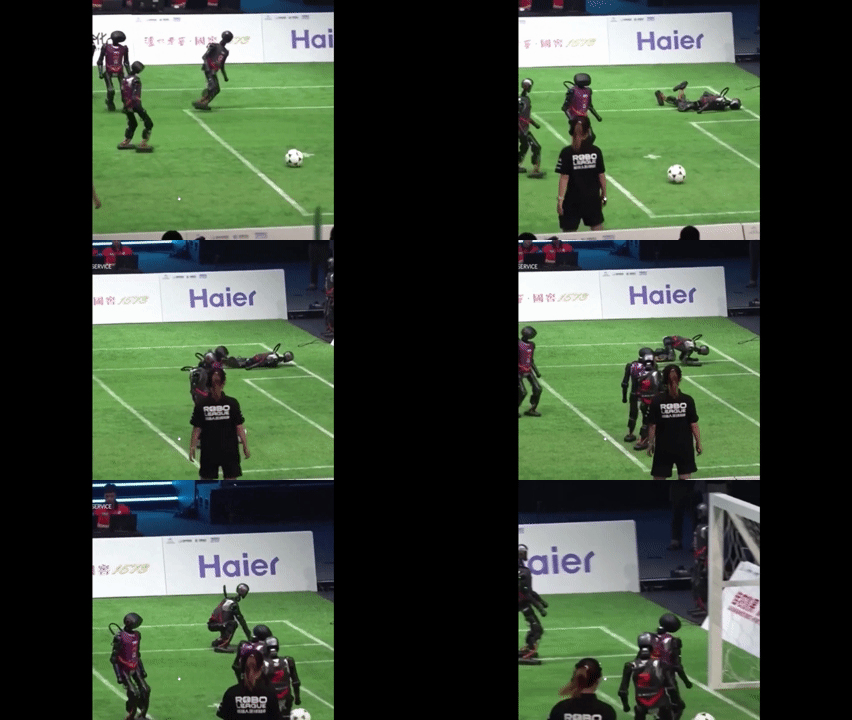
No one shouted, “Hey ref, stop the game,” nor did any technicians rush in to adjust the system. If they fell, they fell; they got up and continued.
This is actually quite different from our previous impressions of robot competitions.
In past robot competitions, it felt like a science exhibition, where if something went wrong, someone would rush in to fix it, and the game would be interrupted repeatedly, resembling a test rather than a competition.
But this time, the rules clearly stated:All robots must operate completely autonomously, and human intervention is not allowed. Even the penalty mechanism was adapted; if a robot collided, fell, or did not commit a critical foul, the game would continue without interruption.
These funny yet somewhat tragic scenes were the highlights of this year’s RoBoLeague.
You can feel that these “iron men” are genuinely trying to play. Although their performance is both silly and adorable, it is also quite charming.
Clearly visible imperfections, but it is evident that they are not just executing pre-set programs; each action is a spontaneous decision.
Watch this segment.
Three robots approached the defense simultaneously. I initially thought they would collide, but at the last moment, one slowed down and let the other pass, allowing the second robot to kick the ball into the goal, executing the entire sequence smoothly.
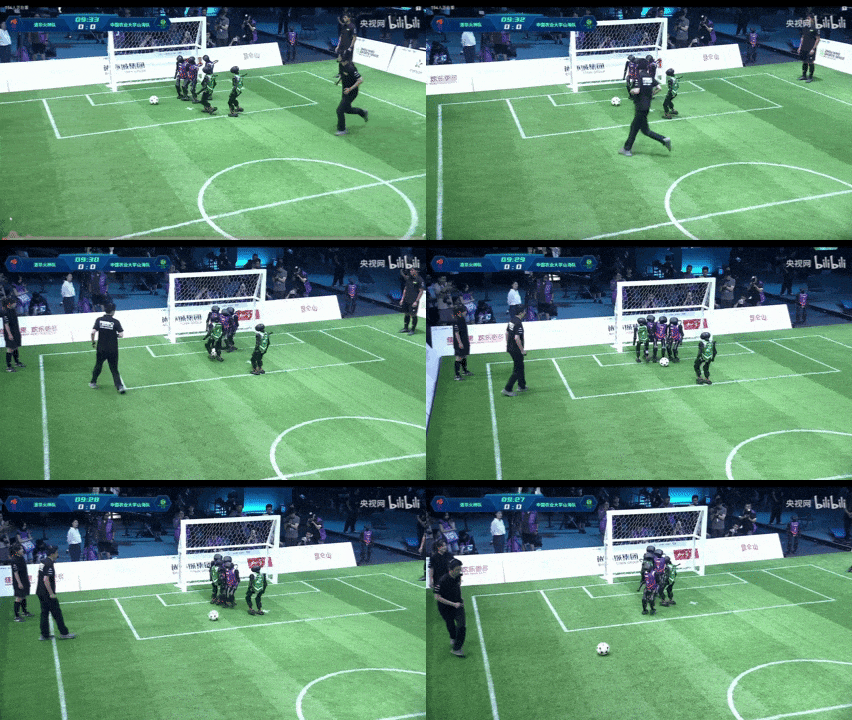
The robot’s internal OS: “I think this ball is mine; you take a step back.”
This is no longer a remote-controlled car that you can just command; they are genuinely starting to understand the rules, such as how to take a throw-in.
Often, they behave more obediently than humans.
Humans might run around due to emotions, misjudgments, or overexcitement. Robots, however, do not get overly excited or greedy; they can be too honest at times, with defenders often following the ball instead of marking players.
Defense is currently the biggest shortcoming. Most teams’ robots are still in the “wherever the ball is, I go” phase, completely lacking a concept of marking or zones. A simple pass can leave the entire defense in disarray.
You can tell they are still at a kindergarten level: they only know to rush forward, kick the ball when they see it, without much thought.
Some teams attempt to coordinate, consciously spreading out, crossing, and creating space; some robots will position themselves in advance before a corner kick, waiting to receive the ball and shoot; others will actively retreat to adjust their formation when they do not have possession, rather than just standing there waiting.
It’s interesting. The occasional tactical signs genuinely provide some surprises.
After three hours of intense competition, the Fire God team from Tsinghua University defeated the Shanhai team from China Agricultural University with a score of 5:3, ultimately winning the championship.
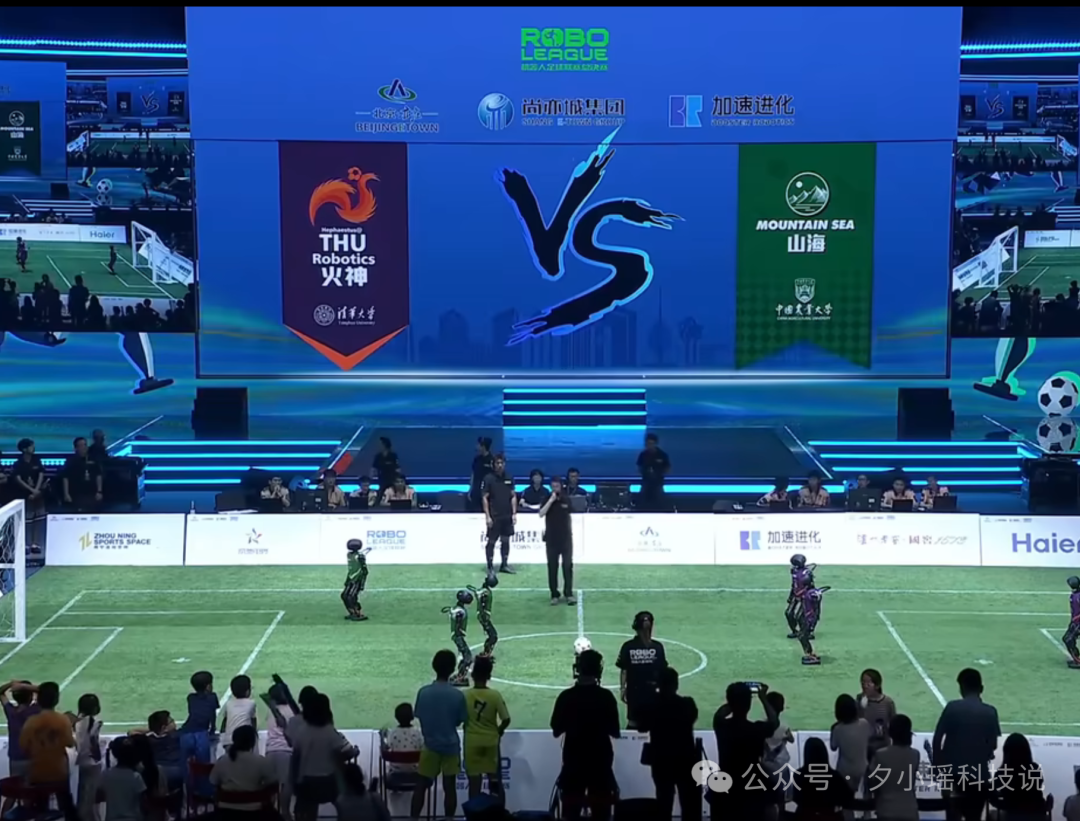
This is not their first championship. In March of this year, the Fire God team from Tsinghua University won the RoboCup Germany Open with a score of 9:0 against the host team, Germany’s Sweaty.

If AI has hope, what about our soccer?
In conclusion.
We often think that breakthroughs in AI will occur in grand, earth-shattering events—like finishing an exam in a second, generating code with a single click, or stunning images at a glance.
But perhaps it happens in a small 3v3 match, where they fall, collide, struggle to get the ball, and quietly get back up, like a child just learning to walk, trying and learning through trial and error. Imperfections are not bugs; I see them as signs of it starting to “think.”
If marathons are where they learn to “run,” then this match is likely the first time AI robots are learning to cooperate in a real trial.
As a user on X said:

Who knows, maybe one day they will really be able to play a match with you, without falling, and even assist in crossing.
The classic commentary line from World Cup announcers will no longer be, “There is not much time left for the Chinese team,” but rather, “There is not much time left for the human team.”