Python Practical Community
Java Practical Community
Long press to recognize the QR code below,add as needed

Scan to follow and add customer service
Join Python Community▲

Scan to follow and add customer service
Join Java Community▲
Source material丨Arm
Edited and organized丨strongerHuang
All processors we use have a set architecture, for example, the STM32F0 has a Cortex-M0 core, which belongs to the ARMv6-M architecture. The technology is getting stronger with each generation, so what are the differences and advantages of the latest ARMv8-M architecture compared to previous architectures?
1. ARM Architecture
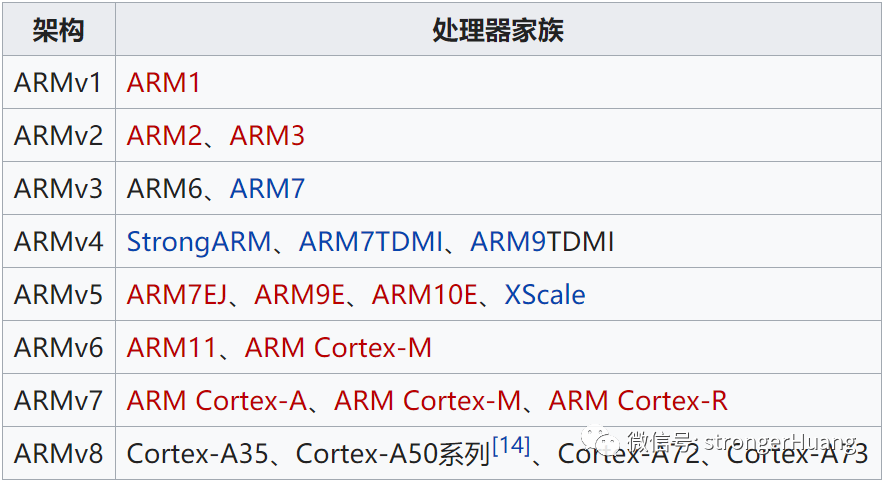
The development history of ARM is quite long, starting from ARMv1, gradually evolving to the well-known ARMv6, ARMv7, and ARMv8.
During ARMv7, the ARM architecture was divided into three different types of cores: Cortex-A,Cortex-R,Cortex-M for different types of processors.
For the ARM architecture, it was also divided into ARMv8-A, ARMv8-R, ARMv8-M.
Here’s a diagram that should help everyone understand better:
For more related introductions, you can refer to my previous article: The Relationship Between STM32, Cortex-M3, and ARMv8-M.
2. Cortex-M Cores
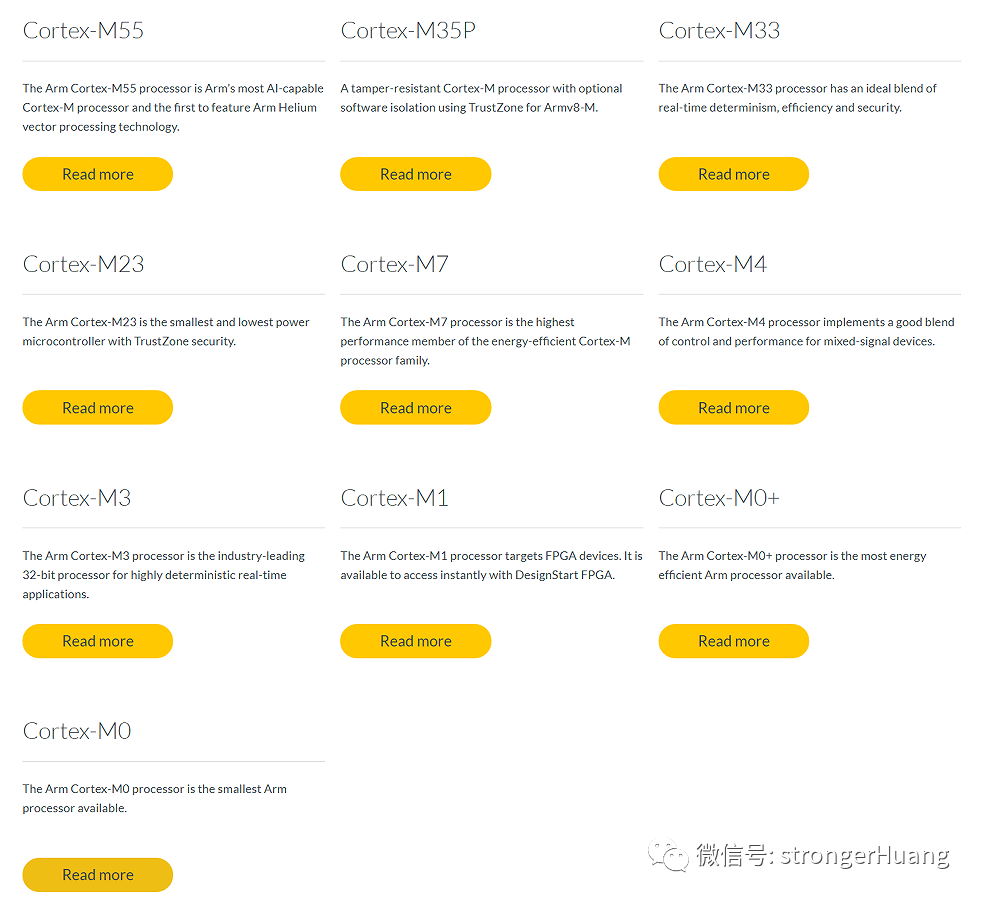
As of now (April 2020), there are 10 models of ARM’s Cortex-M cores, including: Cortex-M0, M0+, M1, M3, M4, M7, M23, M33, M35P, and M55.
Website:
The earliest Cortex-M0 belongs to the Armv6-M architecture, while the latest Cortex-M55 is based on the Armv8-M architecture. These architectures have undergone years of development, resulting in significant differences.

These Cortex-M cores are currently popular cores found in various MCUs. Over time, the first to be phased out should be the Armv6-M architecture cores, and more architectures will continue to develop.
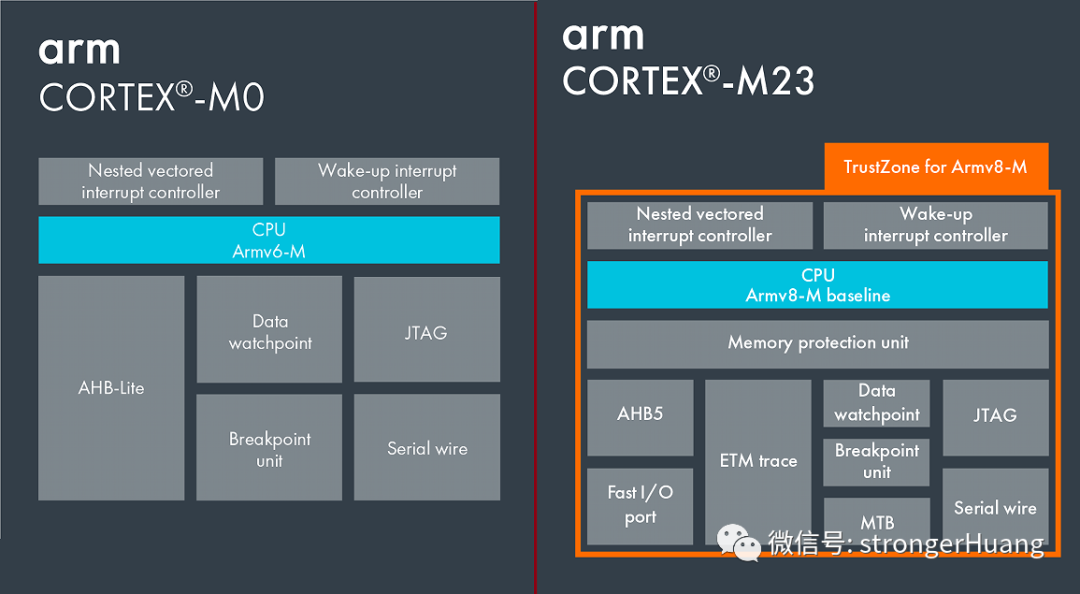
For example: the M23 is developed based on the M0, retaining the advantages of the M0 while expanding some new features.
3. New Features of ARMv8-M Architecture
I wonder if everyone has been paying attention to the newly released Cortex-M processors, which are all trending towards ARMv8-M (of course, there is also the popular RISC-V, but we won’t discuss that here).
For example: the STM32L5 series uses the M33 core, the LPC55S series also uses the M33 core, and the GD32E23 series uses the M23 core. These processors are all based on the ARMv8-M architecture.
In fact, the ARMv8-M architecture was already announced at the ARM Tech Conference in 2015. In today’s rapidly developing Internet of Things, information technology is also very advanced, so security technology has become particularly important. ARMv8-M has a new technology called TrustZone (a type of security technology).
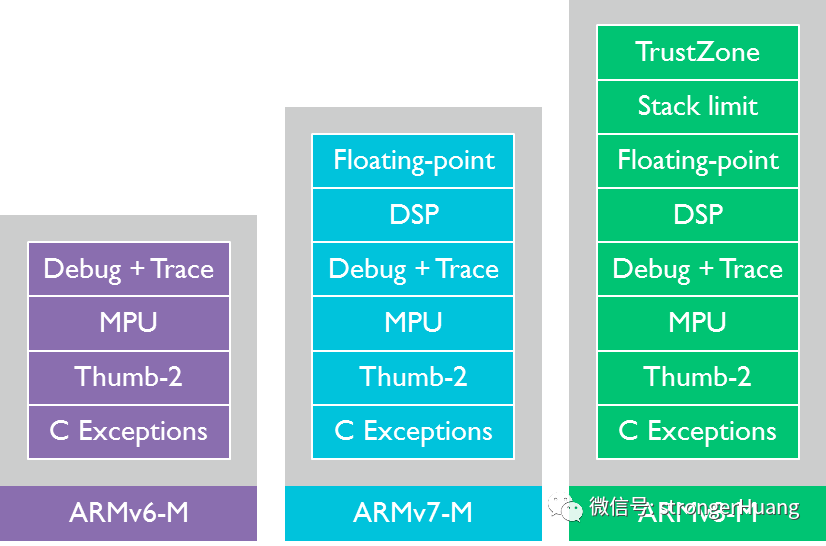
Besides TrustZone technology, ARMv8-M also has many more new features compared to the older generation architectures.
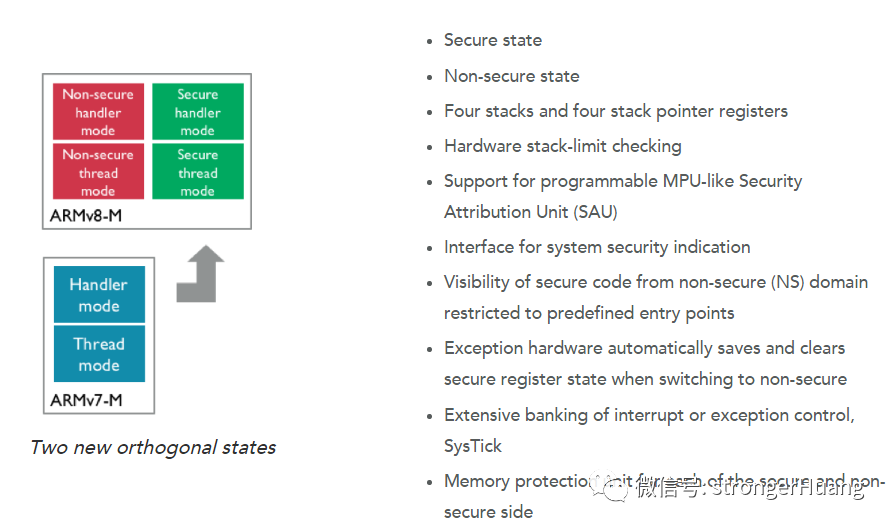
The summary here is quite general, aiming to give everyone a deeper understanding. In summary, focusing on the current artificial intelligence and Internet of Things, enhancing computational power and increasing security are some of the new features.
Disclaimer:This article’s material comes from the internet; copyright belongs to the original author. If there are any copyright issues, please contact me for removal.