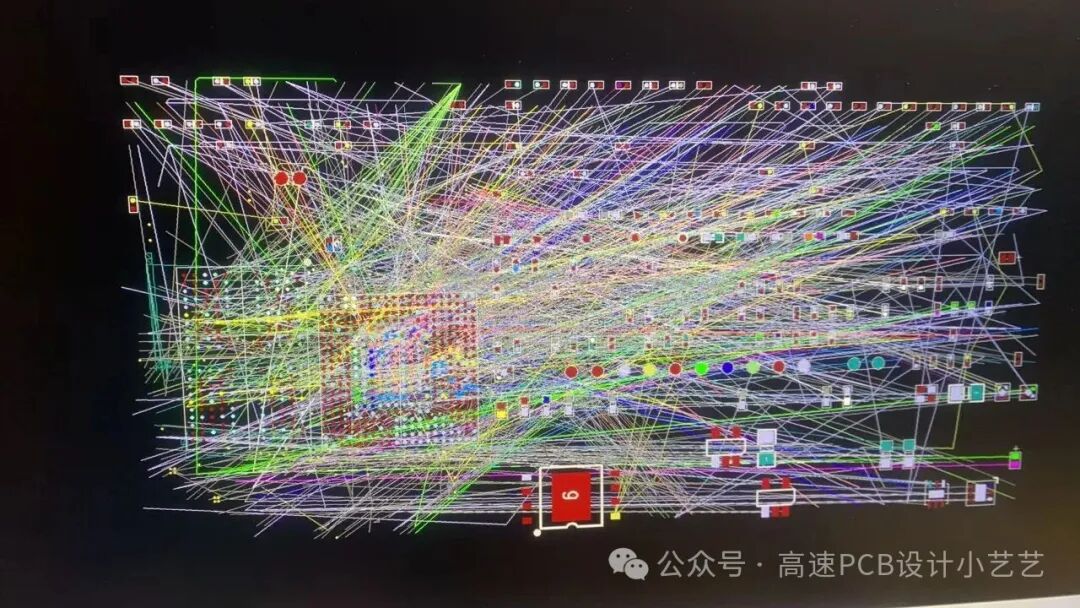
Every engineer deeply involved in PCB design has, at some point during a late night, stared at a chaotic SI waveform on the screen or a chip emitting smoke on the test bench, pondering the philosophical question: “Whose fault is this, really?”
As the saying goes, “In the world of Jianghu, the blame comes from above.” Layout engineers, being the “last link” in the hardware product chain, often find themselves as the “scapegoats”. However, true seasoned players have mastered the elegant art of passing the buck without damaging relationships, avoiding responsibility, and showcasing professionalism.
This article aims to enhance your workplace communication effectiveness and problem identification efficiency, and is not intended to encourage shirking responsibility. The ultimate goal of gracefully passing the buck is to redirect the issue to where it truly belongs.
First Technique: Prevent Problems Before They Occur – Processes are the “Golden Shield”
Gracefully passing the buck requires skills beyond the obvious. True experts have already donned their “bulletproof vests” before the project begins.
-
Requirement Freeze, Black and White: All design requirements must have written documentation. If a hardware engineer casually says, “Just pull it a bit?” ask them to sign off on the design requirements document. If a structural engineer promises, “This will definitely be enough?” have them stamp and sign the stacking diagram. This may seem cumbersome, but it is the foundation of project specifications and your strongest defense later on.
-
Meeting Minutes, Your Sword of Justice: For any key decision-making meeting, make it a habit to produce meeting minutes and email them to all relevant parties. “If there are no objections, proceed as stated” – these eight words are worth their weight in gold.
Second Technique: When Problems Arise – Technology is the “Tai Chi of Force Dissipation”
When problems actually occur, avoid emotional reactions. Use professional technical analysis to turn the “pointing finger” into a “pointer”.
-
Power Supply Unstable? – Don’t rush to look at my wiring.
-
Technical Analysis Points: Are the feedback loop parameters reasonable? Is the selection margin for LDO/DC-DC sufficient? Have the dynamic response requirements of the load been evaluated?
-
Graceful Dialogue: “The width of my power channel is strictly based on the current budget. From the simulation, the voltage drop is not an issue. Should we review the selection of the power chip and the feedback compensation network together?”
Poor Signal Quality? – Don’t just look at my traces.
-
Technical Analysis Points: Is the chip model at the driver end accurate? What is the load condition at the receiving end? Has the topology structure set in the simulation been strictly followed?
-
Graceful Dialogue: “The topology and trace length matching for this DDR line were completely done according to the constraints provided by the SI engineer. The current overshoot/ringing suggests we should jointly re-simulate using the latest IBIS model to see if the termination scheme needs optimization.”
EMC Issues? – This has always been a system problem.
-
Technical Analysis Points: Is the overall shielding scheme reasonable? Is the division of the power ground plane scientific? Does the software turn off unused clocks during critical periods?
-
Graceful Dialogue: “From the spectrum of the RE (Radiated Emission) test, the frequency points exceeding the standard coincide with the clock harmonics of the main chip. My stacking design ensures a complete ground plane, and the filtering capacitors have been placed nearby. Next, we can check the grounding continuity of the shielding case, or ask the software colleagues if they can reduce the clock drive strength during standby.”
Third Technique: Mindset and Philosophy – You are the “Problem Identifier”, Not the “Scapegoat”
Remember, the core of gracefully passing the buck is not about “pushing” but about “guiding”. Your role is to use your professional knowledge and holistic perspective to lead the team to find the true root cause of the problem, like a detective.
-
Focus on the Issue, Not the Person: Always discuss the technology itself, rather than blaming an individual. “This rule setting may have issues” is far more sophisticated than “the requirements you provided were wrong”.
-
Provide Solutions: When pointing out a problem, it is best to offer 1-2 constructive directions for solutions. This will shift your stance from “defending” to “collaborative problem-solving”.
-
Maintain Composure, Showcase Professionalism: Even in the most heated discussions, keep a calm and objective tone. Your familiarity with design details and industry standards is itself the most powerful aura.