A New Engine for the Low Altitude Economy: Additive Manufacturing (3D Printing) Technology as a Key Support
From aerospace components to eVTOL aircraft and low-altitude infrastructure, 3D printing technology is providing critical technical support for the development of the low altitude economy through its unique advantages of customization, lightweight design, and rapid manufacturing.
As the low altitude economy rises as a strategic emerging industry, 3D printing technology is becoming a key driving force for innovation in this field. As a type of additive manufacturing technology based on digital models, 3D printing fundamentally changes traditional manufacturing modes by stacking materials layer by layer, injecting new vitality into the low altitude economy.
According to statistics, the global low altitude economy market is expected to reach $15 trillion by 2040, and the in-depth application of 3D printing technology in this field is accelerating the realization of this goal. From aerospace to urban air traffic, from infrastructure to operational services, 3D printing is empowering the development of the low altitude economy in all aspects.
01 Three Core Application Areas
Aerospace Component Manufacturing
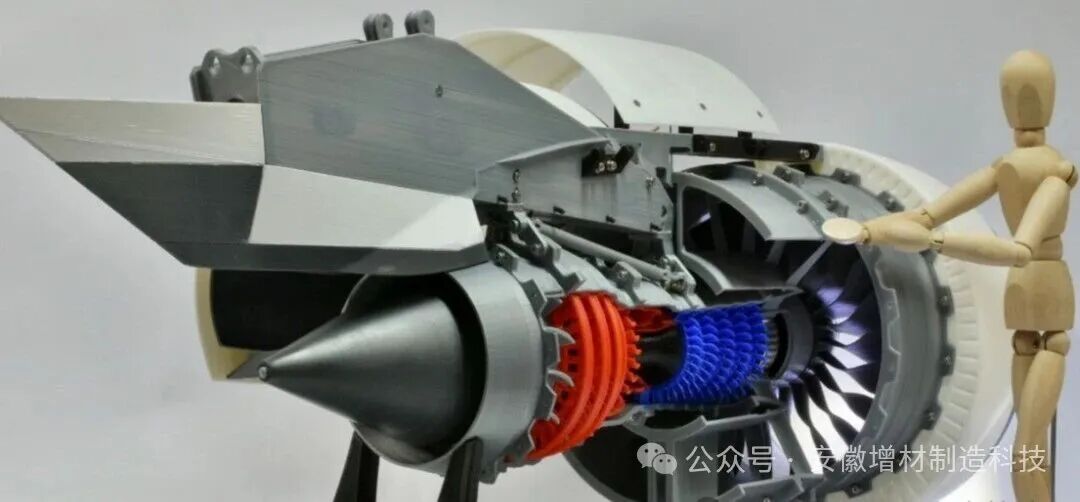
The aerospace field is the most mature area for the application of 3D printing technology. By using materials such as titanium alloys and high-temperature alloys, 3D printing can manufacture complex structural parts that are difficult to achieve with traditional processes. For example, key components such as engine fuel injectors and the titanium alloy main windshield frame of the cockpit, when produced using 3D printing technology, not only reduce weight by over 30% but also significantly improve fuel efficiency and product performance.
Research and Development of Electric Vertical Takeoff and Landing Aircraft (eVTOL)
As an important component of the low altitude economy, eVTOL heavily relies on 3D printing technology. From the lightweight design of the power system to the integrated manufacturing of the airframe structure, 3D printing technology helps eVTOL achieve dual optimization of weight reduction and performance. XPeng Heitech’s flying car uses metal 3D printing for calipers and caliper brackets, successfully achieving a weight reduction target of over 30% while ensuring structural strength and performance.
Low Altitude Infrastructure Construction
In the field of low altitude infrastructure, 3D printing technology can be used to manufacture auxiliary facilities such as temporary runway mats and helipad markings. These facilities are not only cost-effective and easy to install but also meet the needs for temporary and reusable solutions. When parts are damaged, 3D printing technology can quickly produce replacement parts, significantly shortening maintenance cycles and ensuring the normal operation of facilities.
02 Four Major Technical Advantages
Flexible Customization and Rapid Response
3D printing technology can quickly respond to personalized demands in the low altitude economy. Different models of eVTOL aircraft and low altitude infrastructure in different regions can be customized through 3D printing. Design modifications only require adjustments to digital files without the need to reconfigure production lines, greatly improving response speed.
Material Savings and Cost Reduction
Compared to traditional subtractive manufacturing, 3D printing avoids significant material waste by adding materials layer by layer. Unused materials can be recycled, significantly reducing manufacturing costs. This advantage is particularly evident in high-end manufacturing industries such as aerospace, helping companies effectively control production costs.
Structural Optimization and Lightweight Design
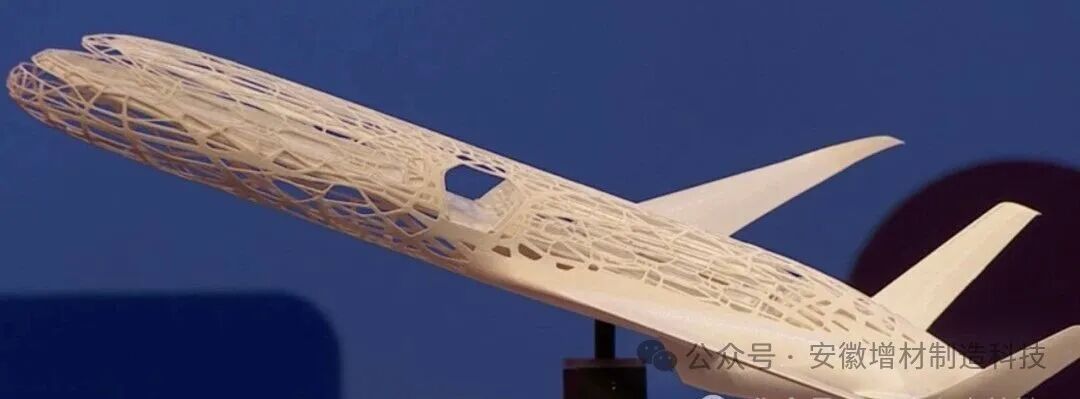
Through topology optimization and lattice structure design, 3D printing can produce components that are both lightweight and meet strength requirements. After using 3D printing technology for structural components such as the fuselage and wings of eVTOL aircraft, weight is reduced while performance is enhanced, significantly improving flight efficiency and endurance.
Innovative Design and Rapid Prototyping
3D printing technology provides strong support for innovative design, allowing for rapid production of product prototypes and testing, greatly shortening the R&D cycle. Complex structures and personalized designs can be realized, providing unlimited possibilities for product innovation in the low altitude economy.
03 Future Development Trends
Technological Innovation and Cost Optimization
With the continuous development of new technologies such as multi-material printing and hybrid manufacturing, the manufacturing costs of 3D printing will further decrease, and printing efficiency and precision will continue to improve. The emergence of new materials and processes will meet more complex and high-end application demands.
Diversification of Application Scenarios
From drone logistics to low altitude tourism, from urban air traffic management to emergency rescue, the application scenarios of 3D printing technology in the low altitude economy will continue to expand. In the future, it will play an important role in more fields, driving the rapid development of related industries.
Coordinated Development of the Industry Chain
With the widespread application of 3D printing technology in the low altitude economy, the industry chain will continue to improve, forming a good trend of coordinated development. By strengthening cooperation and communication between upstream and downstream enterprises in the industry chain, the overall competitiveness of the industry can be enhanced.
Policy and Market Dual-Drive
The government’s support for the low altitude economy is continuously increasing, and market demand is steadily growing, providing a broad space for the application of 3D printing technology. As the market continues to mature and develop in a standardized manner, 3D printing technology will play an even more important role in the low altitude economy.
3D printing technology is providing critical technical support for the development of the low altitude economy through its unique manufacturing advantages. From R&D design to production manufacturing, from facility construction to operational maintenance, 3D printing technology is empowering the entire low altitude economy industry chain.
With continuous technological advancements and deepening applications, 3D printing technology is expected to play an even more important role in the low altitude economy, driving the entire industry towards a more efficient, environmentally friendly, and sustainable direction, ultimately achieving the construction of a new three-dimensional transportation ecosystem.