“Beep ——” On the night of November 10, 2025, the lights under the “Gateway to the East” at Jinji Lake in Suzhou pierced the night sky. A humanoid robot, entirely silver and agile, slowly stood upright, its head sensors glowing softly in blue light, as if gazing back at the city’s nightscape. There was no earth-shattering roar, only the subtle sound of its feet lightly touching the ground, marking the quiet commencement of the A2’s 100-kilometer interprovincial walking challenge.
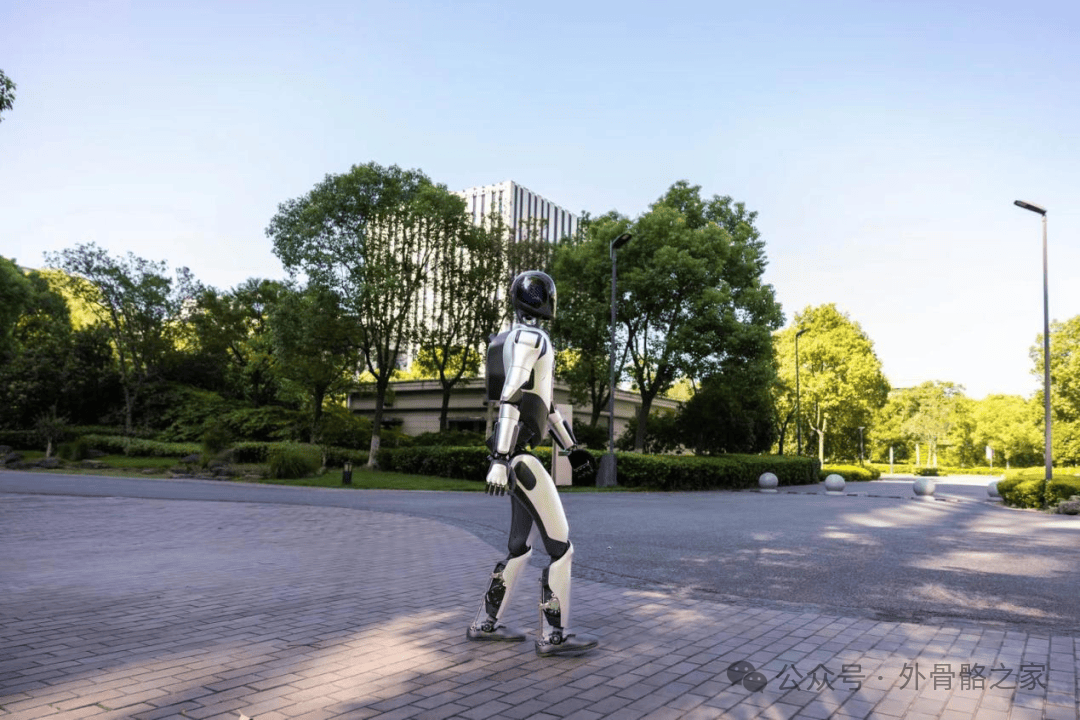
56 hours later, as the morning fog over the Bund in Shanghai had yet to dissipate, the robot stepped onto the promenade by the Huangpu River with a steady pace, and the crowd erupted in thunderous applause. On November 20, the Guinness World Records certifying officer solemnly presented the certificate, with the number 106.286 kilometers permanently engraved — the A2 has become the new holder of the world record for “the longest distance walked by a humanoid robot.” This is not only a breakthrough in technical limits but also a shining moment for China’s hard technology transitioning from the laboratory to reality.
The Suzhou-Shanghai Chronicle: A Hardcore Expedition of 106 Kilometers
From Jinji Lake to the Bund: 56 hours of non-stop walking
“Go!” With the engineer’s command, the A2 lifted its right leg and took the first step of the challenge. Its goal was clear yet distant: to start from the landmark “Gateway to the East” at Jinji Lake in Suzhou, traverse the urban network between Suzhou and Shanghai, and finally reach the North Bund in Shanghai, covering over 100 kilometers.
This was not a meticulously choreographed performance but a fully committed practical test. Over the course of 56 hours, the A2 did not rest for a moment, enduring the sun during the day and the stars at night, even facing rain along the way. Its footprints spanned urban roads, scenic pathways, national and provincial highways, transitioning from smooth asphalt to slick tiled roads, from uneven blind paths to noticeably sloped bridges.
What was most astonishing was its “zero-failure performance.” Throughout the entire journey, the A2 did not fall, did not shut down, and only showed slight wear on the rubber layer of its feet. When engineers inquired about its status after the challenge, it humorously responded, “Looks like I need a new pair of shoes,” anthropomorphic interaction eliciting laughter from the crowd. This level of stability far exceeded the industry’s general expectations for humanoid robots, further validating the maturity of its core technology.
In responding to complex scenarios, the A2 demonstrated intelligence comparable to that of humans. When encountering traffic lights, it accurately recognized signals and patiently waited to cross; while navigating narrow passages, it used laser radar to perceive its surroundings and flexibly adjusted its posture; facing the flow of pedestrians and vehicles, it could quickly make evasive decisions, with no collisions occurring throughout the journey. Even in low-light conditions at night, infrared sensors ensured it could clearly perceive road conditions, and its self-developed balance algorithm allowed it to walk steadily on wet and slippery surfaces.
Hot-swappable battery: Keeping the robot’s “endurance uninterrupted”
For long-distance walking, battery life is the biggest challenge. The A2 provided an innovative solution with its hot-swappable battery technology. During the entire challenge, staff replaced its batteries 15 times, each swap completed in a short time without needing to shut down, achieving a seamless connection between “energy replenishment” and continuous operation.
This battery supports quick replacement, with a single charge lasting about 2 hours, fully meeting the needs for long-distance walking. Compared to traditional charging methods, hot-swappable batteries not only offer higher efficiency but also avoid the impact of long downtimes on the continuity of the challenge. This technological breakthrough not only ensured the success of this 100-kilometer challenge but also laid the foundation for humanoid robots to operate continuously in practical application scenarios.
“We hope robots can quickly replenish energy like humans when needed, rather than waiting a long time to charge,” an engineer from A2 explained. This technology design, closely aligned with practical needs, is the core logic of A2’s transition from “laboratory research” to “commercialization.””>
Technical Insights: Why Can Mass-Produced Models Break World Records?
Unmodified mass-produced machine: Hard power does not require “special treatment”
One of the most shocking aspects of this challenge is that the A2 participating in the challenge is a commercially available version produced in the factory, without any customized modifications for long-distance walking, identical to the models that will be delivered to future customers.
This means that every consumer who buys the A2 in the future will possess such hardcore capabilities. In an industry where humanoid robots generally rely on “customized prototypes” to showcase technology, A2’s approach undoubtedly reflects absolute confidence in its technical strength and sends a strong signal to the market that “mass-produced models possess practical value.””>
The A2’s confidence stems from years of technological accumulation at A2 Robotics. Prior to this, it had undergone 3500 hours of laboratory testing, covering various complex scenarios such as ramps, lawns, and gravel roads, with the reliability of core components repeatedly validated. This 100-kilometer interprovincial walk was merely an extreme test of the stability achieved in the laboratory in a real open environment.
Perception and balance: Equipping the robot with a “smart brain” and “flexible small brain”
To achieve long-distance autonomous walking, precise perception systems and strong balance control capabilities are essential. The A2 is equipped with dual GPS modules, laser radar, infrared depth cameras, and multiple sensors, akin to providing it with “eyes that can see far” and “ears that can hear well,” enabling 360-degree perception of the surrounding environment and precise self-location.
Its self-developed “small brain” balance algorithm is the core secret to its steady walking. This algorithm can analyze road conditions and body posture in real-time, quickly adjusting joint strength and stride, maintaining stability even on uneven surfaces. With 31 flexible degrees of freedom in its joints, its gait closely resembles that of humans, walking steadily and naturally.
“Walking for humanoid robots is not just about moving; it is about understanding and adapting to the environment,” the technical head of A2 Robotics stated. The integration of the A2’s perception system and balance algorithm enables fully autonomous navigation and gait control, allowing it to complete complex routes without human intervention, which is key to its successful completion of the interprovincial challenge.
A2 Robotics: The “Disruptor” of China’s Hard Technology
The world record is backed by years of technological depth at A2 Robotics. This Chinese tech company stands out in the global humanoid robot market with its innovative “one body, three intelligences” technical architecture.
“One body, three intelligences” refers to the integration of three major intelligent modules: operation, interaction, and movement, based on the robot’s body. This systematic technological layout allows A2 Robotics to break free from the limitations of single-function capabilities, possessing comprehensive abilities to “walk, work, and communicate.””>
In terms of movement intelligence, in addition to the A2’s long-distance walking capability, another representative product, the Lingxi X2, features 31 degrees of freedom, capable of performing complex dance moves and highly humanoid gaits, showcasing exceptional agility; in interaction intelligence, the Lingxi X2 is equipped with an emotional computing engine, supporting multimodal interactions such as facial expressions and voice conversations, understanding different languages and human emotions, making human-robot communication more natural; in operational intelligence, the A2 has already equipped itself with functions such as item delivery and facial recognition, capable of handling various practical work scenarios.
This comprehensive technological layout allows A2 Robotics to escape the “technology demonstration” trap, becoming a product with real practical value, paving the way for its commercialization.
Thousand-unit delivery: Leading the era of humanoid robot scaling
In 2025, the A2 will achieve the world’s first batch of thousand-unit scale delivery, becoming the first company to reach this goal in the full-size humanoid robot field. This milestone breakthrough marks the transition of humanoid robots from “niche technology products” to “mass consumer goods,” further highlighting China’s strong capabilities in high-end manufacturing.
“The key to large-scale delivery lies in the maturity of technology and the stability of the supply chain,” the founder of A2 Robotics stated. Over the years, A2 has not only continuously tackled core technologies but has also invested heavily in supply chain construction, achieving autonomy and control over key components, ensuring large-scale production.
Currently, A2 Robotics has built a relatively complete product ecosystem, ranging from household service robots for the consumer market to commercial robots for enterprise clients, covering various scenarios such as retail guidance, corporate reception, entertainment performances, and exhibition explanations. The world record challenge of the A2 has also demonstrated the reliability of its products in extreme environments, injecting strong momentum into its commercialization.
Policy Support: The “Growth Soil” for China’s Hard Technology
The rapid rise of A2 Robotics is inseparable from the country’s strong support for the hard technology industry. In recent years, China has included artificial intelligence, high-end manufacturing, and the robotics industry as strategic development priorities, introducing a series of supportive policies to provide fertile ground for the innovative development of tech companies.
In the “14th Five-Year Plan,” it is clearly stated to “cultivate and expand emerging digital industries such as artificial intelligence and robotics,” supporting enterprises in tackling core technological challenges and encouraging the transformation of innovative achievements. Local governments have also responded with targeted support measures: Suzhou, as an important R&D base for A2 Robotics, provides R&D subsidies, venue support, and talent incentives; Shanghai offers application scenario pilots for its commercialization, helping robots quickly integrate into urban life.
In terms of tax incentives, the state implements a 15% corporate income tax preferential rate for high-tech enterprises, and A2 Robotics, with its core technology patents and R&D investments, enjoys this policy dividend, allowing more funds to be invested in technological innovation. Additionally, the government provides funding support and technical exchange platforms for A2 through science and technology innovation funds and industry-university-research cooperation projects, accelerating the R&D process of core technologies.
“Without the support of national policies, it would be difficult for us to achieve technological breakthroughs and large-scale production in a short time,” a relevant person from A2 Robotics stated. It is this “enterprise innovation + government support” virtuous interaction that allows Chinese hard technology companies to focus on tackling core technologies and secure a place in the global market.
In addition to policy support, China’s vast market demand also provides momentum for the development of A2 Robotics. With consumption upgrades and industrial transformation, there is a huge demand for robotic products in household services, commercial retail, and industrial production. This market demand not only provides a broad application space for A2’s products but also compels the company to continuously iterate its technology and enhance product competitiveness.
Global Attention: A “Milestone Moment” for China’s Hard Technology
The news of the A2 breaking the Guinness World Record quickly attracted global attention. Domestic and foreign media reported on this event, with foreign media giving high praise, calling it a “milestone for China’s hard technology.”
On overseas social platforms, discussions on related topics continue to rise. Some foreign netizens commented: “The technology of Chinese robots is already so advanced, it’s astonishing!” “The 106-kilometer walking distance is stronger than many humans’ endurance” “I look forward to seeing A2 robots in our country in the future.” This global attention and recognition not only affirm A2 Robotics but also recognize China’s hard technology strength.
Domestically, public enthusiasm is equally high. Netizens are sharing this good news on social platforms, with some joking, “This robot’s willpower is stronger than mine,” others looking forward to “encountering robot guides while shopping, that would be so cool,” and some envisioning “future household service robots helping care for the elderly and picking up children.” The public’s expectations reflect the enormous potential of the humanoid robot market and inject confidence into the commercialization of A2 Robotics.

Industry experts have also given high praise from a technical perspective. “The success of the A2’s challenge marks a key step for humanoid robots moving from the laboratory to practical scenarios,” stated an authority in the robotics field. “The stable performance of mass-produced models proves the feasibility of large-scale deployment of humanoid robots, which will drive the development of the entire industry.”
The significance of this challenge has long surpassed merely “breaking the world record.” It showcases China’s technological strength in the humanoid robot field, breaking the monopoly of foreign companies in the high-end robot market; it validates the practicality of humanoid robots in real environments, setting a technical benchmark for the industry; it further stimulates the innovative enthusiasm of Chinese tech companies, encouraging more enterprises to engage in hard technology R&D.
How Will Robots Change Our Lives?
The A2’s 100-kilometer walk is not just a technical challenge but a preview of future life. As core modules such as battery life, perception, and gait control mature, practical and reliable humanoid robots are accelerating their integration into human life scenarios.
In the retail industry, future shopping malls will have robot guides providing one-on-one services, recommending products based on customer needs, and even assisting in item delivery; at corporate receptions, robots can be on duty 24/7, responsible for welcoming visitors, registering information, guiding routes, and serving foreign clients through multilingual interactions; in household scenarios, robots can assist in caring for the elderly and children, help with chores, remind about medication, and provide companionship, becoming valuable helpers in family life.
Beyond these common scenarios, A2 Robotics is exploring more possibilities. In the medical field, robots can assist healthcare workers in material delivery and patient care, alleviating the pressure on medical resources; in logistics, robots can autonomously complete tasks such as cargo handling and sorting, improving logistics efficiency; in education, robots can serve as teaching aids, stimulating students’ interest in learning through interactive teaching methods.
The realization of thousand-unit scale delivery in 2025 will turn these scenarios from “imagination” into “reality.” A2 Robotics is taking practical actions to promote humanoid robots from “high-end technology products” to “mass consumer goods,” allowing more people to enjoy the convenience brought by technology.
“Our goal is to create robot partners that can truly integrate into human life,” the founder of A2 Robotics stated. “Breaking the world record is just the beginning. In the future, we will continue to delve into core technologies, launching more practical and reliable robot products to serve life with technology.”
China’s hard technology steps onto the global stage
From Jinji Lake in Suzhou to the Bund in Shanghai, the A2 measures the strength of China’s hard technology with its footsteps. The number on the Guinness World Record certificate is not just an honor but a testament to the innovative spirit of Chinese tech companies.
In today’s increasingly fierce global tech competition, the success of A2 Robotics relies on continuous innovation by the company, government policy support, and China’s vast market demand and complete supply chain system. Its story is a microcosm of the development of China’s hard technology — from following and imitating to independent innovation, from laboratory research to large-scale deployment, from domestic markets to the global stage.
As more tech companies like A2 rise, China’s voice in the hard technology field will continue to strengthen. Breakthroughs in humanoid robots, artificial intelligence, and high-end manufacturing will drive China’s transformation from a “manufacturing giant” to a “manufacturing powerhouse,” injecting new momentum into economic development.
For each of us, the arrival of robot partners will fundamentally change our way of life. Perhaps it won’t be long before we see robots serving us on the streets; when we return home, we will feel the convenience brought by robots. The progress of technology always changes the world unexpectedly, and the A2’s 100-kilometer walk is just the beginning of this change.
Let us look forward to the next milestone of China’s hard technology; let us witness the beautiful future of coexistence between robots and humans!

end~
 Welcome to follow the Exoskeleton Home WeChat public account to learn more about exoskeleton robot news Add my WeChat number: wjm13971102955lb