Should Transparent Huge Pages Be Disabled in Linux Virtual Machines in Virtualized Environments?

Should Transparent Huge Pages Be Disabled in Linux Virtual Machines in Virtualized Environments?

Whether to disable Transparent Huge Pages (THP) in virtualized environments should be considered comprehensively based on the type of virtual machine workload, features of the virtualization platform, and requirements for performance stability. The following are recommendations and detailed justifications for different scenarios: 1. Core Reasons for Disabling THP in Virtualized Environments Memory Management Conflicts: Balloon … Read more
Industry Focus: Design of Next-Generation Avionics Software Based on Software Virtualization Technology

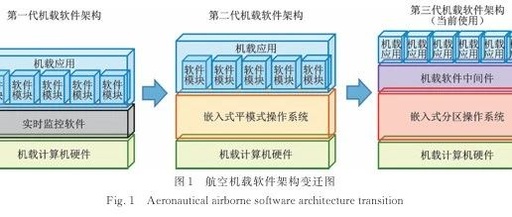
Industry Focus: Design of Next-Generation Avionics Software Based on Software Virtualization Technology

Abstract The rapid development of avionics software systems poses severe challenges to the mainstream avionics software architectures both domestically and internationally. Therefore, it is essential to conduct design research on the next-generation avionics software architecture. This paper analyzes the development of avionics software architecture, studies the latest software architecture technologies in the computer industry, proposes … Read more

Essential Interview Topics on Containers and Virtualization

Essential Interview Topics on Containers and Virtualization

Container Technology File Isolation: chroot Access Isolation: namespaces Resource Isolation: cgroups LXC: Linux Containers What is a Container A completely new way of packaging and deploying software. It encapsulates the application and its dependencies (including code, runtime, system tools, system libraries, etc.) Differences Between Docker and VM Docker is an application layer abstraction, where containers … Read more

GPU Virtualization Scheduling in the Era of Large Models: A Deep Game Between Hardware Genes and Software Strategies

GPU Virtualization Scheduling in the Era of Large Models: A Deep Game Between Hardware Genes and Software Strategies

1. Hardware Isolation of Nvidia MIG: From Architectural Design to Engineering Compromise MIG implements 7 independent instances in A100/H100, each exclusively occupying32-512 SM units, 1.8-24GB of VRAM, and independent L2 cache slices. Hardware-level isolation is achieved throughinstance ID tags: the instruction queue, register file, and memory controller access of each SM carry the instance ID, … Read more

Understanding Server Virtualization, Operating System Virtualization, and Service Virtualization

Understanding Server Virtualization, Operating System Virtualization, and Service Virtualization

Server Virtualization: The Super “Magician” of Hardware Resources Server virtualization is regarded as the “pioneer” of virtualization technology. Imagine you have a powerful physical server, akin to a luxurious building, but many rooms (hardware resources) within that building may often remain idle, leading to significant waste. Server virtualization technology is like a “magician” that maximizes … Read more

Exploring and Reflecting on the Attack Surface of QEMU Virtualization Security

Exploring and Reflecting on the Attack Surface of QEMU Virtualization Security

QEMU and KVM, as typical representatives of virtualization technology, are widely used in cloud computing systems across various vendors. As software with over a decade of history, QEMU has been plagued by security issues. With the continuous development of cloud computing based on QEMU/KVM virtualization software, its security problems have garnered significant attention in recent … Read more

A Discussion on Security Risks and Penetration Testing Methods in Corporate Virtualization Environments

A Discussion on Security Risks and Penetration Testing Methods in Corporate Virtualization Environments

Introduction Since the advent of server virtualization technologies like VMware, the efficiency, operational flexibility, and economic benefits of building enterprise data centers have greatly improved. Looking back a decade ago, when we wanted to deploy a new system, we first needed to apply for the purchase of a server. After it arrived, we had to … Read more

The Endurance of 1999 Yuan: A Review of the iQOO Z9 Turbo

The Endurance of 1999 Yuan: A Review of the iQOO Z9 Turbo

Last week, I saw everyone’s recommendations for several mid-range devices recently.As a result, the iQOO Z9 Turbo stands out significantly.So, I took it for a few days of testing.Here are my impressions.First, let’s look at the design.The front features a 6.78-inch, 1.5K Huaxing C8 direct screen, 2800×1260, 144Hz LTPS high refresh rate, 452ppi, with a … Read more

Full Big Core vs. Tri-Cluster: Major Changes Expected in the New Flagship SoC

Full Big Core vs. Tri-Cluster: Major Changes Expected in the New Flagship SoC

Recently, leaked information has revealed that MediaTek’s next-generation flagship SoC, the Dimensity 9300, may adopt a full big core CPU architecture. Based on ARM’s new mobile processor reference design, it will feature a “4+4” configuration, consisting of 4 Cortex-X4 super big cores and 4 Cortex-A720 big cores. Additionally, it will upgrade to the new fifth-generation … Read more

China’s Chips! The Hidden Gold Mine of Chip Manufacturers in the Mid-Range Market

China's Chips! The Hidden Gold Mine of Chip Manufacturers in the Mid-Range Market

This article is sourced from: Intelligent Communication Positioning Circle Recently, Counterpoint Research released its global smartphone AP/SoC chip market research report for Q4 2024. The report shows that MediaTek, Apple, Qualcomm, UNISOC, Samsung, and HiSilicon occupy the top six positions, with market shares of 34%, 23%, 21%, 14%, 4%, and 3% respectively, accounting for 99% … Read more