The Most Inaccurate Metrics Measured by Smartwatches

The Most Inaccurate Metrics Measured by Smartwatches

From heart rate, blood pressure, sleep to energy consumption, fatigue status, and maximum oxygen uptake, the metrics displayed by smartwatches and fitness bands are increasing, but do some values seem inaccurate? Your feeling is correct,the accuracy of various metrics varies greatly; some are accurate enough for doctors to use as reference, while others are only … Read more
Research Progress of Flexible Sensors in Wearable Devices

Research Progress of Flexible Sensors in Wearable Devices

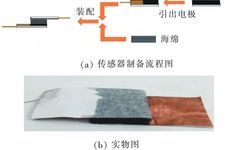
Click the blue text to follow “Textile Report” In the context of the integration of electronic technology and modern textile technology, wearable devices that are more flexible, with more sensitive and accurate signal transmission, and a wider monitoring range have become a research hotspot. Therefore, researchers are focused on developing new types of flexible electronic … Read more

Why Our Wearable Device Does Not Use Bluetooth (BLE) Protocol

Why Our Wearable Device Does Not Use Bluetooth (BLE) Protocol

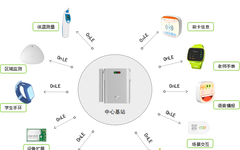
Why Our Wearable Device Does Not Use Bluetooth (BLE) Protocol Introduction After 2010, with the promotion of low-energy Bluetooth protocol, the power consumption problem of traditional Bluetooth protocol has been greatly solved. Along with the development of smartphones, there has been a significant wave of smart hardware, including various wearable devices centered around smartphones, such … Read more

Disruptive Sensing Technology for Automobiles and Wearables

Disruptive Sensing Technology for Automobiles and Wearables

Source: TechSugar Original Author: Liu Hong The TMR (Tunneling Magnetoresistance) sensor is a type of sensor that utilizes quantum phenomena to provide performance advantages over existing sensors, making it a potential replacement for mainstream Hall effect sensors and similar products. What is a Quantum Sensor? Sensors are used to collect data on a range of … Read more

Enhanced Performance of TENG through Graphene Oxide and Transition Layer Coupling

1Introduction to the Results The triboelectric nanogenerators (TENGs) have a simple structure, low manufacturing costs, and are suitable for harvesting low-frequency mechanical energy, thus providing a new method for green energy collection. Previous studies have mainly focused on the effects of single factors such as charge generation, storage, or loss on the electrical output of … Read more

Development of Internet Plus Wearable ECG Monitoring Devices

Development of Internet Plus Wearable ECG Monitoring Devices

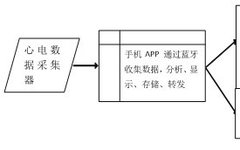
The Internet Plus wearable ECG monitoring device utilizes small and lightweight sensors to enhance wearing comfort, allowing for long-term, real-time collection of human ECG data. By connecting with hospital databases through wireless transmission modules, it integrates individuals into the medical big data ecosystem, breaking the spatial limitations between medical devices and people. In a populous … Read more

PMIC for Wearable Applications: 50% Size Reduction!

PMIC for Wearable Applications: 50% Size Reduction!

According to IDC data, global shipments of wearable devices reached 138.4 million units in Q3 2021, a year-on-year increase of 9.9%. In the domestic market, shipments reached 35.28 million units, up 5.0%. It is expected that global shipments of smart wearable devices will reach 632 million units by 2024. In the small-sized wearable devices, power … Read more

Small Yet Beautiful Wearable Medical/Health Devices

Small Yet Beautiful Wearable Medical/Health Devices

Note: 1. This article mainly collects some POC-related medical/health monitoring device technology companies and their main products. 2. A senior from Kun Yuan Gene once asked what kind of data has scientific significance, and the key word from the senior was “background”. 3. Taking the recent Verily 10,000-person project (projectbaseline.com) as an example (note: assuming … Read more

How NOR Flash Overcomes Design Challenges in Wearables

How NOR Flash Overcomes Design Challenges in Wearables

To continuously improve various features in next-generation devices, wearable and hearable devices rely on memory. Memory is a key design factor for implementing advanced devices… Although wearable and hearable technologies may seem like extensions of the previous generation of handheld devices, the innovative features required to enhance their value, user experience, and functionality significantly increase … Read more

Overview of Low-Power PMICs for Small Wearable Devices

Overview of Low-Power PMICs for Small Wearable Devices

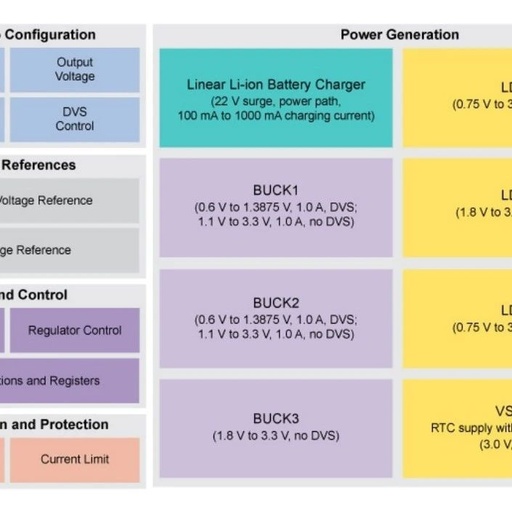
According to a report from Electronic Enthusiasts (by Li Cheng), in recent years, the rapid development of underlying technologies such as 5G, IoT, and AI has completely activated the entire consumer electronics market, leading to a strong momentum in the wearable device market. Data from IDC shows that in the second quarter of 2021, global … Read more