Charge Transfer Dynamics in Supramolecular Tessellations Composed of Aromatic Donors and Chiral Tris(naphthalenediimide) Triangular Acceptors
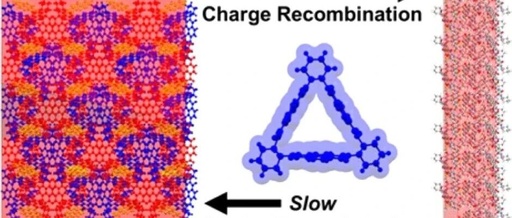
Charge Transfer Dynamics in Supramolecular Tessellations Composed of Aromatic Donors and Chiral Tris(naphthalenediimide) Triangular Acceptors

Introduction The Zeng Lab’s public account aims to share cutting-edge information on the supramolecular self-assembly and excited-state properties of naphthalene diimide/perylene diimide (NDI/PDI), while also serving as a window to introduce the team’s work and share daily activities. Due to the limited level of the editor, there may inevitably be errors, and we welcome corrections … Read more
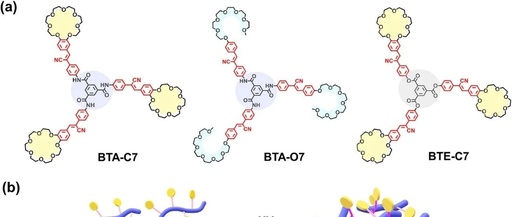
J. Am. Chem. Soc. | Jilin University’s Jiang Shimei: Achieving High-Performance Single-Component Adhesives through Synergistic Supramolecular and Covalent Polymerization

J. Am. Chem. Soc. | Jilin University’s Jiang Shimei: Achieving High-Performance Single-Component Adhesives through Synergistic Supramolecular and Covalent Polymerization

Adhesive research is an important topic in the field of chemistry, driving advancements across multiple industries from medicine and electronics to construction and automotive. Compared to traditional polymer adhesives, supramolecular adhesives represent an innovative approach that utilizes non-covalent interactions such as van der Waals forces, hydrogen bonding, π-π interactions, and hydrophilic/hydrophobic effects to achieve strong … Read more

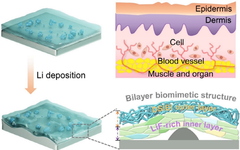
Fatigue-Free and Skin-like Supramolecular Ion-Conductive Elastomeric Interphases for Stable Lithium Metal Batteries

Fatigue-Free and Skin-like Supramolecular Ion-Conductive Elastomeric Interphases for Stable Lithium Metal Batteries

【Research Background】 Metallic lithium is considered an ideal anode material in battery chemistry due to its high theoretical capacity (3860 mAh g -1) and low reduction potential (3.04 V vs. SHE). However, metallic lithium anodes exhibit high chemical reactivity, spontaneously forming a brittle and uneven solid electrolyte interphase (SEI) layer upon contact with organic electrolytes. … Read more