Surgical Innovations and ADC New Drugs: Transformations and New Hope in Ovarian Cancer Treatment Paradigms
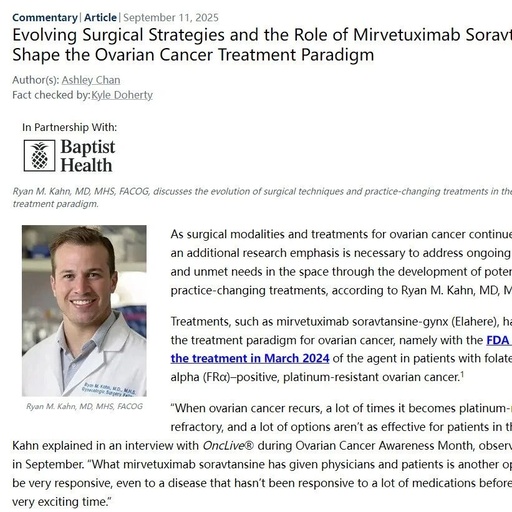
Surgical Innovations and ADC New Drugs: Transformations and New Hope in Ovarian Cancer Treatment Paradigms

The field of ovarian cancer treatment is evolving at an unprecedented pace. With continuous advancements in surgical techniques and the emergence of new therapies, patients’ survival prospects are steadily improving. However, as Dr. Ryan M. Kahn, a gynecologic oncologist at Baptist Health Miami Cancer Institute, states, we still need to address ongoing challenges and unmet … Read more

Breaking Through the Treatment Dilemma of Advanced Ovarian Cancer: Precision Exploration from FRα to HER2

Breaking Through the Treatment Dilemma of Advanced Ovarian Cancer: Precision Exploration from FRα to HER2

Introduction Ovarian cancer is one of the most common malignant tumors in gynecology, with the highest mortality rate among gynecological malignancies. Despite continuous advancements in clinical surgery and ongoing optimization of chemotherapy regimens, the prognosis for patients with advanced ovarian cancer remains poor, especially for those who are resistant to platinum-based drugs, leaving limited treatment … Read more

Nature Sub-Journal: Photoacoustic Imaging Technology for Precise Visualization of Tumor Microenvironments

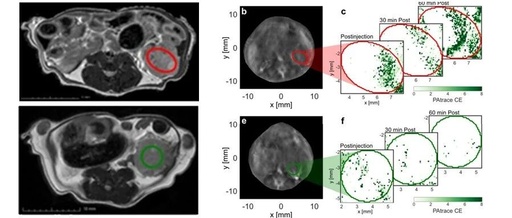
Nature Sub-Journal: Photoacoustic Imaging Technology for Precise Visualization of Tumor Microenvironments

Photoacoustic Imaging (PAI) is an emerging technology that combines the high contrast of optical imaging with the deep penetration capabilities of ultrasound. It generates acoustic signals from tissues excited by laser, enabling functional and molecular-level imaging of living tissues. This technology does not require ionizing radiation and can assess blood oxygen levels through endogenous hemoglobin, … Read more

Molecular Markers of Low-Grade Serous Ovarian Cancer

Molecular Markers of Low-Grade Serous Ovarian Cancer

Approximately 90% of ovarian malignancies are epithelial ovarian cancer (EOC), with serous ovarian cancer (SOC) accounting for about 75% of EOC. In 2014, the World Health Organization (WHO) classified SOC into Type I and Type II based on histological findings under ordinary microscopy and biological behavior: Type I refers to low-grade serous ovarian cancer (LGSOC), … Read more