Fault Injection Method Based on Virtual Prototypes: Application in Powertrain ECU

Fault Injection Method Based on Virtual Prototypes: Application in Powertrain ECU

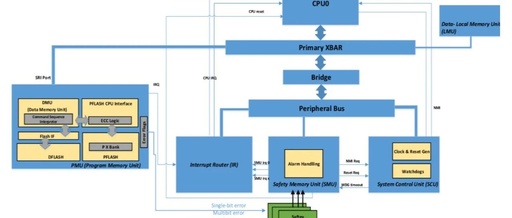
Abstract:To launch vehicles without hardware and software defects, semiconductor suppliers, original equipment manufacturers (OEMs), and tier-one OEM suppliers must work closely together to provide safety mechanisms and related safety implementation methods. Virtual Prototypes (VP) and Fault Injection (FI) are two of the various existing methods recommended by the ISO 26262 standard for verifying safety requirements. … Read more

ECU Software Fault Injection Testing Tool Compliant with Functional Safety Standards – FIT

ECU Software Fault Injection Testing Tool Compliant with Functional Safety Standards - FIT

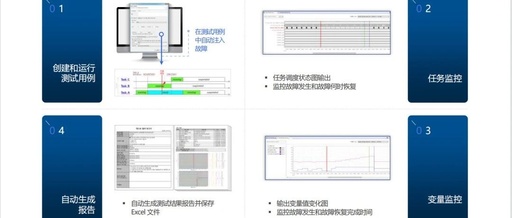
FIT is a runtime software fault injection testing tool, with the following main features: Simulates faults by manipulating memory, registers, task scheduling, and ALARM scheduling; Supports software fault injection (including BSW and ASW) during ECU runtime; Fault injection testing complies with ISO 26262 standards; Achieved ASIL D level certification for functional safety; Allows fault injection … Read more

Breaking Through Technology: How to Become a ‘Quality Gatekeeper’ in Automotive Embedded Software Testing?

Breaking Through Technology: How to Become a 'Quality Gatekeeper' in Automotive Embedded Software Testing?

In the wave of automotive electronics transforming into “software-defined vehicles”, embedded software testing is upgrading from the traditional “verification phase” to a core competitive advantage that determines vehicle functional safety and user experience. When the code volume of a smart car exceeds 100 million lines, how can we build a reliable testing system within a … Read more

Functional Safety Design and Assessment Methods for Automotive MCUs

Functional Safety Design and Assessment Methods for Automotive MCUs

Abstract To meet the hardware requirements of ISO 26262, this study provides a detailed method for assessing the functional safety of automotive microcontrollers. Part 5 of ISO 26262 – the first phase of hardware construction in automotive hardware development outlines safety standards. Here, hardware safety design is created, implemented, integrated, and tested based on the … Read more

Development of Fault Injection Methods and Fault Coverage Analysis for Safety-Critical SoCs (Part 1)

Development of Fault Injection Methods and Fault Coverage Analysis for Safety-Critical SoCs (Part 1)

Abstract:As electronic products become an integral part of daily life, their application in safety-critical automotive systems has become ubiquitous. The International Organization for Standardization (ISO) 26262 standard outlines guidelines for establishing a good safety level in automotive System-on-Chips (SoCs). However, despite adherence to this standard, operational failures may still occur, necessitating Safety Mechanisms (SMs) to … Read more

Essential Insights for Automotive Companies Going Global: The FIT Fault Injection Testing Tool – A “Safety Guardian” Compliant with ISO 26262, Enhancing Testing Efficiency for Autonomous Vehicles by 100%!

Essential Insights for Automotive Companies Going Global: The FIT Fault Injection Testing Tool - A "Safety Guardian" Compliant with ISO 26262, Enhancing Testing Efficiency for Autonomous Vehicles by 100%!

Editor’s Note In the development of electronic control systems for smart vehicles, functional safety verification faces significant challenges: traditional fault injection testing methods are inefficient, lengthy, and costly, and they struggle to comprehensively cover the various abnormal scenarios required by the ISO 26262 standard (such as ASIL D level). As the complexity of automotive electronic … Read more

Continuously Leading: Unisoc’s R52+ Core-Based Automotive MCU Achieves Highest Functional Safety Certification

Continuously Leading: Unisoc's R52+ Core-Based Automotive MCU Achieves Highest Functional Safety Certification

Recently, Unisoc’s next-generation THA6 series MCU has passed the evaluation by the internationally recognized certification body SGS regarding functional safety development processes and functional safety product design, obtaining two qualifications: the ASIL D level functional safety process certification compliant with ISO 26262 standards and the functional safety ASIL D Ready product certification, making it the … Read more

Software Fault Injection Methods

Software Fault Injection Methods

01 Introduction to Fault Injection Methods In critical scenarios related to functional safety, intensive testing activities are essential to ensure that new systems and built-in fault tolerance mechanisms operate as expected. Ensuring that the system operates normally in the event of a failure (Fail Operational) is a more complex issue than traditional testing content. The … Read more

Safety Assessment of Automated Vehicle Functions | Simulation-based Fault Injection

Safety Assessment of Automated Vehicle Functions | Simulation-based Fault Injection

How can one know? This article is translated from the “2017 IEEE International Conference on Vehicular Electronics and Safety (ICVES)” Included article: Safety Assessment of Automated Vehicle Functions by Simulation-based Fault Injection Original authors: Garazi Juez, Estibaliz Amparan Editor’s note When analyzing the concept phase of automotive functional safety based on the existing version of … Read more

Comprehensive Analysis of Domestic Automotive Chips

Comprehensive Analysis of Domestic Automotive Chips

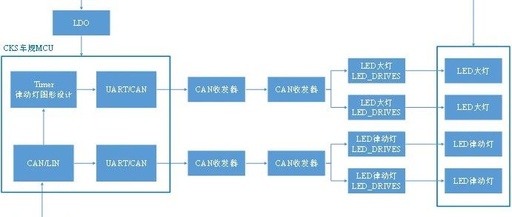
1. Understanding Automotive Chips According to their functions, automotive-grade chips can be categorized into four types: computing and control chips, power chips, sensor chips, and others. Computing and control chips mainly consist of microcontrollers and logic ICs, primarily used for calculation, analysis, and decision-making; power chips mainly convert electrical energy and control circuits; sensor chips … Read more