Automotive Chip Manufacturers Compete for Safety Level: Target ASIL D
Automotive Chip Manufacturers Compete for Safety Level: Target ASIL D

According to Xinzhijia: As the automotive industry advances towards intelligence, the number of electronic/electrical systems installed in vehicles continues to increase. Public data shows that a high-end luxury car can have more than 70 electronic control units (Electronic Control Unit, ECU), among which the engine management system, chassis control system, and braking system are all … Read more
Fault Injection Testing (FIT) in Functional Safety

Fault Injection Testing (FIT) in Functional Safety

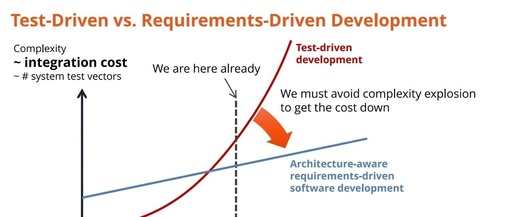
People often ask me how to conduct functional safety testing and what the differences are compared to previous testing methods. I believe there isn’t much difference, but I place significant emphasis on Fault Injection Testing (FIT). This testing method is mentioned in Part 4 and Part 6, generally requiring ASIL to be ++. In fact, … Read more

Libero® SoC Design Suite Achieves Dual Safety Certification!

Libero® SoC Design Suite Achieves Dual Safety Certification!

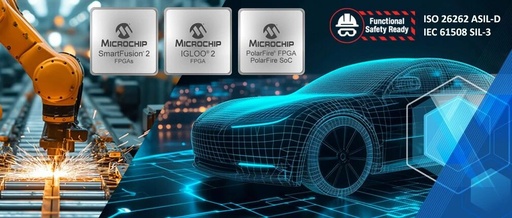
Friends in the chip industry, I have exciting news that will make your heart race! Libero® SoC Design Suite 2023.2 SP1 has officially passed the TÜV® Rhineland’s ISO 26262 ASIL-D and IEC 61508 SIL-3 dual certifications, compatible with SmartFusion® 2, IGLOO® 2, and PolarFire® FPGA and SoC devices. These two “safety gold medals” are not … Read more

Software Fault Injection Methods

Software Fault Injection Methods

Click the blue text above TanSi Laboratory Get more automotive cybersecurity information Abstract Software fault injection is an important technical means for functional safety verification. This article aims to provide a basic overview of software fault injection and introduce existing fault injection techniques. 01 Introduction to Fault Injection Methods // In critical scenarios related to … Read more

Software Fault Injection Methods

Software Fault Injection Methods

Abstract Software fault injection is an important technical means for functional safety verification. This article aims to provide a basic overview of software fault injection and introduce existing fault injection techniques. 01 Introduction to Fault Injection Methods // In critical scenarios related to functional safety, intensive testing activities are crucial to ensure that new systems … Read more

Overview of NXP’s S32K Series MCUs

Overview of NXP's S32K Series MCUs

Follow and star the public account, to reach exciting content directly Source: Online materials Compiled by: Li Xiaoyao Introduction Recently, due to work requirements, I have been learning about NXP’s S32K344, hoping to document my learning process through this blog, which not only makes it easier to find information later but also helps me grasp … Read more

Hall Sensors for Various Parameters in Automotive Applications

Hall Sensors for Various Parameters in Automotive Applications

In the process of autonomous driving, cars are equipped with an increasing number of sensors. Compared to sensors that use other measurement principles and technologies, Hall effect-based magnetic field sensors have many advantages. Current models also meet the stricter requirements of the ISO 26262:2018 standard. When a magnetic field is applied to a semiconductor that … Read more

Understanding Automotive-grade Chips: The Industry’s Treasure!

Understanding Automotive-grade Chips: The Industry's Treasure!

Source: Content from Ruichuang Electronics, thank you! With the continuous fluctuations in domestic and international oil prices, the new energy vehicle market is booming. However, the upstream automotive-grade MCU chips are in short supply. So what are automotive-grade MCU chips, and how are they different from ordinary chips? Today, we will reveal the secrets and … Read more

Automotive Grade Chips and Certification Standards AEC-Q and ISO 26262

Automotive Grade Chips and Certification Standards AEC-Q and ISO 26262

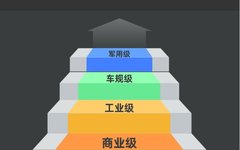
What are Automotive Grade Chips Automotive chips are the core components of automotive electronic systems and are an important foundation for the transformation and upgrading of the automotive industry. In the automotive manufacturing industry, the reliability requirements for automotive grade chips are undoubtedly higher than those for commercial and industrial grade chips. As the name … Read more

Discussing MCUs and Watchdogs

Discussing MCUs and Watchdogs

The “independence” of the built-in watchdog in MCUs is typically reflected in its hardware isolation from core processing units (such as CPUs and buses), for example, having independent clock sources, counters, and reset logic. This ensures that even if the CPU becomes unresponsive due to software bugs or hardware failures, the built-in watchdog can still … Read more