This article is based on a thorough review of relevant authoritative literature and materials, forming a professional and reliable content. All data in the article is verifiable and traceable. Special note: The data and materials have been authorized. The content of this article does not involve any biased views and objectively describes the facts with a neutral attitude.
At the end of the article, there are the latest trending articles; those interested can take a look.
Continuously updated: Practical Handbook for Efficient Modern C++ Programming: From Project Pain Points to the Essence of Modern C++
Hands-on Learning of CUDA Programming
Still struggling to understand the Workflow framework after 3 years of C++ development? This tutorial will help you turn the tide.
Existing Projects:
Stuck learning databases? This lightweight SQLite project will help you understand the underlying principles in no time (includes C language source code).
Practical C++ Cloud Storage System: Stop writing WEB servers on your resume (includes runnable code).
P2P System Breakdown: From reliable UDP transmission to file chunking, understand distributed design in no time.
Is writing a Redis server in C++ too difficult? This project will guide you from zero to a complete implementation.
Real-time Video and Voice Chat Room Based on C++11
Event Background: A Global Technical Disaster
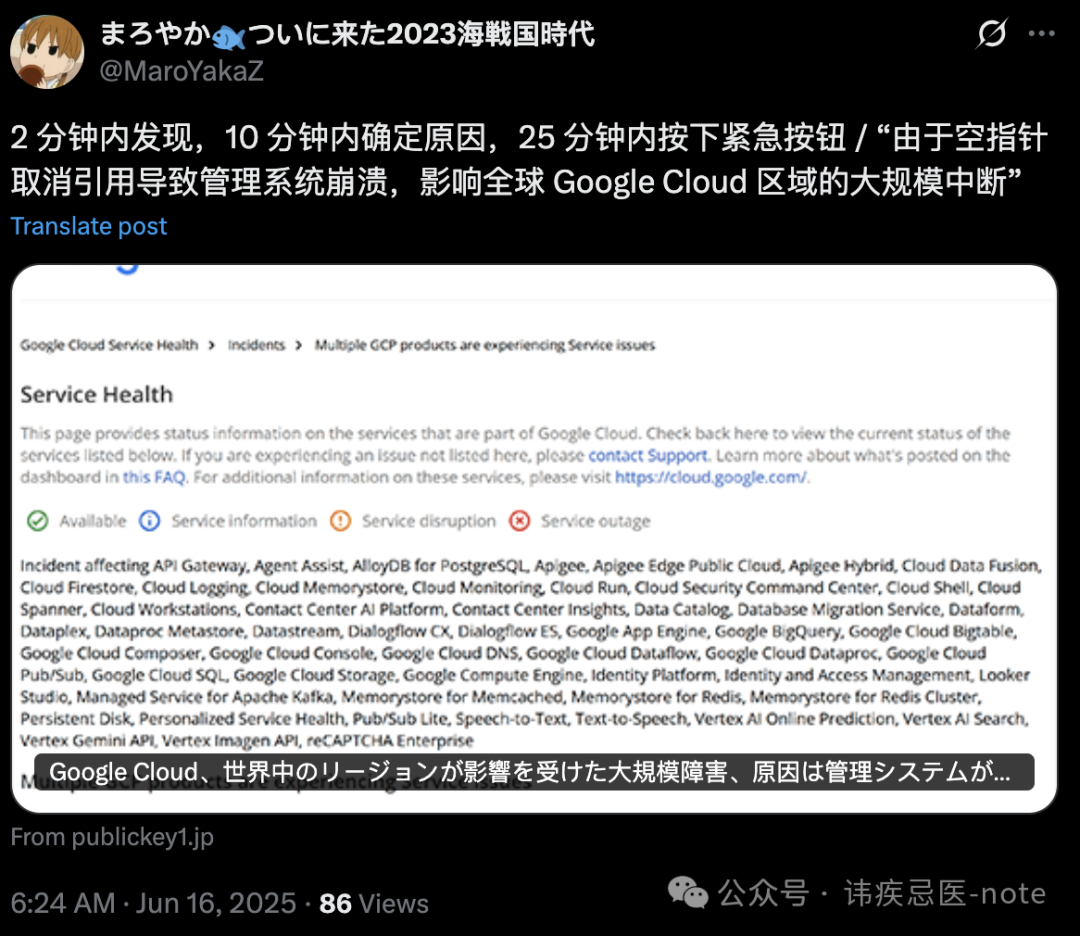
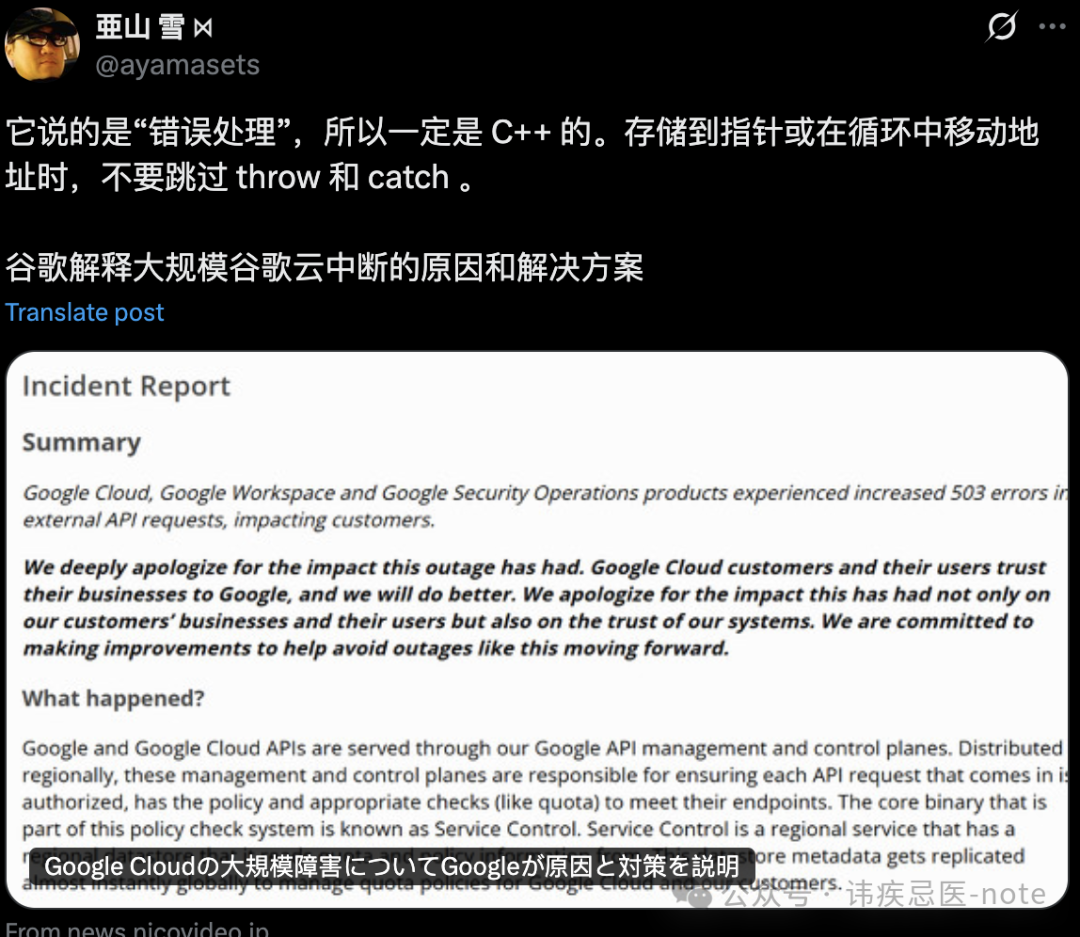
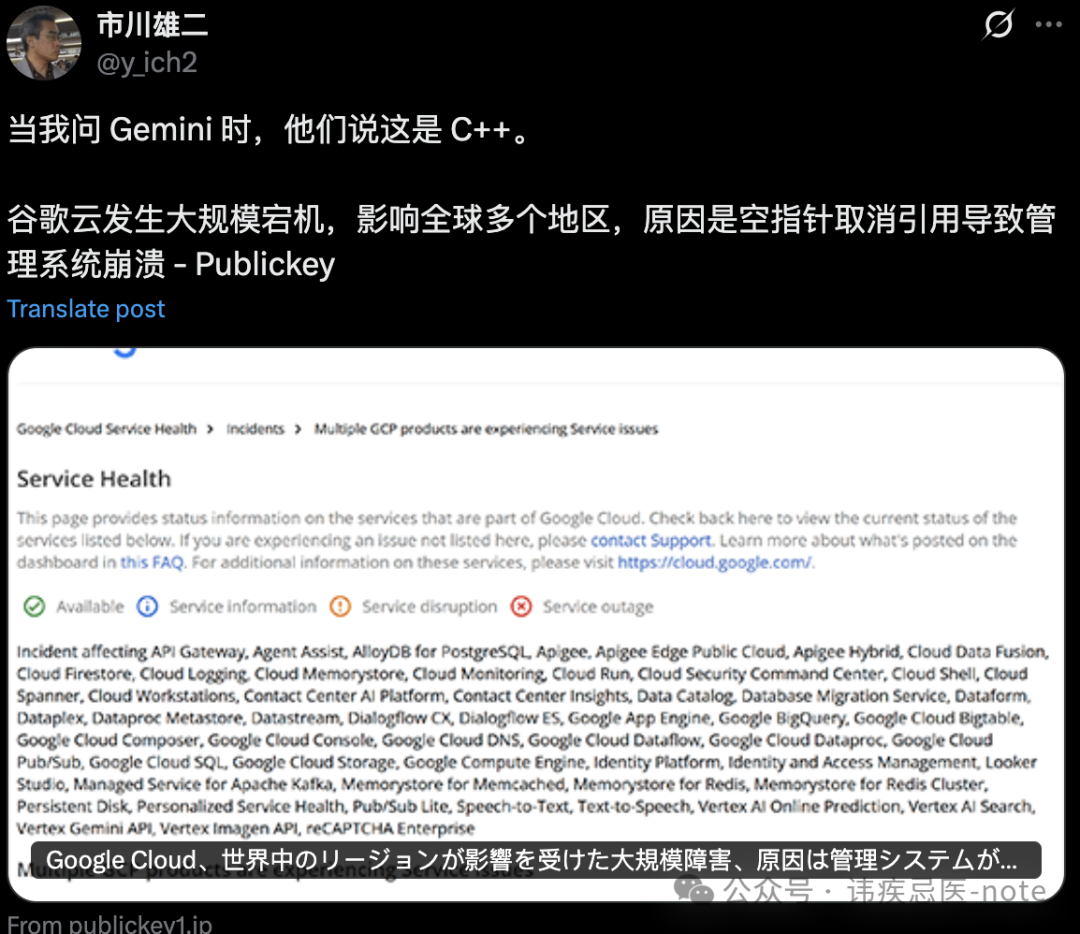
On June 12, 2025, Google Cloud services experienced a global outage. Starting at 10:51 AM Pacific Time (2:51 AM Beijing Time), core services such as Gmail, Google Drive, YouTube, and third-party platforms relying on Google Cloud like OpenAI, Shopify, and GitHub all went offline. The incident lasted for several hours, affecting hundreds of millions of users across the United States, Europe, and Asia. Google officially confirmed that the culprit behind this outage was a “NullPointerException” in the management system—an all too familiar “old friend” in the C++ world.
The cause of this incident is not complex: a seemingly trivial pointer error, under the amplification effect of a distributed system, evolved into a global technical disaster. The consequences were alarming: business shutdowns, user anger, and a crisis of trust in technology followed.
Technical Analysis: The Fatal Blow of NullPointerException
Null Pointer: A Double-Edged Sword in C++
In C++ programming, pointers symbolize efficiency and flexibility, but they are also a breeding ground for hidden dangers. <span>NullPointerException</span> (more commonly seen in C++ as undefined behavior when dereferencing a null pointer) arises from the programmer’s failure to properly handle the null state of pointers. Suppose a piece of core code in the management system is as follows:
struct Node {
    int data;
    Node* next;
};

void processNode(Node* ptr) {
    int value = ptr->data; // Crashes here if ptr is nullptr
}
If <span>ptr</span> is uninitialized or assigned to <span>nullptr</span>, dereferencing it directly will cause the program to crash. In Google Cloud’s management system, this error was evidently not effectively contained, ultimately leading to a global failure. This makes me ponder: how could a fundamental pointer error wreak such havoc in such a critical system?
The answer lies in the essence of C++: it grants developers unparalleled control but also places the entire responsibility on them. The efficiency and fragility of raw pointers coexist, while smart pointers can alleviate some issues but are not a panacea.
The Amplification Effect of Distributed Systems
Google Cloud services are based on a distributed system architecture, involving tens of thousands of servers and complex network coordination. The allure of distributed systems lies in their high availability and scalability, but the flaw is that a failure in a single node can trigger a snowball effect. Suppose a module in the management system is responsible for coordinating service scheduling:
class ServiceManager {
    std::vector<Service*> services;
public:
    void dispatch() {
        for (auto* svc : services) {
            svc->execute(); // svc is not checked for nullptr
        }
    }
};
If a pointer in <span>services</span> is not properly initialized, calling <span>execute()</span> will trigger a crash. Worse, in a distributed environment, this crash may interrupt heartbeat detection, leading other nodes to misjudge the state, ultimately paralyzing the entire cluster. NullPointerException was merely the fuse; the real killer was the system design’s low tolerance for a single error.
The Responsibility of C++ and the Pitfalls of Distributed Systems
The Implicit Challenges for C++ Developers
I believe this incident exposed a neglected issue in modern development: the duality of C++’s low-level control in distributed systems. C++ is known for its performance, but in a distributed environment, the complexities of memory management and concurrency control make developers tread carefully. Smart pointers (<span>std::shared_ptr</span>, <span>std::unique_ptr</span>) can mitigate the risks of null pointers, but they cannot completely replace the necessity of manual checks. For example:
std::shared_ptr<Node> safePtr;
if (safePtr) {
    safePtr->data = 42; // Safe access
}
However, in performance-sensitive management systems, developers may choose raw pointers for optimization considerations, thus laying hidden dangers. Google engineers may have faced similar choices but evidently underestimated the consequences. My view is that the power of C++ requires stronger discipline, rather than mere reliance on tools.
Overtrusting Distributed Systems
Another novel insight is that distributed systems are often overtrusted as a myth of “self-healing.” Google Cloud may have assumed that redundancy mechanisms could cover a single bug, but the core position of the management system made NullPointerException a breakthrough for a single point of failure. This reminds us: distributed does not equal infallible; the robustness of C++ code remains a cornerstone. Over-reliance on system-level fault tolerance while neglecting the rigor at the code level is a profound lesson from this incident.
Conclusion: The Glory and Warnings of C++
This Google Cloud outage incident serves as a mirror in the C++ world, reflecting both the brilliance and fragility of technology. I firmly believe: the sharpness of pointers requires the constraint of discipline, and the grandeur of distributed systems needs the support of details. This is not just a technical error but a spur for us developers—never underestimate the destructive power of a null pointer in the pursuit of performance and scale. The lesson from Google tells us: the glory of C++ belongs to the meticulous, and the future cloud dominators will surely be cohabitors of technology and responsibility.
References
- “Distributed Systems: Principles and Paradigms,” Andrew S. Tanenbaum, Maarten van Steen
- “The C++ Programming Language,” Bjarne Stroustrup
#Google #SafeProgramming #DistributedSystems #PerformanceTips #UninitializedPointers #PointerUsage #InterviewEssentials