Fundamentals of C Language – (02) Data

Fundamentals of C Language - (02) Data

2 Data and Statements 1. Data Programs consist of code and data, and they operate on data. The properties that describe a variable include scope, linkage, and storage type. These three properties determine the variable’s availability (whether it can be called) and its lifecycle. 1.1 Basic Data Types In C language, there are only four … Read more

Tips for Using MDK5

Tips for Using MDK5

Scan the QR code to follow Chip Dynamics, and say goodbye to “chip” bottlenecks! Search WeChatChip Dynamics Next, we will introduce some practical tips for using the MDK5 software during the code editing and writing process. These tips can effectively improve development efficiency, and we recommend that everyone focus on mastering them and deepen understanding … Read more

Analysis | C Language Level 1 Practical Exam Questions from the Electronics Society (December 2024)

Analysis | C Language Level 1 Practical Exam Questions from the Electronics Society (December 2024)

Follow me to learn more about children’s programming content1. Those who love knowledge are better than those who just know; those who love knowledge are better than those who just like it. For those who love programming, please directly output this sentence on the screen. How Can We Live a Joyful Life Without Programming Time … Read more

Calculating Factorials of Positive Integers in C Language

Calculating Factorials of Positive Integers in C Language

In mathematics, the factorial of a positive integer represents the product of all positive integers less than or equal to that number, denoted as n!, known in English as factorial.For example, the factorial of 5 is: 5!=5×4×3×2×1=120 The mathematical expression is: n!=n×(n−1)×(n−2)×…×2×1n! To implement the factorial in C language, a loop for multiplication is required: … Read more

Understanding C Language Vocabulary Elements

Understanding C Language Vocabulary Elements

In the world of C programming, mastering its vocabulary elements is fundamental for writing code smoothly. 1. The Six Major Tokens in C Language There are six key tokens in C language, which are the basic units that make up C code: keywords, punctuation, identifiers, constants, string constants, and operators. 2. Rules for Identifiers Identifiers … Read more

Essential Knowledge Points for C Language Beginners: Summary of One-Dimensional Array Usage Techniques

Essential Knowledge Points for C Language Beginners: Summary of One-Dimensional Array Usage Techniques

“From today on, study hard and make progress every day” Repetition is the best method for memory; spend one minute each day to remember the basics of C language. “Series of 100 Essential Knowledge Points for C Language Beginners“ The following notes finally enter the practical series, which is also the most important and difficult … Read more

Complete Source Code | C Language Implementation of a Book Management System (Data Persistence Version)

Complete Source Code | C Language Implementation of a Book Management System (Data Persistence Version)

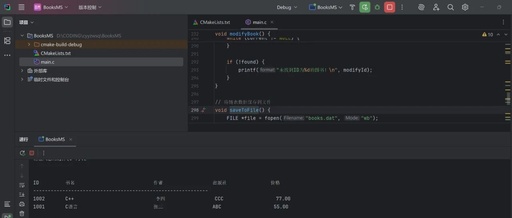
Recommended Reading: Complete Source Code | C Language Implementation of a Student Information Management System C Language Learning Guide: Have you mastered these core knowledge points? C Language Functions: From Beginner to Proficient, Understand C Language Pointers Thoroughly in One Article, Understand C Language Dynamic Memory Management Thoroughly in One Article. Body[Image] The complete source … Read more

Complete Source Code | C Language Design and Implementation of Employee Attendance System

Complete Source Code | C Language Design and Implementation of Employee Attendance System

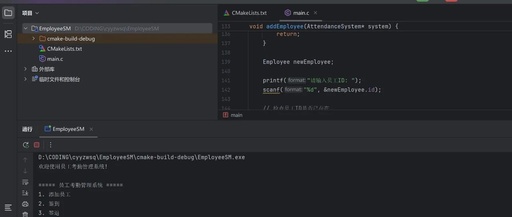
Recommended Reading Notes Version | A very concise summary of C language knowledge! Complete Source Code | C Language Design Cross-Platform Logging Library | Enterprise-Level Development GitHub Stars 88.9K, 9 amazing open-source projects! Latest C Language Interview Questions Summary PDF Detailed Version Understand “Stack Overflow” and “Heap Overflow” in C Language, the most straightforward explanation … Read more

Fan Question | C Language: How to Define a Function with the Same Name as a Library Function and Call That Library Function

Fan Question | C Language: How to Define a Function with the Same Name as a Library Function and Call That Library Function

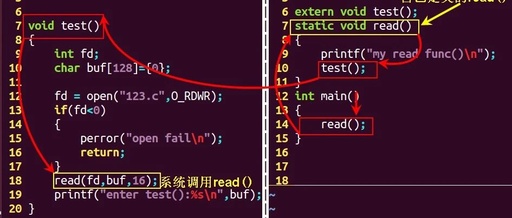
Ma Xiaobian HundredMillionFans CertifiedAccount By clicking follow, you not only gain a tool for finding resources but also an interesting soul ▶ ▶ ▶ Question Description: A certain function fun_1() is in the library and cannot be modified. It is used extensively in the program. Now, I want to make the original fun_1 ineffective (the … Read more

Understanding Array Decay to Pointers in C Language (Part 1)

Understanding Array Decay to Pointers in C Language (Part 1)

Array Decay Rules:In most cases, the name of an array is implicitly converted (or referred to as “decay”) to a pointer to its first element. This behavior is specified by the language standard.★ 1. Cases Where Arrays Convert to Pointers 1.1 Array Name as Function Parameter When an array is passed as a function parameter, … Read more