Presentation Notes | When a Microsecond Is an Eternity: High-Performance Trading Systems in C++ – CppCon 2017

Presentation Notes | When a Microsecond Is an Eternity: High-Performance Trading Systems in C++ - CppCon 2017

Welcome to Ethan’s Air Garden. This is dedicated to creating a computer technology column that can be read during commutes, meals, or before bed, which is both accessible and in-depth. At CppCon 2017, Carl Cook delivered a talk titled “When a Microsecond Is an Eternity: High Performance Trading Systems in C++”. This article records the … Read more


Linux Performance Tuning: Understanding Caches in Memory

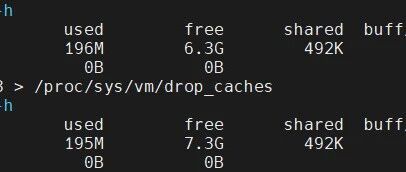
1. Caches in Memory When we talk about memory caches, we mainly refer to buffers and caches, which can be viewed using the free command. # Note that the output of free may vary between different versions $ free total used free shared buff/cache available Mem: 8169348 263524 6875352 668 1030472 7611064 Swap: 0 0 … Read more

Linux Performance Tuning: In-Depth Analysis of Buffer and Cache

Buffer and Cache are present in the output of the free command: $ free total used free shared buff/cache available Mem: 8169348 263524 6875352 668 1030472 7611064 Swap: 0 0 0 Note that the output of free may vary between different versions. This output includes specific usage statistics for physical memory Mem and swap partition … Read more

Practical Course on Linux Kernel Technology (Basic): How to Write Code for Faster CPU Execution?

Practical Course on Linux Kernel Technology (Basic): How to Write Code for Faster CPU Execution?

Table of Contents 1. Multi-level Cache of CPU 2. Improving Data Cache Hit Rate 3. Improving Instruction Cache Hit Rate 4. Improving Cache Hit Rate on Multi-core CPUs 5. Conclusion ๐ŸŽ‰ Accumulating knowledge, sharing, and growing, so that both you and others can benefit! ๐Ÿ˜„ For more project courses, you can add me on WeChat … Read more

Linux Configuration Management

Linux Configuration Management

Linux Configuration Management In today’s digital age, Linux, as a representative of open-source operating systems, is widely used in servers, cloud computing, embedded devices, and development environments. Configuration management is a core aspect of Linux system administration, involving system setup, maintenance, optimization, and automation. Through effective configuration management, administrators can ensure system stability, security, and … Read more

Embedded C Language – Computer Architecture and CPU Operation Principles

Embedded C Language - Computer Architecture and CPU Operation Principles

The core of computer architecture lies inthe instruction set which defines “what to do,”the microarchitecture determines “how to do it,”the packaging and bus decide “how to connect,”the memory hierarchy determines “how fast to access data,”and parallelism and dedicated units determine “how much can be done.” From the Turing machine to modern SoCs, all complex computations … Read more

Buffers and Caches in Linux Memory

Buffers and Caches in Linux Memory

Buffer and Cache Definitions: Buffer: A temporary storage for raw disk blocks, which writes cached data to disk. It is usually not very large (around 20MB). This allows the kernel to consolidate scattered writes, optimizing disk writes uniformly. For example, multiple small writes can be combined into a single large write. Cache: A page cache … Read more

Common Commands That Affect Cache in Linux Systems

Common Commands That Affect Cache in Linux Systems

In Linux systems, files are automatically cached in memory (Page Cache) when read. However, if you want to proactively warm up the cache (preload files into Cache), you can use the following methods: — ## **1. Use the `dd` Command to Read Files (Trigger Cache)** dd if=filename of=/dev/null bs=1M – **Purpose**: Read the file without … Read more

Which Data Occupies Linux Cache

Which Data Occupies Linux Cache

In Linux systems, the memory management mechanism utilizes free memory to cache various data to improve performance. Below is a detailed analysis of whether different components occupy **Cache** (cached memory): — ## **1. Relationship Between Memory and Cache** – **File System Cache (Cached)**: Linux actively caches read files in memory (i.e., `Cached`) to speed up … Read more

Understanding the Differences Between Buffer and Cache in Linux

Understanding the Differences Between Buffer and Cache in Linux

Understanding the Differences Between Buffer and Cache in Linux โ€œWhy does my free command show so much memory usage, yet the system is not slow?โ€โ€œCan both Buffer and Cache be released?โ€โ€œIs Linux stealing my memory?โ€ Many newcomers to Linux are often puzzled when they see the memory usage of the system. This article aims to … Read more