C/C++ Programming: Operators
C/C++ Programming: Operators

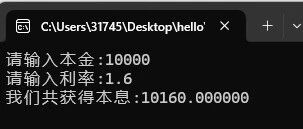
Previously, we learned how to interact with the computer using scanf and printf, but we haven’t written a useful program yet. Today, we will discuss the various calculations that can be performed in a program and use these calculations to implement a simple interest calculator.First, let’s recall the operations we use in mathematics: +, -, … Read more
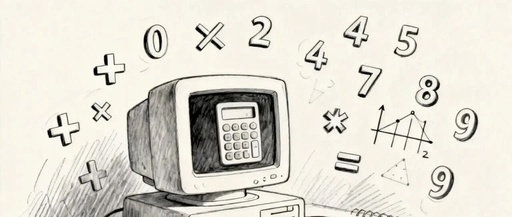
Day 5 of C Language: Operators = Letting the Program Perform Calculations

Day 5 of C Language: Operators = Letting the Program Perform Calculations

Day 5 of C Language: Operators = Letting the Program Perform Calculations đź§® Learn to calculate from scratch, master addition, subtraction, multiplication, and division in 5 minutes In the first four days, we learned how to make the program “speak”, “remember”, and “ask questions”. Today, we will learn something more practical—how to make the program … Read more

Python Mini Class: The ‘Talking’ Print Magic Assistant!

Python Mini Class: The 'Talking' Print Magic Assistant!

In the magical world of Python, there is an amazing “printing assistant”—the print function! Introducing the Print Assistant First, let’s take a look at a cartoon portrait of the print assistant! It has a round “head” called print, and a pair of magical “ears”. Just put the content you want to display into its “ears”, … Read more

C++ Lecture 3: The ‘Secret Symbols’ that Drive Code Execution

C++ Lecture 3: The 'Secret Symbols' that Drive Code Execution

In the previous lecture, we learned how to create variables—these “little boxes” that can store numbers, text, and even boolean values (true/false). However, these “boxes” that can only store data are not very useful; the true magic of programming reveals itself when these “boxes” start to interact, accumulate, compare, and even make judgments. The core … Read more

C++ Basics: Fundamental Operations

C++ Basics: Fundamental Operations

C++ provides a rich set of operators to manipulate data, which can be broadly categorized into the following types: Arithmetic Operators Relational Operators Logical Operators Assignment Operators Increment and Decrement Operators Other Operators (bitwise operations, comma operator, <span>sizeof</span>, etc., which will be briefly mentioned in this article) 1. Arithmetic Operators Used to perform basic mathematical … Read more

Detailed Explanation of Binary Operations (Addition, Subtraction, Multiplication, Division) in FPGA

Detailed Explanation of Binary Operations (Addition, Subtraction, Multiplication, Division) in FPGA

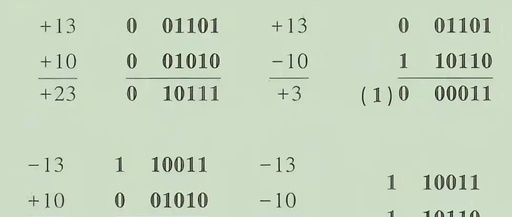
In FPGA design, binary operations are one of the most fundamental and commonly used logical operations, with addition, subtraction, multiplication, and division widely applied in digital signal processing, control algorithms, and data computation scenarios. To simplify hardware implementation while accommodating signed operations, FPGAs typically use two’s complement representation for signed numbers. Using two’s complement not … Read more