The ‘Housekeeping’ of C++: A Deep Dive into the Rule of Three/Five/Zero

The 'Housekeeping' of C++: A Deep Dive into the Rule of Three/Five/Zero

The ‘Housekeeping’ of C++: A Deep Dive into the Rule of Three/Five/Zero From Manual to Automatic: Unveiling the Evolution of Resource Management in C++ Classes Introduction: Who Moved My Resources? Hello, C++ developers. In C++, when your class starts to directly manage resources—such as allocating memory with <span>new</span>, opening file handles, or establishing network connections—you … Read more


Understanding Multi-Mining: What It Is, Why It’s Popular, and How to Choose and Calculate

Understanding Multi-Mining: What It Is, Why It's Popular, and How to Choose and Calculate

For beginners: Explaining Multi-Mining clearly—what it is, why it is popular, how to choose and calculate, and what pitfalls to avoid. (Informational content, not investment advice) 1. What Is It Multi-Mining refers to using the same set of equipment/same account system to participate in multiple decentralized networks (DePIN/PoW/bandwidth/storage/data crowdsourcing, etc.) for mining or task revenue … Read more

C++ Programming Guidelines – Constructors, Assignment, and Destructors

C++ Programming Guidelines - Constructors, Assignment, and Destructors

01 Classes containing member variables must define a constructor or a default constructor. Note: If a class has member variables and does not define a constructor or a default constructor, the compiler will automatically generate a constructor, but the compiler-generated constructor will not initialize the member variables, leaving the object in an uncertain state.Exception: If … Read more

C++ Programming Tips: Managing Resources with Smart Pointers

C++ Programming Tips: Managing Resources with Smart Pointers

Resources refer to entities that, once used, must be returned to the system. For example, dynamically allocated memory using “new” needs to be returned to the system with “delete”, as well as resources like bitmaps and brushes. 1. Disadvantages of Manual Resource Management Consider the following example: We “new” a resource and return it to … Read more

RAII Technique in C++: Resource Acquisition Is Initialization

RAII Technique in C++: Resource Acquisition Is Initialization

RAII (Resource Acquisition Is Initialization) is a core resource management paradigm in C++, which binds the lifecycle of resources to the lifecycle of objects, thus providing an automatic and safe resource management mechanism. This article will detail this technique from multiple dimensions. 1. Core Principles and Mechanisms The core principle of RAII is based on … Read more

Resource Management in FreeRTOS

Resource Management in FreeRTOS

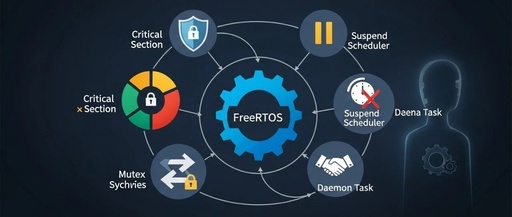
Resource Management Problem: When a task is using a resource and is preempted before it has finished using it, the resource may be left in an incomplete or corrupted state. If another task or interrupt tries to access this resource at that time, it can lead to data corruption or processing errors. That is why … Read more

Linux Learning Notes – cgroup (Part 2)

Linux Learning Notes - cgroup (Part 2)

Control Groups (cgroups) are a feature of the Linux kernel used to limit, record, and isolate the resource usage (CPU, memory, disk I/O, network, etc.) of process groups. cgroup v2 is the second generation implementation of cgroups, providing a more unified and consistent interface. 1. Core Concepts of cgroup v2 Hierarchy v2 adopts a single … Read more

Resolving Overloaded Application Server Resources with Community Help

Resolving Overloaded Application Server Resources with Community Help

Click the above to follow Hat Hat Computer for more computer knowledge.Every company has various servers, and you may remember that a few days ago, Hat Hat posted about an application server that was particularly slow, with extremely high resource load. However, the server’s host configuration was quite high, yet the number of users logged … Read more

Essentials | What is Virtualization Technology? Common Architectures of Virtualization

Essentials | What is Virtualization Technology? Common Architectures of Virtualization

Click on the above“Linux Technology Enthusiast” and select “Set as Starred” High-quality articles delivered promptly In computing, virtualization (English: Virtualization) is a resource management technology that abstracts and presents various physical resources of a computer, such as servers, networks, memory, and storage, breaking the inseparable barriers between physical structures, allowing users to utilize these resources … Read more

How to Solve Insufficient Memory and Storage on Your Phone

How to Solve Insufficient Memory and Storage on Your Phone

Do you often encounter the situation where your phone shows “no storage space” or “insufficient memory”, even though you haven’t installed many apps and your SD card has plenty of space? This can often lead to slow internet browsing on your phone! Why does this happen? Today I will explain! The “Room Structure” of Your … Read more